
An original methodology for managing the development of an event agency in the context of digital transformation
Journal: Economics and Business: Theory and Practice @economyandbusiness
Article in issue: 2 (132), 2026.
Free access
The article is devoted to the development and substantiation of an authorial methodology for managing the development of an event agency in the context of the digital transformation of the events industry. The study examines the specific features of an event agency as an object of management, associated with the project-based nature of its activities, a high degree of uncertainty, and a strong dependence on the human factor. The main directions of digital transformation in the event industry are analyzed, and key management problems arising from the fragmented implementation of digital technologies and the low level of organizational digital maturity are identified. Special attention is paid to the formation of a process-based and cyclical approach to managing the development of an event agency. The article presents an authorial development management model and methodology, comprising strategic, operational, and analytical levels, as well as an implementation algorithm and a system of digital tools to support managerial decision-making. The proposed approaches are aimed at improving the manageability of event agency development, reducing risks, and ensuring organizational effectiveness in a dynamically changing external environment.
Similar articles in the section Communication and transport industries. Accountancy. Business management. Public relations
Short address: https://sciup.org/170212627
IDS: 170212627 | DOI: 10.24412/2411-0450-2026-2-268-274
Оригинальная методика управления развитием event-агентства в условиях цифровой трансформации
Статья посвящена разработке и обоснованию авторской методики управления развитием event-агентства в условиях цифровой трансформации индустрии мероприятий. В работе рассматриваются особенности event-агентства как объекта управления, связанные с проектным характером деятельности, высокой степенью неопределенности и зависимостью от человеческого фактора. Проанализированы основные направления цифровой трансформации event-индустрии и выявлены проблемы, возникающие в результате фрагментарного внедрения цифровых технологий и низкого уровня цифровой зрелости организаций. Особое внимание уделено формированию процессно-циклического подхода к управлению развитием event-агентства. В статье представлена авторская модель-методика управления развитием, состоящая из стратегического, операционного и аналитического уровней, а также алгоритм её реализации и система цифровых инструментов поддержки принимаемых решений. Предложенные подходы ориентированы на повышение управляемости развития event-агентств, снижение рисков и обеспечение эффективности в условиях динамично изменяющейся внешней среды.
Text of the scientific article An original methodology for managing the development of an event agency in the context of digital transformation
Digital transformation, as a leading driver of global economic development, inevitably impacts the events industry, primarily manifesting itself in changes to established forms of event organization and approaches to participant coordination. In particular, as recognized in the academic literature, technological advancement has transformed not only traditional events but has also led to the emergence of digital, virtual, hybrid, phygital, and meta-events, which, according to N. Piccioni, are gradually beginning to displace conventional formats and necessitate a reconsideration of the concepts of presence, engagement, and event experience, thereby highlighting the relevance of scholarly analysis of these ongoing transformations [1]. At the same time, it should be noted that the academic literature lacks a sufficiently systematized and comprehensive body of research addressing the development of event agencies under the new conditions of digital transformation; this identified research gap is further intensified by the extreme heterogeneity and rapid dynamics of change within the events industry, as events are no longer exclusively spatial and temporal phenomena but increasingly function as digital ecosystems embedded within plat- form-based and networked structures. For example, since the COVID-19 pandemic period, hybrid event formats have become firmly established and have gradually evolved into an independent model of event activity [2].
In view of the above, issues related to the formalization and management of digital transformation processes, as well as the organization of internal restructuring aimed at improving operational efficiency and achieving competitive advantages in alignment with emerging trends and tendencies, gain particular relevance from a business perspective. Modern event agencies face the challenge of managing their development in the context of digital transformation, which involves the formation of an appropriate business model and the maintenance of strategic effectiveness. Taken together, these circumstances have determined the scope and objective of the present study.
The objective of the study is to formalize key processes and to propose a methodology for managing the development of an event agency in the context of digital transformation. The theoretical foundation of the research is based on scholarly works in the field of event agency manage- ment, as well as studies examining the transformation processes of the events industry, primarily associated with digitalization and the impact of digital technologies. Through systematization, analysis, synthesis, and bibliographic review, the article presents both theoretical considerations and practice-oriented aspects of managing the development of an event agency under contemporary conditions.
In conceptualizing the process of development management, it is important to define its existing boundaries and the specific characteristics determined by the object of management under consideration.
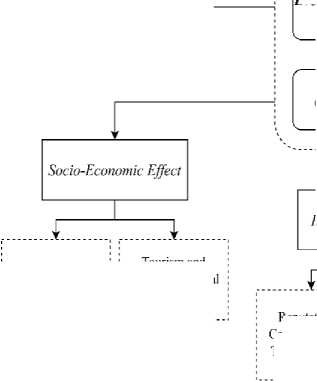
Thus, it should be specified that, under contemporary conditions, an event agency represents a specific object of management that simultaneously possesses the characteristics of a project- based, service-oriented, and creative organization. The activities of an event agency are traditionally focused on the development, organization, and implementation of unique event products; at the same time, environmental constraints are also present, as operations take place under conditions of high uncertainty, time limitations affecting organizers, and the demands of clients and audiences, which often combine both collective and individual expectations. Taken together, these factors determine the distinctive nature of an event agency as an object of management (see Fig. 1). Unlike traditional production structures, an event agency primarily operates through temporary project teams, which gives rise to specific requirements for resource management, participant coordination, and performance control.
Project-Based Nature of Activities
Temporary Teams and the High Importance of Their Coordination
Limited Implementation Timeframes
Creation of a Unique ! Event Experience
Integration of Clients, Contractors, and Venues
Partnership Networks and Business Model Flexibility
Organizational and Managerial Characteristics
Reputational Capital; Limited Tangible Assets formation of the Event Economy
Tourism and
Services: Sectoral Development
Event Agency as an Object of Management
Business Model and Value
Resource Specificity
EVENT AGENCY
(Project-and-Service Organization)
Uniqueness ot Each Event; Risks of Failures and Deviations
Dependence on the External Environment; Demand Volatility
Creative and Human Resources; Information and Digital Resources
Fig. 1. Event agency as an object of management in the context of the project-based and service economy, compiled based on sources [3; 4; 5]
From a business modeling perspective, an event agency acts as an integrator of resources and competencies through which value is created by combining creative solutions, organizational processes, and technological tools [3]. Accordingly, the agency coordinates interactions among clients, contractors, venues, technical specialists, and digital platforms, effectively operating within a complex network of partnership relations. At the same time, the strategic effectiveness of the agency largely depends on its ability to adapt its business model, introduce new event formats that meet client demand, and take into account the current technological conditions of their implementation. Therefore, the management cycle of an event agency and its development is continuous.
From the perspective of management systems, the distinctive features of event agencies are largely determined by the project-based and creative nature of their activities. As rightly noted by K. Thomas and S. Stephens, event management relies on the simultaneous application of classical management theories together with project-based and situational approaches, which is driven by the uniqueness of each event and the impossibility of fully reproducing solutions or replicating events in a standardized manner [4]. Accordingly, the importance of strategic planning increases within event agencies, alongside the need to ensure rapid restructuring of management structures and coordination mechanisms within the organization. It should also be noted that there exists a wide range of niches and specific types of events that an agency may organize, which makes the variable component of its activities particularly pronounced.
As subjects of the market economy, event agencies, according to D.V. Povetkina, actively contribute to the implementation of socioeconomic objectives due to their multiplicative impact on the development of territories, tourism, and related industries; moreover, the agencies themselves act as key actors in shaping the event economy [5]. Accordingly, managing the efficiency and development of event agencies represents a broader and more systemic task that extends beyond influencing individual business structures. In this context, organizational development management is understood as a specific type of managerial activity aimed at the purposeful transformation of the qualitative characteris- tics of a system; in other words, development is associated with the transition of an organization to a new state, often accompanied by transformations in structure, processes, competencies, and decision-making mechanisms [6]. In relation to event agencies, this approach is particularly relevant due to the previously identified characteristics and the high dynamism of the industry.
According to the views of I.E. Vekshina, development management represents a continuous and systemic process that involves setting development goals, selecting directions of change, implementing managerial interventions, and evaluating their outcomes while taking into account both external and internal environmental factors [6]. Development management implies an active role of the management subject and a conscious engagement with uncertainty; therefore, in the context of an event agency, development management cannot be reduced solely to increasing the volume of services provided or expanding the client base. On the contrary, it presupposes the formation of a stable yet change-oriented business model, the development of organizational and digital competencies within the team, the enhancement of project process manageability, and the reduction of performance dependence on the individual characteristics of specific employees. As in the case of any organization, the development of an event agency is a complex and multidimensional process affecting strategic, organizational, technological, and human resource levels; this process can be appropriately represented in the form of a cycle (Fig. 2):
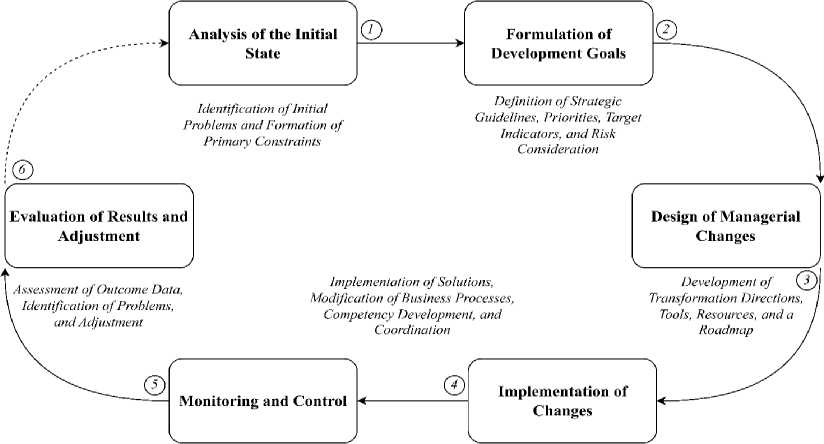
Fig. 2. Cyclical process of managing the development of an event agency, compiled by the author
Substantively, managing the development of an event agency involves, first, the formation of long-term orientations and priorities taking into account the transformation of the events industry; second, the establishment of mechanisms for aligning strategic objectives with operational and project activities; and third, systematic work with risks and change management. Of particular importance is the agency’s ability to shift from reactive decision-making to proactive approaches based on data analysis, forecasting, and the formalization of management procedures; in this context, technologies become a promising resource for implementing development initiatives, while simultaneously generating certain development-related risks.
In particular, at the present stage, increasing attention is being paid to the concept of Events 4.0, within which digital technologies become a central element both in the organization of events and in the functioning of an event agency. However, according to existing assessments, a number of challenges remain typical for many organizations:
-
1. Fragmentation of management under conditions of insufficient digital maturity, which, according to the study by W.G. Ryan, A. Fenton, W. Ahmed, and P. Scarf, is associated with an intermediate level of digital maturity and the partial, non-systemic implementation of technologies across most events and event organizations [7]. Today, digital tools are actively used for marketing, registration, and communication with participants; however, data integration remains limited and a unified development management system is not formed. As a result, decisions are often made in response to emerging problems rather than on the basis of strategic analysis and forecasting, which complicates the ability to keep pace with market trends and tendencies.
-
2. Strengthening dependence on the human factor – despite active digitalization, event agencies continue to demonstrate a high level of reliance on human capital and such factors as creativity, communication skills, the ability to manage emotions, and audience (user) responsiveness. According to B. Neuhofer, B. Magnus, and K. Celuch, technologies do not replace humans in the events industry; in most cases, they enter into complex relationships of value co-creation or codestruction with them [8]. Consequently, insufficient staff readiness to work with digital solu-
- tions leads to a decline in the quality of organized events, accompanied by increased operational risks and a loss of client loyalty.
-
3. The exponential impact of digitalization and related transformations on the operational risks of event agencies; the primary consequence of this influence is that digital transformation expands the spectrum of risks associated with event agency management, meaning that organizations are increasingly affected by:
-
- risks of technological failures and platform dependency;
-
- risks of data leakage and improper use of participant data;
-
- reputational risks associated with digital communication channels;
-
- risks of losing control over the client experience as processes become automated; and others.
Noteworthy in the context of the listed risks are the findings of the study by S. Unson, W. Wang, and K. Harrison, which notes that during periods of crises and shock events, event agencies were forced to implement innovations at an accelerated pace, often without sufficient methodological grounding or strategic management [9]. This situation significantly increased organizational vulnerability and contributed to the absence of formalized change management mechanisms. Moreover, the synergistic impact of combined risks on event agencies should not be overlooked.
It is precisely these three problems that make it possible to identify the main challenge faced by modern event agencies – the lack of clarity regarding development vectors due to the reactive nature of management systems and the deficit of formalization. In such circumstances, the management of event agency development is often limited to isolated measures related to the implementation of individual digital tools, changes in event formats, or the redistribution of functions within the team. However, without a formalized development management model, such decisions do not ensure business scalability; the absence of a systemic approach hinders the transition from situational innovations to a managed digital transformation.
Taken together, the identified problems and contradictions served as the basis for the formalization and development of a methodology for managing the development of an event agency in the context of digital transformation (Fig. 3):
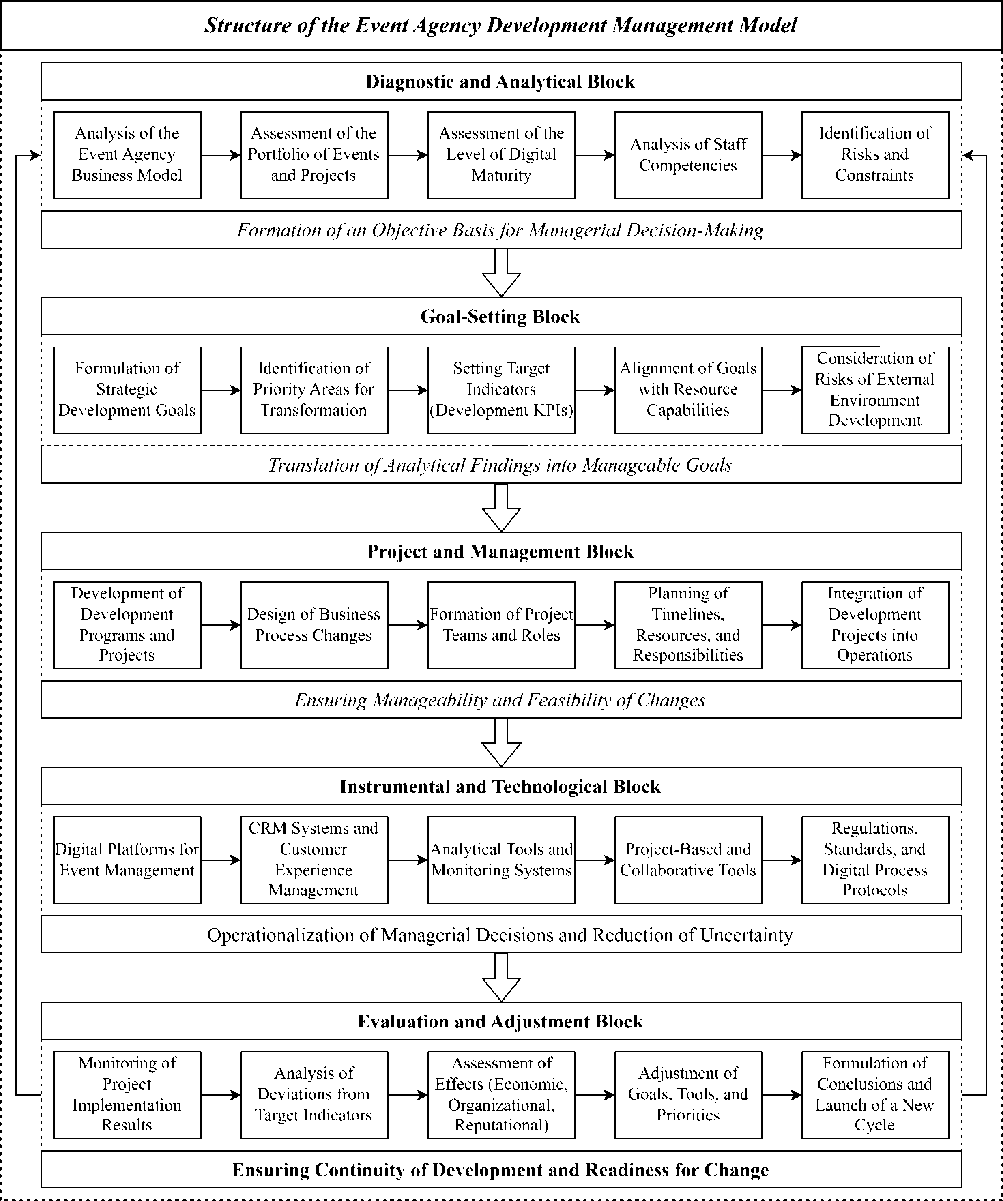
Fig. 3. Development management model of an event agency in the context of digital transformation, developed by the author
The structure of the development management model of an event agency in the context of digital transformation is based on the principles of formalization and the integration of its specific characteristics, the traditional management cycle, and digitally mediated influences. At the same time, a fundamental premise of the model is its orientation toward a risk-based approach [10]. In accordance with the above, a set of development management tools for event agencies is presented as a complementary element of the methodology (Table):
Table. Development management tools for an event agency
|
Tool Group |
Tools |
Features and Objectives (Expected Effects) of Application |
|
Analytical |
SWOT analysis, digital maturity assessment, risk analysis, etc. |
Identification of strengths and weaknesses, threats and opportunities; reduction of uncertainty in decisionmaking |
|
Strategic |
Strategic planning, scenario analysis, etc. |
Formation of long-term development priorities; enhancement of agency effectiveness |
|
Project-based |
Project management, development roadmaps, etc. |
Ensuring the manageability of change processes; synchronization of resources and timelines |
|
Digital |
CRM systems, event management platforms, data analytics, etc. |
Increased process transparency, improved client experience, enhanced operational efficiency |
|
Risk-oriented |
Risk monitoring systems, predictive analytics, etc. |
Proactive risk identification; reduction of the likelihood of disruptions and crisis situations |
|
Organizational |
Regulations, KPIs, motivation systems, etc. |
Improved execution discipline; alignment of personnel with development goals |
|
Human resource |
Training, development of digital and managerial competencies, etc. |
Reduced dependence on individual experience; development of human capital |
Taken together with the proposed tools, the development management model of an event agency is based on the integration of processbased, strategic, and analytical approaches and is aimed at overcoming the fragmentation of managerial decision-making. The model has a cyclical nature and implies continuous reproduction of managerial interventions while taking into account both external and internal changes. The methodological foundation of the model and its tools lies in their cyclical application, mediated by the previously identified cyclical process of event agency development management and its established specific characteristics.
Thus, the conducted study has made it possible to develop a comprehensive understanding of the specific features of managing the development of an event agency in the context of digital transformation, viewed as a complex, multi-level, and continuous process. The necessity of transitioning to a systemic approach to development management has been substantiated, grounded in cyclicality, formalization, and the integration of digital tools into managerial practice.
The proposed authorial model and methodology are aimed at overcoming the key limitations of contemporary business in the events industry, associated with a high dependence on the human factor, the fragmentation of decision-making, and the reactive nature of management. The application of the model makes it possible to align strategic development goals with the project-based and operational activities of the agency, ensure the manageability of change processes, and enhance organizational effectiveness under conditions of uncertainty in both the external and internal environment.
The practical significance of the methodology lies in the possibility of its implementation in the activities of event agencies of various scales and specializations, as well as in its use as a foundation for the introduction of digital platforms, analytical systems, and risk management tools. In the future, the proposed model may serve as a basis for further research in the field of digital maturity within the events industry and for the development of applied instruments for assessing the effectiveness of development management.
