
Byzantion coin from Paphlagonian Hadrianopolis

Journal: Materials on Archaeology and History of the Ancient and Medieval Black Sea Region @maiask
Section: Нумизматика
Article in issue: 19, 2025.
Free access
This article presents a silver coin of Byzantion discovered in 2023 in rock-cut tomb M-14 at the Southern Necropolis of Paphlagonian Hadrianopolis. Dated to the Late Classical-Early Hellenistic Period (340-320 BCE), the coin features the legend ΠY on the obverse, depicting a bull standing above a dolphin to the left, with a windmill-shaped incuse on the reverse. The structures and finds were unearthed by archaeological excavations started in Hadrianopolis at 2003 generally indicate the Late Roman-Early Byzantine period urbanization of the city. This situation gave the impression that Hadrianopolis was a weak city during the Hellenistic and Early Roman periods, and that there was no settlement in the city at all. However, the coin we examined in this study provides important information about the Charon tradition in Hadrianopolis and supports the argument that Hadrianopolis should not be considered merely a Late Antique city, but also held an important settlement in the region during the Hellenistic and Early Roman periods.
Similar articles in the section Cultural remains of historical times





Short address: https://sciup.org/14135332
IDS: 14135332 | DOI: 10.53737/2713-2021.2025.60.56.027
Монета Византии из Пафлагонского Адрианополя
Предметом этой статьи является монета Византия, обнаруженная в высеченной в скале гробнице М-14 из Южного некрополя в пафлагонском Адрианополе в сезон 2023 г. Датированная позднеклассическим - раннеэллинистическим периодом (340-320 гг. до н.э.), монета имеет легенду ΠY на аверсе, изображающую сидящего быка вверху и дельфина внизу слева, а также наковальню в форме ветряной мельницы на реверсе. Постройки и находки, обнаруженные в ходе археологических раскопок, начатых в Адрианополе в 2003 г., в целом указывают на урбанизацию города позднеримского-ранневизантийского периода. Эта ситуация создавала впечатление, что Адрианополь был слабым городом в эллинистический и раннеримский периоды, и что в городе вообще не было поселений. Однако монета, которую мы исследовали в рамках данного исследования, предоставляет важную информацию о традиции Харона в Адрианополе и подтверждает нашу точку зрения о том, что Адрианополь следует рассматривать не только как позднеантичный город, но и как важное поселение в регионе в эллинистический и раннеримский периоды.
Text of the scientific article Byzantion coin from Paphlagonian Hadrianopolis
Paphlagonian Hadrianopolis is located 3 km west of the Eskipazar district of Karabük province, in an area called Viranşehir and its surroundings (Fig. 1). The city includes the villages of Budaklar, Büyükyayalar, Çaylı, and Beytarla. Today, the remains of the city are concentrated in Budaklar Village and Hacı Ahmetler Neighborhood (Keleş et al. 2011: 39; Keleş 2021: 4; Çelikbaş, Oyarçin 2022: 179; Çelikbaş, Verim 2022: 60; Oyarçin, Çelikbaş 2023: 472). Looking at the chronological process of the city, it has been established that settlement in the region existed from the Late Chalcolithic period (Kalkan, Çelikbaş 2022: 417—431) and continued until the Middle Ages, as evidenced by the architectural remains in the city and the findings from the excavations conducted in 2020 (Oyarçin, Çelikbaş 2023: 469—484; Çelikbaş, Oyarçin 2024: 751—767).
The first known name of the city, which was part of Galatia around the 5th BCE, is Caesarea Proseilemmeneitai (Marek 1993: 102; Belke 1996: 155; Matthews et al. 2009: 44). The city's name was turned into Hadrianopolis during the Roman period to honor Emperor Hadrian (117 — 138 CE) after his visit and urban development activities in the city (Çelikbaş, Oyarçin 2022: 179).
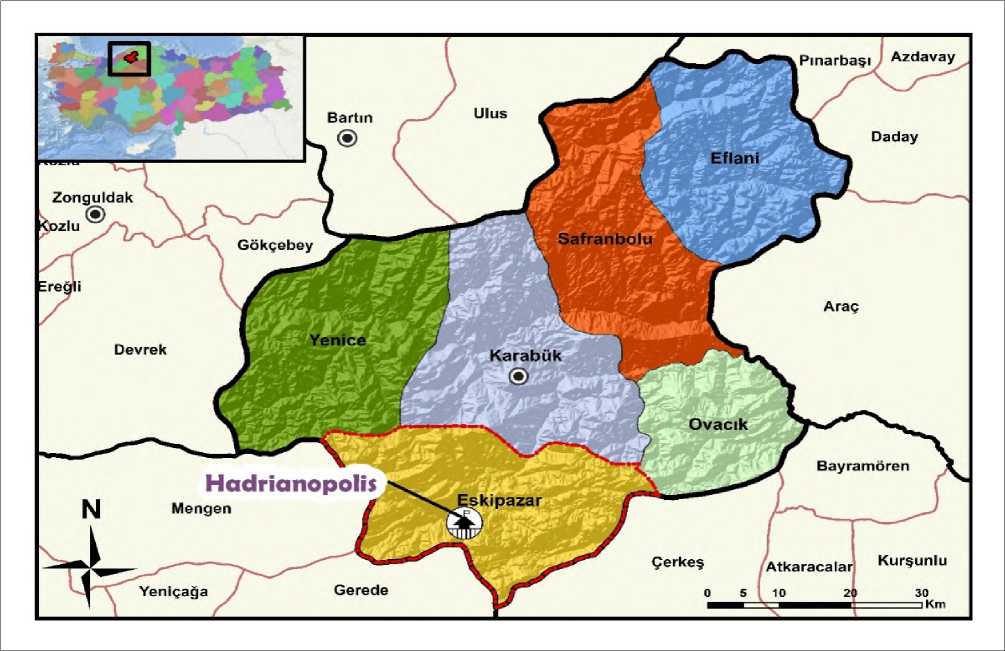
Fig. 1. Karabük and Hadrianopolis (Excavation Archive).
Excavations started in Hadrianopolis in 2003 have unearthed many structures reflecting the Late Roman-Early Byzantine urbanization of the city, such as a military tower, castle wall, a fountain, three churches, a southern necropolis, two baths, and a villa (domus). The coins and other finds discovered in these structures are also mostly dated to the Late Roman and Early Byzantine (Oyarçin 2019: 442—451; Oyarçin 2021: 171—190; Çelikbaş, Oyarçin 2022: 179—188; Oyarçin, Kızılyalçın Oyarçin 2024: 104—127; Çelikbaş, Oyarçin 2024: 751—767). Excavations started in 2018 at the Hadrianopolis Southern Necropolis, where traces of the Late Roman-Early Byzantine periods as well as the city's early periods have been found. During the excavations at the Hadrianopolis Southern
МАИАСП № 19. 2025
Necropolis, 115 rock-cut tombs were unearthed, and numerous Early Roman finds were discovered inside the tombs (Fig. 2).
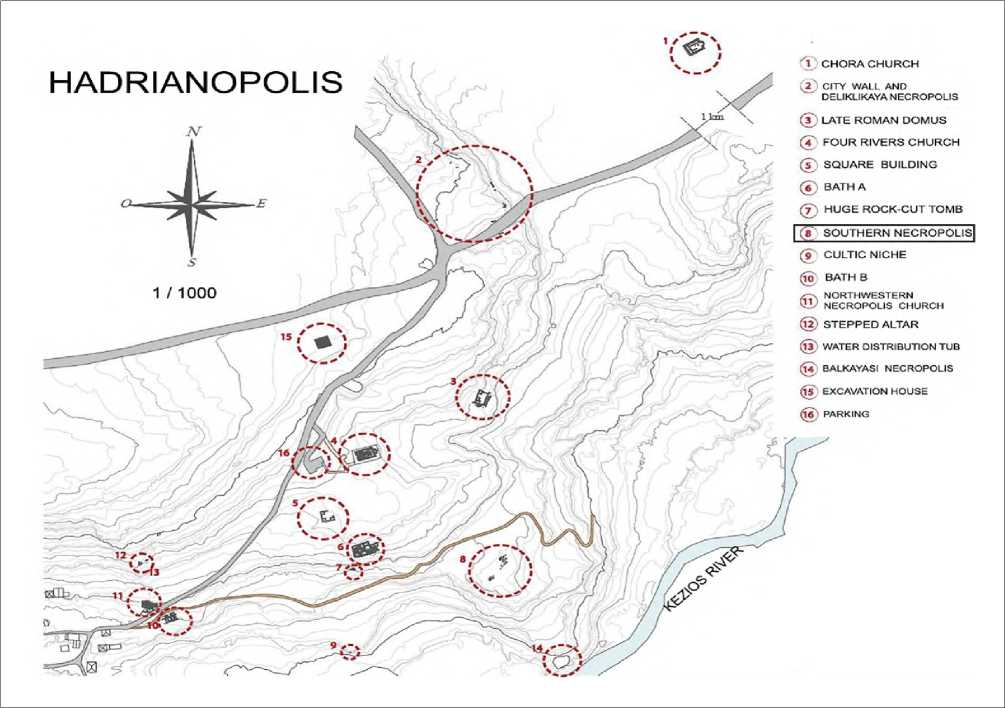
Fig. 2. Site plan and location of Southern Necropolis.
Important datas about the Hellenistic and Early Roman periods of the city have been obtained from the Southern Necropolis. One of the most important pieces of this data are seven Roman provincial coins minted in Hadrianopolis, discovered in rock-cut tombs M-33, M-46, M-63, and M-69. Thanks to these coins discovered in the Southern Necropolis of Hadrianopolis, where coin minting was previously unknown, it has been determined that coins were minted at least during the reigns of Marcus Aurelius and Lucius Verus. Three of the coins found as individual finds in different tombs in the Southern Necropolis have been dated to the reign of Marcus Aurelius, while the remaining four coins have been dated to Lucius Verus (Çelikbaş, Oyarçin 2022: 179—188). Forty-eight caligae pins dating to the 2nd century CE were also discovered in tomb M-46 (Çelikbaş, Çakmak 2025: 102). In 2021, an iron mask belonging to a Roman cavalryman and various pieces of armor were found in a square structure. These military objects are prove the Roman military presence in the city. The caligae pins found in the Southern Necropolis are also among the finds belonging to the Early Roman soldiers identified in Hadrianopolis (Çelikbaş, Çakmak 2025: 102103). In addition to obtaining new datas related to Hadrianopolis in the Southern Necropolis, a single Late Classical-Early Hellenistic period coin minted in Byzantion, which is the subject of our study, was also found in tomb M-14 during 2023 excavation season (Fig. 3).
МАИАСП № 19. 2025
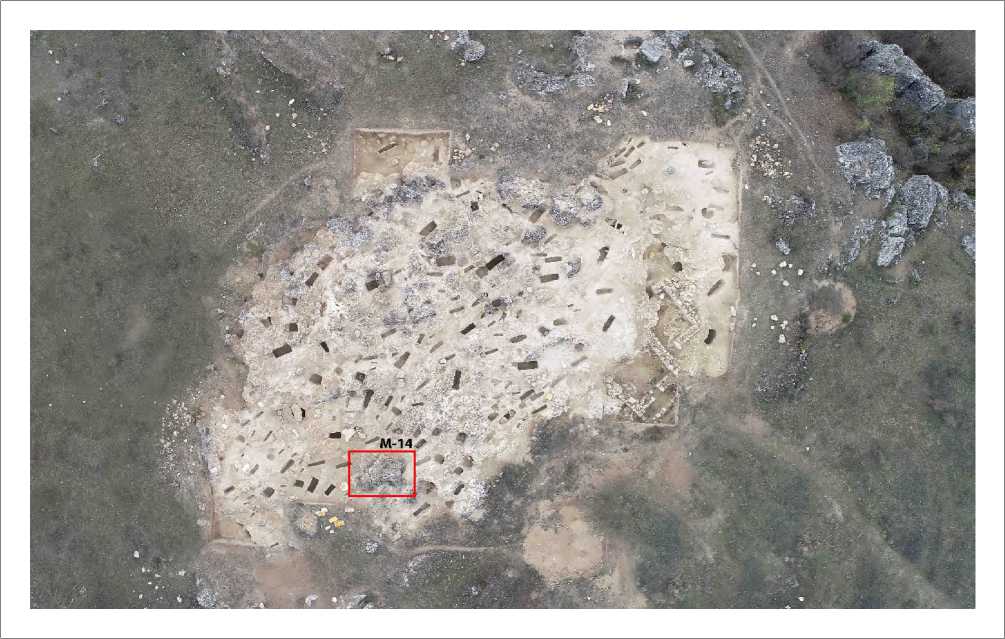
Fig. 3. Aerial Photo of Southern Necropolis and rock-cut tomb M 14 (Excavation Archive).
The obverse of Late Classical-Early Hellenistic (340 — 320 BCE) silver coin which has ½ siglos currency, depicts a bull standing on a dolphin moving to the left with the legend ΠY, while the reverse a windmill-shaped incus (Fig. 4). No data from the Late Classical Period has been found in surveys and scientific excavations in Hadrianopolis and its surroundings. The earliest coins date back to the Roman Imperial Period. The Byzantion coin discovered in the Southern Necropolis is of great importance as it is the earliest coin in Hadrianopolis. Although the coin dates back to the Late Classical-Early Hellenistic period, most of the rock-cut tombs in the Southern Necropolis of Hadrianopolis, where the Byzantion coin discovered in, date back to the Roman period. The first question at this point is during which period the coin was left in the rock-cut tomb. The rock-cut tombs in the South Necropolis reflect the chamosorion type carved into the bedrock. The chamosorion type tombs, which are particularly deep and wide, have been dated to the 2nd century CE based on the burial gifts discovered inside them. The shallow and narrow tombs, on the other hand, have been determined to belong to the Late Roman-Early Byzantine period. Numerous pottery fragments from the Prehistoric Period have also been found in the Southern Necropolis, which consists of tombs carved into the limestone bedrock. The pottery from the Late Chalcolithic Period found in a sacrificial pit carved into the bedrock indicates that the necropolis was used for different purposes over hundreds of years (Kalkan, Çelikbaş 2022: 417—431).
МАИАСП № 19. 2025
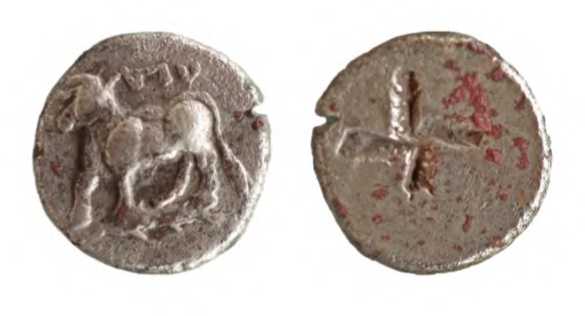
Fig. 4. The Byzantion coin from Hadrianopolis (Excavation Archive).
Itis currently hard to say whether the Byzantion coin discovered in the rock-cut tomb was left during the Late Classical-Early Hellenistic period or the Roman period. However, the coin discovered in the tomb has led to speculation that life existed in the Late Classical-Early Hellenistic period. It is also true that more archaeological data is needed to seriously consider the existence of a tradition of burial gift coins in the Late Classical-Early Hellenistic period in the Hadrianopolis region based on a single coin. According to current archaeological data in Asia Minor, the Charon coin tradition, which is not well known, is encountered in tombs in the Thracia and Macedonia. Regarding the Charon tradition, coins are often of low value, whether placed in the mouth or hand of the individual at the moment of death or at the time of burial, reflecting the characteristic nature of sometimes at the moment of death and sometimes at the moment of burial, are generally of low value, reflecting the characteristic nature of this coin tradition (Stevens1991:215—229;Yıldırım 2009: 15—24; Keleş 2014: 333—344). Inother words, coinssymbols of the intangible power ofmoneyhave beenseenasa way totouchtheinvisible worldofthe dead(Stevens 1991: 228). It is stated that Charon tradition first began to appear in Greek tombs in the 5th century BCE and continued to increase until the late 5th century CE. They were not very common in the Greek world duringthe Hellenistic period, but were more common inthe Romanworld (Stewens 1991: 223;Stefanakis 2002: 171; Keleş 2014: 122). When examined in the context of coins, the earliest Greek tomb is dated to the second quarter of the 5th century BCE (Grinsell 1957: 262; Grinder-Hansen 1991: 210). In the Halae Necropolis of Boeotia, which was used between the 6th and 3rd centuries BCE, Charon coins found in tombs dating from the end of the 4th century BCE to the middle of the 3rd century BCE were discovered in the mouth or head of the skeleton (Goldman, Jones 1942: 370; Yıldırım 2009: 21). Therefore, it is possible to consider the Byzantion coin should be related with Charon tradition. In this context, when evaluated in general terms, the Byzantion coin found in the South Necropolis, which dates back to the Late Classical-Early Hellenistic period, is one of the important pieces of evidence supporting the idea that Hadrianopolis should not be considered only as a Late Antique city, but also that it had an important settlement in the region during the Hellenistic and Early Roman periods. In addition, although the coin that is the subject of this article was minted in the Late Classical-Early Hellenistic period, considering the periods of the tombs in the Southern Necropolis and the finds in the tombs, it is more likely that it was left in the tomb during the Roman period. At this point, it is certain that coins to be discovered in the Hadrianopolis Southern Necropolis in the coming years will provide us with clearer data. In addition, the fact that the silver Charon coin discovered in rock-cut tomb M-14 was minted in Byzantion suggests that this tomb may belong to a Byzantion resident who lived and died in Hadrianopolis, and it is also quite important in terms of showing that there were certain relations between the cities of Byzantion and Hadrianopolis. In conclusion, while the Byzantion coin discussed in this article provides information about the Charon tradition in the city and the existence of certain relationships between Hadrianopolis and Byzantion, new tombs to be excavated in the Southern Necropolis in the coming years will undoubtedly provide more comprehensive and clear data on these issues.
МАИАСП № 19. 2025
Catalog
Byzantion
Late Classical-Early Hellenistic Period (340—320 BCE)
Obv. ΠY
Standing bull; dolphin below, I.
Rev. Windmill shaped incuse.
1. AR, 13 mm, 2.17 g, 11h, (Currency: ½ Siglos), 2023/Hadrianopolis Southern Necropolis, Inventory Code: AIO-1.
