
Effect of apple pomace powders on the physicochemical characteristics and amino acid profile of cooked sausages
Journal: Bulletin of Almaty Technological University @vestnik-atu
Section: Технология пищевой и перерабатывающей промышленности
Article in issue: 2 (152), 2026.
Free access
This study investigated the effects of incorporating apple pomace powder from 3 apple varieties (Aidared, Simirenko, and Golden Delicious) at two inclusion levels (3% and 5%) on the physicochemical properties and amino acid composition of cooked sausages. Results showed that apple pomace powders significantly influenced moisture, protein, fat, ash content, water holding capacity (WHC), water binding capacity (WBC), and fat retention capacity (FRC). Notably, 3% Golden Delicious apple pomace powder (CSG3) enhanced WHC and FHC most effectively, while 5% Simirenko apple pomace powder (CSS5) resulted in the highest protein content (41,3±0,58%). Apple pomace powder inclusion also increased the pH of sausages and positively affected the amino acid profile, with improvements in lysine, valine, phenylalanine, and alanine levels. The type and concentration of apple pomace powder influenced the enhancement of both nutritional and functional attributes. These findings suggest that apple pomace powder can be utilized as a functional ingredient in sausage formulations to improve nutritional quality and functional performance.
Similar articles in the section Communication and transport industries. Accountancy. Business management. Public relations
Short address: https://sciup.org/140315557
IDS: 140315557 | UDC: 65.59.03 | DOI: 10.48184/2304-568X-2026-2-13-21
Влияние порошков из яблочных выжимок на физико-химические характеристики и аминокислотный профиль варёных колбас
В данном исследовании изучено влияние добавления порошка из яблочных выжимок трёх сортов яблок (Айдаред, Симиренко и Голден Делишес) в двух концентрациях (3% и 5%) на физико-химические свойства и аминокислотный состав варёных колбас. Результаты показали, что порошок из яблочных выжимок оказывает значительное влияние на влажность, содержание белка, жира, золы, водоудерживающую способность (WHC), влагосвязывающую способность (WBC) и способность удерживать жир (FRC). Особенно эффективен 3% порошок из яблочных выжимок сорта Голден Делишес (CSG3), который повышал WHC и FRC, в то время как вариант с 5% порошка из сорта Симиренко (CSS5) обеспечивал наивысшее содержание белка (41,3±0,58%). Добавление порошка из яблочных выжимок также увеличивало pH колбас и положительно влияло на аминокислотный профиль, улучшая содержание лизина, валина, фенилаланина и аланина. Вид и концентрация порошка из яблочных выжимок определяли степень улучшения как питательных, так и функциональных характеристик. Полученные данные свидетельствуют о том, что порошок из яблочных выжимок может использоваться в качестве функционального ингредиента в рецептурах колбас для повышения их пищевой ценности и технологических свойств.
Алма сығындысы ұнтақтарының пісірілген шұжықтардың физика- химиялық қасиеттері мен аминқышқылдық құрамына әсері
Бұл зерттеуде үш түрлі алма сортының (Айдаред, Симиренко және Голден Делишес) алма сығындысы ұнтағын 3% және 5% мөлшерде қосу арқылы пісірілген шұжықтардың физика-химиялық қасиеттері мен аминқышқылдық құрамына әсері зерттелді. Нәтижелер алма сығындысы ұнтақтарының ылғалдылық, ақуыз, май, күл мөлшері, суды ұстау қабілеті (WHC), суды байланыстыру қабілеті (WBC) және майды ұстап тұру қабілетіне (FRC) айтарлықтай әсер ететінін көрсетті. Атап айтқанда, 3% Голден Делишес сортының алма сығындысы ұнтағы (CSG3) суды ұстау және майды ұстау қабілетін ең тиімді арттырды, ал 5% Симиренко алма ұнтағы (CSS5) ақуыздың ең жоғары мөлшерін көрсетті (41,3±0,58%). Сондай-ақ, алма ұнтағын қосу шұжықтардың рН көрсеткішін жоғарылатып, аминқышқылдар құрамына оң әсерін тигізді – лизин, валин, фенилаланин және аланин мөлшері артты. Алма сығындысы ұнтағының түрі мен концентрациясы өнімнің тағамдық және функционалдық сипаттарын жақсартуға әсер етті. Бұл нәтижелер алма сығындысы ұнтағын шұжық рецептурасына функционалды қоспа ретінде қосу оның тағамдық құндылығы мен технологиялық сапасын арттыра алатынын көрсетеді.
Text of the scientific article Effect of apple pomace powders on the physicochemical characteristics and amino acid profile of cooked sausages
IRSTI 65.59.03
The increasing global emphasis on sustainability and waste reduction has spurred interest in utilizing food by-products as functional ingredients in various industries, including meat production. Apple pomace, the solid residue remaining after juice extraction, represents a rich source of dietary fiber, polyphenols, and natural antioxidants. Its incorporation into meat products, particularly sausages, offers a promising avenue to enhance their nutritional profile while mitigating oxidative degradation.
Recent research highlights the growing interest in utilizing fruit and vegetable pomaces in meat and sausage products as functional ingredients to improve their nutritional, sensory, and preservation qualities. Studies have demonstrated the effectiveness of various pomaces, such as apple, grape, tomato, carrot, and pineapple, in enhancing antioxidant activity, increasing dietary fiber content, and improving sensory attributes like texture and flavor [1-6]. For instance, apple pomace has been successfully incorporated into buffalo meat sausages, boosting their antioxidant properties and nutritional value [7], while tomato pomace has shown promise in reducing nitrite levels and enhancing the microbiological stability of fermented sausages [8]. Similarly, combinations like wheat bran with apple or carrot pomace have led to the development of fiber-rich chicken sausages with acceptable sensory profiles [9]. These findings underscore the potential of fruit and vegetable pomaces not only as sustainable solutions for food waste management but also as innovative components to enhance the quality and shelf life of meat products.
The application of apple pomace in meat products aligns with the dual goals of product innovation and environmental sustainability. By repurposing fruit by-products, the meat industry can reduce reliance on synthetic additives and minimize food waste. However, understanding the physicochemical interactions between pomace components and meat matrices is crucial to optimizing these formulations for both quality and cost-efficiency.
The aim of this study is to investigate the effects of incorporating different types and concentrations of apple pomace powder on the proximate composition, pH, techno-functional properties, and amino acid profile of cooked sausages. By evaluating the influence of Aidared, Simirenko, and Golden Delicious apple pomace at 3% and 5% inclusion levels, this research seeks to determine the potential of apple pomace as a functional ingredient to enhance the nutritional and technological quality of meat products.
Materials and methods
Cooked Sausage Production
The study comprised 7 treatments of cooked sausage, all with the following ingredients: turkey breast meat (45-47 %), turkey skin (30 %), ice water (20 %), curing salt (1.6 %), soy protein (1.5 %), paprika (0.25 %). The differences between treatments concern the amount of 3 different apple pomace powders (Table 1).
Table 1. Cooked sausage formulations with 3 different apple pomace powder levels (units: g/100 g).
|
Ingredients |
Treatments* |
||||||
|
Control |
CSA3 |
CSA5 |
CSS3 |
CSS5 |
CSG3 |
CSG5 |
|
|
Turkey breast meat |
50 |
47 |
45 |
47 |
45 |
47 |
45 |
|
Turkey skin |
30 |
30 |
30 |
30 |
30 |
30 |
30 |
|
Ice water |
20 |
20 |
20 |
20 |
20 |
20 |
20 |
|
Apple pomace powder |
- |
3 |
5 |
3 |
5 |
3 |
5 |
|
Total |
100 |
100 |
100 |
100 |
100 |
100 |
100 |
|
Curing salt |
1.6 |
1.6 |
1.6 |
1.6 |
1.6 |
1.6 |
1.6 |
|
Soy protein |
1.5 |
1.5 |
1.5 |
1.5 |
1.5 |
1.5 |
1.5 |
|
Paprika |
0.25 |
0.25 |
0.25 |
0.25 |
0.25 |
0.25 |
0.25 |
*Control, cooked sausage with 50% turkey breast meat and without apple pomace powder; CSA3, CSA5: cooked sausages incorporated with 3% and 5% “Aidared” apple pomace powder respectively; CSS3, CSS5: cooked sausages incorporated with 3% and 5% “Simirenko” apple pomace powder respectively; CSG3, CSG5: cooked sausages incorporated with 3% and 5% “Golden Delicious” apple pomace powder respectively.
Determination pH
The pH of cooked turkey sausage samples was determined using a method based on measuring the acidity in the homogenate of the sample in water. The cooked sausages were stored at 4°C. For each measurement, a 5 g sample of sausage was taken and homogenized with 20 ml of distilled water. The resulting mixture was thoroughly blended until a uniform consistency was achieved to ensure accurate pH measurement. The pH values were measured at room temperature using a laboratory pH meter (Orion 3-Star pH Benchtop Meter, Thermo Fisher Scientific Inc.). The pH meter electrode was immersed in the homogenate, and the readings were recorded.
Determination of Water Holding Capacity (WHC)
The water holding capacity (WHC) of cooked sausage products was determined using a modified method based on the product's ability to retain moisture after exposure to water and centrifugation. A 10 g sausage sample was placed in a test tube and mixed with 40 mL of distilled water. The mixture was carefully stirred to form a uniform solution.
The test tube was then placed in a water bath at 30°C for 30 minutes to allow moisture equilibrium between the product and water. After the water bath treatment, the samples were centrifuged at 3000 rpm for 30 minutes, separating the liquid (supernatant) from the product.
The supernatant was carefully removed, and the remaining sample in the test tube was weighed.
The WHC (%) was calculated using Equation 1.1:
WHC (%)= ^1 х100 (1.1)
v ' m2
m 1 - mass of the sample after removing the supernatant, g; m 2 - mass of the sample mixed with distilled water, g.
Determination of Water Binding Capacity (WBC)
To determine the Water Binding Capacity (WBC), 4 g samples of the designed meat modules were taken from each composition and placed into centrifuge tubes equipped with perforated inserts. The inserts were positioned to allow proper drainage of the released liquid. The samples were centrifuged for 20 minutes at a rotational speed of 100 s⁻¹.
After centrifugation, the samples were weighed, and the mass of substances in the separated liquid was added to the sample mass. The mass of these substances was determined by drying the liquid at 105°C to a constant weight. The percentage of bound water was calculated using the following Equation 1.2:
WBC (%)=m1+m3 m2x100 (1-2) v ' то m0 - initial weight of the sample before centrifugation, g; m1 - weight of the sample after centrifugation, g; m2 - weight of the dry residue in the sample, g; m3 - weight of the dry residue in the separated liquid, g.
Determination of Fat Retention Capacity (FRC)
After calculating the Water Binding Capacity (WBC) of each meat module using Equation 1.2, the mass of the meat remaining in the fat analyzer was determined. The meat was placed in a crucible and dried to a constant weight at 150°C for 1.5 hours. Following the drying process, a 2 g sample of each meat module was taken, placed in a porcelain mortar, and mixed with 2.5 g of pre-calcined sand and 6 g of α-monobromonaphthalene. The mixture was ground thoroughly for 4 minutes and filtered through folded filter paper.
The resulting solution was uniformly applied to the lower prism of a refractometer, and the refractive index was measured. Simultaneously, the refractive index of α-monobromonaphthalene was determined as a reference.
After the experiment, the Fat Retention Capacity (FRC) was calculated using Equation 1.3:
FRC (%)= m1 x100 (1-3) m2
m 1 - mass fraction of fat in the sample after thermal processing, %; m 2 - mass fraction of fat in the sample before thermal processing, %.
Determination of Moisture Content
The moisture content in the samples was determined using the drying method. For this purpose, the initial weight of the samples was measured before drying, followed by drying them in a convection dryer at 105°C for 12 hours.
After drying, the weight of the samples was measured again. The difference between the initial and final weights represented the amount of moisture lost, which allowed for the calculation of the percentage of moisture in the product.
Determination of Fat Content
The fat content was determined using the Soxhlet method, which is based on fat extraction using a solvent. The extraction process was carried out using the Universal Extractor E-800 (BUCHI, Switzerland), an automated system that ensures high precision. During the analysis, 2 g of preprepared samples were placed into a paper thimble and then inserted into the extraction apparatus. Ethyl ether or petroleum ether was used as the solvent. After the extraction was completed, the fat residue was dried to a constant weight. The fat mass was then measured using a high-precision analytical balance. The fat content in the product was calculated as a percentage by relating the mass of the extracted fat to the initial sample mass. Each measurement was performed at least three times, and the average values along with standard deviations were calculated. This method provides high accuracy in determining the total fat content in the product.
Determination of Protein Content
The protein content was determined using the Kjeldahl method, which is based on converting total nitrogen into ammonium and accurately quantifying it. The analysis was conducted using the Kjeltec™ 2300 Nitrogen Analyzer (FOSS, Hilleroed, Denmark).
The protein content was calculated using the following Equation (1.4):
Protein, (%) = (Nitrogen
content х Nitrogen coefficient) х
(1.4)
Sample weight
х100%
Determination of Ash Content
The ash content was measured using the incineration method in a muffle furnace, following AOAC standards. The samples were heated at high temperatures to eliminate organic matter, leaving behind the mineral residue, which was then weighed to determine its mass.
Determination of Amino Acid Composition in Cooked Sausages
The determination of amino acid composition in cooked sausages was carried out following the requirements of GOST R 55569-2013. The samples were hydrolyzed using 6 M hydrochloric acid at 110°C for 24 hours. The resulting hydrolysates were analyzed by high-performance liquid chromatography (HPLC) using an amino acid analyzer equipped with cation exchange columns and post-column derivatization. The concentrations of amino acids were determined by comparison with calibration standards.
Statistical Analysis of Results
To ensure the reliability of the data obtained from each experiment, no fewer than three repetitions were conducted. All results were presented as mean values ± standard error. The Duncan multiple comparison test was used to determine significant differences between the means. A significance level of 5% (p<0.05) was adopted. One-way analysis of variance (ANOVA)
was performed to evaluate the statistical significance of factors and their interactions. Data analysis was performed using the Statistica software, version 13.0 (StatSoft Inc., Poland).
Results and discussion
Physicochemical properties of cooked sausages
The addition of apple pomace powder at 3% and 5% levels from different apple varieties (Aidared, Simirenko, and Golden Delicious) significantly influenced the physicochemical and functional properties of cooked sausages. The findings are given in Table 2.
Table 2 Physicochemical properties of cooked sausages incorporated with different levels of different apple pomace powder, n=3, mean±SD
|
Treatment |
Moisture (%) |
Protein (%) |
Fat (%) |
Ash (%) |
Water holding capacity (%) |
Water binding capacity (%) |
Fat retention capacity (%) |
pH |
|
Control |
71,23±0, 25a |
36,21±0,4 4d |
35,43±0,43 ce |
2,38±0,0 8a |
47,98±0,6 1e |
80,51±1,0 3a |
69,38±0,8 8b |
5,46±0,0 4e |
|
CSA3 |
69,59±0, 18b |
37,9±0,49c |
40,1±0,52a |
1,88±0,0 2e |
50,87±0,7 1d |
76,33±0,9 9b |
67,86±0,8 5b |
5,94±0,0 3c |
|
CSA5 |
68,95±0, 58c |
39,89±0,5 3b |
35,08±0,45 e |
2,02±0,0 1d |
45,38±0,6 2 |
72,16±0,9 5c |
65,23±0,8 3c |
5,78±0,0 2d |
|
CSS3 |
70,1±0,1 0b |
36,31±0,4 6d |
36,54±0,5c |
1,87±0,0 2e |
52,45±0,7 0c |
72,06±0,9 3c |
66,18±0,8 1c |
5,94±0,0 4c |
|
CSS5 |
68,82±0, 30c |
41,3±0,58a |
38,1±0,53b |
2,24±0,0 5b |
48,88±0,6 5e |
76,89±0,9 8b |
68,54±0,8 0b |
6,04±0,0 6b |
|
CSG3 |
69,71±0, 13b |
40,13±0,5 5b |
36,09±0,49 cd |
1,96±0,0 1d |
67,88±088 a |
71,6±0,90c |
71,13±0,9 7a |
6,26±0,0 1a |
|
CSG5 |
68,74±0, 23c |
39,73±0,5 1b |
38,77±0,57 b |
2,07±0,1 9c |
56,30±076 b |
76,33±0,9 4b |
70,95±0,9 1a |
6,3±0,02a |
All values are mean ±standard deviation of 3 replicates (n=5).
a-eMeans within a column with different letters are significantly different (p<0.05).
Control: cooked sausage without apple pomace powder; CSA3, CSA5: cooked sausages incorporated with 3% and 5% “Aidared” apple pomace powder respectively; CSS3, CSS5: cooked sausages incorporated with 3% and 5% “Simirenko” apple pomace powder respectively; CSG3, CSG5: cooked sausages incorporated with 3% and 5% “Golden Delicious” apple pomace powder respectively.
The moisture content of sausages decreased with the incorporation of apple pomace powder compared to the control, reflecting the waterabsorbing properties of dietary fibers present in apple pomace powder. The control sample had the highest moisture content (71.23±0.25%), while CSA5 and CSS5 exhibited the lowest 68.95±0.58% and 68.82±0.30% values, respectively. Among the treatments, CSG3 showed higher moisture retention (69.71±0.13%), suggesting a better water-holding capability of Golden Delicious apple pomace powder at 3%. This follows the results obtained by Yadav et al. [10] and Huda et al. [11], who reported that the moisture content of dietary fiber-enriched chicken sausages and the protein content of treated mutton nuggets decreased with the increasing level of dried apple pomace.
Apple pomace powder incorporation resulted in an increase in protein content due to the protein contribution of the apple pomace itself. The highest protein content was observed in CSS5 (41.3±0.58%) and CSA5 (39.89±0.53%), while the control had significantly lower protein levels (36.21±0.44%). This enhancement indicates the protein-binding capability of apple pomace powder when incorporated at higher levels.
Ash content, indicative of mineral presence, was slightly reduced in most apple pomace powder treatments compared to the control, except for CSS5 (2.24±0.05%) and CSG5 (2.07±0.19%), which showed higher values. This could be attributed to the mineral composition of the respective apple pomace powders. This was in agreement with the findings of Verma et al. who reported that the ash content of low-fat chicken nuggets decreased with the increasing levels of apple pulp [12].
The WHC was significantly improved by apple pomace powder addition, with CSG3 demonstrating the highest WHC (67.88±0.88%), indicating the superior hydration capacity of Golden Delicious apple pomace powder. Conversely, CSA5 exhibited the lowest WHC (45.38±0.62%), potentially due to the higher incorporation level affecting the matrix structure. As the level of apple pomace powder increased, the WHC of patties increased from 6.69% to 20.03%, indicating that apple pomace powder enhances the WHC of meat patties [7].
The control had the highest WBC count (80.51±1.03%), which decreased with the addition of apple pomace powder. Among the treatments, CSA3 and CSG5 showed comparable WBC values (76.33±0.99% and 76.33±0.94%, respectively), maintaining functional water retention properties despite the addition of apple pomace powder.
The FHC was generally enhanced with apple pomace powder addition, with CSG3 and CSG5 showing the highest values (71.13±0.97% and 70.95±0.91%, respectively). This improvement highlights the role of dietary fibers in stabilizing fat during thermal processing.
The pH of sausages increased with apple pomace powder addition, reflecting the buffering properties of dietary fibers. CSG5 recorded the highest pH (6.30±0.02), while the control exhibited the lowest (5.46±0.04). The increase in pH could potentially influence microbial stability and sensory attributes. The mean pH values at the beginning of the experiment ranged between 6.73 and 6.82 and remained almost constant during storage, reaching values between 6.60 and 6.64 after 96 hours for control and burgers with 4% and 8% apple pomace [13].
The incorporation of apple pomace powder from different apple varieties significantly improved the functional properties of cooked sausages. Specifically, Golden Delicious apple pomace powder demonstrated superior performance in enhancing WHC, FHC, and overall functionality, making it a promising functional ingredient in sausage formulations. Higher levels of apple pomace powder (5%) generally resulted in slightly reduced moisture content and WBC, likely due to the excessive fiber content disrupting the protein matrix.
Amino Acid Composition of Cooked Sausages
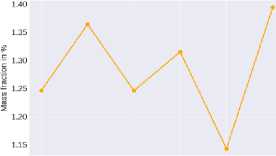
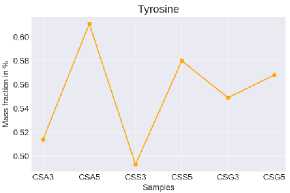
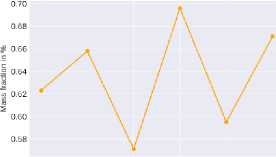
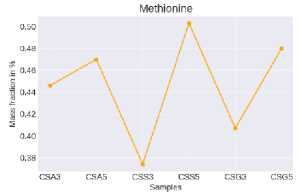
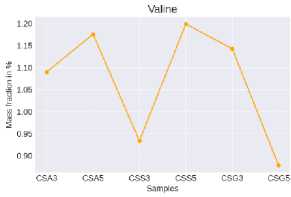
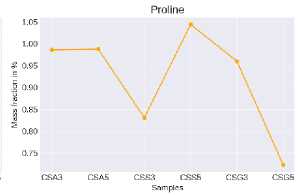
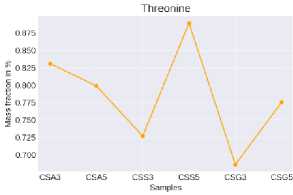
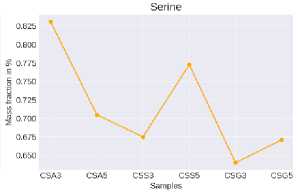
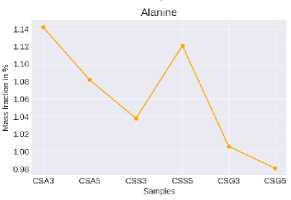
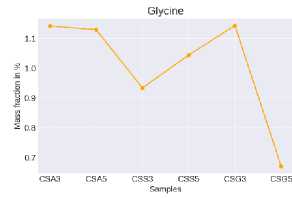
The amino acid profile of cooked sausages with the addition of apple pomace powder from different apple varieties at 3% and 5% levels is presented in Figure 1. The inclusion of apple pomace powder had a notable impact on the concentration of essential and non-essential amino acids. Arginine content (Figure 1, a) was slightly lower in apple pomace powder-treated sausages, with the highest value observed in CSA5 (1.129), followed by CSG5 (0.93). Lysine content (Figure 1, b), an essential amino acid, was significantly increased in all apple pomace powder treatments, particularly in CSG5 (1.394), reflecting the potential of apple pomace powder to enrich the lysine profile of sausages. The phenylalanine content (Figure 1, d) increased with higher apple pomace powder levels, as seen in CSS5 (0.696) and CSA5 (0.658). Tyrosine (Figure 1, c) followed a similar trend, with CSA5 recording the highest concentration (0.611).
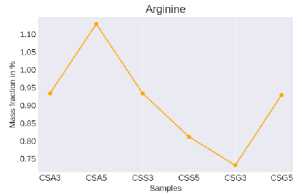
a)
Lysine
CSA3 CSA5 CSS3 CSS5 CSG3 CSG5 Samples
c)
b)
Phenylalanine
CSA3 CSA5 CSS3 CSSS CSG3 CSGS samples
e)
Leucine + Isoleucine

CSA3 CSA5 CSS3 CSSS CSG3 CSG5 samples
d)
f)
g)
h)
i)
k)
l)
m)
n)
Figure 1. The amino acid compositions of cooked sausages
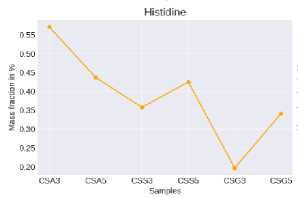
These results suggest that apple pomace powder contributes to enhancing aromatic amino acids in the sausage matrix, potentially improving flavor and nutritional value. Histidine levels (Figure 1, e) were significantly reduced with the inclusion of apple pomace powder, especially in CSG3 (0.197) and CSS3 (0.358). This may be attributed to the interaction of histidine with the fiber and phenolic compounds in apple pomace powder. Leucine and isoleucine concentrations (Figure 1, f) were slightly higher in sausages with apple pomace powder. The maximum levels were observed in CSG5 (1.084) and CSS5 (1.083), indicating that apple pomace powder did not negatively affect these essential branched-chain amino acids. Methionine levels (Figure 1, g) varied slightly among the samples, with a noticeable increase in CSA5 (0.470) and CSS5 (0.503). This demonstrates that apple pomace powder inclusion maintains methionine content, an important amino acid for protein synthesis and antioxidant activity. Valine concentrations (Figure 1, h) were higher in apple pomace powder-treated samples. CSS5 (1.199) had the highest valine content, followed by CSA5 (1.176), showcasing the contribution of apple pomace powder to enhancing branched-chain amino acid levels. Proline and threonine, both associated with structural protein stability, showed moderate variations across treatments. CSG3 had the highest proline (0.960) (Figure 1, i), while CSS5 recorded the highest threonine (0.889) (Figure 1, k). These variations may be due to the interaction of apple pomace powder with sausage proteins during cooking. Serine, alanine, and glycine levels (Figure 1, l, m, n) were generally higher in apple pomace powder-treated sausages. Notably, CSA3 (1.142) and CSG3 (1.143) exhibited the highest alanine and glycine content. These amino acids are known for their contributions to flavor and sweetness, which may enhance the sensory properties of the sausages. The inclusion of apple pomace powder from Aidared, Simirenko, and Golden Delicious apples enriched the amino acid profile of cooked sausages. Particularly, apple pomace powder at 5% levels (CSA5, CSS5, and CSG5) significantly improved the concentrations of essential amino acids such as lysine, phenylalanine, and valine. The observed variations among different apple varieties highlight the influence of apple pomace type on amino acid composition. Furthermore, the increase in alanine and glycine levels suggests potential improvements in flavor characteristics, while the reduction in histidine may influence antioxidant properties. This was in agreement with the findings of
Conclusion
The incorporation of apple pomace powder derived from different apple cultivars into cooked sausages significantly enhanced their functional and nutritional characteristics. The results demonstrated that apple pomace powder at both 3% and 5% levels positively influenced protein content, fat retention, and fat holding capacity while modifying moisture and ash content. Golden Delicious apple pomace powder, particularly at 3%, exhibited superior performance in improving water holding and fat retention capacities. Furthermore, the amino acid profile of sausages was enriched through apple pomace powder addition, with increased levels of lysine, valine, alanine, and glycine, indicating improved nutritional value and potential flavor enhancement. Conversely, reductions in histidine suggest possible interactions with phenolic compounds and fiber components. Overall, apple pomace powder serves as a promising clean-label ingredient for enhancing both the quality and functionality of meat products. Future research should focus on sensory evaluation and shelf-life analysis to validate consumer acceptance and industrial applicability.
Funding
This research has been funded by the Science Committee of the Ministry of Science and Higher Education of the Republic of Kazakhstan (Grant No AP22684574).
