
Taşımalı Eğitim Yapan Okullardaki Ortaokul Öğrencilerinin Sosyal Bilgiler Dersine Yönelik Tutumları
Journal: International Journal of Progression and Development in Education (IJPADE) @ijpade
Article in issue: 1 vol.1, 2023.
Free access
Taşımalı eğitim, okul bulunmayan yerleşim yerlerinde yaşayan öğrenciler açısından sosyal yaşamının bir parçasıdır. İlkokul ve ortaokul kademelerindeki öğrencilerin sosyal yaşamlarına ilişkin tüm boyutlar ise sosyal bilgiler dersinin kapsamında yer almaktadır. Sözü edilen kapsam temelinde taşımalı eğitimin öğrencilerin sosyal bilgiler dersin yönelik tutumlarını nasıl şekillendirdiğini irdelemeyi amaçlayan bu çalışma gerçekleştirilmiştir. Araştırmada karma araştırma yönteminden sıralı açımlayıcı desen kullanılmıştır. Araştırmanın katılımcı grubunda Türkiye’nin Erzurum ilinde taşımalı eğitim yapan bir ortaokulda öğrenim görmekte olan toplam 198 öğrenci yer almıştır. İstatistiksel ve niteliksel verilerin bir arada toplandığı araştırmanın verileri ölçek ve yarı yapılandırılmış görüşme formu aracılığıyla toplanmıştır. İstatistiksel verilerin çözümlenmesinde parametrik olmayan istatistiksel testlerden Kruskal Wallis, niteliksel verilerin çözümlenmesinde ise içerik analizi kullanılmıştır. Araştırmada katılımcıların sosyal bilgiler dersine yönelik tutumlarına ait puanların sınıf değişkenine göre farklılık göstermediği belirlenmiştir. Araştırmada ayrıca öğrencilerin taşımalı eğitime ilişkin olumlu görüşlere sahip olduğu, tşımalı eğitimin kendislerine sosyalleşme, günlük yaşama ilişkin bilgi ve beceri kazandırmada yararlı bir yapı olduklarını düşündükleri saptanmıştır. Araştırmada ulaşılan sonuçlara bağlı olarak çeşitli öneriler geliştirilmiştir.
Short address: https://sciup.org/170213546
IDS: 170213546 | DOI: 10.5281/zenodo.7651479
Attitudes of Secondary Students at Schools with Transported Education to the Social Studies Course
Transported education is a part of social life for students living in settlements without school. The social studies course includes all aspects of the social life of primary and secondary school students. This study, which aims to examine how transported education shapes students' attitudes toward the social studies course, was carried out based on the scope mentioned earlier. A sequential explanatory design from the mixed research method was used in the study. In the participant group of the study, a total of 198 students studying in a secondary school providing transported education in Erzurum, Turkey, took place. The data of the study, in which statistical and qualitative data were collected together, were collected through scale and semi-structured interview form. Kruskal Wallis, one of the non-parametric statistical tests, was used in the analysis of statistical data, and content analysis was used in qualitative data analysis. In the study, it was determined that the scores of the participants' attitudes toward the social studies course did not differ according to the class variable. In the study, it was also determined that the students had positive opinions about transported education, and they thought that transported education was a helpful structure for them to socialize and gain knowledge and skills about daily life. Various suggestions have been developed depending on the results of the study.
Text of the scientific article Taşımalı Eğitim Yapan Okullardaki Ortaokul Öğrencilerinin Sosyal Bilgiler Dersine Yönelik Tutumları
GİRİŞ
Ülkelerin en dinamik yapılarından biri olan temel eğitim, her yurttaşın yaşamında karşılaştığı ve karşılaşacağı kişisel ve toplumsal sorunlarını çözmede, toplumun değerlerine uyum sağlamada, üretken ve tutumlu olmada, temel yeterlilikleri ve alışkanlıkları kazandırmada başlıca eğitim kademesi olarak ifade edilmektedir (Başaran, 1982; Yeşilyurt ve Orak, 2007).
Eğitim, sosyal bir süreç olmasının yanında kişinin gelişimini uygun ve kontrollü bir çevre etkisiyle sağlamaktadır. Başka bir ifadeyle eğitim; bireyin bağlı bulunduğu topluma en uygun şekilde bedensel, duygusal, zihinsel ve sosyal adaptasyonunu sağlamak olarak da tanımlanmaktadır (Şan, 2012).
Günümüzde bilim ve teknoloji sürekli olarak gelişmekte ve yenilenmektedir. Bu hızlı değişim sürecinde ülkelerin birbiri ile rekabet edilebilmesi için bilim ve teknolojideki gelişmelere ayak uydurması gerekmektedir. Bu gereklilik nedeniyle nitelikli insan gücüne ihtiyaç günden güne artmaktadır. Nitekim bir toplumun çağın gereklerine ayak uydurabilmesi ancak sahip olduğu nitelikli insan gücü ile mümkündür. Nitelikli insan gücünün sağlanmasında ise en önemli değişkenin eğitim olduğu söylenebilir. Öyle ki kaliteli eğitim alan bireylerin, toplumun kalkınmasında önemli rol oynadığı bilinmektedir (Şan, 2012). Öte taraftan bazı yerleşim birimlerinde eğitim kurumlarının bulunmamasından dolayı söz konusu yerleşim yerlerindeki bireylerin eğitim görmesi, eğitim kurumu bulunan farklı bir yerleşim birimine gitmesiyle, bir başka deyişle taşımalı eğitim ile mümkün olabilmektedir.
Taşımalı eğitim uygulaması; nüfusu az ve dağınık yerleşim birimlerindeki zorunlu öğrenim çağındaki çocukların, merkezi okullara günübirlik taşınmaları suretiyle yapılan uygulama olarak tanımlamaktadır (Yeşilyurt ve Orak, 2007). Türkiye’de taşımalı Eğitim uygulaması, 1989-1990 yıllarında çeşitli illerde uygulanmaya başlanmış ve uygulamanın başarılı olması ile birlikte 1990-1991 eğitim-öğretim yılından itibaren birçok pilot ilde (Antalya, Çankırı, Konya, Van, Balıkesir, Çanakkale, Eskişehir, Kırklareli ve Kocaeli) uygulanmaya başlanmıştır. Daha sonra taşımalı eğitim uygulaması 1991-1992 eğitim-öğretim yılında genişleyerek 29 il ve bu illere bağlı 78 ilçenin 960 köy okulunda devam ettirilmiş ve toplamda 16538 öğrenci merkez okullarına taşınmıştır. Bir sonraki eğitim-öğretim yılında ise taşımalı eğitim gören öğrencilerin sayısı artarak 53676’e ulaşmıştır (Yurdabakan ve Tektaş, 2012).
Türkiye’de Millî Eğitim Bakanlığı’nın taşımalı eğitim yapılmasını teşvik etmesindeki amaçları (Güleryüz, 2002; Yeşilyurt ve Orak, 2012);
-
• İlköğretim okulu bulunmayan yerlere ilköğretim düzeyinde eğitim götürülmesi,
-
• Kapalı okulların öğrencilerine taşımalı eğitimle hizmet verilmesini sağlanması,
-
• Birleştirilmiş sınıf öğretimine son verilmesi ve taşınan öğrencilerin nitelikli eğitim öğretim görmelerini sağlamak biçimindedir.
Taşımalı eğitimin çeşitli yararları olmakla birlikte birtakım dezavantajları da söz konusudur. Bu dezavantajlar;
-
• Maliyet oranının yüksek olması,
-
• Öğrencilerin normal eğitime başlama sürelerinden daha erken olarak güne başlamaları,
-
• Eve dönüş sürelerinin uzaması,
biçiminde ifade edilebilir (Yurtbakan ve Altun, 2016).
Taşımalı eğitimin öğrencilerin günlük yaşamını doğrudan etkileyen bir değişken olması bağlamında öğrencilerin toplumsallaşma sürecine etki ettiği yadsınamaz bir gerçektir. İlkokul ve ortaokul kademelerindeki öğrencilerin toplumsallaşma sürecine yönelik tüm boyutlar, sosyal bilgiler dersinin içeriğini oluşturmaktadır. Nitekim sosyal bilgiler, öğrencilere toplumsal yaşama yönelik bilgi, beceri ve değerler kazandırmayı ve aynı zamanda öğrencilerin toplumsallaşmasının okul programları aracılığıyla gerçekleştirilmesini amaçlayan bir derstir (Bayram, 2021). Bu kapsamda taşımalı eğitimin öğrencilerin toplumsallaşması ile ilgili boyutunun da sosyal bilgiler dersinin kapsamına girdiği söylenebilir.
Taşımalı eğitimin öğrencilerin sosyal yaşamının bir parçası olması ve öğrencilerin sosyal yaşamına ilişkin tüm boyutların sosyal bilgiler dersinin içeriğinde yer alması kapsamında, taşımalı eğitimin öğrencilerin sosyal bilgiler dersin yönelik tutumlarını nasıl şekillendirdiğini irdelemeyi amaçlayan bu çalışma gerçekleştirilmiştir.
Araştırmanın amacı doğrultusunda yapılan alanyazın taramasında taşımalı eğitimi konu edinen çok sayıda çalışmaya (Işık ve Maya, 2003; Kaya, 2006; Küçüksüleymanoğlu, 2006; Yeşilyurt ve Orak, 2007; Kaya ve Aksu Bilgin, 2009; Recepoğlu, 2009; Bilek ve Kale, 2012; Yurdabakan ve Tektaş, 2013; Cinoğlu vd., 2014) rastlanmıştır. Taşımalı eğitim yapan okullardaki öğrencilerin sosyal bilgiler dersine yönelik tutumlarını araştıran herhangi bir çalışmaya ise rastlanmamıştır. Söz konusu durum, alanyazın açısından bir eksiklik olarak görülmüş ve bu noktadan hareketle bu araştırmanın yapılmasına karar verilmiştir. Araştırmanın ilgili alanyazına taşımalı eğitim yapan ortaokullardaki öğrencilerin sosyal bilgiler dersine yönelik tutumlarını nasıl etkilediğinin ortaya konulması kapsamında katkı sağlayacağı öngörülmektedir.
AMAÇ
Bu araştırmanın amacı; taşımalı eğitim yapan ortaokullardaki öğrencilerin sosyal bilgiler dersine yönelik tutumlarının irdelenmesidir. Bu amaç doğrultusunda aşağıdaki sorulara yanıt aranmıştır: Taşımalı eğitim yapan ortaokullardaki öğrencilerin;
-
• Sosyal bilgiler dersine yönelik tutumları sınıf düzeyine göre farklılık göstermekte midir?
-
• Taşımalı eğitime yönelik görüşleri nelerdir?
-
• Taşımalı eğitimin sosyalleşmeye ve günlük yaşama etkisine yönelik tutumlarındaki etkisine yönelik görüşleri nelerdir?
YÖNTEM
Bu araştırmada karma araştırma yöntemi kullanılmıştır. Karma araştırma yöntemi, istatistiksel ve niteliksel verilerin bir arada toplanıp çözümlendiği çalışmalara ilişkindir (Creswell ve Clark, 2017). Bu araştırmada Karma araştırma yönteminin kullanılma nedeni, araştırma sürecinde hem istatistiksel hem de niteliksel verilerin toplanıp çözümlenmiş olmasıdır. Bu araştırma Atatürk Üniversitesi, Eğtim
Bilimleri Birim Etik Kurulu’nun 23.12.2022 tarih ve 09 nolu etik kurul kararı kapsamında gerçekleştirilmiştir.
Desen
Araştırmada karma araştırma yönteminden sıralı açımlayıcı desen kullanılmıştır. Sıralı açımlayıcı desen, öncelikli olarak istatistiksel verilerin toplanıp çözümlendiği ve ardından niteliksel verilerin toplanıp istatistiksel sonuçların derinlikli, irdelenmesinde kullanıldığı araştırmalarda işe koşulmaktadır (Creswell ve Clark, 2017). Bu araştırmada sıralı açımlayıcı desenin kullanılma nedeni, araştırmanın ilk aşamasında istatistiksel verilerin toplanması ve ardından niteliksel verilerin toplanmasıdır. Araştırmada veri toplama sürecinden başlayarak raporlaştırmaya kadar planlı ve aşamalı bir yol izlenmiştir. Sıralı açımlayıcı desenin kullanıldığı bu araştırmada izlenen süreç Şekil 1’de olduğu gibi sıralanmıştır:
•Araştırmanın istatistiksel verilerini toplamak amacıyla veri toplama aracının belirlenmesi
•Araştırmanın katılımcı grubunun belirlenmesi
•Araştırmanın istatistiksel verilerinin toplanıp çözümlenmesi
•Yar yapılandırılmış görüşme formu hazırlanarak niteliksel verilerin toplanması ve çözümlenmesi ve niteliksel verilerin biraraya getirilerek bulguların ve sonuçların ortaya konması
•Araştırma sürecinin bir bütün olarak rapolaştırılması
Şekil 1. Araştırma süreci
Şekil 1’de görüldüğü gibi araştırma, aşamalı olarak gerçekleştirilmiştir. Araştırma istatistiksel verilerin toplanmasından raporlaştırmaya kadar şekildeki gibi altı aşamada gerçekleştirilmiştir. Araştırmada ilk aşama istatististiksel verileri toplamada kullanılacak aracın belirlenmesi, ikinci aşama ise katılımcı grubun seçilmesi olmuştur. Sonraki aşamada istatistiksel veriler toplanarak çözümleme yapılmıştır. Ardından niteliksel verilerin toplanması için görüşme formu oluşturulmuş ve görüşme verileri toplanıp çözümlenmiştir. İstatistiksel bulgularla ve niteliksel bulgular bir araya getirilerek araştırma raporlanmıştır. Araştırma sürecünün değişkenleri arasındaki uyumu kontrol etmek amacıyla araştırma uyum matrisinden (Kaya ve Bayram, 2021) yararlanılmıştır.
Katılımcı Grup
Araştırmanın katılımcı grubu iki aşamada oluşturulmuştur. İlk aşama istatistiksel verilerin toplandığı grubun belirlenmesidir. İstatistiksel verilerin toplandığı katılımcı grup belirlenirken uygun örnekleme yöntemi kullanılmıştır. Uygun örnekleme, kolay ulaşılabilen ve gönüllü katılımcılarla çalışmaya dayalı örneklem yöntemidir (Büyüköztürk vd., 2020). İstatistiksel verilerin toplandığı katılımcılara yönelik kişisel bilgiler Tablo 1’de gösterilmiştir:
Tablo 1. İstatistiksel verilerin toplandığı katılımcılara yönelik kişisel bilgiler
|
Cinsiyet |
5.sınıf |
6.sınıf |
7.sınıf |
8.sınıf |
|
Kız |
22 |
28 |
25 |
29 |
|
Erkek |
18 |
32 |
24 |
22 |
|
Toplam |
40 |
60 |
49 |
51 |
|
Genel Toplam |
198 |
Tablo 1’de görüldüğü gibi araştırmanın istatistiksel verilerinin toplandığı grupta taşımalı eğitim gören 198 ortaokul öğrencisi yer almıştır. Söz konusu öğrencilerin 104’ü kız, 96’sı erkektir. Öğrencilerin 40’ı 5. sınıf, 60’ı 6. sınıf, 49’u 7. sınıf, 51’i ise 8. sınıflarda öğrenim görmektedir.
Araştırmanın niteliksel verilerinin toplandığı katılımcı grup, istatistiksel verilerin toplandığı öğrenciler arasından gönüllü olan 10 öğrenci ile oluşturulmuştur.
Verilerin Toplanması
Araştırmanın veri toplama süreci iki aşamada gerçekleştirilmiştir. İlk aşamada istatistiksel, ikinci aşamada niteliksel veriler toplanmıştır. Söz konusu aşamalarda yapılan uygulamalar ve veri toplama araçlarına ilişkin bilgiler aşağıda verilmiştir.
Araştırmanın istatistiksel verilerinin toplanmasında Çetinkaya ve Uçar (2019) tarafından geliştirilen “Sosyal Bilgiler Tutum Ölçeği (SBTÖ)” kullanılmıştır. “Tamamen Katılıyorum”, “Katılıyorum”, “Kısmen Katılıyorum”, “Katılmıyorum” ve “Kesinlikle Katılmıyorum” seçeneklerine sahip 5’li likert tipinde olan ölçeğin öncelikle güvenirlik çalışması yapılmıştır. Ölçeğin Cronbach’s Alpha Testi sonucuna gore ( a= .692) olgegin guvenirliginin kabul edilebilir duzeyde (Ozdamar, 2002) oldugu görülmüştür. Ölçek, ortaokul öğrencilerinin sosyal bilgiler dersine yönelik tutumları ile ilgili toplam 40 maddeden oluşmaktadır. Tutum ölçeği ilgi, bilgiyi kullanma, dersin içeriği ve isteksizlik olmak üzere dört boyuttan oluşmaktadır. İlgi boyutu, öğrencilerin sosyal bilgiler dersine yönelik ilgi ve alakalarını belirlemeye yönelik 11 sorudan; bilgiyi kullanma boyutu, öğrencilerin bilgi ve becerilerini belirlemeye yönelik yedi sorudan; dersin içeriği boyutu, öğrencilerin dersin içeriği konusunda beklentilerini belirlemeye yönelik beş sorudan, isteksizlik boyutu ise, öğrencilerin derse yönelik olumlu ya da olumsuz beklentilerini belirlemekle ilgili altı sorudan oluşmaktadır.
Araştırmanın niteliksel verileri araştırmacı tarafından oluşturulan yarı yapılandırılmış görüşme formu ile toplanmıştır. Form, taşımalı eğitim yapan ortaokullardaki öğrencilerin sosyal bilgiler dersine yönelik tutumlarını nasıl etkilediğine ilişkin görüşlerini almak amacıyla hazırlanmıştır. Formun hazırlanma sürecinde nitel araştırma konusunda alanında yetkin uzmanların görüşüne başvurulmuştur. Öğrencilerle yapılan görüşmeler, velilerden ve kurumdan izin alınarak yüz yüze gerçekleştirilmiştir. Bu kapsamda öğrencilerle öğrencilerin uygun gördüğü bir ortamda bir araya gelinerek görüşme formunda yer alan sorular sorulmuştur. Öğrencilerin verdiği yanıtlar araştırmacı tarafından kalem kağıt kullanılarak not edilmiştir. Alınan notlar daha sonra düzenlenerek bilgisayar ortamına aktarılmış ve çözümleme için hazırlanmıştır.
Verilerin Çözümlenmesi
Araştırmanın istatistiksel verilerinin çözümlenmesinde yapılacak işlemlere karar vermek amacıyla verilerin çarpıklık ve basıklık değerleri kontrol edilmiştir. Verilerin normal dağılıp dağılmadığını belirlemek için ise Kolmogorov-Smirnov (KS) Testi uygulanmıştır. KS Testinin yapılmasındaki neden, katılımcı sayısının 35 kişiden fazla olmasıdır. 35 kişiden daha fazla katılımcının bulunduğu çalışmalarda normallik dağılımında KS Testi uygun görülmektedir (Tabachnick ve Fidell, 2019). Çarpıklık ve basıklık değerleri ile KS Testinin sonuçları, Tablo 2’de gösterilmiştir:
Tablo 2. İstatistiksel verilerin çarpıklık, basıklık ve KS testi sonuçları
Boyut Çarpıklık BasıklıkKS
Çarpıklık Standart hata Basıklık Standart hata
Ölçek Toplamı 1.027 .173 2.439.344
Tablo 2’de görüldüğü üzere istatistiksel verilerin çarpıklık ve basıklık değerleri -2,5 ile 2,5 arasında, Kolmogorov- Smirnov Testi sonucu ise .05’ten küçük (Tabachnik ve Fidel, 2019) çıkmıştır. Ulaşılan sonuçlardan dolayı istatistiksel verilerin normal dağılım göstermediği belirlenmiş ve bu kapsamda verilerin çözümlenmesinde parametrik olmayan testlerden Kruskal Wallis’in kullanılmasına karar verilmiştir.
Araştırmanın niteliksel verilerinin çözümlenmesinde içerik analizi kullanılmıştır. İçerik analizi, nitel verilerin önceden belli olmayan temalar kapsamında sınıflandırılmasını içermektedir (Yıldırım ve Şimşek, 2016). Bu araştırmanın niteliksel verilerilerinin çözümlenmesinde içerik analizinin kullanılmasının sebebi, temaların çözümleme sırasında oluşturulması ve tümevarımsal bir yol izlenmesidir.
ARAŞTIRMA ETİĞİ
Araştırmada bilimsel araştırma etiği kapsamında şu işlemler yapılmıştır:
-
• Araştırmaya başlamadan önce Erzurum Atatürk Üniversitesi Bilimsel Araştırmalar Etik Kurulu’ndan etik kurul izni alınmıştır.
-
• Araştırmanın katılımcı grubu, ortaokul öğrencilerinden oluştuğundan dolayı öğrencilerin öğrenim gördüğü okulun bağlı bulunduğu Milli Eğitim Müdürlüğü’nden araştırma izni alınmıştır.
-
• Araştırmada yer alan katılımcıların isimleri ve okudukları okul, gizli tutulmuş ayrıca veli onam belgesi ile gerekli izinler alınmıştır.
-
• Niteliksel veriler toplanırken kaydedilen tüm dokümanlar yalnızca bu araştırma için kullanılmış ve verilerin orijinal haline sadık kalınmıştır.
BULGULAR
Araştırmada taşımalı eğitim yapan ortaokullardaki öğrencilerin sosyal bilgiler dersine yönelik tutumları, sınıf değişkeni kapsamında incelenmiştir. Ayrıca taşımalı eğitim yapan ortaokullardaki öğrencilerin taşımalı eğitimin sosyalleşmeye ve günlük yaşama etkisine yönelik görüşleri de irdelenmiştir. Ulaşılan bulgular, istatistiksel bulgular ve niteliksel bulgular olmak üzere iki ana başlıkta verilmiştir.
Araştırmanın İstatistiksel Bulguları
Araştırmada taşımalı eğitim yapan ortaokullardaki öğrencilerin sosyal bilgiler dersine yönelik tutumları, sınıf değişkeni kapsamında irdelenmiştir. Ulaşılan sonuçlar Tablo 3’te verilmiştir:
Tablo 3. Taşımalı eğitim yapan okullardaki öğrencilerin SBTÖ’den aldıkları puanların sınıf değişkenine göre Kruskal Wallis testi sonuçları
|
Sınıf |
n |
Sıralı ortalama |
Serbestlik derecesi |
x2 |
p |
fark |
|
5 |
40 |
97,79 |
3 |
1.012 |
.798 |
- |
|
6 |
60 |
94,29 |
||||
|
7 |
48 |
104,39 |
||||
|
8 |
50 |
102,43 |
||||
|
Toplam |
198 |
Tablo 4 incelendiğinde araştırmada yer alan öğrencilerin sosyal bilgiler dersine yönelik tutumlarına ait puanların sınıf değişkenine göre anlamlı biçimde (p=.798>.05) farklılık göstermediği görülmektedir. Tablo 4’te yer alan sonuçlar itibarıyla farklı sınıflarda öğrenim görmekte olan öğrencilerin sosyal bilgiler dersine yönelik tutumlarının sınıf değişkenine göre farklılaşmadığı söylenebilir.
Araştırmanın Niteliksel Bulguları
Araştırmada taşımalı eğitim yapan ortaokullardaki öğrencilerin taşımalı eğitimin sosyalleşmeye ve günlük yaşama etkisine yönelik görüşleri irdelenmiştir. Ulaşılan bulgular doğrudan alıntılarla desteklenerek verilmiştir.
Araştırmaya katılan öğrencilerin taşımalı eğitime ilişkin görüşleri araştırılmıştır. Elde edilen bulgular Şekil 2’de gösterilmiştir:
İmkânlardan yararlanma Ö2, Ö3, Ö6
Fırsat eşitliği Ö1, Ö5,Ö6
Sosyal devlet Ö2, Ö5

Taşımalı Eğitim Yapan Okullardaki Ortaokul Öğrencilerinin Taşımalı Eğitime İlişkin Görüşleri


Şekil 2. Taşımalı eğitim yapan okullardaki ortaokul öğrencilerinin taşımalı eğitime ilişkin görüşleri ile ilgili bulgular
Şekil 2’de görüldüğü gibi katılımcıların taşımalı eğitime yönelik görüşleri teması ile ilgili üç kod oluşturulmuştur. Katılımcıların ifadelerinden ulaşılan kodlar, ait oldukları kullanıcılarla özdeşleştirilerek gösterilmiştir. Şekil 2’de yer alan ifadeler doğrultusunda taşımalı eğitim alan öğrencilerin taşımalı eğitime yönelik görüşleri; imkânlardan yararlanma, sosyal devlet, fırsat eşitliği olarak gördükleri belirlenmiştir. Katılımcıların taşımalı eğitime yönelik görüşlerine ilişkin bulgular, katılımcıların doğrudan ifadeleriyle desteklenerek yorumlanmıştır.
Araştırmada bazı katılımcılar taşımalı eğitimi fırsat eşitliği olarak gördükleri saptanmıştır. Örneğin Ö1 taşımalı eğitim ile ilgili olarak, “ Taşmalı eğitim tüm öğrencilere fırsat eşitliği sağlıyor . ’demiştir. Benzer olarak Ö5, ‘’Devletin tüm öğrencilere eğitimde fırsat eşitliği sağlıyor.’’ diyerek taşımalı eğitimin önemli olduğunu belirtmiştir. Öğrencilerden Ö6, “ Taşımalı eğitim, imkânı olmayan öğrencilerin diğer öğrenciler gibi eşit eğitim almasını sağlıyor.” ş eklinde ifade etmiştir. Yanıtlar doğrultusunda öğrencilerin taşımalı eğitimin fırsat eşitliği sağladığına ilişkin benzer bir algıya sahip oldukları anlaşılmaktadır.
Araştırmada bazı öğrencilerin taşımalı eğitimi sosyal devlet anlayışının gereği olarak gördükleri saptanmıştır. Örneğin, Ö2, ”Devletin imkânı olmayan öğrencileri okutması sosyal devlet anlayışının bir gereğidir.” ifadesini kullanırken , Ö3 ise, “Sosyal devletler okuyamayan öğrencilerine eğitim imkânı sağlar.” ifadesini kullanmıştır.
Araştırmaya katılan katılımcılardan bazıları ise taşımalı eğitime yönelik görüşlerini belirtirken taşımalı eğitimi imkânlardan yararlanma olarak gördüklerini ifade etmişlerdir. Örneğin, Ö2 görüşünü “Köyümüzde imkânlar kısıtlı olduğundan daha fazla imkâna sahip okullarda eğitim alıyoruz.” sözleriyle ifade etmiştir. Benzer olarak Ö3, “ Kırsal bir bölgede yaşıyoruz bundan dolayı imkânlarımız kısıtlı devletin bizi başka bir okula taşıyarak eğitim vermesi farklı imkânlardan yararlanmamızı sağlıyor .” ifadelerini kullanmıştır. Ö6 ise ‘ Taşımalı olarak eğitim gördüğümüz okulun eğitim imkânları daha fazla.’ İfadesini kullanmıştır. Sorulara verilen yanıtlara bakıldığında taşımalı eğitimin katılımcılarda olumlu bir bakış açısı geliştirdiği anlaşılmaktadır.
Araştırmaya katılan öğrencilerin taşımalı eğitimin sosyalleşmeye etkisine ilişkin görüşleri araştırılmıştır. Elde edilen bulgular Şekil 3’te gösterilmiştir:
Yeni arkadaşlıklar edinme
Ö1, Ö2, Ö4,Ö6
Farklı insanlar ve kültürler tanıma
Ö2,Ö3, Ö5

Taşımalı Eğitim Yapan Okullardaki Ortaokul
Öğrencilerinin Taşımalı Eğitimin Sosyalleşmeye Etkisine İlişkin Görüşleri
Şekil 3. Taşımalı eğitim yapan okullardaki ortaokul öğrencilerinin taşımalı eğitimin sosyalleşmeye etkisine ilişkin görüşleri ile ilgili bulgular
Şekil 3’te görüldüğü gibi taşımalı eğitim yapan okullardaki ortaokul öğrencilerinin taşımalı eğitimin sosyalleşmeye etkisine ilişkin görüşleri teması ile ilgili iki kod oluşturulmuştur. Katılımcıların ifadelerinden ulaşılan kodlar, ait oldukları kullanıcılarla özdeşleştirilerek gösterilmiştir. Şekil 3’te yer alan ifadeler doğrultusunda taşımalı eğitimin sosyalleşme üzerindeki etkisi ile ilgili görüşleri; farklı insanlar tanıma, yeni arkadaşlıklar edinme olarak gördükleri belirlenmiştir.
Araştırmada bazı katılımcılar taşımalı eğitimin sosyalleşme üzerinde olumlu etkileri olduğunu ve yeni arkadaşlıklar edinme fırsatı sunduğunu belirtmişlerdir. Örneğin Ö1 taşımalı eğitimin sosyalleşme üzerindeki etkisi ile ilgili olarak, “ Taşımalı eğitimle birlikte yeni arkadaşlıklar edindim.’’ diyerek taşımalı eğitimin sosyalleşme üzerindeki etkisini belirtmiştir. Katılımcılardan Ö2, “ Taşımalı eğitim sosyal olarak beni geliştiriyor çünkü bu sayede yeni arkadaşlar ediniyorum” ş eklinde ifade kullanmıştır. Ö4 kodlu katılımcı ‘’ Taşımalı eğitim arkadaş çevremi genişleterek sosyalleşmeme katkı sunmaktadır ’’ şeklinde ifade kullanmıştır. Ö6 ise ‘ ’Yeni bir okul ve ortamda bulunmak arkadaş çevremin artması demektir’’ ifadesi ile diğer katılımcıları destekler nitelikte ifadeler kullanmıştır. Katılımcıların verdikleri yanıtlar doğrultusunda taşımalı eğitimin sosyalleşme üzerinde olumlu yönde bir etkisi olduğu anlaşılmaktadır.
Araştırmada bazı katılımcılar ise taşımalı eğitimin sosyalleşmeye olumlu katkısının olduğunu ayrıca farklı kültür ve insanları tanıma konusunda da kendilerine katkı sağladığını belirtmişlerdir. Örneğin, Ö2, ”Taşımalı eğitimle birlikte farklı insanlarla bir araya geldiğim için onlara ait kültürü daha yakından tanıyorum.” ifadesini kullanırken , Ö3 “Farklı insanları tanıyorum bu da benim farklılıklara saygı duymamı ve insanları yakından tanımamı sağlıyor.” ifadesini kullanmıştır. Ö5 ise, ‘ ’Taşımalı eğitim farklı kültürleri daha yakından tanımamı kolaylaştırıyor ’’ ifadelerine yer vermiştir. Bu ifadeler de gösteriyor ki katılımcılar taşımalı eğitimin sosyalleşme üzerindeki ektisine ilişkin benzer bir algıya sahiptir.
Araştırmaya katılan öğrencilerin taşımalı eğitimin günlük yaşama etkisine ilişkin görüşleri araştırılmıştır. Elde edilen bulgular Şekil 4’te gösterilmiştir:
Uykusuz kalmak
Ö1, Ö4

Erken uyanmak Ö5, Ö6
Kahvaltı yapamamak
Ö2, Ö3
Taşımalı Eğitim Yapan Okullardaki Ortaokul Öğrencilerinin Taşımalı Eğitimin Günlük Yaşama Etkisine İlişkin Görüşleri
Şekil 4. Taşımalı eğitim yapan okullardaki ortaokul öğrencilerinin taşımalı eğitimin günlük yaşama etkisine ilişkin görüşleri ile ilgili bulgular
Şekil 4’te görüldüğü gibi taşımalı eğitim yapan okullardaki ortaokul öğrencilerinin taşımalı eğitimin günlük yaşama etkisine ilişkin görüşleri teması ile ilgili üç kod oluşturulmuştur. Katılımcıların ifadelerinden ulaşılan kodlar, ait oldukları kullanıcılarla özdeşleştirilerek gösterilmiştir. Şekil 4’te yer alan ifadeler doğrultusunda taşımalı eğitimin günlük yaşam üzerindeki etkisi ile ilgili görüşleri; erken uyanmak, uykusuz kalmak ve kahvaltı yapamamak olarak ifade edilmiştir
Araştırmada bazı öğrenciler taşımalı eğitimin günlük yaşam üzerinde olumsuz etkilerinden bahsetmiştir. Örneğin Ö5 taşımalı eğitimin günlük yaşam üzerindeki etkisi ile ilgili olarak, “ Taşımalı eğitimde okul uzak olduğundan erken uyanmak zorunda kalıyorum.’’ ifadesini kullanmıştır. Katılımcılardan Ö6 ise, “ Servise yetişmek için çok erken uyanmak zorunda kalıyorum” ş eklinde ifade kullanmıştır.
Araştırmadaki diğer katılımcılar ise taşımalı eğitimin günlük yaşama katkısı ile ilgili şu ifadeleri kullanmıştır. Örneğin, Ö2 ”Taşımalı eğitimde servise yetişmek için erken kalkıyorum ve kahvaltı yapamadan okula gitmek zorunda kalıyorum.” ifadesini kullanırken , Ö3 “Mesafenin uzak olmasından dolayı servisler erken geliyor bundan dolayı kahvaltı yapamadan servise binip okula geliyorum” ifadesini kullanmıştır.
Diğer yandan taşımalı eğitimin günlük yaşam üzerindeki etkisine yönelik Ö1 kodlu katılımcı ‘’ Taşımalı eğitimde servise yetişmek için erken kalkıyorum bundan dolayı uykusuz kalıyorum” ifadesini kullanırken, Ö4 kodlu katılımcı ‘Çok erken uyanıyorum okula uykusuz gitmek zorunda kalıyorum ve okulda derslere odaklanamıyorum’’ ifadelerini kullanmıştır.
Araştırmaya katılan öğrencilerin taşımalı eğitimin öğrencilere günlük yaşamla ilgili beceri ve değer kazandırmadaki etkisine ilişkin görüşleri araştırılmıştır. Elde edilen bulgular Şekil 5’te gösterilmiştir:
Tolumsal kuralları öğrenme Ö3, Ö5
Sosyalleşme Ö2, Ö4
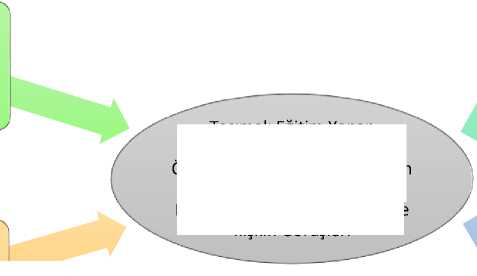
Taşımalı Eğitim Yapan Okullardaki Ortaokul Öğrencilerinin Taşımalı Eğitimin Günlük Yaşamla İlgili Beceri ve Değer Kazandırmadaki Etkisine
İlişkin Görüşleri
Kişisel ihtiyaçları karşılama
Ö4, Ö6
İnsan haklarına saygı Ö1,Ö4
Şekil 5. Taşımalı eğitim yapan okullardaki ortaokul öğrencilerinin taşımalı eğitimin günlük yaşamla ilgili beceri ve değer kazandırmadaki etkisine ilişkin görüşleri ile ilgili bulgular
Şekil 5’te görüldüğü gibi taşımalı eğitim yapan okullardaki ortaokul öğrencilerinin taşımalı eğitimin günlük yaşamla ilgili beceri ve değer kazandırmadaki etkisine ilişkin görüşleri teması ile ilgili dört kod oluşturulmuştur. Katılımcıların ifadelerinden ulaşılan kodlar, ait oldukları kullanıcılarla özdeşleştirilerek gösterilmiştir. Şekil 5’te yer alan ifadeler doğrultusunda taşımalı eğitim alan katılımcıların taşımalı eğitimi insan haklarına saygı duyma, sosyalleşme, toplumsal kuralları öğrenme ve kişisel ihtiyaçları karşılama gibi beceri ve değerleri kazandırma olarak gördükleri belirlenmiştir. Katılımcıların taşımalı eğitimin beceri ve değer kazandırmasına ilişkin görüşleri, doğrudan katılımcıların ifadeleriyle desteklenerek yorumlanmıştır.
Araştırmada katılımcılar taşımalı eğitimin insan haklarına saygı duymayı öğrettiğine dair ifadeler kullanmıştır. Örneğin Ö1 taşımalı eğitimin beceri ve değer kazandırması ile ilgili olarak, “ Taşmalı eğitim bana diğer arkadaşlarımın haklarına saygı duymayı öğretiyor, örneğin sıra ile servise bindiğimizden arkadaşlarımın sırasını almadan servise biniyorum .’’ demiştir. Benzer olarak Ö4, ‘’Servis içerisinde herkesin koltuk numarası bulunduğundan hiç kimse başkasının koltuğuna oturmuyor.’ ifadesini kullanmıştır.
Katılımcılardan Ö2, “ Taşımalı eğitimle farklı köylerden öğrencilerle aynı serviste seyahat ettiğimiz için farklı arkadaşlar tanıma fırsatı buluyorum bu da benim sosyalleşmemi sağlıyor.” ş eklinde ifade kullanmıştır. Ö4 ise “ Taşımalı eğitim aldığım okul büyük ve kalabalık olduğu için arkadaş çevrem genişledi bu durumda sosyal olarak gelişimime katkı sunmuştur.” ifadesine yer vermiştir. Bu doğrultuda taşımalı eğitimin sosyalleşmeye etkisi konusunda katılımcıların benzer bir algıya sahip oldukları anlaşılmaktadır.
Bazı katılımcılar taşımalı eğitimin kendilerine toplumsal kuralları öğrenme konusunda beceri ve değer kazandırdığını belirtmişlerdir. Örneğin Ö3 “ Taşımalı eğitimde servis kullanıyoruz ve bu kullandığımız servisin temizliğine özen gösteriyoruz” ifadesini kullanırken, Ö5 ise ‘ ’Arkadaşlarımızla birbirimize saygı duyarak birbirimizin haklarına riayet ediyoruz. ’’ ifadesini kullanmıştır.
Araştırmada yer alan katılımcılardan bir kısmı ise taşımalı eğitime yönelik görüşlerini belirtirken taşımalı eğitimin kişisel ihtiyaçları karşılama konusunda bireysel hareket edebilmeyi sağladığına dair ifadeler kullanmıştır. Örneğin, Ö4, görüşünü “Ailemden uzak başka bir köye taşımalı olarak gittiğimden ihtiyaçlarımı bireysel olarak karşılamayı öğreniyorum.” ifadesini kullanmıştır. Ö3 ise Ö4’ü destekler nitelikte, “ Yalnız başıma hareket etmeyi ve bireysel ihtiyaçlarımı kendi kendime karşılama becerilerini kazanıyorum .” ifadelerini kullanmıştır. Kullanılan ifadelere bakıldığında taşımalı eğitimin katılımcılarda olumlu bir bakış açısı geliştirdiği, birçok beceri ve değeri aynı anda kazandırdığı anlaşılmaktadır.
SONUÇ, TARTIŞMA ve ÖNERİLER
Karma araştırma yönteminden sıralı açımlayıcı desen kullanılarak yapılan bu çalışmada taşımalı eğitim yapan okullardaki ortaokul öğrencilerinin sosyal bilgiler dersine yönelik tutumları incelenmiştir.
Araştırmada taşımalı eğitim yapan ortaokullardaki öğrencilerin sosyal bilgiler dersine yönelik tutumları, sınıf değişkeni kapsamında incelenmiştir. Ayrıca taşımalı eğitim yapan ortaokullardaki öğrencilerin taşımalı eğitimin sosyalleşmeye ve günlük yaşama etkisine yönelik görüşleri de irdelenmiştir. Araştırma sonunda taşımalı eğitim yapan okullardaki öğrencilerin sosyal bilgiler dersine yönelik tutumlarına ait aldıkları puanların sınıf değişkenine göre düzeyi anlamlı farklılık göstermediği belirlenmiştir. Şimşek ve Büyükkıdık (2017), yaptıkları çalışma sonunda taşımalı eğitim yapan okullardaki öğrencilerin büyük bir bölümünün taşımalı eğitim uygulamasına yönelik tutumlarının olumlu olduğunu saptamışlardır. Araştırmada katılımcıların taşımalı eğitimi; sosyalleşme, fırsat eşitliği, zamandan tasarruf ve toplumsal kurallara uyum sağlama konusunda katkı sağlayan bir yapı olduğunu düşündükleri belirlenmiştir. Çetinkaya ve Üzümcü (2021), taşımalı eğitim uygulamasının eğitim-öğretimde öğrenciler arasında fırsat eşitliğini sağlayarak, öğrencilerin merkezdeki okulların fiziki ve sosyal imkânlarından faydalanmasını sağladığı sonucuna ulaşmıştır.
Taşımalı eğitimin taşımanın yapıldığı merkezi okullarda bulunan öğrenciler açısından da önemli olduğu, çalışmaların uygulandığı okullardaki öğrencilerin akademik, sosyal ve sportif etkinliklerde başarılı oldukları belirlenmiştir. Bu olumlu etkilerinin yanında, taşımalı eğitimin birtakım dezavantajları olduğu da belirlenmiştir. Katılımcıların erken uyandıklarından dolayı uykusuz kaldıkları ayrıca kahvaltı yapmadan okula gittikleri bunun da ders motivasyonunu olumsuz etkilediği belirlenmiştir. Arı (2000) yaptığı çalışmada, taşımalı eğitim yapan okullardaki öğrencilere verilen ödevlerin yapılmasında yeterli sürenin bulunmaması, yorgunluk ve motivasyon eksikliği gibi sebeplerden dolayı öğrencilerin sorunlar yaşadıklarını belirtmiştir. Kaya (2006), yaptığı çalışmada öğrencilerin, sabah erken saatte servise yetişmek için durakta beklediklerini ve her sabah erkenden yola çıktıklarından dolayı kahvaltılarını düzenli bir şekilde yapmadıklarını derse aç olarak girdiklerini ve bunun bir olumsuzluk olduğunu saptamıştır. Yalçın (2006), yaptığı çalışmanın sonunda okullarda taşımalı eğitimle gelen öğrencilerle yerleşik öğrenciler arasında topluma uyum ve sosyalleşme bakımından belirgin farklar olduğu belirlenmiştir. Şan (2012) yaptığı çalışmada erkek öğrencilerin taşımalı eğitim uygulamasına yönelik düşüncelerinin kız öğrencilere oranla daha olumsuz olduğunu saptamış ve öğrencilerin taşınma mesafesi arttıkça, taşımalı eğitime yönelik tutumlarının olumsuzlaştığını belirlemiştir. Şan (2012) ayrıca ilköğretim son sınıf öğrencilerinin olumsuz görüşlerinin diğer sınıflardaki öğrencilerden fazla olduğunu ortaya koymuştur.
Araştırmada ulaşılan sonuçlara bağlı olarak; taşımalı eğitimin yapıldığı merkezi okullara taşıma mesafelerinin uzak olmaması, taşımalı eğitim yapılan okulların ders başlangıç saatlerinin öğrencilerin seyahat sürelerinin göz önüne alınarak belirlenmesi, öğrencilerin sağlık durumlarını tehlikeye sokacak oranda erken uyanmasını engelleyecek önlemler alınması ve seyahat servislerinin öğrencileri zamanında alıp zamanında bırakması gibi önlemler alınabilir. Ayrıca öğrencilerin taşımalı olarak geldikleri okulun olanakları iyileştirilerek taşımalı öğrencilerin bu olanaklardan diğer öğrencilerle aynı oranda yararlanması sağlanabilir.
Etik Metni
Bu makalede dergi yazım kurallarına, yayın ilkelerine, araştırma ve yayın etiği kurallarına, dergi etik kurallarına uyulmuştur. Makale ile ilgili doğabilecek her türlü ihlallerde sorumluluk yazara aittir.
Yazar Katkı Oranı
Yazarın bu makaleye katkı oranı, %100’dür.
Çıkar Çatışması Beyanı
Makalem ile ilgili herhangi bir kurum, kuruluş, kişi ile mali çıkar çatışması yoktur.
Etik Onay
Bu araştırma Atatürk Üniversitesi, Eğtim Bilimleri Birim Etik Kurulu’nun 23.12.2022 tarih ve 09 nolu etik kurul kararı kapsamında gerçekleştirilmiştir.
KAYNAKÇA
Arı, A. (2000). Normal, taşımalı ve yatılı ilköğretim okullarının karşılaştırılması (Yüksek lisans tezi). Afyon Kocatepe Üniversitesi, Sosyal Bilimler Enstitüsü, Afyon.
Başaran, E. İ. (1982). Örgütsel davranışın yönetimi. Ankara: Ankara Üniversitesi Eğitim Fakültesi Yayınları.
Bayram, H. (2021). 6. sınıf sosyal bilgiler dersinde probleme dayalı öğrenmenin öğrencilerin girişimcilik düzeyine etkisi. Anadolu Üniversitesi, Eğitim Bilimleri Enstitüsü, Eskişehir.
Büyüköztürk, Ş., Çakmak, E. K., Akgün, Ö. E., Karadeniz, Ş., & Demirel, F. (2020). Eğitimde bilimsel araştırma yöntemleri. Pegem Akademi Yayıncılık.
Creswell, J. W., & Clark, V. L. P. (2017). Designing and conducting mixed methods research . London: Sage Publications.
Güleryüz, H. (2002). Taşımalı eğitim. Ankara: Öğretmen Dünyası.
Kaya, N. Ç. (2006). Taşımalı eğitim programındaki ilköğretim öğrencilerinin durumları: Silopi köyleri örneğinde bir sosyal değerlendirme. Ankara Üniversitesi Dil ve Tarih-Coğrafya Fakültesi Dergisi, 46(2), 105-116. Retrieved from
Küçüksüleymanoğlu, R. (2006). Taşımalı eğitim (Bursa ili örneği). İlköğretim Online, 5(2), 16-24. Retrieved from
Özdamar, K. (2002). Paket programlarla istatistiksel veri analizi-1. Eskişehir: Kaan Kitabevi.
Recepoğlu, E. (2009). Taşımalı ilköğretim uygulaması ve karşılaşılan sorunlar: Kastamonu ili örneği. Kastamonu Üniversitesi Kastamonu Eğitim Dergisi, 17(2), 427-444. Retrieved from
Şan, A. (2012). İlköğretimde taşımalı eğitim öğrencilerinin sorunları. (Yüksek Lisans Tezi). Dokuz Eylül Üniversitesi, Eğitim Bilimleri Enstitüsü, İzmir.
Şimşek, A., & Büyükkıdık, S. (2017). Öğretmen ve öğrenci görüşleriyle taşımalı eğitim uygulaması değerlendirilmesi: Bozova ilçesi örneği. İlköğretim Online , 16 (1), 15-34.
Tabachnick, B. G., & Fidell, L. S. (2019). Using multivariate statistics . London: Pearson.
Yalçın, K. Y. (2006). Yerleşik ve taşımalı eğitim yapan ilköğretim okullarındaki öğrencilerin toplumsallaşmasında beden eğitimi ve sporun önemi Kütahya ili örneği. (Yüksek Lisans Tezi). Dumlupınar Üniversitesi, Sosyal Bilimler Enstitüsü, Kütahya.
örneği. Elektronik Sosyal Bilimler Dergisi, 6(19), 197-213. Retrieved from
Yıldırım, A., & Şimşek, H. (2016). Sosyal bilimlerde nitel araştırma yöntemleri. Ankara: Seçkin Yayıncılık.
Yurdabakan, İ., & Tektaş, M. (2013). Taşımalı ilköğretim öğrencilerinin taşımalı eğitime ilişkin görüşleri. Dokuz Eylül Üniversitesi Sosyal Bilimler Enstitüsü Dergisi , 15 (3), 511-527.
Retrieved from
EXTENDED ABSTRACT
Today, science and technology are constantly developing and renewing. In this rapid change process, countries need to keep up with the developments in science and technology to compete with each other. Due to this necessity, the need for a qualified workforce is increasing day by day. As a matter of fact, a society can keep up with the requirements of age only with its skilled workforce. It can be said that the most crucial variable in providing a qualified workforce is education. It is known that individuals who receive quality education play an essential role in the development of society (Şan, 2012). On the other hand, due to the lack of educational institutions in some settlements, individuals can receive education by going to a different territory with an educational institution, in other words, by transported education. Transported education application; It is defined as the practice carried out by daily transportation of children at the age of compulsory education in low-populated and dispersed settlements to central schools (Yeşilyurt and Salim, 2007). Turkey started to implement Transported education application in various provinces in 1989-1990, and with the success of the application, many pilot provinces (Antalya, Çankırı, Konya, Van, Balıkesir, Çanakkale, Eskişehir, Kırklareli and Kocaeli) since the 1990-1991 academic years. ) have been included in the application. Later, the transported education application was expanded in the 1991-1992 academic years and continued in 960 village schools in 29 provinces and 78 districts of these provinces. As a result, a total of 16538 students were transferred to central schools. In the next academic year, the number of students exploiding transported education increased and reached 53676 (Büyükkaragöz and Şahin, 1995; Yurdabakan and Tektaş, 2012).
It is undeniable that transported education affects students' socialization process in the context of being a variable that directly affects the daily life of students. Therefore, all dimensions of the socialization process of primary and secondary school students constitute the content of the social studies course (Deveci and Bayram, 2022). As a matter of fact, social studies is a course that aims to provide students with knowledge, skills, and values for social life, and at the same time, the socialization of students is realized through school programs (Bayram, 2022). In this context, it can be said that the dimension of transported education related to the socialization of students is also included in the scope of social studies courses.
Within the scope of the fact that transported education is a part of the students’ social life and that all aspects of the students’ social life are included in the content of the social studies course, this study aimed to examine how transported education shapes the students’ attitudes toward the social studies course.
In the literature scanning conducted in line with the purpose of the research are many studies on transported education (Işık and Maya, 2003; Kaya, 2006; Küçüksüleymanoğlu, 2006; Yeşilyurt and Orak, 2007; Kaya and Aksu Bilgin, 2009; Recepoğlu, 2009; Bilek and Kale, 2012). ; Yurdabakan and Tektaş, 2013; Cinoğlu et al., 2014). However, no study searched the students’ attitudes in transported education schools toward the social studies course. The point in question was seen as a deficiency in terms of the literature, and it was decided to conduct this research from this point of view. It is predicted that the study will contribute to the relevant literature in terms of revealing how the transported education affect students’ attitudes towards the social studies course.
This study aims to examine students' attitudes in secondary schools that provide transported education toward the social studies course. For this purpose, answers were sought to the following questions; Students in secondary schools providing transported education;
-
• Do their attitudes toward the social studies course differ according to the grade level?
-
• What are their views on transported education?
-
• What are their views on the effect of transported education on their attitudes toward socialization and its impact on daily life?
A mixed research method was used in the research. The mixed research method is related to studies in which statistical and qualitative data are collected and analyzed (Creswell, 2017). The reason for using the mixed research method is that both statistical and qualitative data were collected and analyzed during the research process.
In the study, a sequential explanatory design from the mixed research method was used. A sequential exploratory design is used in studies where statistical data are collected and analyzed first. Then qualitative data are collected and used for in-depth analysis of statistical results (Creswell, 2017). The reason for using the sequential exploratory design in this study is to collect statistical data in the first stage of the research and then to collect qualitative data. In the research, a planned and gradual path was followed, starting from the data collection process to reporting. The research compliance matrix (Kaya and Bayram, 2021) was used to control the fit between the variables of the research process.
The participant group of the research was formed in two stages. The first step is determining the group in which the statistical data are collected. An appropriate sampling method was used while determining the participant group from which statistical data were collected. Convenient sampling is a sampling method that is easily accessible and based on working with volunteer participants (Büyüköztürk et al., 2020). The group in which the statistical data of the study was collected included 198 secondary school students exploiting transported education. The participant group, qualitative data of the research was collected, was formed with ten volunteers from among the students from whom the statistical data were collected.
The data collection process of the research was carried out in two stages. Statistical data were collected in the first stage, and qualitative data were collected in the second stage. The Social Studies Attitude Scale developed by Çetinkaya and Uçar (2019) was used to collect the statistical data for the study. Qualitative data of the study were collected with a semi-structured interview form created by the researcher. The form was prepared to get the opinions of the students in the secondary schools that provide transported education on how transported education affects their attitudes towards the social studies course. During the form preparation, experts' opinions in the qualitative research field were consulted. The interviews with the students were carried out face-to-face with the permission of the parents and the institution. In this context, the questions in the interview form were asked of the students, and the answers were noted. The notes taken were edited later and prepared for analysis.
The skewness and kurtosis values of the data were checked to decide on the actions to be taken in the analysis of the statistical data of the research. The Kolmogorov-Smirnov Test was applied to determine whether the data were normally distributed. As a result of the tests performed, the skewness and kurtosis values of the statistical data were between -2.5 and 2.5, and the Kolmogorov-Smirnov Test result was less than .05 (Tabachnik and Fidel, 2019). Due to the results obtained, it was determined that the statistical data did not show a normal distribution. In this context, it was decided to use Kruskal Wallis, one of the non-parametric tests, to analyze the data.
Content analysis was used to analyze the qualitative data of the study. The content analysis includes the classification of qualitative data within the scope of unspecified themes (Yıldırım and Şimşek, 2016). The reason why content analysis was used in the analysis of the qualitative data of this research is that the themes were created during the analysis, and an inductive path was followed.
In the research, the students' attitudes in the secondary schools that provide transported education towards the social studies course were examined within the scope of the class variable. In addition, the views of students in secondary schools that provide transported education on the effect of transported education on socialization and daily life were also examined. At the end of the research, it was determined that the scores of the students in the schools providing transported education regarding their attitudes towards the social studies course did not differ significantly according to the class variable. Şimşek and Büyükkıdık (2017), at the end of their study, determined that the attitudes of most of the students in the schools that provide transported education are positive. It is stated that the participants in the research think transported education is a structure that contributes to socialization, equality of opportunity, saving time, and adapting to social rules. Çetinkaya and Üzümcü (2021) concluded that the transported education application provides equal opportunities among students in education and enables students to benefit from the physical and social opportunities of the schools in the center.
It has been determined that transported education is also crucial for the students in the central schools where transportation is carried out and that the students in the schools where the studies are applied are successful in academic, social, and sports activities. Besides these positive effects, it has been determined that transported education has some disadvantages, too. It was determined that the participants were sleep-deprived because they woke up early and went to school without breakfast, which negatively affected their lesson motivation. In his study, Arı (2000) stated that students experience problems due to insufficient time to complete the assignments given to the students in the schools providing transported education, fatigue, and lack of motivation. Kaya (2006), in his study, determined that students wait at the bus stop early in the morning to catch the bus. Because they set off early every morning, they do not have breakfast regularly, so they enter the lesson hungry, which is negativeness. Yalçın (2006), at the end of his study, determined that there are significant differences between students who come with transported education at schools and settled students in terms of socialization and adaptation to society. In his study, Şan (2012) determined that male students' thoughts on transported education application were more negative than female students and determined that as the transportation distance of students increased, their attitudes towards transported education became more negative. Şan (2012) also revealed that primary school senior students' negative opinions are higher than those in other classes.
Depending on the results of the research, measures can be taken. For example, transport distances should be close to the schools in the center. Furthermore, starting hours of the courses in schools transported education provided should be arranged according to the students' travel times. Students should be prevented from waking up too early not to endanger their health, and services should pick up and drop off students on time. In addition, the facilities of the school where the students come by transport can be improved, and it can be ensured that the transported students benefit from these opportunities at the same rate as other students.
