
The Relationships among Knowledge, Beliefs, and Instructional Practices of Pre-Service and In-Service Mathematics Teachers: A Systematic Review
Journal: International Journal of Cognitive Research in Science, Engineering and Education @ijcrsee
Article in issue: 2 vol.14, 2026.
Free access
Various factors, including knowledge, beliefs, and instructional practices, influence the quality of pre-service and in-service mathematics teachers’ instruction. The relationships among these factors have been investigated in many previous studies. This systematic review investigated the relationships among knowledge, beliefs, and instructional practices of pre-service and in-service mathematics teachers by analyzing included studies from 2015 to 2023. The study used systematic review methodology and the Preferred Reporting Items for Systematic Reviews and Meta-Analyses (PRISMA) guidelines, along with descriptive and qualitative statistical analyses. A collection of 38 relevant studies, selected from databases such as Google Scholar, Mendeley, ScienceDirect, Scopus, and Taylor & Francis Online, was analyzed to answer the research questions after a screening and eligibility assessment using inclusion and exclusion criteria. The research results on the relationships among knowledge, beliefs, and instructional practices of pre-service and in-service mathematics teachers reported in the included studies are relatively diverse. In particular, most research shows that teachers’ knowledge affects their beliefs and the quality of teaching in their instructional practices. In contrast, their instructional practices promote the development of their knowledge, reflect, and enhance their beliefs. However, the proportion of studies finding the relationships among these factors to be insignificant remains relatively low. Based on these findings, the study makes recommendations to stakeholders for in-service mathematics teachers’ professional development and training, as well as pre-service mathematics teacher training programs. In addition, the study highlights limitations and suggests new research directions for the future.
Short address: https://sciup.org/170213601
IDS: 170213601 | UDC: 37.091.12:51(597)”2015/2023” | DOI: 10.23947/2334-8496-2026-14-2-211-229
Text of the scientific article The Relationships among Knowledge, Beliefs, and Instructional Practices of Pre-Service and In-Service Mathematics Teachers: A Systematic Review
© 2026 by the authors. This article is an open access article distributed under the terms and conditions of the Creative Commons Attribution (CC BY) license .
ily to support students in becoming self-aware and strategic learners ( Hasim et al., 2022 ).
Research on the influence of teachers’ beliefs on instructional practices is considered an important aspect of mathematics education. In particular, mathematics teachers’ beliefs include two main aspects: beliefs about the nature of mathematics and beliefs about teaching and learning mathematics ( Balanlay, 2021 ). According to Nguyen and Tran’s (2023) study, mathematics teachers held sophisticated beliefs about teaching and learning, a holistic view of knowledge, and mathematical proficiency. Therefore, many previous studies suggest that belief and knowledge are two factors that affect teachers’ instructional practices in the classroom ( Muhtarom et al., 2019 ; Purnomo et al., 2016 ). At the same time, many studies continue to show a relatively weak relationship among mathematics teachers’ knowledge, beliefs, and instructional practices ( Auslander et al., 2023 ; Moh’d et al., 2021 ). Therefore, it can be observed that previous studies have yielded both consistent and inconsistent conclusions regarding the relationships among the elements of knowledge, beliefs, and instructional practices of mathematics teachers ( Kaspersen et al., 2017 ).
Several systematic reviews have previously examined the relationships among knowledge elements, beliefs, and instructional practices of mathematics teachers. Depaepe et al. (2020) surveyed studies on the relationship between teachers’ professional knowledge and the quality of their instructional practices in mathematics education. First, the study provided an overview of approaches for defining mathematical expertise. Second, the relationship between teachers’ professional knowledge and instructional practices was highlighted, with a focus on the indirect roles of teachers’ professional beliefs and their situation-specific knowledge and skills. Third, the study described the teacher competency model as an integrated model of knowledge, beliefs, situation-specific skills, and classroom behavior. The study discussed current research on the relationship between teaching quality and professional teacher knowledge. Another study by Hasim et al. (2022) on STEM (Science – Technology – Engineering – Mathematics) education and sustainable development identified sustainable development activities in STEM education and their impact on teacher knowledge and teaching methods. Peer-reviewed studies published between 2017 and 2021 were selected from the Scopus, Web of Science, and EBSCOhost databases. Research shows that sustainability activities in STEM had an indirect but strong influence on teachers’ knowledge and instructional practices. In particular, Minarni et al. (2018) conducted a narrative review to discuss the relationships between teachers’ teaching beliefs and practices, their instructional practices and student learning outcomes, and their beliefs and instructional practices and learning outcomes. Research results indicate that (1) mathematics teachers’ beliefs guide them in determining the instructional practices they consider appropriate, (2) student-centered learning approaches improve student learning outcomes, and (3) teachers’ beliefs and instructional practices, along with a student-centered approach, can motivate students to build mathematical knowledge and improve math learning outcomes actively. The difference between the current study and the previous studies is that this study aims to compile information regarding various studies covering the relationships among knowledge and beliefs, beliefs and instructional practices, and knowledge and instructional practices among pre-service and in-service mathematics teachers by using a systematic review guided by the PRISMA in educational and social science journals published worldwide from 2015 to 2023. Additionally, this study discusses various research methodologies used in selected studies, enabling researchers in the field of mathematics education to determine appropriate approaches for their future studies.
The relationships among knowledge, beliefs, and instructional practices are a topic of considerable interest, and the research literature is divided on the degree to which these factors are correlated (Kaspersen et al., 2017). Previous studies have yielded few results on the influence of beliefs on mathematics teachers’ instructional practices. Fennema et al. (1996; as cited in Lui and Bonner, 2016) did not find the expected relationship between beliefs and changes in mathematics instructional practices. As cited in Thompson (1992; as cited in Lui and Bonner, 2016), several qualitative studies have shown a relatively weak relationship between beliefs and instructional practices. The previous results of insignificant associations between beliefs and practices may be due to many external factors influencing teacher instructional practices, such as school and classroom habits and resources. Second, further research is needed on the significance of beliefs and knowledge in instructional planning. The study by Cady et al. (2006; as cited in Lui and Bonner, 2016) suggested that content knowledge, pedagogical knowledge, and professional experience may mediate the relationship between teachers’ teaching beliefs and practices. This study aims to explore the complex, intertwined relationships among these factors, as previous studies have concluded. Thus, a systematic review is required to provide an overview of recent research on the relationships among pre-service and in-service mathematics teachers’ knowledge, beliefs, and instructional practices. The findings of this study can serve as a reference for designing mathematics teacher education and professional development programs. Additionally, by identifying research gaps, the paper opens the door to future studies that will delve deeper into specific aspects of these relationships.
Knowledge describes the cognitive aspects of teachers’ competencies ( Dunekacke et al., 2016 ). The concepts of teachers’ knowledge encompass subject knowledge, curriculum, pedagogy, global issues, and other topics ( Carney et al., 2016 ; Lo, 2023 ). Mathematics teachers’ knowledge can be defined as a three-dimensional structure that includes mathematical content knowledge, mathematical pedagogical content knowledge, and general pedagogical knowledge ( Abdul Rahman et al., 2019 ; Dunekacke et al., 2016 ; Tinh et al., 2021 ; Yang et al., 2020 ). In the “in-the-head-of-teacher” context, teachers’ content and pedagogical content knowledge can be distributed and situated ( Kaiser et al., 2017 ). Content knowledge is knowledge acquired from books during the learning process and includes mathematical definitions, concepts, algorithms, and procedural knowledge ( Blömeke and Kaiser, 2014 ; Dong et al., 2020 ), belonging to different branches of mathematics such as algebra, geometry, numbers, and data ( Blömeke and Delaney, 2012 ). Meanwhile, pedagogical content knowledge is subject-specific knowledge for teaching and helps students absorb knowledge (Shulman, 1986; as cited in Yang et al., 2020 ). Pedagogical content knowledge is often divided into two main components, including knowledge about how to teach concepts (how to present concepts and knowledge about problems) and knowledge about students’ thinking (how to present concepts and knowledge about problems) and knowledge about students’ thinking (students’ perceptions and confusion) ( Scheiner et al., 2019 ; Copur-Gencturk and Li, 2023 ; Yang et al., 2020 ), allowing teachers to predict students’ options and confusions when solving problems, explain students’ ideas, and predict students’ responses to specific tasks ( Carney et al., 2016 ). Many empirical studies have confirmed the importance of pedagogical content knowledge for the quality of teacher education and student learning outcomes ( Copur-Gencturk and Li, 2023 ).
Beliefs are the foundation of thought and behavior, acting as “cognitive filters” through which new knowledge and experiences are interpreted and acted upon (Swan, 2006; as cited in Calleja, 2022 ; Lin, 2021 ). Therefore, belief helps predict individual behavior ( Calleja, 2022 ; Dunekacke et al., 2016 ). In the context of education, teachers’ beliefs are described as a combination of personal perspectives, deeply held values, judgments, and implicit assumptions about mathematics, curriculum, education, students, teaching, and learning, which were shaped by their knowledge, experience, and instructional practices ( Calleja, 2022 ; Felbrich et al., 2012 ; Lamichhane, 2017 ).
Many studies have classified teachers’ beliefs to explain better concepts in teaching mathematics, classroom roles, and teachers’ choice of teaching activities ( Calleja, 2022 ; Dunekacke et al., 2016 ). Askew et al. (1997) proposed three types of teachers’ beliefs, called transmission, discovery, and connec-tionist, including beliefs about the nature of mathematics, beliefs about teaching mathematics, and how students learn mathematics (as cited in Calleja, 2022 ; Aljaberi and Gheith, 2018 ; Balanlay, 2021 ; Carney et al., 2016 ). In particular, beliefs about the nature of mathematics influence teachers’ views on teaching and learning mathematics ( Guler and Celik, 2023 ; Nguyen and Tran, 2023 ). Teachers’ beliefs about the nature of mathematics concern cognition, concepts, meanings, rules, and mental images related to mathematics, while beliefs about teaching and learning mathematics are also important. Teachers’ opinions on how mathematics is taught and how students learn mathematics were surveyed by Lamichhane (2017) and Yang et al. (2020) . Specifically, a transmission belief views mathematics as a collection of fixed, specific, irrefutable knowledge based on deductive logic, to be transferred to students ( Carney et al., 2016 ). A connectionist belief views mathematical content as a connected set of topics and concepts and focuses on students’ problem-solving methods and strategies (Askew et al., 1997; as cited in Carney et al., 2016 ). With this in mind, teachers are expected to facilitate learning activities and discussions by providing challenges to clarify mathematical concepts and relationships ( Carney et al., 2016 ). A discovery belief views mathematics as a unified synthesis of knowledge. This method involves the teacher acting as a facilitator, establishing a classroom setting where students can investigate ideas and approaches to problem-solving ( Carney et al., 2016 ). In addition, teachers’ beliefs can also be considered in terms of efficacy beliefs, that is, teachers’ beliefs and awareness of their ability to teach students with different requirements and standards to achieve learning outcomes. Students are expected to participate and achieve outcomes ( Ekstam et al., 2017 ). Research by Beswick (2012) shows that teachers with more than one belief type tend to teach consistently with a different belief type in each specific context.
Instructional practices occur in classroom settings, creating conditions for students to learn ( Baier et al., 2019 ; Depaepe and König, 2018 ; Makamure and Jita, 2019 ; Wadanambi and Leung, 2019 ). Many researchers believe instructional practices can be considered from teacher-centered and student-centered approaches ( Hogan et al., 2013 ). In particular, the student-centered approach has been adopted in many countries in recent years due to its ability to respond to educational reforms ( Cai and Howson, 2013 ). Specifically, this teaching approach allows students to actively participate in activities to solve real-world, meaningful mathematical problems, creating conditions for them to predict, verify, collect information, analyze data, communicate, and collaborate ( Yang et al., 2020 ).
Teachers’ instructional practices can be described in terms of student learning support, classroom management, and cognitive activation ( Baier et al., 2019 ). Learning support includes teachers’ behaviors that create a friendly, personally supportive learning environment that motivates and encourages students to participate in learning and provide feedback ( Baumert et al., 2010 ). Classroom management is considered adequate when teachers ensure continuous student learning and limit disruptions and conflicts in the classroom ( Korpershoek et al., 2016 ). Additionally, teachers demonstrate instructional practices with high cognitive activation ability by providing students with cognitively challenging tasks and creating. Thus, instructional practices require both in-service and pre-service teachers to have knowledge, responsibility, attitudes, skills, and experience, thereby contributing to the development of teachers’ knowledge in depth and breadth.
The relationships between knowledge and beliefs, knowledge and instructional practices, and teachers’ beliefs and practices have all been the subject of numerous prior studies. The results of studies on the relationships between these factors are relatively diverse. Teachers’ knowledge and beliefs have a close two-way relationship. Indeed, previous studies found that teachers with a strong background in mathematics hold strong beliefs about the nature of mathematics and mathematics teaching and learning, and vice versa ( Abdul Rahman et al., 2018 ; Blömeke and Kaiser, 2014 ). In contrast, as the nature and teaching and learning of mathematics become more complex, teachers’ content and pedagogical knowledge increase, with a greater demand for higher quality ( Pagiling and Taufik, 2022 ).
Regarding the relationship between teachers’ knowledge and instructional practices, many studies have shown the importance of knowledge for teacher teaching quality, contributing to shaping their instructional practices, especially for aspects of classroom management and student support ( Baier et al., 2019 ; Carney et al., 2016 ; Dong et al., 2020 ; Ernest, 1989; as cited in Yang et al., 2020 ; Lui and Bonner, 2016 ). Specifically, mathematical content knowledge is directly related to teachers’ instructional practices, whereas other types of knowledge, such as pedagogical content knowledge and general pedagogical knowledge, are closely related to them (Ernest, 1989; as cited in Yang et al., 2020 ).
The gap between theory and practice in education is a challenge educators must address to promote mathematics teaching and learning. Belief is considered one of the factors contributing to narrowing or widening that gap. Therefore, investigating the relationship between beliefs and mathematics instructional practices is necessary to provide an overview of the training and development of mathematics teachers ( Purnomo et al., 2016 ). Regarding this relationship, many studies have confirmed that teachers’ beliefs play a decisive role in their instructional practices and vice versa, for changes in their instructional practices can lead to a change in teachers’ beliefs ( Beswick, 2005 ; as cited in Calleja, 2022 ; Aljaberi and Gheith, 2018 ; Yang et al., 2023 ). According to Carney et al. (2016) and Dong et al. (2020) , teachers’ beliefs strongly influence how they apply new teaching methods and the depth and duration of their application. Specifically, teachers’ beliefs, including beliefs about the nature of mathematics and beliefs about mathematics teaching and learning, play the role of contextual filters through which teachers categorize instructional practices ( Aljaberi and Gheith, 2018 ; Lui and Bonner, 2016 ), interpret their experiences, shape their interactions with students, and conduct instructional activities in the classroom ( Aljaberi and Gheith, 2018 ; Yang et al., 2023 ; Wadanambi and Leung, 2019 ). However, teachers’ beliefs about efficacy are an important basis for predicting teaching quality, level of cognitive activation, and teacher learning support ( Ekstam et al., 2017 ). In particular, teachers with high levels of efficacy beliefs often tend to teach student-centered, make efforts to apply new teaching methods, and support students’ learning at an individual level ( Holzberger et al., 2013 ; Saadati et al., 2019 ), as well as flexibility in classroom management and lesson design ( Temiz and Topeu, 2013 ), while teachers with conventional beliefs tend to teach teacher-centered ( Saadati et al., 2019 ). However, some studies still suggest no relationship between teachers’ beliefs and instructional practices (Wilkins, 2008; as cited in Guler and Celik, 2023 ).
This systematic review investigates the relationships among three core constructs in mathemat- ics education: knowledge, beliefs, and instructional practices among pre-service teachers and in-service teachers. The study synthesizes evidence from relevant studies published from 2015 to 2023. The following research questions defined the study’s focus.
-
1. What are the essential characteristics of the included studies, such as year of publication, country, and research subjects (pre-service or in-service mathematics teachers)?
-
2. What research methods are used in the included studies?
-
3. What is the relationship between teachers’ knowledge and beliefs?
-
4. What is the relationship between teachers’ knowledge and instructional practices?
-
5. What is the relationship between teachers’ beliefs and instructional practices?
Materials and methods
Design
To answer the above research questions, several different research methods can be used, such as the research of Nguyen et al. (2020) , which uses bibliographic and content analysis methods; research by Do and Phan et al. (2021) , Phan et al. (2022) , and Pham et al. (2022) using the bibliometric analysis method. However, a systematic review effectively synthesizes and summarizes research results on a specific issue. It is a thorough, transparent process for identifying, evaluating, and synthesizing research evidence. It helps improve the accuracy of conclusions by considering consistency. It is summarized in the results of many studies on the same topic ( Juhl and Lund, 2018 ), conducted methodically or scientifically, using a pre-designed protocol to collect and synthesize data with the lowest possible level of bias ( Hanley and Cutts, 2013 ).
This systematic review follows the Preferred Reporting Items for Systematic Reviews and MetaAnalyses (PRISMA) guidelines (Moher et al., 2010) to provide an overview of studies on the relationships among knowledge, beliefs, and instructional practices among pre-service and in-service mathematics teachers. The following diagram shows the study protocol (see Figure 1).
/------------\
Inclusion criteria and exclusion criteria for selecting studies
|
* |
Databases for selecting studies |
Search terms for retrieving relevant studies |
♦ |
z \ Methods for study selection, screening, data extraction i and analysis |
Figure 1. Protocol for selecting studies
Search methods
The databases were searched until the end of January 2024 to select studies that examined the relationships among knowledge, beliefs, and instructional practices of pre-service and in-service mathematics teachers. Various electronic databases were used, including Google Scholar, Mendeley, Scien-ceDirect, Scopus, and Taylor and Francis Online. These popular databases were available online and provided much relevant research on mathematics education. In particular, to limit the number of included studies and ensure the selection of high-quality studies, we selected studies by checking the Scopus database. Systematic review studies ( Andersen et al., 2022 ; Hasim et al., 2022 ) also had a similar database approach. In addition, to limit bias, the authors independently searched the above databases using predetermined search strings and criteria and performed title screening. , abstract, and full texts based on those criteria to select for research. After working independently, the authors met to discuss the identified studies and agreed on the included studies.
The following search strings were used to find relevant studies on the research topic, with the syntax adapted for each database: (mathematics teachers) AND (knowledge), (mathematics teachers) AND (beliefs), (mathematics teachers) AND (instructional practices), (mathematics teachers) AND (practices), (mathematics teachers) AND (relationship) AND (knowledge), (beliefs), AND (practices). The search was limited to peer-reviewed studies published in English from 2015 to 2023.
Inclusion criteria
Selected studies were studies that met the following criteria: (1) experimental studies or survey studies, (2) research subjects that were pre-service or in-service mathematics teachers, and (3) examined the relationships among knowledge, beliefs, and instructional practices of mathematics teachers.
Exclusion criteria
Studies that were not selected fell into the following cases: (1) the research design was not experimental or survey, (2) the research object differed from pre-service and in-service mathematics teachers, (3) the research results were unrelated to the theme of the relationships among knowledge, beliefs, and instructional practices of mathematics teachers.
Search results
The database search yielded 163 relevant studies. The Excel platform established a database of authors, titles, year of publication, country, abstracts, research methods (sample, research design, instruments), and research results. After removing duplicate studies and selecting titles and abstracts, 65 studies were obtained. The full-text review and eligibility evaluation process was carried out following a discussion among members, during which 27 studies were excluded. After the study selection process, 38 suitable studies were chosen for analysis in this systematic review. Figure 2 shows the steps for selecting the included studies according to the PRISMA guidelines.
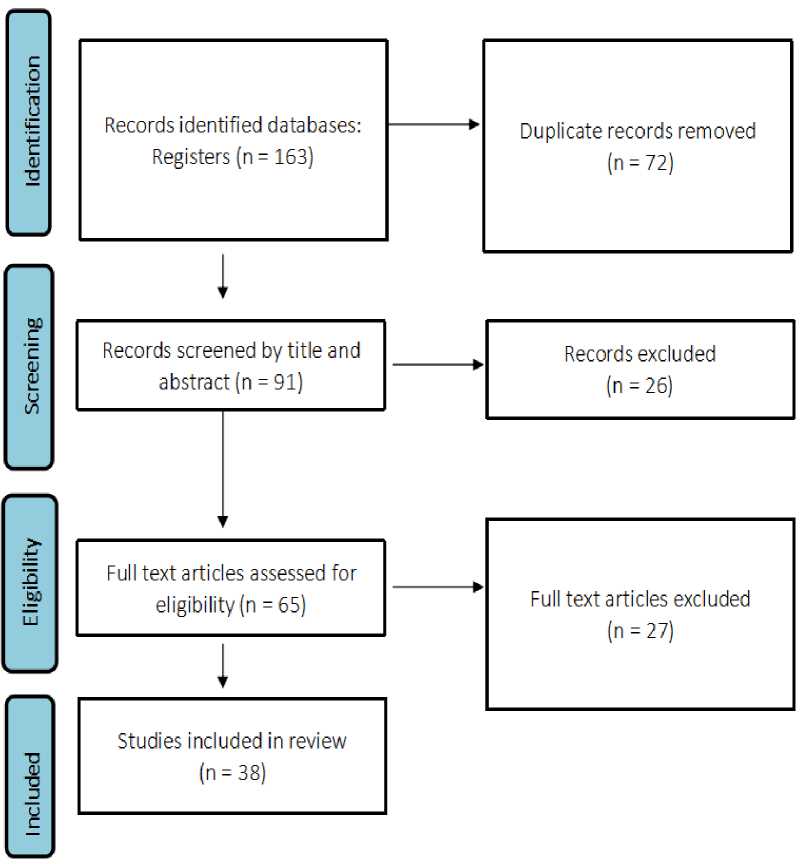
Figure 2. Selection process based on PRISMA (Moher et al., 2010)
Results
Research question 1: Demographic characteristics of the selected studies
The statistical results for the year of publication of the 38 selected studies are shown in Figure 3. It can be observed that, from 2015 to 2023, the number of studies published in 2022 and 2023 represents the highest proportion, with a rate of 21% (8 studies per year), whereas in 2019, 2020, and 2021 the rate was 11% (4 studies per year). Meanwhile, the number of studies published in 2015-2018 does not exceed 5 per year, representing no more than 10%.
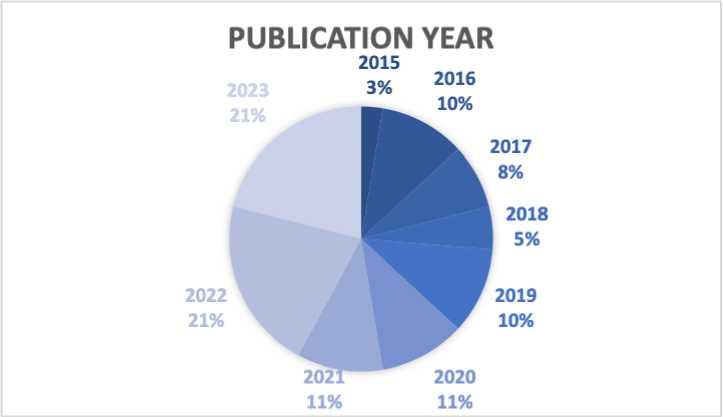
Figure 3. Distribution of the publication year
Geographical distribution statistics can be meaningful for practical comparisons of research results ( Andersen et al., 2022 ; Ashraf et al., 2021 ). Figure 4 shows the distribution of country affiliations of the selected studies based on the information from the first author. Statistical results show that many studies on the relationships among knowledge, beliefs, and instructional practices of mathematics teachers have been conducted in the United States (11 studies) and China (7 studies). Meanwhile, the number of studies in other countries is significantly lower. In particular, four studies have been conducted in Germany, three in Indonesia, two in Turkey, and one in Brazil, Finland, Malta, Norway, the Republic of Korea, Rwanda, South Africa, Sri Lanka, Taiwan, and Vietnam.
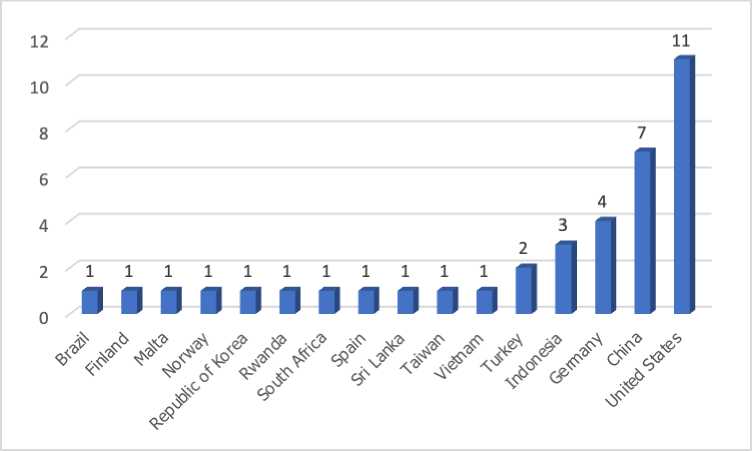
Figure 4. Geographical Distribution
The selected studies are experimental or survey studies that aim to clarify the relationships among the elements of knowledge, beliefs, and instructional practices of pre-service and in-service mathematics teachers. Therefore, the research subjects of these studies may include in-service teachers or/and/or pre-service teachers. The statistical results show that the research subjects in these studies are relatively diverse; however, most studies are conducted with in-service teachers. Specifically, 23 studies were conducted on in-service teachers, 13 on pre-service teachers, and two on research subjects, including both in-service and pre-service teachers; see Table 1.
Table 1. Participants in the Included Studies
|
Participants |
Studies |
n |
|
In-service teachers |
Auslander et al. (2023), Baron (2015), Calleja (2022), Carney et al. (2016), Copur-Gencturk and Li (2023), De Souza and Lopes (2021), Dong et al. (2020), Gomez Johnson and Williams (2023), Guler and Celik (2023), Hunt et al. (2023), Jenßen et al. (2022), Li et al. (2022), Moh’d et al. (2021), Moliner and Alegre (2022), Munter and Correnti (2017), Munter and Wilhelm (2021), Nguyen and Tran (2023), Suryanti et al. (2022), Thurm and Barzel (2020), Yang et al. (2021), Yang et al. (2023), Yu et al. (2022), Zhang (2022) |
23 |
|
Pre-service teachers |
Dunekacke et al. (2016), Ekstam et al. (2017), Guler and Celik (2018), Kaspersen et al. (2017), Kim (2018), Lin (2022), Lo (2023), Makamure and Jita (2019), Muhtarom et al. (2019), Purnomo et al. (2016), Rakes et al. (2022), Wadanambi and Leung (2019), Yang et al. (2020) |
13 |
|
Both |
Baier et al. (2019), Lui and Bonner (2016) |
2 |
Research question 2: Research methods of the selected studies
The selected studies use various research designs to investigate the relationships among mathematics teachers’ knowledge, beliefs, and instructional practices, including experimental, case study, and survey designs (see Figure 5). In addition to the advantages of experimental research with longitudinal data sets and survey research being possible with sufficiently large sample sizes, the use of case studies allows the review, observation, and analysis of relevant real-life conditions in researching the relationships among elements of teachers’ knowledge, beliefs, and instructional practices ( Calleja, 2022 ; Yang et al., 2023 ). The statistical results show that 14 of the 38 selected studies were experimental, 14 were surveys, and 12 were case studies.
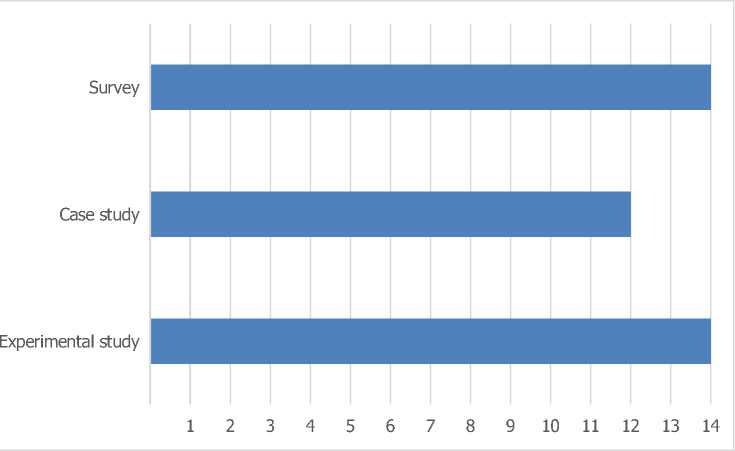
Figure 5. Research designs of the included studies
According to Figure 6, the selected studies employ a range of research methods, including quantitative, qualitative, and mixed-methods approaches. Consequently, 21% of the selected studies are qualitative, 36% are quantitative, and 43% are mixed methods studies.
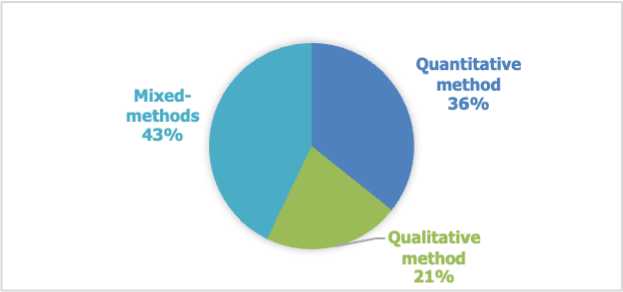
Figure 6. Research methods of the included studies.
The selected studies involve research subjects, including pre-service and in-service mathematics teachers, and sample sizes vary across studies depending on the research design. The statistical results show that 10 studies have sample sizes of less than 20, most of which are case studies. Meanwhile, the remaining 28 studies, 11 with sample sizes greater than 200, are surveyed and experimental. The study with the smallest sample size was conducted by Purnomo et al. (2016) with 1 participant, and the study with the largest sample size was carried out by Carney et al. (2016) with 3933 participants.
The selected studies use various assessment instruments to evaluate the relationships among pre-service and in-service mathematics teachers’ knowledge, beliefs, and instructional practices, including tests, surveys, interviews, observations, and other instruments. According to Table 2, surveys are used by most studies (25 studies, accounting for 65.79%) due to their ability to be implemented with a reasonably large sample size and their suitability for surveying teachers’ knowledge and beliefs. Additionally, tests (12 studies, 31.58%), interviews (14 studies, 36.84%), and observations, either direct or via video recordings (15 studies, 39.47%), are used in many studies, especially in experimental research and case studies. Furthermore, in some selected studies, other assessment instruments are also used, such as reflective journals, field notes, lesson plans ( Baier et al., 2019 ; Baron, 2015 ; Suryanti et al., 2022 ), reported lessons, course content, task forms ( Yang et al., 2023 ), and drawings ( Lin, 2021 ), to evaluate teachers’ instructional beliefs and practices.
Table 2. Instruments Used in the Included Studies
|
Instruments |
Included studies n % |
|
Tests |
Auslander et al. (2023), Baier et al. (2019), Dunekacke et al. (2016), Ekstam et al. (2017), Guler and Celik (2018), Jenßen et al. (2022), Munter and Correnti (2017), Munter and Wilhelm 12 31.58 (2021), Rakes et al. (2022), Thurm and Barzel (2020), Yang et al. (2020), Yang et al. (2021) |
|
Survey |
Auslander et al. (2023), Calleja (2022), Carney et al. (2016), Copur-Gencturk and Li (2023), De Souza and Lopes (2021), Dong et al. (2020), Dunekacke et al. (2016), Ekstam et al. (2017), Gomez Johnson and Williams (2023), Guler and Celik (2023), Hunt et al. (2023), Jenßen et al. (2022), Kaspersen et al. (2017), Lui and Bonner (2016), Makamure 25 65.79 and Jita (2019), Moh’d et al. (2021), Moliner and Alegre (2022), Munter and Correnti (2017), Munter and Wilhelm (2021), Suryanti et al. (2022), Thurm and Barzel (2020), Wadanambi and Leung (2019), Yang et al. (2020), Yu et al. (2022), Zhang (2022) |
|
Interview |
Auslander et al. (2023), Calleja (2022), Kaspersen et al. (2017), Kim (2018), Makamure and Jita (2019), Muhtarom et al. (2019), Munter and Correnti (2017), Munter and Wilhelm 14 3684 (2021), Nguyen and Tran (2023), Purnomo et al. (2016), Suryanti et al. (2022), Wadan- . ambi and Leung (2019), Yang et al. (2023), Yu et al. (2022) |
|
Observation |
Auslander et al. (2023), Baron (2015), Dunekacke et al. (2016), Guler and Celik (2023), Li et al. (2022), Lui and Bonner (2016), Moh’d et al. (2021), Muhtarom et al. (2019), Munter 15 3947 and Correnti (2017), Munter and Wilhelm (2021), Nguyen and Tran (2023), Purnomo et al. . (2016), Wadanambi and Leung (2019), Yang et al. (2021), Yang et al. (2023) |
|
Others |
Baier et al. (2019), Baron (2015), Lin (2021), Suryanti et al. (2022), Yang et al. (2023) 5 13.16 |
Research question 3: The relationship between mathematics teachers’ knowledge and beliefs
Table 3. Relationship between Mathematics Teachers’ Knowledge and Beliefs
Included studies
There are relationships between teachers’ knowledge and beliefs.
-
1 Dunekacke et al. (2016): The data show a positive relationship between knowledge and beliefs.
-
2 Ekstam et al. (2017): Research results show that the relationship between subject knowledge and teacher efficacy beliefs for instruction was only indirect (via interest).
-
3 Kim (2018): The research results show that pre-service teachers with confidence in constructivist and studentcentered teaching have a higher understanding of mathematical, pedagogical, and technological knowledge.
-
4 Lin (2021): The results show that teachers’ beliefs in teacher-centered teaching positively impact content knowledge, while teachers’ beliefs in student-centered teaching impact content knowledge with their pedagogical content knowledge and positive emotions.
-
5 Lo (2023): The results show that mathematics teachers’ beliefs about teaching and learning mathematics correlate with their pedagogical content knowledge to a certain extent.
-
6 Lui and Bonner (2016): The study shows different relationships between the beliefs and knowledge of two groups of in-service and pre-service teachers. Specifically, while pre-service teachers’ constructivist teaching beliefs positively impact their conceptual knowledge, in-service teachers have difficulty forming and developing conceptual knowledge.
-
7 Yang (2020): Research results show that pre-service teachers’ beliefs about the nature of mathematics and constructivist beliefs about mathematics teaching and learning serve as bridges between content knowledge and pedagogical content knowledge in instructional practices.
There are no relationships between teachers’ knowledge and beliefs.
-
1 De Souza and Lopes (2021): The research results show that teachers have solid mathematical knowledge and skills, but are not confident in their ability to apply knowledge in the classroom.
-
2 Moliner and Alegre (2022): The study shows no relationship between mathematics teachers’ beliefs and knowledge.
Table 3 presents an analysis of studies on the relationship between mathematics teachers’ knowledge and beliefs. Among the nine studies investigating this relationship, seven report a relationship between teachers’ beliefs and knowledge, and two confirm that this relationship is insignificant. Research by Ekstam et al. (2017) shows that subject knowledge only has an indirect impact on teacher efficacy beliefs, whereas pre-service teachers’ personal interests have a significant impact. Specifically, these studies show that teachers’ content and pedagogical content knowledge significantly influence pre-service and in-service teachers’ beliefs about teaching and learning mathematics and facilitate changes in these belief structures. This shows that pre-service teachers’ beliefs are subject to change, underscoring the significance of process- and application-oriented orientations in teacher education ( Ekstam et al., 2017 ). Meanwhile, studies by Lui and Bonner (2016) , Kim (2018) , Yang (2020) , Lin (2021) , and Lo (2023) confirm the positive effect of beliefs on teachers’ knowledge development and pedagogical content knowledge. Beliefs about constructivist and student-centered teaching are particularly prevalent (see Table 3). However, the studies by Moliner and Alegre (2020) and De Souza and Lopes (2021) report different results, indicating no relationship between mathematics teachers’ knowledge and beliefs.
Research question 4: The relationship between mathematics teachers’ knowledge and instructional practices
The results of the analysis of selected studies on the relationship between knowledge and instructional practices of mathematics teachers are shown in Table 4. Of the 18 studies investigating this relationship, 13 show a relationship between teachers’ knowledge and instructional practices, while 5 show little to no relationship. Research by authors Baron (2015), Lui and Bonner (2016), Munter and Correnti (2017), Baier et al. (2019), Muhtarom et al. (2019), Dong et al. (2020), Moliner and Alegre (2022), Rakes et al. (2022), Yu et al. (2022), Zhang (2022) and Auslander et al. (2023) indicate that teachers’ knowledge, including content knowledge, pedagogical content knowledge and general pedagogical knowledge, has a significant impact on teacher instructional practices related to goals, plans, approaches, and teaching experiences. Meanwhile, Makamure and Jita (2019) and Nguyen and Tran (2023) argue that changes in instructional practices can improve content knowledge and pedagogical content knowledge among preservice and in-service mathematics teachers. However, some studies by Lui and Bonner (2016), Guler and Celik (2018), Yang et al. (2020), Moh’d et al. (2021), and Yang et al. (2021) also point out that although there are in-service and pre-service teachers who have solid knowledge, it is not reflected in their instructional practices, that is, there are some groups of teachers’ knowledge that there is a negligible relationship with their instructional practices (see Table 4).
Table 4. Relationship between Mathematics Teachers’ Knowledge and Instructional Practices
Included studies
There are relationships between teachers’ knowledge and instructional practices.
-
1 Auslander et al. (2023): Research results show that mathematics teachers’ content knowledge shapes instructional practices.
-
2 Baier et al. (2019): The research results show a significant connection between the pedagogical expertise and the quality of the instructional practices of mathematics teachers.
-
3 Baron (2015): The research results show that knowledge can impact teachers’ instructional practices.
-
4 Dong et al. (2020): The research results show that teachers who are knowledgeable about the nature of
pedagogy and methods tend to have fewer difficulties in teaching.
-
5 Lui and Bonner (2016): The results show a positive relationship between teachers’ conceptual knowledge and instructional practices, particularly in lesson planning.
-
6 Makamure and Jita (2019) found that instructional practices contribute to teachers’ development of mathematical knowledge.
-
7 Moliner and Alegre (2020): The study provides statistically significant results on the relationship between teachers’ knowledge and instructional practices.
-
8 Muhtarom et al. (2019): Research shows a positive relationship between pre-service teachers’ knowledge and their instructional practices. In particular, pedagogical content knowledge is demonstrated in each classroom teaching activity.
-
9 Munter and Correnti (2017): Research shows a relationship between teachers’ pedagogical content knowledge and the effectiveness of instructional practices in oral and dialogical teaching approaches.
-
10 Nguyen and Tran (2023): Research shows that teachers’ knowledge changes when curricula are idealized and upgraded and when these ideals are applied in instructional practices.
-
11 Rakes et al. (2022): Research shows that pre-service teachers’ instructional practices become more effective after participating in a conceptual knowledge development course.
-
12 Yu et al. (2022): Research shows that teachers’ instructional practices are positively influenced by pedagogical content knowledge, general pedagogical knowledge, and cross-curricular teaching expertise.
-
13 Zhang (2022): Research shows that teachers with varying levels of professional knowledge have distinct teaching goals and instructional approaches.
There are no relationships between teachers’ knowledge and instructional practices
-
1 Guler and Celik (2018): Research results show that although pre-service teachers have strong content knowledge, they do not connect it to instructional practices when explaining concepts to students.
-
2 Lui and Bonner (2016): The results do not show a clear relationship between teachers’ procedural knowledge and instructional practices.
-
3 Moh’d et al. (2021): The research results show that the teachers’ pedagogical content knowledge is not reflected in their instructional practices.
-
4 Yang et al. (2020): Research shows that teachers’ content and pedagogical content knowledge do not correlate with their instructional practices.
-
5 Yang et al. (2021): Research shows that teachers’ knowledge of teaching topics and their ability to observe instructional practices do not correlate significantly.
Research question 5: The relationship between mathematics teachers’ beliefs and instructional practices
Regarding the relationship between mathematics teachers’ beliefs and instructional practices, the results of the selected studies’ analyses are shown in Table 5. Of the 18 studies examining this relationship, 14 report a link between teachers’ beliefs and instructional practices, and 4 find it insignificant. Research results by authors Lui and Bonner (2016) , Purnomo et al. (2016) , Wadanambi and Leung (2019) , Dong et al. (2020) , Thurm and Barzel (2020) , Yang et al. (2020) , Calleja (2022) , Li et al. (2022) , Zhang (2022) , Gomez Johnson and Williams (2023) , Hunt et al. (2023) , Nguyen and Tran (2023) and Yang et al. (2023) show that teachers’ beliefs about the nature of mathematics, as well as about teaching and learning mathematics, have a positive impact on their instructional practices, as reflected in their teaching goals and choices of teaching methods. On the other hand, the studies by Kaspersen et al. (2017) , Baier et al. (2019) , Auslander et al. (2023) , and Guler and Celik (2023) argue that the relationship between teachers’ beliefs and their instructional practices is relatively weak, as shown by the fact that although survey results show that many teachers have deep mathematical beliefs, their instructional practices do not reflect that.
Table 5. Relationship between Mathematics Teachers’ Beliefs and Instructional Practices
Included studies
There are relationships between teachers’ beliefs and instructional practices.
-
1 Calleja (2022): Research shows that changes in teachers’ beliefs are correlated with changes in their instructional practices.
-
2 Dong et al. (2020): The study results show that teachers’ beliefs strongly influence instructional practices.
-
3 Gomez, Johnson, and Williams (2023): Research shows that teachers’ beliefs impact the effectiveness of their instructional practices.
-
4 Hunt et al. (2023): The quantitative analysis results show that changes in teachers’ beliefs strengthen their orientation toward instructional practices.
-
5 Li et al. (2022): Research shows consistency between teachers’ beliefs and instructional practices to a certain extent.
-
6 Lui and Bonner (2016): Research shows that teachers revert to their original beliefs while transitioning from theory to practice.
-
7 Muhtarom et al. (2019): Research shows a relationship between teachers’ beliefs and instructional practices.
-
8 Nguyen and Tran (2023): Research shows that instructional practices can reflect teachers’ beliefs.
-
9 Purnomo et al. (2016): Research shows that teachers’ beliefs about the nature of mathematics significantly influence their teaching.
-
10 Thurm and Barzel (2020): Research shows that teachers’ positive beliefs influence their teaching methods, including discovery-based methods.
-
11 Wadanambi and Leung (2019): Research shows that teachers’ professional beliefs encourage them to choose flexible instructional practices.
-
12 Yang et al. (2020): Research shows that teachers’ beliefs are consistently linked to their instructional practices.
-
13 Yang et al. (2023): Research shows that teachers’ beliefs about mathematics teaching significantly influence
-
14 Zhang (2022): Research shows that teachers with varying levels of belief have distinct teaching goals and instructional approaches.
There are no relationships between teachers’ beliefs and instructional practices.
-
1 Auslander et al. (2023): Research indicates that beliefs play a minimal role in shaping teachers’ instructional practices.
-
2 Baier et al. (2019): Research shows that teachers with high constructivist teaching beliefs do not achieve higher ratings for their instructional practices.
-
3 Guler and Celik (2023): Research shows that the relationship between teachers’ beliefs and instructional practices is very weak or insignificant, making it difficult to conclude that a linear relationship exists between the two factors.
-
4 Kaspersen et al. (2017): Research shows a relatively weak relationship between teachers’ beliefs and instructional practices.
Discussion
Following PRISMA guidelines, this systematic review was conducted to answer the above research questions and clarify the relationships among pre-service and in-service mathematics teachers’ knowledge, beliefs, and instructional practices.
The first research question examines the fundamental characteristics of the included studies, including year of publication, country, and research subjects. Consequently, between 2015 and 2023, the number of studies published in 2021 and 2023 represents the highest proportion. This shows that in recent years, educational researchers have paid considerable attention to improving the quality of teacher education by examining the relationships among knowledge, beliefs, attitudes, and instructional practices. This observation is consistent with the results concluded in studies ( Depaepe et al., 2020 ; Hasim et al., 2022 ). Furthermore, the statistical results show that the studies’ geographical distribution is relatively widespread, with studies conducted in nations across most of the world. The two countries with the most studies are the United States and China. The research subjects in the selected studies were pre-service or in-service math teachers. Statistical results show that the research subjects in these studies are relatively diverse; however, most (23) were conducted on in-service teachers, and two studies were conducted on pre-service and in-service math teachers. Research on in-service teachers yields meaningful insights into teacher pedagogical training, while research on pre-service teachers informs the design of math teacher training programs at pedagogical universities. By clarifying the relationships between in-service and preservice teachers’ knowledge, beliefs, and instructional practices, educators can adjust training content or training programs to improve teachers’ knowledge, beliefs, and teaching quality ( Heck et al., 2019 ).
The second research question examines the research methods used in the included studies. In particular, the included studies used research designs including experimental (14 studies), case study (12 studies), and survey (14 studies). In addition to the advantages of experimental research with longitudinal data sets and survey research that can be conducted with sufficiently large sample sizes, case studies allow the examination, observation, and analysis of conditions. Practical facts are relevant in studying the relationships among teachers’ knowledge, beliefs, and instructional practices ( Calleja, 2022 ; Nkundabakura et al., 2022 ; Yang et al., 2023 ). Furthermore, the findings show that study sample sizes differ significantly across research designs, ranging from 1 in a case study to 3933 in a survey study. The included studies have also used various research methods to collect and analyze data, including mixed-methods approaches. In particular, data from the studies were collected through a variety of instruments, including surveys (65.79%), tests (31.58%), interviews (36.84%), observations directly or through recording videos (39.47%), and other instruments such as reflective journals, field notes, lesson plans, reported lessons, course content, task forms, and drawing (13.16%) to assess teachers’ knowledge, beliefs, and instructional practices. Thus, using different research methods across subjects yields inconsistent results. Therefore, new research methods are required, such as studying a broader range of subjects and using larger sample sizes to clarify the rules.
The remaining research questions examine the relationships among pre-service and in-service mathematics teachers’ knowledge, beliefs, and instructional practices. Regarding Question 3, the studies by Dunekacke et al. (2016) , Lui and Bonner (2016) , Ekstam et al. (2017) , Kim (2018) , Yang (2020) , Lin (2021) , and Lo (2023) confirm the positive impact of teacher knowledge and beliefs. Specifically, in these studies, teachers’ content and pedagogical content knowledge significantly influence their beliefs about mathematics teaching and learning and facilitate favorable conditions for change in these belief structures. This result is similar to the conclusions made in other studies ( Abdul Rahman et al., 2019 ; Pagiling and Taufik, 2022 ). This emphasizes the significance of process and application-related orientations in teacher education by demonstrating that pre-service and in-service math teachers’ beliefs can be altered ( Ekstam et al., 2017 ). On the other hand, studies by Mapolelo and Akinsola (2015) , Moliner and Alegre (2022) , and De Souza and Lopes (2021) present different results, showing no relationship between mathematics teachers’ knowledge and beliefs when teachers hold transmission or conventional beliefs.
For Question 4, research by authors Baron (2015), Lui and Bonner (2016), Munter and Correnti (2017), Baier et al. (2019), Muhtarom et al. (2019), Dong et al. (2020), Moliner and Alegre (2022), Rakes et al. (2022), Yu et al. (2022), Zhang (2022) and Auslander at al. (2023) point out that teachers’ knowledge, including content knowledge, pedagogical content knowledge, and general pedagogical knowledge, has a significant impact on their instructional practices, while Makamure and Jita (2019) and Nguyen and Tran (2023) argue that changes in instructional practices contribute to improving pre-service and in-service mathematics teachers’ content knowledge and pedagogical content knowledge. The studies by Mapolelo and Akinsola (2015) and Savuran and Isiksal-Bostan (2022) also show similar results. However, some studies by Lui and Bonner (2016), Guler and Celik (2018), Yang et al. (2020), Moh’d et al. (2021), and Yang et al. (2021) also point out that although there are pre-service and in-service teachers who have solid knowledge, it is not reflected in their instructional practices. For pre-service mathematics teachers, enhancing instructional practices during training contributes to the development of their knowledge and teaching skills.
Regarding Question 5, the research results of the authors Lui and Bonner (2016) , Purnomo et al. (2016) , Wadanambi and Leung (2019) , Dong et al. (2020) , Thurm and Barzel (2020) , Yang et al. (2020) , Calleja (2022) , Li et al. (2022) , Zhang (2022) , Gomez Johnson and Williams (2023) , Hunt et al. (2023) , Nguyen and Tran (2023) and Yang et al. (2023) demonstrate that teachers’ beliefs about the nature of mathematics, as well as teaching and learning mathematics, influence their instructional practices positively. Specifically, teachers with high efficacy beliefs tend to teach in a student-centered manner, while teachers with conventional beliefs tend to instruct in a teacher-centered manner. This finding is consistent with Aljaberi and Gheith (2018) and Saadati et al. (2019) . However, the studies by Kaspersen et al. (2017) , Baier et al. (2019) , Auslander et al. (2023) , and Guler and Celik (2023) argue that the relationship between teachers’ beliefs and their instructional practices is relatively weak, expressed through their instructional practices, and does not reflect teachers’ beliefs. Alburo (2019) also finds similar results in his study. Most research studies conclude that teachers’ beliefs influence their instructional practices. However, it is necessary to clarify the specific contexts, conditions, or causes beyond pre-service and in-service mathematics teachers’ beliefs about the nature of mathematics or about mathematics teaching that can impact their instructional practices.
The research results partly suggest that changes in mathematics teachers’ knowledge and beliefs can impact their instructional practices. In-service math teachers should receive support for their long-term professional development, and pre-service math teachers should receive training. According to Alburo (2019) , appropriate and periodic training and retraining aim to improve teachers’ competencies, create a constructive learning environment, reduce teaching pressure, and enhance mathematics teachers’ ability to develop teaching materials that are contextually, locally, and culturally appropriate. Reorienting teachers’ pedagogical beliefs and instructional practices can benefit from this. The teachers have probably benefited from long-term professional development and opportunities to teach in a professional learning community and to watch one another in action. They have used this to create a creative environment where they can reflect individually and collectively on teaching and learning mathematics from various perspectives ( Baron, 2015 ). In addition, the inconsistency in conclusions about a relationship between the knowledge, beliefs, and instructional practices of pre-service and in-service mathematics teachers has motivated some proposals to examine other factors that may influence this relationship. Specifically, Lui and Bonner (2016) argue that school and classroom norms, routines, obligations, and resources affect teachers’ instructional practices. Therefore, stakeholders in mathematics education can consider and take measures to ensure the harmony between these factors and the instructional practices of in-service mathematics teachers ( Lui and Bonner, 2016 ), as well as ensure recognition of pre-service mathematics teachers’ deep knowledge and beliefs about mathematics, as these factors can influence their instructional practices ( Mapolelo and Akinsola, 2015 ; Ramos-Rodríguez et al., 2021 ).
In addition to the results obtained, this study also has some limitations. First, the limitation of the databases used to identify relevant studies is that they include a relatively small number of studies. Consequently, certain conclusions might not be as representative or broadly applicable. Second, the study uses qualitative analysis and descriptive statistics instead of quantitative results. The analysis tool is highly accurate and can limit bias. However, a qualitative instrument is appropriate for the present study, given the 38 selected studies and their relatively diverse research objectives. Furthermore, although the themes used to analyze the studies are specified, this study does not clarify the intervention measures used in the included studies. Researchers studying the development of teachers’ knowledge, beliefs, and instructional practices may find these results useful if implemented.
This study’s findings and limitations suggest new research directions for future systematic reviews. While many studies confirmed that mathematics teachers’ knowledge influences their practice, others highlighted a disconnect where solid knowledge did not translate into enacted practice. Future research should move beyond identifying if a relationship exists and instead investigate why this gap occurs. On the other hand, this review identified that school norms, routines, and available resources often moderate the relationship between a teacher’s beliefs and their instructional choices. Future studies should employ socio-cultural frameworks to examine how specific environmental factors constrain or support teachers in enacting their beliefs. Explicitly comparing urban, rural, and high- and low-resource environments might be a research direction worth considering. Additionally, many studies have confirmed the positive impact of online learning on pre-service and mathematics teachers’ beliefs (Hunt et al., 2023; Thurm and Barzel, 2020). Therefore, the study recommends future studies investigating the effects of teacher education and development on online platforms on changes in their knowledge, beliefs, and instructional practices. Furthermore, empirical studies on the relationships among knowledge, beliefs, and instructional practices of mathematics teachers should be conducted for a sufficient period to observe changes in these factors (Lui and Bonner, 2016; Nkundabakura et al., 2022). Therefore, longitudinal studies on this topic are necessary. Regarding the research design, new systematic review studies can (1) expand the scope of the database when searching for relevant studies and (2) conduct quantitative studies or use mixed research methods, such as combining content analysis and biometric analysis (Nguyen et al., 2020). In terms of the research content, new studies can (3) focus on researching one of the relationships among teachers’ knowledge, beliefs, and instructional practices, (4) analyze research whose participants are entirely preservice mathematics teachers or in-service mathematics teachers, and (5) analyze intervention methods of experimental research on teachers’ knowledge, beliefs, and instructional practices.
Conclusion
This systematic review study examined the relationships among knowledge, beliefs, and instructional practices of pre-service and in-service mathematics teachers by analyzing 38 included studies. The analysis results show that 2021-2023 represents the highest proportion of research on this topic and is carried out in many different countries worldwide, most notably the United States and China. Besides, various research designs, such as experiments, case studies, and survey studies, have been conducted with different sample sizes (as few as one and as many as 3933), including in-service and/or pre-service mathematics teachers. Data have been collected and analyzed qualitatively and/or quantitatively in the included studies to evaluate the relationships among these factors. Various instruments have been used, including tests, surveys, interviews, direct observations, video recordings, reflective journals, field notes, lesson plans, reported lessons, course materials, task forms, and drawings.
More importantly, the findings show that the included studies have different conclusions about the relationships among pre-service and in-service mathematics teachers’ knowledge, beliefs, and instructional practices. In particular, the majority of research shows that (1) content knowledge, pedagogical content knowledge, and general pedagogical knowledge of pre-service and in-service mathematics teachers affect their beliefs and the quality of teaching in the classroom, and their instructional practices, (2) their beliefs about constructivist and student-centered teaching have a positive impact on their goals, plans, and choices of teaching approaches, and (3) conversely, instructional practices promote the development of teachers’ knowledge reflects, and enhances their beliefs. However, the proportion of studies finding the relationship among these factors to be insignificant remains relatively low. In addition to the results, the study proposes several recommendations for training and developing both pre-service and in-service mathematics teachers, identifies some limitations of this systematic review, and suggests new research directions for future related research.
Acknowledgements
The authors would like to thank NAFOSTED for its valuable support.
Funding
This research is funded by Vietnam National Foundation for Science and Technology Development (NAFOSTED) under grant number 503.01-2023.04.
Conflict of interests
The authors declare that there is no conflict of interest.
Data availability statement
On request, the authors will provide data generated or analyzed during this study.
Author Contributions
Conceptualization: Tien-Trung Nguyen and Duong Huu Tong; methodology: Duong Huu Tong; software: Hoang Thi Nga; validation: Tien-Trung Nguyen, Duong Huu Tong and Chi Thanh Nguyen; formal analysis: Le Thai Bao Thien Trung; investigation: Hoang Thi Nga; resources: Duong Huu Tong; data curation: Hoang Thi Nga; writing—original draft preparation: Duong Huu Tong; writing—review and editing: Tien-Trung Nguyen; visualization: Le Thai Bao Thien Trung; supervision: Chi Thanh Ngu-yen; project administration: Tien-Trung Nguyen; funding acquisition: Tien-Trung Nguyen. All authors have read and agreed to the published version of the manuscript.
