
The role of micro-credentials in the future digitalized artificial intelligence-driven education

Journal: Education Integration @edumag-mrsu
Section: Международный опыт интеграции образования
Article in issue: 2 (123) т.30, 2026.
Free access
Introduction. Microcredentials are digital badges that validate students’ acquired knowledge and skills – have become increasingly popular in higher education amid the rapid digital transformation following the COVID-19 pandemic. Rapidly growing academic interest in this topic is driven by an increase in the number of scientific publications, from one in 1992 to 162 in 2025. The aim of this study is to assess the potential role of microcredentials in modern higher education, based on artificial intelligence and digitalization. Materials and Methods. A comprehensive bibliometric network analysis of 664 publications published in the Scopus database was conducted. The analysis was conducted using VOSviewer software to visualize text and bibliographic data and identify clusters of related topics in the scientific literature on microcredentials. Results. A significant increase in research on microcredentials was identified, and key thematic clusters were identified. The most significant clusters focus on employability (skills and workforce needs), digital transformation (technology-enabled learning), and lifelong learning (continuing education and professional development), among other aspects. The interdisciplinary nature and broad influence of microcredentials in contemporary academic literature, with a particular focus on higher education, are highlighted. Conclusion. Microcredentials can address skills shortages and align higher education with labor market demands while supporting personalized learning. Their potential for enhancing learner employability and flexibility in an AI-enabled higher education system is highlighted. Microcredentials are a significant innovation in higher education. By offering flexible and targeted learning pathways, they can significantly contribute to the transformation of the AI-enabled higher education system. The findings of this study can be useful for educators, policymakers, and stakeholders in integrating microcredentials to create adaptive and future-proof digital higher education systems. The additional thematic clusters identified demonstrate that micro-credentials link digital technologies, employment, lifelong learning, and quality assurance within a unified pedagogical framework.
Short address: https://sciup.org/147254465
IDS: 147254465 | UDC: 378:004.8 | DOI: 10.15507/1991-9468.26302.238-257
Роль микросертификатов в будущем цифровом образовании, основанном на искусственном интеллекте
Введение. Микросертификаты – цифровые бейджи, подтверждающие полученные знания и навыки. Они стали востребованными в сфере высшего образования в условиях стремительной цифровой трансформации после пандемии COVID-19. Быстрорастущий академический интерес к этой тематике обусловлен увеличением числа научных публикаций с 1992 по 2025 гг. Цель исследования – оценить потенциальную роль микросертификатов в современном высшем образовании, основанном на искусственном интеллекте и цифровизации. Материалы и методы. Осуществлен комплексный библиометрический сетевой анализ 664 публикаций, размещенных в базе данных Scopus. Анализ проводился с использованием программного обеспечения VOSviewer с целью визуализации текстовых и библиографических данных, а также для определения кластеров связанных тем в научной литературе по микросертификатам. Результаты исследования. Выявлен значительный рост исследований микросертификатов и отмечены ключевые тематические кластеры. Наиболее значимые кластеры сосредоточены на трудоустройстве (навыках и потребностях в рабочей силе), цифровой трансформации (обучении с использованием технологий), непрерывном обучении (непрерывном образовании и повышении квалификации) и других аспектах. Подчеркивается междисциплинарный характер и широкое влияние микросертификатов в cовременной академической литературе, уделяющей особое внимание высшему образованию. Заключение. Микросертификаты могут решить проблему дефицита навыков и согласовать высшее образование с требованиями рынка труда, одновременно поддерживая персонализированное обучение. Подчеркивается их потенциал для повышения трудоустройства и гибкости учащихся в системе высшего образования на основе искусственного интеллекта. Микросертификаты – значительная инновация в сфере высшего образования. Предлагая гибкие и целенаправленные учебные траектории, они могут внести значительный вклад в трансформацию системы высшего образования, основанной на искусственном интеллекте. Результаты данного исследования могут быть полезны преподавателям, политикам и заинтересованным сторонам для интеграции микросертификатов в целях создания адаптивных и перспективных систем цифрового высшего образования. Дополнительно выявленные тематические кластеры показывают, что микросертификаты связывают цифровые технологии, трудоустройство, непрерывное обучение и обеспечение качества в единой педагогической логике.
Text of the review article The role of micro-credentials in the future digitalized artificial intelligence-driven education
ISSN 1991-9468 (Print),
EDN:
Cambridge, United Kingdom b Prague Business School, Prague, Czech Republic, c Jusup Balasagyn Kyrgyz National University, Bishkek, Kyrgyz Republic, d Togliatti State University,
Togliatti, Russian Federation, e Financial University under the Government of the Russian Federation, Moscow, Russian Federation, H
Nowadays, higher education is undergoing profound changes that include digitalization, incorporation of artificial intelligence (AI) tools and large language models (LLMs), adaptive learning, or sustainable education practices [1–3]. In this modern higher education marked by the recent COVID-19 pandemic, micro-credentials emerge as an original innovation that offers specialization and focus on specific competences and skills that are often offered as digital badges or verifiable electronic records [4; 5]. For example, United Nations Educational, Scientific and Cultural Organization (UNESCO) describes a micro-credential as a documented outcome of focused learning that confirms what a learner knows or can do, usually issued as a badge or certificate by a trusted provider and aligned with explicit quality standards1. Contrary to traditional degrees and diplomas, microcredentials contain a smaller volume of learning and obtained knowledge, but their high level of granularity allows them to target specific skills which makes them particularly useful in rapidly changing conditions of the digitalized and globalized modern economy and labour markets [6; 7]. Under conditions of ongoing digital transformation and the growing influence of AI, education systems are increasingly expected to evolve toward more flexible, personalized, and competence-oriented models [8–10]. Micro-credentials offer one response to these expectations, providing modular and timeefficient mechanisms for certifying skills that support AI-driven lifelong learning [11; 12].
Figure 1 illustrates the micro-credentials ecosystem, featuring four key stakeholders: employers; universities and higher education institutions (HEIs); private education providers (such as non-profit organisations (NGOs), and small and medium-sized enterprises (SMEs)); and learners, who receive digitally certified knowledge and skills via micro-credentials and digital badges.
The structure of this ecosystem can be further elaborated as follows: first, employers identify specific skills gaps that are not necessarily addressed by traditional higher education, which typically adapts slowly to shifts in the economy and labour markets. Subsequently, these employers communicate their competency requirements to universities, HEIs, and private sector providers, including NGOs and specialized companies. Universities, HEIs, and private educational providers promptly create short micro-credentials courses and offer them to learners. The micro-credentials are verified by the information and communication technological tools (e.g. Blockchain) which makes them transparent and easily verifiable by anyone wishing to check their authenticity [13; 14].
A combination of recent developments has fuelled the spread of micro-credentials. The COVID-19 pandemic acted as a powerful driver of higher education digitalization, forcing HEIs, universities, and learners to shift to online platforms and alternative delivery formats in a very short span of time [15–17]. This abrupt digital turn not only familiarized millions of people with online learning but also exposed the limitations of conventional credentialing in recognizing learning acquired beyond formal degree programmes. Even prior to the pandemic, employers worldwide frequently voiced concerns that graduates lacked practical, job-ready competencies despite holding traditional qualifications [18; 19]. At the same time, rising tuition fees and issues with unsustainable student debts are leading to the growing scepticism about the exclusive value of traditional university degree programmes. Today, many adult learners and working professionals actually prefer shorter and smarter learning (e.g. short courses or webinars) that can quickly improve their position at the labour market and improve their job resumes. As a result, governments, universities, and businesses have all started to reconsider traditional certification of learning and knowledge moving beyond the monopoly
яшшшшж
of university degrees towards novel and flexible forms of knowledge certification represented by the digital certificates, badges, and micro-credentials [20; 21].
Regarding the discussion presented above, it needs to be highlighted that digital transformation, AI development, and changing workforce expectations by employers have all created a favourable environment for the expansion of micro-credentials in higher education and other sectors [22]. This research aims at identifying the major trends, current challenges, as well as some exciting emerging opportunities associated with the use of micro-credentials in future digitalized education using the means of a bibliometric analysis based on academic publications indexed in Elsevier’s Scopus database. It also examines the dynamics of publication activity using bibliographic network analysis and discusses what the results can reveal about the future pathways of AI-driven adaptive learning-based higher education.
From a pedagogical perspective, the core problem addressed in this paper is how higher education institutions can design flexible, skills-oriented learning pathways that respond to rapidly changing labour-market demands while preserving academic quality and integrity. Micro-credentials are considered here as a specific instructional and assessment tool within higher education pedagogy, rather than as a generic labour-market instrument. Accordingly, this study focuses on the following research questions:
-
1. How has the academic discourse on micro-credentials in higher education evolved over time?
-
2. What thematic clusters can be identified in the literature on micro-credentials, and how do they relate to teaching, learning and certification in higher education?
-
3. What implications do these patterns have for educational policy and practice in universities?
Micro-Credentials for Enhan cing Higher Education. In recent years, micro-credentials have gained wide popularity and attention both in academic circles and
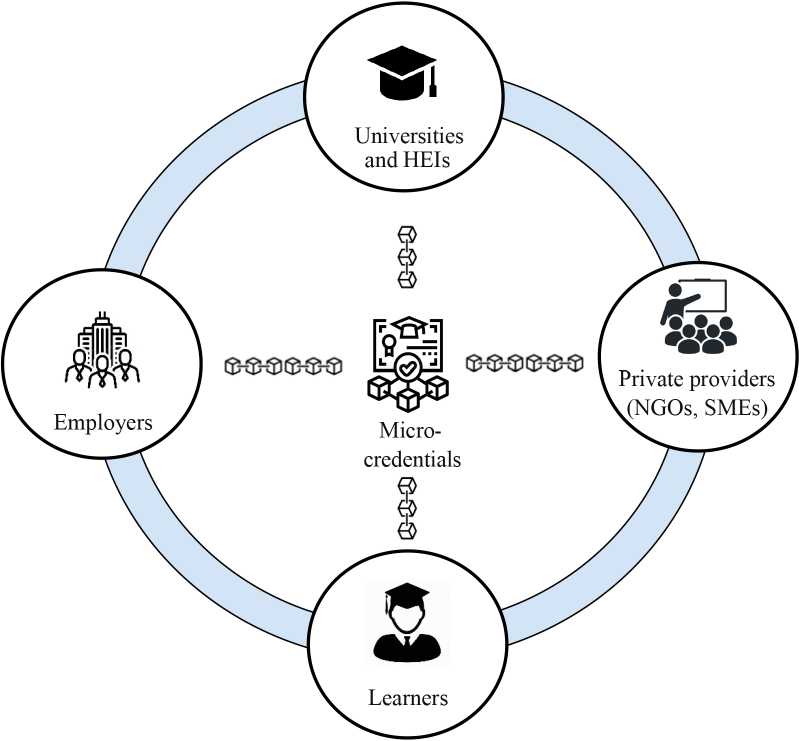
F i g. 1. Micro-credential ecosystem in higher education
Notes : HEIs – higher education institutions; NGOs – non-profit organisations; SMEs – small and medium-sized enterprises. Employers articulate emerging skill needs to universities, HEIs and private providers, who rapidly design short micro-credential courses for learners. The resulting digital credentials are issued and verified using ICT tools (e.g. blockchain), which makes them transparent and easily checkable for all stakeholders.
Source : Figures 1, 5 compiled by the authors.
among the policymakers following their transformation from a totally unknown concept into a global educational trend [23]. Recent digitalization of higher education which was further enhanced by the digital surge caused by the COVID-19 pandemic with its social distancing and home learning largely contributed to the growing popularity of micro-credentials. Because of the recent pandemic, many educators and learners could appreciate their potential and technical aspects represented by verifiability powered by the digital tools that became popular during the lockdowns [24].
About two decades ago, most early academic contributions concentrated largely on digital badges which emerged in the 2010s as one of the first formats of digital credentials. They were initially designed to verify and recognize skills as well as learning achievements that had been acquired outside traditional formal degree programmes [25; 26]. Employers often appreciated the detailed skills-related information contained in these badges but some HEIs often raised doubts regarding their status and reliability when compared to conventional and traditional qualifications and certifications [27]. Nevertheless, as time has passed, a growing body of research literature has emphasized that micro-credentials could clearly reflect what learners know and are able to do in ways that are far more precise and useful than traditional form of certifications offered by HEIs and other educational providers [28].
Nowadys, more recent academic publications increasingly demonstrate that micro-credentials can play the key role of the instruments suitable for competency-based education, lifelong learning, as well as curriculum reform. A number of studies indicate that adding micro-credentials into higher education curricula can enhance flexibility and help educational programmes to profile clearly defined competences and outcomes that are linked to the needs of the contemporary labour markets [29; 30]. As a result of this process of gradual recognition and acceptance, HEIs have gradually begun to integrate some micro-credential modules into their degree structures or to offer short courses of webinars awarded by micro-credentials in study areas of high demand (e.g. data analytics, IT, or project management). These micro-credentials can later be accumulated and eventually combined into traditional qualifications with certificates or diplomas [31]. The available evidence suggests that these approaches have the power to strengthen students’ motivation, as far as they enable learners to focus on topics that match their personal and professional goals while, at the same time, help to improve their employability through clearly specified attestations focused on real skills applicable in everyday lives.
Another common topic that can be found in the research literature is related to the persistent mismatch between traditional education and the up-to-date requirements of the labour markets and the potential of micro-credentials to bridge this gap [32; 33]. Numerous studies highlight concerns of employers that the majority of today’s graduates frequently lack practical and technical competencies needed in workplaces that are currently being transformed by automation and AI [34; 35]. Many HEIs still rely on lecture-based memorisation approaches in their learning and tuition that are obsolete in today’s digital era. These approaches focus on reproducing information rather than developing adaptive and applicable skills. Degree programmes are often criticized for slow changes and transformation of study plans, which can result in discrepancies between the content that is offered to students and the skills that are in demand on the labour market. On the contrary, micro-credential courses can be both prepared and updated in no time which allows to provide rapid and effective responses to emerging skill profiles and new labour market requirements [36]. For instance, they can offer competences in newly introduced programming languages, AI applications, or data literacy complementing traditional degrees with up-to-date, targeted and granular knowledge and skills [37].
Figure 2 that follows illustrates the dynamics of worldwide search interest using Google online search engine (measured as and denoted by the metric called “Interest over Time”) in the terms “micro credential”, “micro degree”, and “digital badge” based on Google Trends tool for the period 2015–2025.
Figure 2 clearly shows a sharp increase in search interest at the early stages
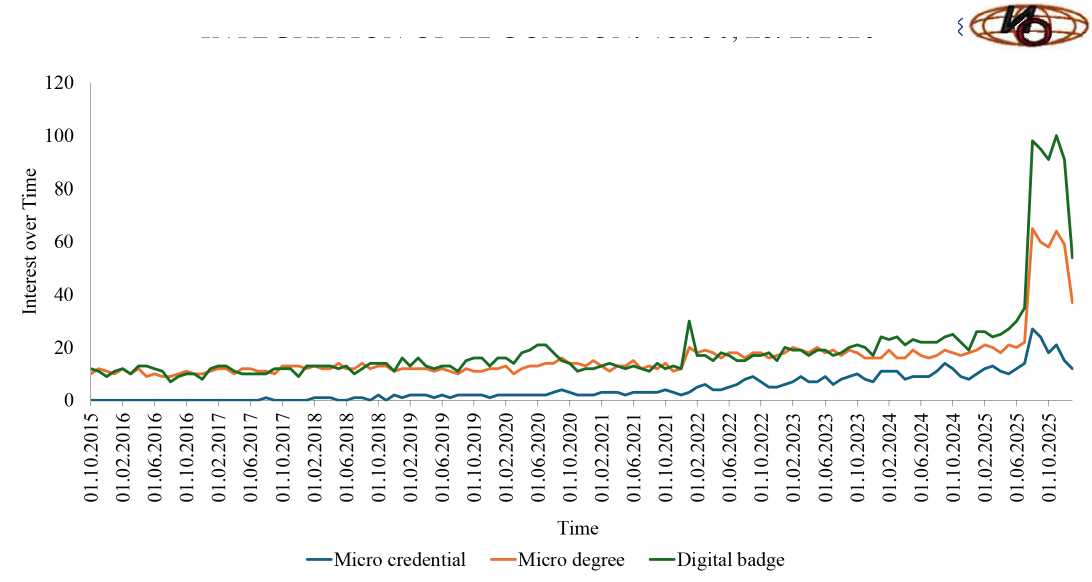
F i g. 2. Dynamics of global search interest in “micro credential”, “micro degree” and “digital badge” (2015–2025)
Note : Values represent the Google Trends “Interest over Time” index (0–100), which normalises the popularity of search queries over the selected period.
Source : Compiled by the authors based on Google Trends.
of the COVID-19 pandemic and again in the second half of 2025. This pattern points to the growing public and policy attention to micro-credentials as an emerging form of digital certification in education and professional training more broadly, including but not limited to higher education.
Furthermore, the debate on micro-credentials also revolves around issues of quality assurance and the development of clear and transparent frameworks. The existence of a large number of diverse definitions and practices in different countries and institutions often makes it difficult to come to a common consensus on what is actually a micro-credential [38]. As a result of that, some researchers investigate how technologies such as Blockchain can be used to secure, authenticate, and share micro-credentials, making them incorruptible, transferable, and easily verifiable across various regions, countries, and jurisdictions [39].
Last but not least, research literature highlights that micro-credentials are no longer the exclusive product of HEIs and universities. A wide spectrum of other actors (including professional associations, industry consortia, start-ups, NGOs, and small and SMEs are increasingly involved in designing, offering, awarding, and issuing micro-credentials2 [40]. This diversification of providers challenges the long-standing dominance of HEIs in certifying learning and reveals the signs of an on-going broader transformation of the post-COVID educational landscape in the 21st century.
Materials and Methods
Data. This study employs a bibliometric network analysis of publications dedicated to micro-credentials that are indexed in Elsevier’s Scopus database. The final obtained dataset consisted of 664 documents published between 1992 and 2025 that include the term “micro-credentials” (or a closely related variant) in the title, abstract, or keywords. The starting year 1992 corresponds to the earliest Scopus-indexed publication in the dataset that explicitly uses the term “micro-credentials” or a closely related variant. The end point of 2025 reflects the most recent snapshot of the database available at the time of data collection. Scopus database has been chosen as the primary data source instead of alternative databases such as Web of Science or Dimensions because of its comparatively wider and broader coverage of academic publications in the fields of social sciences and education. In particular, Scopus indexes a larger number of journals and conference proceedings relevant to emerging, interdisciplinary domains, making it a suitable platform for capturing the evolving discourse on micro-credentials. Other databases, such as Web of Science (WoS) or Lens.org, also provide valuable coverage of research on micro-credentials. In this study we relied on Scopus because it is widely used in bibliometric studies in education and the social sciences and even offers individual researchers 30-days full access for each peer review of a paper submitted to Elsevier journal. We acknowledge that using a single database may omit some relevant publications. Therefore, the results should be interpreted as reflecting the Scopus-indexed segment of the literature. Future research could replicate this analysis using multiple databases for triangulation.
Inclusion Criteria. The search in Scopus was carried out using the term “micro-credentials” (including close spelling variants) in titles, abstracts or author keywords. To keep the focus on pedagogy and higher education, we restricted the dataset to records indexed in the subject areas “Social Sciences”, “Arts and Humanities”, “Business, Management and Accounting” and “Computer Science – Education”, and to documents written in English. This means that publications on micro-credentials in purely technical or non-educational contexts were excluded from the analysis.
Table 1 below provides a list of most-cited publication on micro-credentials in higher education.
From Table 1 it becomes apparent that most-cited articles on the topic of micro-credentials were published between 2018 and 2025 (which points at the novelty and yet importance of the topic). Moreover, most of the articles listed in Table 1 represent comprehensive literature reviews which only reinforces the importance and relevance of this study which is also a literature review, albeit an extended and complex one featuring the bibliographic network analysis.
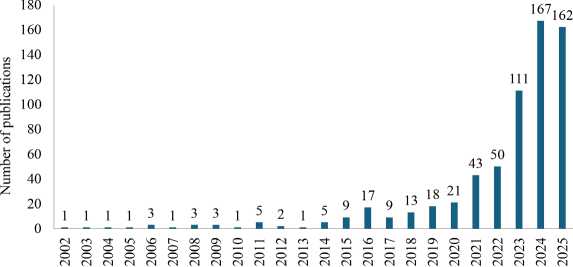
Furthermore, Figure 3 presents the trajectory of publication activity on micro-credentials over time (2002–2025), revealing a clear upward trend that accelerates in the
T a b l e 1. Top 10 most cited articles on micro-credentials (1992–2025)
|
Year |
Article |
Number of citations |
|
2022 |
McGreal R., Olcott Jr D. A Strategic Reset: Micro-Credentials for Higher Education Leaders [41] |
128 |
|
2023 |
Varadarajan S., Koh J.H.L., Daniel B.K. A Systematic Review of the Opportunities and Challenges of Micro-Credentials for Multiple Stakeholders: Learners, Employers, Higher Education Institutions and Government [42] |
117 |
|
2022 |
Wheelahan L., Moodie G. Gig Qualifications for the Gig Economy: Micro-Credentials and the ’Hungry Mile’ [43] |
108 |
|
2021 |
Wheelahan L., Moodie G. Analysing Micro-Credentials in Higher Education: A Bernsteinian Analysis [44] |
107 |
|
2021 |
Brown M., Mhichil M.N.G., Beirne E., Mac Lochlainn C. The Global Micro-Credential Landscape: Charting a New Credential Ecology for Lifelong Learning [31] |
107 |
|
2021 |
Selvaratnam R.M., Sankey M.D. An Integrative Literature Review of the Implementation of Micro-Credentials in Higher Education: Implications for practice in Australasia [45] |
89 |
|
2018 |
Carey K.L., Stefaniak J.E. An Exploration of the Utility of Digital Badging in Higher Education Settings [46] |
85 |
|
2023 |
Alsobhi H.A., Alakhtar R.A., Ubaid A., Hussain O.K., Hussain F.K. Blockchain-Based Micro-Credentialing System in Higher Education Institutions: Systematic Literature Review [47] |
85 |
|
2023 |
Ahsan K., Akbar S., Kam B., Abdulrahman M.D.A. Implementation of Micro-Credentials in Higher Education: A Systematic Literature Review [48] |
73 |
|
2020 |
Hunt T., Carter R., Zhang L., Yang S. Micro-Credentials: The Potential of Personalized Professional Development [49]. |
66 |
Source : Compiled by the authors based on Scopus database.
Year
F i g. 3. Trend in the number of Scopus-indexed publications on micro-credentials (2002–2025)
Note : The figure shows the annual number of documents in the dataset, illustrating the rapid growth of research activity in recent years.
Source : Compiled by the authors based on Scopus database.
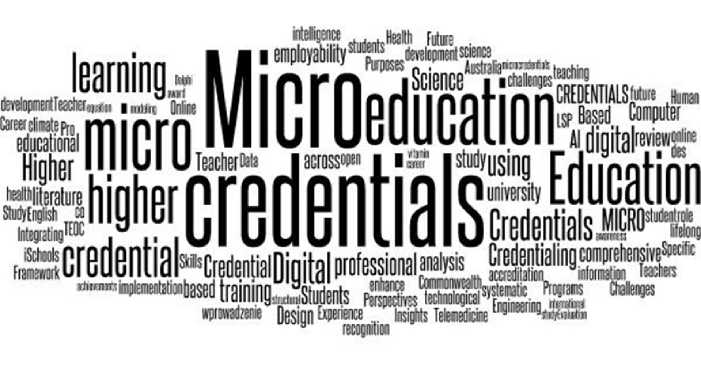
F i g. 4. Word Cloud based on the titles of 664 papers from Scopus database (1992–2025)
Note : Larger and bolder terms appear more frequently across titles, indicating the most common concepts in academic literature.
Source : Compiled by the authors using WordItOut.
most recent years. Figure 3 documents how academic research on this topic has shifted from a handful of isolated contributions to a substantial and steadily growing body of scientific literature. It shows the annual number of documents in the dataset, illustrating the rapid growth of research activity in recent years.
In addition, Figure 4 shows a word cloud generated from the titles of the 664 Scopus-indexed publications. Terms displayed in larger font sizes appear more frequently across titles, highlighting recurrent concepts and focal points in micro-credential research. This visualization provides an initial overview of dominant themes and terminology, which is further explored in the subsequent bibliometric analysis.
In the next section, we transform this material into a set of bibliometric networks in order to identify the dominant themes and structural patterns of research on micro-credentials.
Research Procedure. Building on the dataset described above, we applied bibliometric network analysis to explore the intellectual structure and main thematic directions of research on micro-credentials. This approach makes it possible to quantify publication patterns and to visualise connections within a large corpus of literature, for example by examining how keywords co-occur or how frequently certain articles are cited together.
Research Tools. The network bibliographic analysis was performed using VOSviewer (version 1.6.18), a specialised software tool widely used for constructing and visualising bibliometric networks. VOSviewer allows the creation of maps that represent items such as authors, papers, or terms as nodes, with links indicating relationships (e.g., co-occurrence in titles and abstracts, co-citation, or bibliographic coupling). Through clustering algorithms, the software groups closely related items, thereby revealing major thematic clusters within the micro-credential discourse.
Table 2 summarises the main parameters used for dataset construction and selection, including the data source, time frame, language restrictions, keyword strategy, document types, and final sample size. These criteria were applied by the authors to ensure consistency and transparency in the bibliometric data collection process.
|
T a b l e 2. Summary of data and data selection algorithm |
|
|
Category |
Specific criteria |
|
Reference and citation database |
Scopus |
|
Time period |
1992–2025 |
|
Language |
English |
|
Keywords |
“micro-credentials” |
|
Document types |
|
|
Articles |
289 |
|
Proceeding papers |
197 |
|
Others |
178 |
|
Sample size |
n = 664 |
Source : Compiled by the authors.
Figure 5 below features a schematic representation of the methodological workflow used in this paper and outlines the steps from defining the research phenomenon and search strategy through data extraction to the construction and interpretation of bibliometric networks.
Data Analysis. In VOSviewer, we constructed separate networks for terms (titles and abstracts) and for bibliographic data (keywords, citations and bibliographic coupling). For the text-based analysis, only terms that occurred at least five times across the corpus were included.
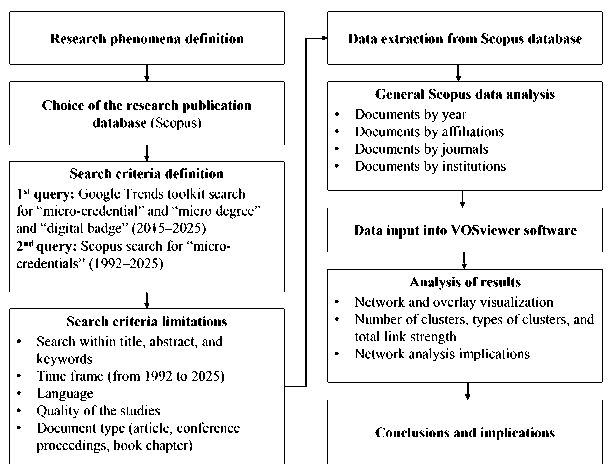
F i g. 5. Outline of the bibliometric research methodology
Note : The diagram summarises the main stages of the study: definition of the research phenomenon, selection of the database and search criteria, screening and cleaning of records, and construction and interpretation of bibliometric networks in VOSviewer.
For the bibliographic analysis, the minimum number of keyword occurrences was set to five and the association-strength normalisation was used. Clusters were identified using the VOS clustering technique with the default resolution parameter and a minimum cluster size of 10 items. All maps were generated using fractional counting, and labels were manually checked to remove generic terms that were not specific to micro-credentials.
In both the term-based and bibliographic maps, clusters were generated automatically by the VOSviewer clustering algorithm based on patterns of co-occurrence and co-citation. As is typical for such network visualisations, some thematic areas partially overlap, and individual terms may be linked to several clusters at once. Cluster labels are therefore interpretative and were assigned by the authors based on the most frequent and central terms within each group.
Results
Text-Based Cluster Analysis. This section presents the empirical results of the bibliometric analysis conducted with VOSviewer. The findings are displayed in the form of network maps, which reveal the identification of central topics, clusters, and interconnections that can be identified from the thorough analysis of research literature.
Figure 6 displays the results of the textbased bibliographic network cluster analysis that was based on the data from titles and abstracts of all 664 publications related to micro-credentialing selected from Scopus database and covering the time span from 1992 until 2025. The resulting map reveals five noticeable clusters that are described below in greater detail.
The keyword analysis shows that terms associated with “micro-credentials” most frequently align with five thematic areas: employability and micro-credentials (Cluster 1); distance learning and flexible modes
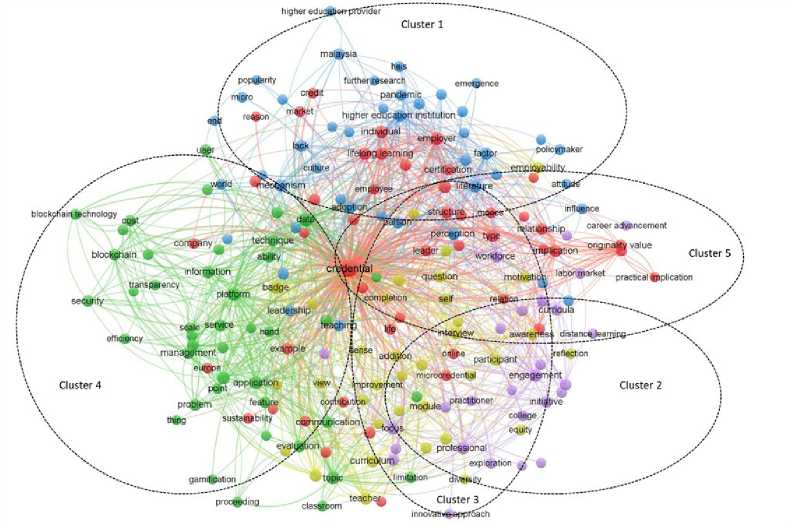
F i g. 6. The dominant clusters of cross-sector research connected with micro-credentials retrieved from the sample of 664 publications indexed in Scopus
Notes : The VOSviewer map is based on terms extracted from titles and abstracts of 664 publications and reveals five clusters: 1 – employability and micro-credentials; 2 – distance learning and flexible provision; 3 – learning processes and skills development; 4 – digitalisation and technological integration; 5 – quality assurance and sustainability.
Source : Hereinafter in this article all figures were drawn up by the authors based on VOSViewer v. 1.6.18 software.
of provision (Cluster 2); learning processes and skills development (Cluster 3); digitalization and technological integration (Cluster 4); quality assurance and sustainability (Cluster 5).
Having identified these five clusters, we now interpret their substantive meaning and provide illustrative examples from current practice. The results indicate that lifelong learning functions as a universal concept traceable across several clusters. It appears to be closely linked to the employability-focused cluster, where workers are expected to update their skills on a continuous basis, and to the distance-learning cluster, in which online formats make ongoing learning more accessible. This suggests that micro-credentials can satisfy both the immediate needs of the labour market as well as the long-term development trajectories of individuals. Digital badges are at the similar position appearing within the distance-learning cluster as well as the technology-oriented cluster, which highlights the role of digital tools (including badges and Blockchain-based solutions) in promoting the success of online digital micro-credential initiatives.
The matches and connections between clusters point at the fact that effective micro-credential ecosystems typically combine several important dimensions. For example, a well-designed study programme can therefore employ digital technologies (Cluster 4) to deliver flexible online courses (Cluster 2) that foster learning and skills development (Cluster 3), improve employability and motivation (Cluster 1), and at the same time comply with quality and sustainability requirements (Cluster 5). Overall, the analysis reveals the strong interdependence between higher education and employment in the micro-credential discourse. Keywords frequently co-occur with notions such as “digital badges”, “employment”, and “lifelong learning”, reflecting a broad agreement in the literature that micro-credentials create a bridge between formal education and workplace skill demands, mediated by digital technologies and framed by quality considerations.
Concrete examples from the literature illustrate how these clusters translate into practice. For Cluster 1 (employability), several studies show universities co-designing micro-credentials with industry partners to address specific skill shortages, for instance in data analytics [41–43], cyber-security [44; 45], or project management [47–49]. Cluster 2 (distance learning and flexible provision) is reflected in large-scale online initiatives in Australasia and Europe, where micro-credentials are offered fully online and can be stacked towards larger qualifications [31; 45]. Cluster 3 (learning processes and skills development) aligns with research on competency-based curricula and authentic assessment in micro-credential courses, including the use of digital badges to evidence mastery of discrete skills [46; 49]. Cluster 4 (digitalisation and technological integration) is supported by empirical pilots of blockchain-based credentialing systems in higher education institutions [39; 47], while Cluster 5 (quality assurance and sustainability) is connected to emerging national and institutional frameworks that define standards for learning outcomes, workload and assessment in micro-credential programmes [42; 44; 45].
Figure 7 confirms this discussion by visualising the density of the term-cooccurrence network in the literature on micro-credentials. Areas with warmer colours indicate topics that have been studied more intensively within this body of research. It needs to be mentioned that the density visualisation does not measure the “quality” of research but rather the concentration of frequently co-occurring terms within the dataset.
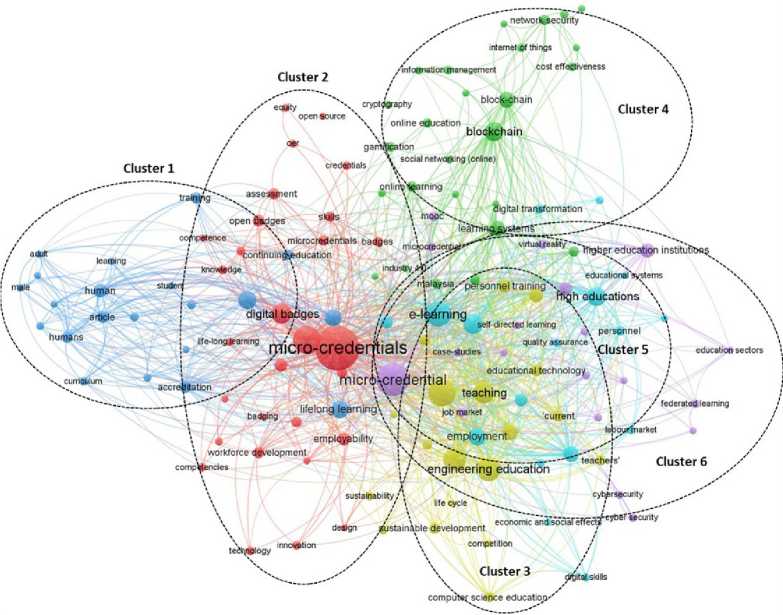
Bibliographic Cluster Analysis. Furthermore, Figure 8 reveals the results of the network map based on the bibliographic data (keyword co-occurrences, citation, and bibliographic coupling) retrieved from 664 publications selected from Scopus database (1992–2025). Our results of the bibliometric network analysis demonstrate that six main clusters are identified: learner motivation and perceived benefits (Cluster 1); alternative credentialing, including digital badges and Massive Open Online Courses (MOOCs) (Cluster 2); lifelong learning and continuing education (Cluster 3); AI-enhanced learning and advanced technologies (Cluster 4); professional development for teachers (Cluster 5); equity, inclusion, and access in education (Cluster 6).
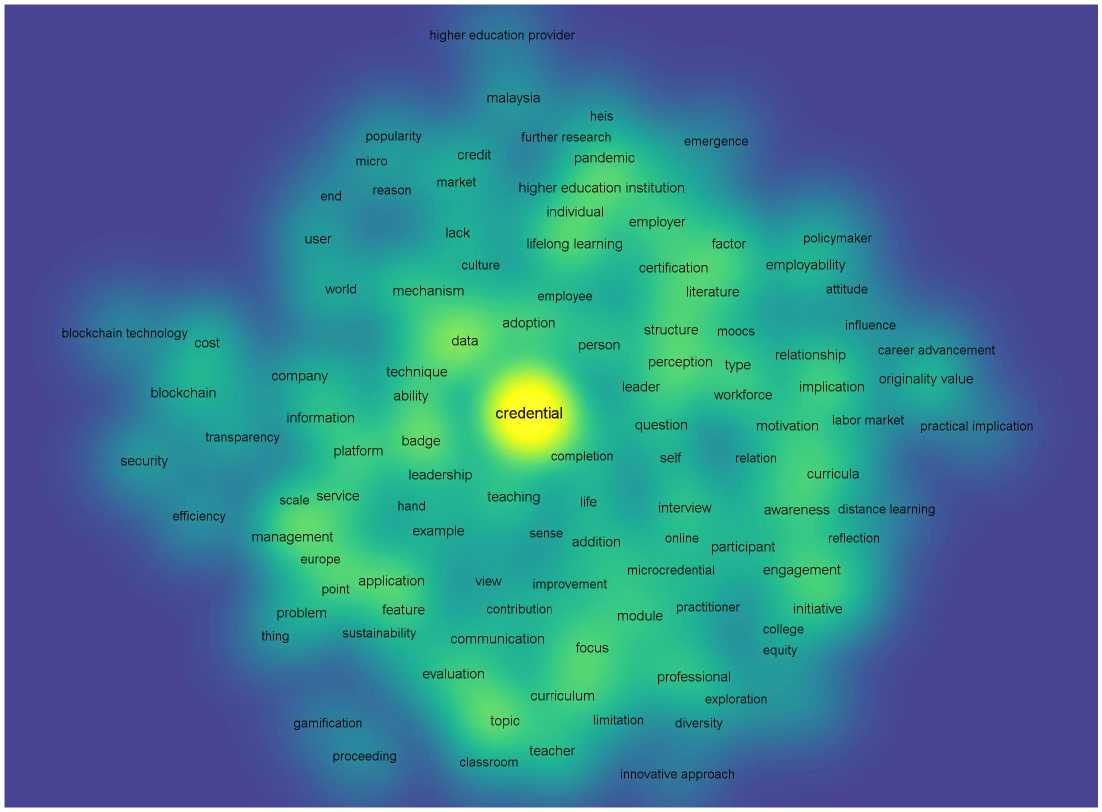
F i g. 7. Density visualization of the network cluster analysis of the sample of 664 publications on micro-credentials indexed in Scopus
Note : Warmer colours indicate areas of higher density, where terms related to micro-credentials appear more frequently and form the core of the research field.
Overall, the results demonstrate that research on micro-credentials is structured around closely interconnected pedagogical, technological and labor-market dimensions. The bibliographic cluster analysis shows that micro-credentials are studied not only as digital certificates, but also as instruments for flexible learning, employability, lifelong education, professional development and inclusion. Therefore, the results confirm that micro-credentials represent an emerging interdisciplinary field in which higher education increasingly converges with AI-driven technologies and skills-based certification.
Discussion
Having identified these six clusters, we now discuss their substantive meaning and provide illustrative examples from current practice. The results indicate that lifelong learning functions as a universal concept traceable across several clusters. It appears to be closely linked to the employability-focused cluster, where workers are expected to update their skills on a continuous basis, and to the distance-learning cluster, in which online formats make ongoing learning more accessible. This suggests that micro-credentials can satisfy both the immediate needs of the labour market as well as the long-term development trajectories of individuals. Digital badges are at the similar position appearing within the distance-learning cluster as well as the technology-oriented cluster, which highlights the role of digital tools (including badges and Blockchain-based solutions) in promoting the success of online digital micro-credential initiatives.
Below we briefly characterise each of these six clusters and relate them to how micro-credentials are implemented in higher education and industry. All in all, these six clusters highlight the wide-ranging and interdisciplinary nature of the recent research and debate on micro-credentialing. If we compare these results with the text-based clusters from Figures 6 and 7, it becomes clear that the bibliographic clusters place stronger emphasis on cutting-edge technologies (particularly AI in Cluster 4) and on specific application contexts such as teacher professional learning (Cluster 5), while
networl#ecarrty interne!.of things cost effectiveness
/Infauna ti block^h;
cryptography equity blockchi social networking (oniwj assessment traitjipg skills educational'sysfems educations diglt^lbarisei article sett-directed learning h ипцрпз life-longjeaming technology federated learning current tabounfnarket tployment teacheis'
Cluster 6
cyt^rsecurisy sustainability, етГ^¥Жа?е’мг«а*
Cluster 3
digitalskills personnel
’’•fluster 5
''-engineering education industry,^-' --------чч
/X^ai^siaZpSsonnel training'
design sustainable development у \ competition ф empt^pbility workforce development lerjtial
: teaching competence \ mlcrocr«ientials badges
’ "’continuing,education digital transformation /''
leatningj'jyMeniS" ""—., virtual reality -^.^^. education institutions^
garret credentials \
J , lifelong learning’' badging ° \
Cluster 2
Cluster 4
Cluster 1
F i g. 8. Network map based on the bibliographic data of the sample of papers containing the keywords “micro-credentials” retrieved from the sample of 664 publications indexed in WoS
Notes : The map is based on keyword co-occurrences, citation links and bibliographic coupling in 664 publications and identifies six clusters: 1 – learner motivation and perceived benefits; 2 – alternative credentialing, including digital badges and MOOCs; 3 – lifelong learning and continuing education; 4 – AI-enhanced learning and advanced technologies; 5 – professional development for teachers; 6 – equity, inclusion and access in education.
still incorporating some important themes such as motivation, alternative credentials, lifelong learning, as well as equity. The relationships between clusters are also quite informative. The integration of AI tools into micro-credential platforms (Cluster 4) has the potential to support personalised learning pathways, which can positively influence learner motivation and outcomes (related to Cluster 1). In the similar fashion, using micro-credentials in teacher training (Cluster 5) appears to indirectly foster equity and inclusion (Cluster 6), since well-prepared educators and tutors are essential for delivering high-quality, inclusive education.
Together, the text-based and bibliographic analyses confirm that micro-credentials are simultaneously studied as technological innovations, pedagogical tools, workforce-development mechanisms and policy instruments. The identification of six interconnected clusters indicates that the subject of micro-credentialing in higher education and targeted AI-driven learning is rapidly expanding, with research addressing impacts at the three main levels: individual (learner), institutional (higher education providers), and systemic (labour market and society), all of them being equally important and working in unison to contribute to the transition of modern digitalized higher education that needs to respond to the rapidly changing needs of economy and society.
The bibliographic clusters also map onto concrete use-cases. For example, Cluster 4 (AI-enhanced learning and advanced technologies) resonates with recent initiatives that combine micro-credentials with AI-driven adaptive learning platforms in engineering and technical education [9; 11]. Cluster 5 (professional development for teachers) is illustrated by micro-credential programmes that support educators in learning analytics, online pedagogy and inclusive teaching practices [40; 49]. Cluster 6 (equity, inclusion and access) corresponds to projects where micro-credentials are used to widen participation, for instance by recognising prior experiential learning of adult learners or by offering low-cost online credentials for under-represented groups3 [42].
Conclusion
This bibliometric study demonstrates that micro-credentials have become a distinct pedagogical and technological mechanism for structuring flexible learning pathways in higher education. The analysis identified two complementary layers of the field: five text-based clusters centred on employability, distance learning, skills development, digitalisation and quality assurance, and six bibliographic clusters that additionally emphasise learner motivation, alternative credentials, AI-enhanced learning, teacher professional development and equity. This confirms that micro-credentials are not only an administrative response to labour-market needs, but also a pedagogical format that reshapes curriculum design, assessment and lifelong learning in AI-driven universities.
The practical significance of these results stems from their application for universities, policymakers, and employers in designing institution-wide micro-credential strategies, quality-assurance procedures, and stackable pathways linked to degrees or continuing professional development. The paper’s scientific contribution consists in mapping the thematic structure of Scopus-indexed micro-credential research and demonstrating how the field integrates pedagogical theory, digital certification technologies, employability, and inclusive lifelong learning.
The key findings stemming from this study indicate that micro-credentials occupy a strategic position between education, technology, and the modern labour markets. The bibliometric evidence presented in this paper demonstrates the multidimensional role that micro-credentials already play (and are very likely to play in the nearest future) within digitalized and AI-driven higher education systems. Concepts such as higher education, digital badges, employment, and lifelong learning that are increasingly starting to appear in the academic debate on the digital transition of higher education suggest that micro-credentials are now functioning as a connecting link between formal programmes and ongoing professional development. In practical terms, micro-credentials are increasingly perceived by researchers and stakeholders alike as important tools needed for making education more flexible and responsive to both individual aspirations and industry requirements. Students can acquire targeted, on-demand skills, while employers gain more transparent and practical information about those skills in the verifiable digital format.
In addition to that, several important implications emerge from the bibliographic network cluster analyses of micro-credentials research literature. First of all, the importance of employability and learner/ student motivation highlights the perceived value of micro-credentials in improving job prospects and aligning curricula with current and emerging needs for updating and enhancing the existing competences. Policymakers and leaders in higher education might therefore consider micro-credentials as a key component in strategies aimed at narrowing the existing gaps between academic programmes and expectations of employers. This is likely to require closer collaboration with industry partners to ensure that micro-credential content is explicitly designed around real skill shortages and priority areas for competence development. When embedded thoughtfully, micro-credentials can contribute to strengthening human capital in modern digitized and AI-driven economy by fostering continuous upskilling and reskilling, thus supporting a more adaptable workforce in times of rapid technological changes.
Furthermore, the analysis in this paper confirms that digital technologies (e.g. online learning environments, Blockchain infrastructures, and AI systems) remain crucial for the current and future development of micro-credentials. For example, institutions would need to invest in robust digital infrastructures for issuing, managing, and verifying micro-credentials by implementing Blockchain-based credentialing solutions that guarantee security, authenticity, and global portability. The presence of an AI-oriented cluster further suggests that AI can be effectively used to personalise learning pathways and provide intelligent support in micro-credential courses. Adaptive learning environments powered by AI, recommendation systems, as well as analytics can also be used for tailoring content to individual learners with specific profiles which can potentially increase their engagement, success rates, as well as perceived relevance. Nowadays, when higher education becomes more data-intensive and digital, these technologies become crucial for providing micro-credentials in an efficient and learner-centred way.
In addition, it becomes apparent that the long-term success and acceptance of micro-credentials by HEIs, employers, and the general public would also depend on trust and recognition across educational and professional domains. Stakeholders need to develop some coherent standards and frameworks that would define learning outcomes, ensure rigorous assessment, and clarify how micro-credentials would be related to the existing qualification systems (for example via credit transfer or stacking arrangements). In addition, transparent quality assurance mechanisms (e.g. accreditation processes or endorsements by reputable institutions and professional bodies) can increase credibility of micro-credentials for both employers and learners. Moreover, aligning micro-credential initiatives with broader policy agendas, such as the Sustainable Development Goals (SDGs), can make ensure that they would contribute not only to short-term skills needs but also to the long-term social and economic well-being. Using this perspective, micro-credentials should be designed not merely as isolated training certifications but also as useful and modern tools for promoting equity, inclusion, as well as cultural sensitivity. Ensuring that digital micro-credentialing opportunities are accessible to underrepresented and disadvantaged groups is essential if micro-credentials are to function as instruments of social inclusion rather than new sources of inequality.
Additionally, this study suggests that micro-credentials have transformative potential beyond student learning alone. They can also play a role in faculty development and adult learning. Educational authorities and higher education institutions might introduce micro-credential pathways for academic and teaching staff to continuously update their pedagogical and technological competences. Educators who themselves engage with micro-credential learning are likely to integrate this model into their own teaching practice, thereby normalising it for students and colleagues. At the system level, embedding micro-credentials into national and sectoral lifelong learning frameworks – for example, by recognising them in professional licensing or continuing education requirements – can foster cultures in which adults routinely return to formal or non-formal learning to refresh and expand their skills. In this way, micro-credentials can become a cornerstone of resilient lifelong learning ecosystems that support employability and competitiveness in the face of evolving skill demands.
Finally, bibliometric patterns indicate that research and implementation efforts regarding micro-credentials are currently concentrated in specific regions, such as North America, Europe, and Australia, and within particular communities of practice. As interest in micro-credentialing spreads to other regions, there is an emerging need for international dialogue, knowledge exchange, and collaboration. Cross-border partnerships involving universities, HEIs, industry certification bodies, governmental agencies, and international organizations could facilitate the development of functional frameworks, common design principles, and mutual recognition arrangements. Such cooperation would streamline the process of understanding and verifying micro-credentials earned in different countries or sectors, thereby enhancing learner mobility and global employability.
Overall, the results and outcomes of this research have clearly demonstrated that micro-credentials emerged as a novel and promising response to the opportunities and challenges associated with AI-driven and digitalised post-COVID higher education. They point at a broader shift towards modular, skills-oriented learning that complements rather than replaces traditional university degrees. However, realising their full potential would require attention to learner motivation and engagement, technological capacity (including AI and Blockchain), quality assurance and recognition, as well as alignment with wider societal goals such as equity and lifelong learning. If supported by coherent policy frameworks and collaborative governance, micro-credentials can really become a key lever for making higher education more flexible, inclusive, and responsive to the needs of learners and societies in the 21st century.
From a practical standpoint, several recommendations emerge from our findings. For policymakers, it is essential to embed micro-credentials into national qualification frameworks and quality assurance systems, providing clear guidance on standards, recognition, and funding. For universities and other HEIs, we recommend developing institution-wide micro-credential strategies that prioritize co-design with employers, establish clear pathways for stacking into degrees, and implement robust digital infrastructures for issuing and verifying credentials. For employers, the evidence suggests the value of engaging in partnerships with HEIs and trusted providers to define relevant competencies and to recognize high-quality micro-credentials in recruitment, promotion, and continuing professional development.
