
Development of practical recommendations for the use of adaptive information processing algorithms in computers of ground receiving stations of a multi-position surveillance system
Free access
This article examines the development of practical recommendations for the use of adaptive information processing algorithms in specialized navigation computers of ground receiving stations of a multi-position surveillance system (MPSS). It is shown that the implementation of the developed algorithms will improve the accuracy of estimating the coordinates of aircraft and vehicles in the MPSS when exposed to noise and interference. Practical recommendations for implementing the proposed adaptive information processing algorithms in the software of the MPSS equipment are provided.
Similar articles in the section Electrical engineering

Short address: https://sciup.org/140315074
IDS: 140315074 | UDC: 621.396.96
Text of the scientific article Development of practical recommendations for the use of adaptive information processing algorithms in computers of ground receiving stations of a multi-position surveillance system
MPSSs are a powerful air traffic surveillance tool. These systems are designed to extract and display aircraft or vehicle identification data to air traffic controllers. They provide accurate data in real time without human intervention, using a number of ground receiving stations (GRS) strategically located around the coverage area. These stations are connected to a central station, which houses a central server for calculating the aircraft and vehicle positions [1, 2].
Algorithms for adaptive data processing in MLSNs are proposed in [3, 4] and the results of a study of their accuracy characteristics are presented. This article discusses practical recommendations for the application of adaptive data processing algorithms in specialized navigation computers of MLSN GRS.
The developed algorithm for adaptive estimation of radio navigation parameters [6] is proposed for implementation in the "Processing and Control" software, which is part of the "Almanac" MLSN receiving device (Fig. 1).
Figure 1 – Receiver Unit of the Automatic Dependent Surveillance (ADS) System
The AMPSS receiver unit receives and processes signals from the filter and amplifier module, generates and sends target messages to the server hub for subsequent processing and transmission to air traffic control centers (ATC) [5] The receiver unit is housed in the receiver-computer module (RCM) (Fig. 2), which is designed to receive signals from the filter and amplifier module perform monitoring and control, and process information, including generating and maintaining target tracks for the 1090 ES Automatic Dependent Surveillance (ADS-B) system.
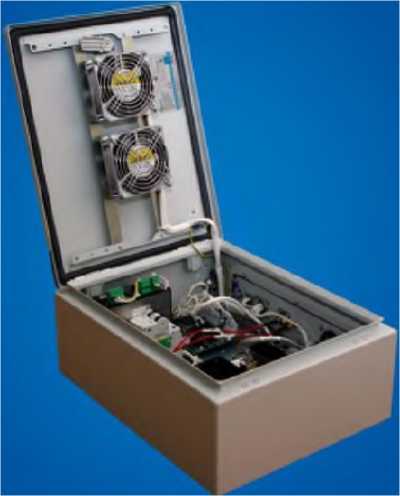
Figure 2 – Software and Computing Module of the AMPSS System
The algorithm for adaptive object location estimation is proposed to be implemented on the AMPSS server hub (Fig. 2), which is a computing system for determining aircraft and vehicle coordinates using multilateration.
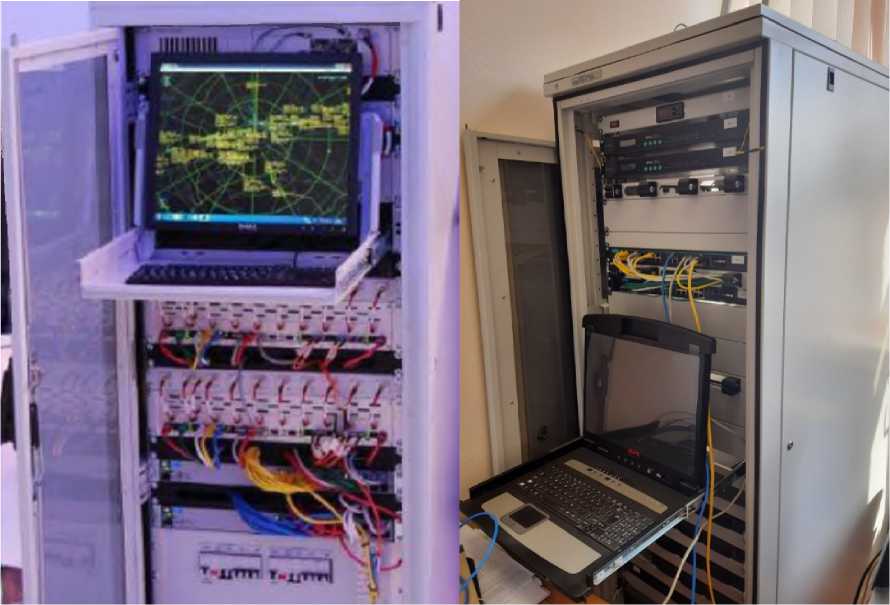
a)
b)
Figure 3 – Multilateration System Hub Server: a) "Almanac", b) "Tetra-I"
In conclusion, it should be noted that the paper provides practical recommendations for the implementation of adaptive information processing algorithms in the software of multilateration system equipment. The implementation of the developed algorithms will improve the accuracy of aircraft and vehicle position estimation in multilateration systems when exposed to noise and interference.
