
Leadership Relationships in Context: The Role of Leader–Member Exchange Theory and Organisational Culture in Shaping Employee Outcomes
Journal: International Journal of Management Trends: Key Concepts and Research @journal-ijmt
Article in issue: 1 vol.5, 2026.
Free access
Leadership effectiveness and employee outcomes are increasingly understood as relational and context-dependent phenomena. Leader–Member Exchange (LMX) theory highlights the importance of dyadic leader–follower relationships, while organisational culture shapes the norms, values, and practices within which these relationships unfold. This study examines the interplay between LMX, organisational culture, communication practices, and talent management, with a particular focus on how these dynamics shape employee engagement, performance, well-being, and retention. Adopting a qualitative, constructivist literature study, the research synthesises empirical studies, meta-analyses, and conceptual frameworks spanning leadership, organisational behaviour, and talent management, and a thematic analysis was conducted to identify recurring relational patterns, contextual moderators, and mechanisms linking LMX quality to employee outcomes. The review demonstrates that high-quality LMX relationships, characterised by trust, reciprocity, and open communication, are strongly associated with positive employee outcomes, particularly when embedded in inclusive and adaptive organisational cultures, whereas low-quality exchanges within misaligned or hierarchical cultures contribute to disengagement, relative deprivation, and turnover intentions. Communication practices and talent management systems emerge as critical mediating mechanisms, with digital and remote work contexts amplifying both relational opportunities and risks. The findings underscore the need for leadership approaches that integrate relational awareness with cultural alignment and systemic talent practices, advancing a more contextualised understanding of LMX and highlighting inclusive leadership, relational mindfulness, and culturally responsive communication as essential for organisational sustainability and workforce well-being.
Similar articles in the section Management
Short address: https://sciup.org/170213189
IDS: 170213189 | UDC: 005.32:316.46 | DOI: 10.58898/ijmt.v5i1.31-39
Text of the scientific article Leadership Relationships in Context: The Role of Leader–Member Exchange Theory and Organisational Culture in Shaping Employee Outcomes
© 2026 by the authors. This article is an open access article distributed under the terms and conditions of the Creative Commons Attribution (CC BY) license .
Employee outcomes are deeply intertwined with the relational and cultural environments of organisations. LMX theory emphasises that high-quality exchanges foster trust, psychological empowerment, and motivation, whereas low-quality exchanges can generate relative deprivation, disengagement, and turnover intentions (Graen & Uhl-Bien, 1995; Gerstner & Day, 1997;
Relational quality encompassing trust, reciprocity, and communication satisfaction exerts a direct influence on employees’ psychological states and work behaviours, with organisational trust significantly enhancing the quality of work life through effective managerial practices, while personality traits exert a comparatively weaker effect (Omilion-Hodges & Ptacek, 2021;
Scholars argue that leaders who cultivate inclusive, transparent, and responsive exchanges facilitate not only individual performance but also collective team outcomes (Aggarwal et al., 2020; Dulebohn et al., 2012). Organisational culture profoundly shapes employee experiences across hierarchical levels and contexts, with supportive, participative, and innovative cultures enhancing organisational citizenship behaviour, proactive engagement, job satisfaction, motivation, and commitment, while hierarchical, market-oriented, or toxic cultures suppress initiative, reduce engagement, increase stress, and elevate turnover intentions (Fernandes, Pereira, & Wiedenhöft, 2023;
Organisational culture provides the contextual lens through which LMX quality manifests. Schein (2010) asserts that culture shapes expectations for communication, conflict resolution, and leadership legitimacy. Alignment between leader behaviour and organisational norms enhances work engagement, fosters commitment, and reduces turnover (Alagaraja & Shuck, 2015). Cultural misalignment or toxic leadership can undermine trust, constrain skill utilisation, and trigger disengagement, whereas leadership behaviours aligned with organisational values, supported by a constructive culture, enhance motivation, performance, and job satisfaction (Adekoya et al., 2019). Effective talent management practices such as structured career development, mentoring, and recognition programs promote retention, while the absence of clear succession planning increases turnover intentions, and structured succession initiatives significantly mediate the relationship between self-leadership and turnover intention (Aibieyi & Oghoator, 2015;
Literature Review
LMX Theory and Its Foundations
LMX theory, developed from the vertical dyad linkage model (Dansereau et al., 1975), conceptualises leadership as differentiated and relationship-based. High-quality LMX relationships are characterised by mutual trust, respect, and obligation, whereas low-quality relationships often produce transactional, compliance-driven exchanges (Graen & Uhl-Bien, 1995; Aggarwal et al., 2020). Meta-analytic evidence confirms that high-quality LMX is positively associated with job performance, work engagement, and organisational citizenship behaviour (Gerstner & Day, 1997;
Communication as a Relational Mechanism
Communication emerges as a central mechanism in shaping LMX quality. Frequency, transparency, and cooperative communication mediate the relationship between leader behaviours and employee perceptions of inclusion and insider status (Abu Baka & Sheer, 2013; Omilion-Hodges & Ptacek, 2021). Technologically mediated communication in remote contexts further complicates relational dynamics, with digital tools enhancing or constraining feedback, trust, and engagement depending on their use (Borhani et al., 2024; Begemann et al., 2024). Morrison (2014) highlights that employees’ willingness to speak up or remain silent is shaped by leadership behaviours, organisational culture, and perceptions of psychological safety, and Huang, Wilkinson, and Barry (2024) demonstrate that perceptions of contextual voice efficacy significantly determine the propensity to exercise voice, with low perceived efficacy increasing silence.
Talent Management and Retention
Talent management and retention strategies are closely intertwined with LMX dynamics: high-quality exchanges facilitate mentoring, skill development, and career progression, whereas low-quality exchanges often result in turnover and underutilisation of employees’ capabilities (Al Dalahmeh, 2020; Mey et al., 2021; Nzonzo & du Plessis, 2020). Integrating wellness interventions, inclusive leadership, and structured succession planning strengthens organisational resilience and employee commitment (Zinyama & Tsara, 2022; Hafnidah et al., 2025). Inclusive leadership additionally promotes employee wellbeing by fostering a thriving work environment, with individual traits such as growth need strength amplifying the positive impact of leadership practices (Liu et al., 2025).
Organisational Culture as Context
Organisational culture underpins the effectiveness of both LMX and talent management interventions. Strong, adaptive cultures foster psychological safety, facilitate constructive conflict resolution, and align organisational goals with employee motivations (Schein, 2010). Research demonstrates that misalignment between leadership practices and cultural norms can undermine engagement and exacerbate family–work conflicts, particularly in remote or hybrid work contexts
Research Methodology
Conceptual Framework: The Relational-Cultural Model of Employee Outcomes
This section introduces the Relational-Cultural Model: Employee Outcomes Framework, developed through an integrative synthesis of the literature review and thematic analysis. Central to the model is LMX, which captures the quality of dyadic relationships between leaders and subordinates, highlighting dimensions of trust, reciprocity, and effective communication. Organisational culture provides the contextual foundation for these exchanges, shaping shared norms, values, and expectations that influence both the enactment and perception of leader–follower interactions.
Within this context, communication practices and talent management strategies operate as critical mediating mechanisms, translating relational and cultural influences into tangible organisational processes. Communication practices that emphasise transparency, frequency, and inclusivity facilitate alignment between leaders and employees, reinforcing perceptions of fairness, support, and belonging. Talent management interventions, including structured mentorship, career development, and succession planning, amplify the positive effects of high-quality LMX and supportive culture, promoting employee engagement, performance, well-being, and retention.
Figure 1 depicts a multi-level framework in which leadership behaviours and cultural alignment converge through deliberate organisational practices to shape employee experiences and outcomes, underscoring the need for integrative strategies that simultaneously address relational, cultural, and systemic dimensions.
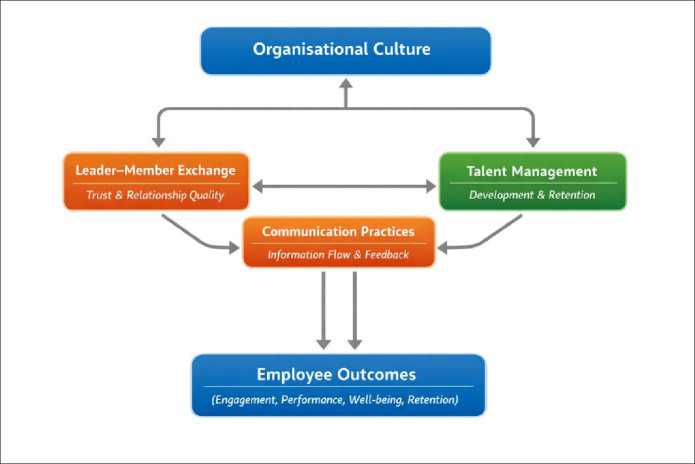
Figure 1: Relational-Cultural Model: Employee Outcomes Framework
Discussion and Implications
This study situates LMX within the broader relational and cultural contexts of contemporary organisations, examining how dyadic leadership interactions, organisational culture, communication practices, and talent management collectively shape employee engagement, performance, well-being, and retention. High-quality LMX relationships, characterised by trust, reciprocity, and open communication, consistently correlate with positive outcomes, particularly when supported by inclusive and adaptive organisational cultures, corroborating research indicating that relational quality directly influences psychological states and work behaviours while personality traits exert a weaker effect (Omilion-Hodges & Ptacek, 2021;
Organisational culture acts both as a lens and a conduit for LMX effectiveness. Supportive, participative, and innovative cultures enhance organisational citizenship behaviour, proactive engagement, and job satisfaction, whereas rigid, hierarchical, or toxic cultures suppress initiative, elevate stress, and increase turnover intentions (Fernandes, Pereira, & Wiedenhöft, 2023; Belias & Koustelios, 2014). Leadership behaviours aligned with cultural norms strengthen motivation, performance, and retention, demonstrating that relational dynamics and cultural alignment are mutually reinforcing (Adekoya et al., 2019;
Communication practices and talent management emerge as key mechanisms through which LMX and organisational culture translate into tangible outcomes. Transparent, frequent, and inclusive communication fosters perceptions of fairness, support, and belonging, particularly in digitally mediated or remote contexts where relational opportunities and risks are amplified (Begemann et al., 2024; Mdhluli, 2025). Structured talent management interventions strengthen retention, engagement, and resilience, whereas gaps exacerbate turnover and disengagement (Aibieyi & Oghoator, 2015; Hafnidah et al., 2025; Liu et al., 2025), indicating that high-quality LMX alone is insufficient without integration into coherent organisational systems.
Conclusion
Effective leadership extends beyond task completion to the cultivation of meaningful relational exchanges that align with organisational culture. LMX theory provides a nuanced lens to examine how dyadic relationships influence engagement, performance, and retention, while communication, culture, and talent management strategies shape the quality of these exchanges. The analysis reveals that high-quality LMX, aligned with inclusive culture and supportive systems, produces significant organisational benefits, whereas low-quality relationships amplify disengagement, inequity, and turnover.
Organisational leaders must integrate evidence-based strategies to foster trust, transparency, and developmental support, recognising the interplay of individual, team, and cultural dynamics. Attention to relational subtleties, particularly in diverse and remote work environments, is crucial for sustaining performance and promoting equity. Future studies should continue to explore the intersections of LMX, organisational culture, and emerging workforce practices, offering actionable insights for leadership development, talent retention, and organisational sustainability.
Study Limitations
As a qualitative, constructivist literature study, this research is subject to several limitations. Much of the underlying evidence derives from highly developed economies, which may limit direct applicability to different socioeconomic and cultural contexts, including the South African setting. The synthesis also relies on published, peer-reviewed sources and excludes grey literature, introducing potential publication bias. Finally, the absence of primary data means the proposed Relational-Cultural Model remains a conceptual contribution requiring empirical validation. Future studies should adopt multi-level, cross-cultural, and longitudinal designs to test the framework and examine the impact of digital transformation on relational and intergenerational dynamics.
Conflict of Interests
The author declares no conflict of interest.
Data Availability and Use of AI Tools
This study is based entirely on a qualitative, constructivist literature review; all data analysed were derived from publicly accessible, peer-reviewed sources, and no primary data were collected. QuillBot and Grammarly were used solely for language editing and readability; all conceptualisation, analysis, interpretation, and synthesis were performed independently by the author.
