
Применение технологии искусственного интеллекта в системе гражданского судопроизводства США
Журнал: Legal Concept @legal-concept
Рубрика: Главная тема номера
Статья в выпуске: 4 т.20, 2021 года.
Бесплатный доступ
Введение: в эпоху активного внедрения цифровых технологий все больше процессов автоматизируется, умные машины берут на себя работу людей. Еще буквально в конце XX в. автоматическая проверка орфографии и поисковые системы воспринимались многими как «высокоинтеллектуальные» информационные технологии. В настоящее время такие процессы стали совершенно тривиальными для большинства людей и уступили место более прогрессивным технологиям. Интеллектуальные системы распознавания лиц, установленные в общественных местах и аэропортах, позволяют проверять личность человека, а также оказывать помощь в поимке преступников. Интеллектуальные помощники в мобильных устройствах, например Google Maps, предоставляют дополнительную информацию о пункте назначения (время работы, наименование организации). Однако все больше и больше дебатов возникает по поводу внедрения технологий искусственного интеллекта в судебный процесс. Многие специалисты в отрасли информационно-коммуникационных технологий, а также практикующие юристы утверждают, что благодаря накопленному опыту и судебной практике возможно прогнозирование и вынесение судебных решений на основе определенных алгоритмов по некоторым категориям дел. Подобная практика уже существует в системе альтернативного урегулирования гражданско-правовых споров. Первое подобное решение было вынесено роботом медиатором еще в 2019 г. в Высоком суде Англии и Уэльса. Для разрешения спора была использована система «Smartsettle ONE», разработанная канадской компанией «iCan Systems». Применение технологии искусственного интеллекта позволило разрешить спор между сторонами и прийти к соглашению менее чем за час. К вопросам внедрения технологии искусственного интеллекта в систему государственных судов законодатель подходит более осторожно. Однако судебные дела не всегда требуют комплексного индивидуального подхода к принятию решений и многие случаи могут быть обработаны автоматически, по крайней мере, частично. В этой связи представляется целесообразным исследовать в настоящей статье основные возможности и риски использования искусственного интеллекта на примере системы гражданского судопроизводства Соединенных Штатов Америки. Цель настоящего исследования достигается путем ответа на ряд поставленных вопросов: как искусственный интеллект может быть полезен для судов? Какие механизмы системы отправления правосудия нуждаются в совершенствовании для эффективной работы систем искусственного интеллекта? Какие формы искусственного интеллекта существуют в системе гражданского судопроизводства США? Как суды и судьи могут осуществлять работу с искусственным интеллектом в соответствии со стандартами справедливой процедуры рассмотрения споров гражданско-правового характера? Методология основывается на теоретическом подходе к исследованию наиболее часто используемых технологий искусственного интеллекта в системе гражданского судопроизводства США, а также ряда национальных законов и иных нормативных актов. На основе анализа полученных теоретических данных, в настоящей работе автором анализируются современные тенденции и механизмы разрешения споров гражданско-правового характера при помощи систем искусственного интеллекта, а также освещаются некоторые, связанные с этим, проблемы. Результаты исследования могут быть использованы при определении ключевых целей и задач процессуального характера, совершенствовании функционирования судебных и внесудебных организаций, правоприменительной, научно-исследовательской деятельности, а также в учебно-преподавательской деятельности, в частности, при лекциях и семинарских занятиях по курсам международного частного права и гражданского процесса. Выводы: увеличение степени осведомленности участников гражданско-правовых споров о современных тенденциях и инструментах отправления правосудия способствует развитию института гражданского судопроизводства, а также увеличению прозрачности и повышению степени доверия граждан судебной системе в целом.
Похожие статьи в разделе Гражданское процессуальное право. Судоустройство
Короткий адрес: https://sciup.org/149139406
IDS: 149139406 | УДК: 347.91 | DOI: 10.15688/lc.jvolsu.2021.4.8
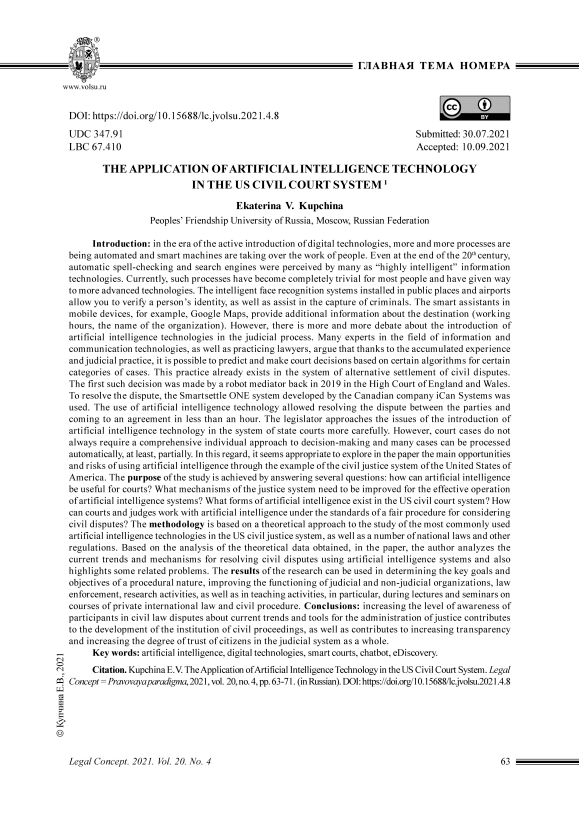
The application of artificial intelligence technology in the US civil court system
Introduction: in the era of the active introduction of digital technologies, more and more processes are being automated and smart machines are taking over the work of people. Even at the end of the 20th century, automatic spell-checking and search engines were perceived by many as “highly intelligent” information technologies. Currently, such processes have become completely trivial for most people and have given way to more advanced technologies. The intelligent face recognition systems installed in public places and airports allow you to verify a person’s identity, as well as assist in the capture of criminals. The smart assistants in mobile devices, for example, Google Maps, provide additional information about the destination (working hours, the name of the organization). However, there is more and more debate about the introduction of artificial intelligence technologies in the judicial process. Many experts in the field of information and communication technologies, as well as practicing lawyers, argue that thanks to the accumulated experience and judicial practice, it is possible to predict and make court decisions based on certain algorithms for certain categories of cases. This practice already exists in the system of alternative settlement of civil disputes. The first such decision was made by a robot mediator back in 2019 in the High Court of England and Wales. To resolve the dispute, the Smartsettle ONE system developed by the Canadian company iCan Systems was used. The use of artificial intelligence technology allowed resolving the dispute between the parties and coming to an agreement in less than an hour. The legislator approaches the issues of the introduction of artificial intelligence technology in the system of state courts more carefully. However, court cases do not always require a comprehensive individual approach to decision-making and many cases can be processed automatically, at least, partially. In this regard, it seems appropriate to explore in the paper the main opportunities and risks of using artificial intelligence through the example of the civil justice system of the United States of America. The purpose of the study is achieved by answering several questions: how can artificial intelligence be useful for courts? What mechanisms of the justice system need to be improved for the effective operation of artificial intelligence systems? What forms of artificial intelligence exist in the US civil court system? How can courts and judges work with artificial intelligence under the standards of a fair procedure for considering civil disputes? The methodology is based on a theoretical approach to the study of the most commonly used artificial intelligence technologies in the US civil justice system, as well as a number of national laws and other regulations. Based on the analysis of the theoretical data obtained, in the paper, the author analyzes the current trends and mechanisms for resolving civil disputes using artificial intelligence systems and also highlights some related problems. The results of the research can be used in determining the key goals and objectives of a procedural nature, improving the functioning of judicial and non-judicial organizations, law enforcement, research activities, as well as in teaching activities, in particular, during lectures and seminars on courses of private international law and civil procedure. Conclusions: increasing the level of awareness of participants in civil law disputes about current trends and tools for the administration of justice contributes to the development of the institution of civil proceedings, as well as contributes to increasing transparency and increasing the degree of trust of citizens in the judicial system as a whole.
Список литературы Применение технологии искусственного интеллекта в системе гражданского судопроизводства США
- Ермакова, Е. П. Реформы гражданского судопроизводства, арбитража и медиации в зарубежных странах 2014-2018 гг. (Австралия, Англия, Германия, Канада, США, Франция) : монография / Е. П. Ермакова. - М. : Инфотропик Медиа, 2018. -192 с.
- Ермакова, Е. П. Искусственный интеллект в гражданском судопроизводстве и арбитраже: опыт США и КНР : монография / Е. П. Ермакова, Е. Е. Фролова. - М., 2021. - 224 с.
- Ермакова, Е. П. Разрешение споров и искусственный интеллект: за и против / Е. П. Ермакова, Е. Е. Фролова ; общ ред. Л. В. Туманова // Перспективы и проблемы развития третейского разбирательства в России : сб. ст. по материалам науч.-практ. конф. с междунар. участием. - 2020. - С. 29-36.
- Иншакова, А. О. Правовое регулирование цифровых технологий / А. О. Иншакова, К. Ю. Ра-дийчук // Инновации. Наука. Образование. - 2020. -№ 20. - C. 549-554.
- Мамычев, А. Ю. «Будущее» как аттрактор современных политико-правовых и социально-экономических трансформаций: обзор основных проблем и подходов / А. Ю. Мамычев, А. А. Ким, Е. Е. Фролова // Advances in Law Studies. - 2020. - Т. 8, № 55. -C. 3-17.
- Русакова, Е. П. Интегрирование современных цифровых технологий в судопроизводство Китайской Народной Республики и Сингапура / Е. П. Русакова // Государство и право. -2020. - № 9. - С. 102-109.
- Velez-Green, A. The United States Can Be a World Leader in AI. Here's How / A. Velez-Green, P. Scharre // The National Interest. - 2017. - Electronic text data. - Mode of access: https://www.cnas.org/ publications/commentary/the-united-states-can-be-a-world-leader-in-ai-heres-how (date of access: 15.07.2021). - Title from screen.
- Garberson, A. What are Analytics Experts Looking to in 2020 with Data and Privacy? / A. Garberson // MarTech Today - 2020. - Electronic text data. - Mode of access: https://martechtoday.com/what-are-analytics-experts-looking-to-in-2020-with-data-and-privacy-238946 (date of access: 10.07.2021). - Title from screen.
- Ilachinski, A. AI, Robots, and Swarms: Issues, Questions, and Recommended Studies / A. Ilachinski // Center for Naval Analysis. - 2017. - P. 6.
- O'Brien, C. AI Startups Raised $18.5 Billion in 2019, Setting New Funding Record / C. O'Brien. -Venture Beat. - 2020. - Electronic text data. - Mode of access: https: //venturebeat. com/2020/01/14/ai-startups-raised- 18-5-billion-in-2019-setting-new-funding-record/ (date of access: 11.07.2021). - Title from screen.
- Colorado Resource Network. - Electronic text data. - Mode of access: https://www.coloradoresource network.com/ (date of access: 15.07.2021). - Title from screen.
- Computing System Innovations. - Electronic text data. - Mode of access: http://csisoft.com/ (date of access: 15.07.2021). - Title from screen.
- Florida Law Help. - Electronic text data. -Mode of access: https://floridalawhelp.org/ (date of access: 15.07.2021). - Title from screen.
- Hilborne, N. Robot Mediator Settles First Ever Court Case / N. Hilborne // Legal futures. - 2019. -Electronic text data. - Mode of access: https:// www.legaliutures.co.uk/latest-news/robot-mediator-settles-first-ever-court-case (date of access: 11.07.2021). - Title from screen.
- JTC Resource Bulletin. Introduction to AI for Courts. Version 1.0. - 2020. - Electronic text data. – Mode of access: https://www.ncsc.org/__data/assets/pdf_file/ 0013/20830/2020-04-02-intro-to-ai-for-courts_final.pdf (date of access: 18.07.2021). - Title from screen.
- Legal Services Corporation (LSC). Justice Gap Report. - Electronic text data. - Mode of access: https://www.lsc.gov/our-impact/publications/other-publications-and-reports/justice-gap-report (date of access: 18.07.2021). - Title from screen.
- National Center for State Courts (NCSC). Trial Trends and Implications for the Civil Justice System. -Electronic text data. - Mode of access: https:// www.courtstatistics.org/__data/assets/pdf_file/0014/ 30614/Trial-Trends-and-Implications-for-the-Civil-Justice-System.pdf (date of access: 20.07.2021). - Title from screen.
- NSCAI, The Final Report. - 2021 (March, 1). -Electronic text data. - Mode of access: https:// www.nscai.gov/wp-content/uploads/2021/03/Full-Report-Digital-1.pdf (date of access: 22.07.2021). - Title from screen.
- Odyssey File & Serve. - Electronic text data. -Mode of access: https://www.tylertech.com/products/ odyssey/file-serve (date of access: 18.07.2021). - Title from screen.
- Rozynski, O. We Are Creating the Alien / O. Rozynski. - 2019. - Electronic text data. - Mode of access: https://towardsdatascience.com/we-are-creating-the-alien-878921e0c3e8 (date of access: 12.07.2021). - Title from screen.
- Brown, P. Waking Up to Artificial Intelligence / P. Brown. - 2020. - Electronic text data. - Mode of access: (date of access: 12.07.2021). - Title from screen.
- The VICTOR Project: Applying Artificial Intelligence to Brazils Supreme Federal Court / Ricardo Vieira de Carvalho Fernandes, Danilo Barros Mendes, Gustavo Henrique T. A. Carvalho, Hugo Honda Ferreira // Research Handbook on Big Data Law Research Handbooks in Information Law series. - 2021. - P. 304317. - DOI: https://doi.org/10.4337/9781788972826.00021.
- Using Machine Learning on Legal Matters: Paying Attention to the Data Behind the Curtain / R. Keeling [et al.] // Hastings Sci. & Tech. L.J. -2020. - Vol. 11, №№ 1. - P. 8-36.
- Rusakova, E. P. Digital Rights as New Object of Civil Rights: Issues of Substantive and Procedural Law / E. P. Rusakova, E. E. Frolova, A. I. Gorbacheva // Advances in Intelligent Systems and Computing. -2020. - Vol. 1100. - P. 665-673.
- Smith, G. Ethical, Safe, Lawful: A Toolkit for Artificial Intelligence Projects / G. Smith, R.Cumbley // Allens with Linklaters LLP - 2019. - Electronic text data. -Mode of access: https://www.allens.com.au/globalassets/ pdfs/campaigns/report-ai-toolkit_may19.pdf (date of access: 12.07.2021). - Title from screen.
- Superior Court of California. County of Los Angeles. LACourtConnect. - Electronic text data. - Mode of access: https://my.lacourt.org/laccwelcome (date of access: 15.07.2021). - Title from screen.
- Vanni, R. How Artificial Intelligence is Transforming the Legal Profession / R. Vanni // Kira Inc. - 2020. - Electronic text data. - Mode of access: https://kirasystems.com/learn/how-artificial-intelligence-is-transforming-the-legal-profession (date of access: 20.07.2021). - Title from screen.
