
Роль домашних и диких млекопитающих в экономике русской деревни юга Западной Сибири XVII–XVIII вв. (по материалам Ананьино)
Журнал: Нижневолжский археологический вестник @nav-jvolsu
Рубрика: Статьи
Статья в выпуске: 2 т.25, 2026 года.
Бесплатный доступ
Статья посвящена описанию характера животноводства и промысловой деятельности жителей деревни Ананьино, а также тренда изменений хозяйственной структуры поселения во времени. Объектом исследования стала коллекция костных остатков животных из раскопок комплекса пяти жилых построек деревни Ананьино XVII–XVIII вв., расположенной на территории Тарского района Омской области. Были определены 25 192 экз. костей от 8 видов домашних и 14 видов диких млекопитающих. Отмечена большая раздробленность костного материала. По длине костей было установлено, что все домашние копытные были малорослыми. На основании анализа стертости зубов реконструирована возрастная структура стада скота. Крупный рогатый скот, свиней и овец выращивали преимущественно на мясо и забивали сразу же по достижении ими достаточного веса. Судя по набору элементов скелета, около половины мясной продукции животноводства и мяса диких копытных вывозили за пределы поселения, вероятно, в Тару. На ранних этапах становления хозяйства, с начала и до середины XVII в. жители деревни разводили преимущественно свиней. С помощью собак в окрестностях добывали косулю, лося, зайца и птицу. Регистрируемые объемы пушного промысла были не велики. К концу XVIII в. происходит существенное сокращение промысловой деятельности, на фоне развития животноводства. Основой хозяйства становится разведение крупного рогатого скота, в меньшей степени свиней и овец. Возможно, в Ананьино существовала определенная мясная специализация в животноводстве для обслуживания нужд городского населения Тары.
Похожие статьи в разделе Археология
Короткий адрес: https://sciup.org/149151191
IDS: 149151191 | УДК: 902“634”(477,7) | DOI: 10.15688/nav.jvolsu.2026.2.7
The Role of Domestic and Wild Mammals in the Economy of the Russian Village in the South of Western Siberia in the 17th – 18th Centuries (Based on the Materials From Ananyino)
This article describes the nature of animal husbandry and the fishing activities of the inhabitants of the village of Ananyino, as well as trends in the economic structure of the settlement over time. The object of the study is a collection of animal bone remains from the excavations of a complex of five residential buildings in the village of Ananyino, dated to the 17th – 18th centuries and located in the Tara district of the Omsk region. A total of 25,192 bones from 8 species of domestic and 14 species of wild mammals were identified. A high degree of fragmentation of the bone material was noted. Based on lengths of the bones, it was determined that all domestic ungulates were small in stature. Based on the analysis of tooth wear, the age structure of the livestock herd was reconstructed. Cattle, pigs, and sheep were raised primarily for meat and were slaughtered as soon as they reached sufficient weight. Based on the representation of skeletal elements, about half of the meat products from animal husbandry and the meat of wild ungulates were exported outside the settlement, probably to Tara. In the early stages of the establishment of the economy, from the beginning to the middle of the 17th century, the villagers raised mainly pigs. Roe deer, elk, hare, and birds were hunted with the help of dogs in the vicinity of the village. The recorded volumes of fur trapping were not large. By the end of the 18th century, there was a significant reduction in fishing activities against the backdrop of the development of animal husbandry. The basis of the economy became cattle breeding and, to a lesser extent, the raising of pigs and sheep. It is possible that in Ananyino there was a certain specialization in meat production within animal husbandry to serve the needs of the urban population of Tara.
Текст научной статьи Роль домашних и диких млекопитающих в экономике русской деревни юга Западной Сибири XVII–XVIII вв. (по материалам Ананьино)
DOI:
В конце XVI – начале XVII в. в Сибири повсеместно возникали русские поселения, жители которых старались создать в непривычных климатических условиях традиционный хозяйственный уклад и обеспечить себя привычной пищей [Визгалов и др., 2013, с. 349]. В последние десятилетия археобиологическими методами активно ведется междисциплинарное изучение археологических памятников Нового времени, прежде всего городов Урала и Сиби- ри: Тобольска, Верхотурья, Березова, Манга-зеи и др. [Косинцев, Подопригора,1998; Косинцев, Черная, 2000; Пластеева, Девяшин, 2013; Бачура и др., 2020; Slepchenko et al., 2021].
Деревенские комплексы на этих территориях не изучены совсем. Исключением является Тарское Прииртышье, где с 1995 г. под руководством Л.В. Татауровой исследовались сельские комплексы XVII–XIX вв.: Ананьи-но, Бергамак, Изюк, Такмык, Розановка [Та-тауров и др., 2019, с. 197–210]. Появление в XVII в. сети деревень было связано с заве- дением государевой пашни и развитием животноводства, то есть с созданием базы для обеспечения продовольственной безопасности Тары, как военного форпоста на южном фронтире [Татаурова и др., 2022, с. 85–86]. Наиболее масштабно раскопана д. Ананьино (Тарский район Омской области), основанная на правом берегу Иртыша в начале XVII в., сразу после постройки в 1594 г. города Тары.
Население деревни обрабатывало удобные для земледелия, чаще пойменные участки [Татаурова, Крих, 2015, с. 480–481], по данным карпологического анализа сеяли овес и просо [Корона, Татаурова, 2011], а письменные источники свидетельствуют о посевах ячменя, пшеницы, гороха [Дозорная книга ... , 2022, с. 291, 292].
Помимо земледелия, основу экономической стабильности на поселении обеспечивали животноводство и промысловая деятельность. Предварительные результаты анализа костных остатков животных из раскопов 2005– 2018 гг. [Явшева и др., 2008; Бондарев и др., 2020; Татаурова, Некрасов, 2021] не включали качественные характеристики животноводства, а также соотношение и объемы этих двух важных хозяйственных сфер в разные хронологические периоды.
Цель работы – анализ характера животноводства и промысловой деятельности жителей деревни Ананьино, а также тренда изменений хозяйственной структуры поселения во времени.
Материал и методы
Раскопки археологического комплекса (поселение и могильник) Ананьино 1 проводились в течение 16 лет. Поселение было устроено по южному берегу озера Ананьино – старицы Иртыша в Тарском районе Омской области. Из десяти изученных на памятнике жилищ полигоном для нашего исследования стали остатки пяти построек в северо-восточной части поселения (раскопки 2013–2014, 2017–2021 гг.) и окружавшее их межжилищное пространство (рис. 1). На участке вокруг жилища 4 попал фрагмент раннего кладбища деревни. Анализируемые объекты представлены разными типами: жилище 1 – изба на связи с теплой горницей, холодными сенями и клетью с подполом. С юго-западной стороны от нее располагалась летняя печь под навесом и небольшой объект, возможно, хозяйственный. Комплекс датирован серединой – второй половиной XVIII века. Жилище 2 – двухчастное (изба-сени) середины XVII – XVIII в. [Татаурова, 2019]. Жилище 3 – изба на связи, вторая половина XVII – XVIII в. [Та-таурова, Сопова, 2021]. Жилище 4 – изба на связи, которое можно датировать XVII в., частично перекрыто участком раннего погребального комплекса. Объект 5 – сильно разрушен и, возможно, не являлся жилищем. Датирован концом XVII – XVIII веком.
В процессе раскопок артефакты и органические остатки фиксировались по квадратам и условным горизонтам. Общие хронологические рамки бытования всех исследованных жилищ определяются XVII–XVIII веками. Поскольку в культурном слое деревни сложно выделить строительные ярусы, которые можно продатировать [Татаурова, Сопо-ва, 2021], анализ остеологических материалов проводился по археологическим горизонтам, выделенным в процессе раскопок. Это условное деление, не подкрепленное абсолютными датами, позволило нам, однако, проследить постепенные изменения в хозяйственной деятельности, произошедшие на протяжении всего рассматриваемого периода.
В результате раскопок собрана остеологическая коллекция из 25 192 экз. костных остатков животных. Ее часть (7 758 экз.) из раскопок 2014, 2017, 2018 гг. ранее была определена и опубликована А.А. Бондаревым [Бондарев и др., 2020]. Эти данные были использованы для наиболее полного обзора видового состава коллекции (табл. 1). Остальные статистические выкладки выполнены по итогам настоящей работы. Для определения и описания костных остатков млекопитающих использованы методика и эталонная коллекция музея Института экологии растений и животных УрО РАН [Ерохин, Бачура, 2011]. Изученная остеологическая коллекция находится на хранении в музее под № 1757. Остатки, видовую принадлежность которых определить не удалось, отнесены к категории – млекопитающие, ближе не определимые.
Поскольку изученные комплексы расположены в одной деревне, весь домашний скот мы рассматриваем как единое стадо. Определение возраста животных осуществлялось по нижним челюстям. Для молодых особей применялись данные о сроках смены молочных зубов и появления постоянных [Silver, 1970]. Для взрослых особей с постоянными зубами возраст устанавливался по степени стертости жевательной поверхности по методике А. Грант [Grant, 1982]. Использование этих методик позволило получить возрастную структуру забоя крупного и мелкого рогатого скота и свиньи. Для построения возрастной структуры стада была использована методика С. Пейна [Payne, 1973].
Высота в холке домашних копытных восстановлена по размерам наиболее многочисленных таранных костей. Для этого длина кости с латеральной стороны умножалась на специальный коэффициент. Для крупного и мелкого рогатого скота дополнительно высота в холке реконструирована по длине мета-подий. Высота лошадей в холке определялась на основании длины метаподий по таблице из работы В.О. Витта [Витт, 1952, с. 172–173].
Результаты
Остеологическая коллекция включает кости млекопитающих, птиц и рыб (рис. 2). При абсолютном доминировании костей млекопитающих на изучаемой жилой территории их количество относительно меньше на участке вокруг постройки 3 за счет увеличения доли костей птиц. Процент костей рыб мал на всех участках, но немного выше на площади построек 1, 4 и территории вокруг них. При этом абсолютное количество костей птицы и рыбы, как и их доля в общих остеологических спектрах, падает с течением времени более чем в два раза (рис. 2).
Распределение и раздробленность большинства костных остатков характеризуют их как кухонные отходы. Не являются таковыми, вероятно, часть костей пушных млекопитающих, остатки которых немногочисленны (табл. 1), кости домашних собак и кошек, а также часть элементов головы и дистальных отделов ног копытных, сохранившихся в результате их специального захоронения или несущих следы обработки. Около 30 % (7 231 экз.) костей млекопитающих не удалось определить полностью. В разряд неопределимых попали сильно фрагментированные кости копытных животных. Соотношение определимых и неопределимых костных остатков показывает степень раздробленности костей и выявляет уровень их пищевой утилизации. В данном случае большая доля неопределимых остатков объясняется высоким уровнем дробления костных элементов для получения максимального пищевого эффекта. Судя по размеру и морфологии неопределимых остатков, около 30 % – это небольшие фрагменты трубчатых костей коровы, а около 40 % – фрагменты трубчатых костей мелких копытных (мелкого рогатого скота и косули).
Домашние животные представлены восемью видами, что составляет 66–80 % костных остатков на разных участках рассматриваемой жилой части деревни (табл. 1). Интересной находкой является шейный позвонок верблюда ( Camelus bactrianus ), вида, который издавна является важным домашним животным в степных и полупустынных районах восточной части Центральной и Средней Азии. Эта находка свидетельствует о торговых связях местного населения с купцами из Тары [Татауров, Тихонов, 2022, с. 237].
На участках, связанных с постройками 1, 2, 4, 5, доминирующим видом является крупный рогатый скот ( Bos taurus ), его кости составляют около 40 % от всех определимых остатков млекопитающих. С учетом неопределимых элементов этот процент еще выше (табл. 1). На участке вокруг постройки 3 доля костей коровы (22 %) в полтора раза меньше доли костей свиньи (38 %). Всего крупному рогатому скоту принадлежит 4 587 экз. остатков, которые обнаружены во всех частях раскопа и преимущественно являются кухонными отходами. Можно отметить, что соотношение элементов скелета коров близко к естественному (рис. 3), а увеличенная доля костей верхних отделов конечностей и головы, вероятно, определяется их большой раздробленностью, при том, что наиболее твердые элементы нижних отделов ног (фаланги, мелкие кости запястья и заплюсны) оставались целыми.
Туши коров разделывали прямо на поселении и использовали целиком. Трубчатые кости ног разрубались на несколько частей.
Наиболее твердые целые верхние эпифизы составляют 23 % от остатков лучевых костей и 9 % метаподий, а наиболее твердые целые нижние эпифизы от 14 % остатков большеберцовых и лишь 4 % плечевых костей. От бедренных костей не сохранилось ни одной целой части. Диафизы трубчатых костей представлены преимущественно небольшими фрагментами, попавшими в категорию неопределимых. Кости головы тоже дробились. Нижние челюсти разрубались на 3–4 части, лишь 15 % челюстей имеют целые зубные ряды. Череп рассекался на две половины вдоль и поперек на несколько частей, рога отрезались, с них снимали роговые чехлы.
Можно отметить, что количество парных элементов головы (зубных рядов от нижних челюстей), по которым можно вычислить минимальное количество особей, в 1,5–2 раза выше, чем сохранившиеся наиболее массовые элементы поясов конечностей (плечевая и большеберцовая кости). Таким образом, не все мясные части туши использовались на месте разделки, часть из них шла на продажу или обмен.
Вся изученная выборка происходит от однородного по размерам скота, высота в холке которого в среднем составляла 108–110 см, а максимальная не превышала 117 см (табл. 2; [Бондарев и др., 2020, с. 294]). Местные коровы по размерам близки к скоту из Березова [Бачура и др., 2023], однако мельче скота из других сибирских городов, высота в холке которого колебалась от 100 до 129 см, [Косинцев, Черная, 2000; Исаев и др., 2011; Пластеева, Девяшин, 2013; Бачура и др., 2022].
Крупный рогатый скот активно забивали, начиная с полугодовалого возраста и до 3 лет. Максимальный забой приходился на 2,5– 3 года – оптимальный возраст убоя животных, выращенных для получения мяса [Uerpmann, 1973, p. 316]. В результате взрослых особей в стаде оставалось не более 15 % (рис. 4). Их использовали для размножения и получения молока. Это свидетельствует об интенсивном мясном направлении эксплуатации крупного рогатого скота.
Около 30 % костей крупного рогатого скота погрызены собаками, 12 мелких костей ног имеют следы переваривания. Часть первых фаланг и таранных костей использовали для изготовления игрушек [Татаурова, 2018]. Следы обработки отмечены на метаподиях и лопатках. Сохранилось 15 целых рогов, из них 3 экз. найдены около печи постройки 2, еще 4 экз. около печи постройки 4. Такая локализация может указывать на ритуальный характер находок.
Вторым важным видом, используемым в качестве пищи, является свинья ( Sus scrofa domesticus ). На различных частях памятника ее кости составляют 21–36 % от определимых остатков млекопитающих (табл. 1). По количеству костей этот вид доминирует на территории жилища 3. Представлены все элементы скелета (рис. 3), но доля костей головы (черепов и нижних челюстей) значительно больше нормы. Черепа свиней сильно раздроблены, в отличие от трубчатых костей, которые не требуют дробления в процессе готовки, потому что довольно крепкие. Однако минимальное количество особей, вычисленное по сумме зубных рядов, в два раза превышает таковое, подсчитанное по остаткам наиболее массовых плечевых костей. Соответственно мясные части туши частично реализовывали за пределами территории деревни, а головы утилизировали там, где животных забивали.
Период наибольшей плодовитости свиней в 2–4 года, старше трехлетнего возраста держат лишь наиболее фертильных свиноматок, а первая случка происходит в 10–12 месяцев [Плеханов, 1926]. Поросят до этого возраста в Ананьино забивали крайне редко (рис. 4). Уже к годовалому возрасту или несколько позже набор веса у свиней резко затормаживается без снижения затрат кормов [Волкопялов, 1968]. Это самый оптимальный возраст для их забоя [Uerpmann, 1973, p. 316]. Судя по состоянию зубной системы, 55 % свиней в Ананьино забивали в возрасте 1–1,5 года. Дальнейшее увеличение массы тела у свиней возможно только при полноценном питании, обеспечить которое, вероятно, было сложно, поэтому лишь единичные животные доживали до двух-трехлетнего возраста, а остатков от свиней старше 3 лет не найдено. Большей части свиноматок давали опороситься и выкормить детенышей только один раз, после чего их забивали.
Недостатком кормов и/или породными особенностями можно объяснить небольшие размеры свиней. В среднем их рост в холке составлял 58–66 см (табл. 2). Были особи более мелких размеров 56–57 см, а наиболее крупные достигали 68 см, что соответствует средним размерам свиней из поселений лесной полосы Древней Руси, при максимуме там в 85 см [Цалкин, 1956].
Значительно реже разводили мелкий рогатый скот. Кости двух видов – козы домашней ( Capra hircus ) и овцы ( Ovis aries ) очень схожи между собой, однако по отдельным признакам можно сказать, что на памятнике преобладают (96 %) остатки овец [Бондарев и др., 2020]. Общая доля определимых костей этих видов составляет не более 4–7 % на разных участках жилой застройки (табл. 1). Стоит оговориться, что численность остатков мелкого рогатого скота занижена, вследствие их значительной раздробленности. Массовые мелкие фрагменты трубчатых костей ног и элементов головы мелких копытных попали в категорию неопределимых. Представлены все элементы скелета. Преобладают кости проксимальных отделов конечностей (рис. 3), то есть наиболее мясных частей тела, и непропорционально мало костей осевого скелета. Возможно, более мягкие ребра и позвонки полностью съедались собаками и/или людьми, поскольку не менее 15 % костей носили следы погрызов.
Судя по состоянию зубной системы, мелкий рогатый скот интенсивно забивали с полугодовалого возраста до 4 лет для получения мяса и, возможно, шкур. Гибель особей до 4 мес., скорее связана с естественными причинами. Самый оптимальный возраст для забоя овец на мясо 1–2 года [Uerpmann, 1973, с. 316]. Для получения шерсти животные должны быть старше 4 лет, а их доля в забое составлять не менее 75–80 % [Ерохин и др., 2016]. В Ананьи-но их доля минимальна – 10 % (рис. 4), и маркирует маточное стадо для воспроизводства. Высота в холке мелкого рогатого скота в среднем составляла 57–70 см, а отдельных особей 76 см (табл. 2). Сходные размеры по расчетам высоты в холке по длине таранных костей, зафиксированы в материалах из раскопок Томского кремля XVII–XVIII вв., которые лежат в диапазоне 56–77 см [Косинцев, Черная, 2000].
Лошадь (Equus caballus) на археологических памятниках русского населения не от- носят к пищевым видам копытных, а число ее остатков редко превышает 2–3 %. В Ана-ньино доля ее остатков увеличивается по мере развития деревни с 3 % до 6 % от общего числа костей млекопитающих к концу XVIII века. Это больше, чем на синхронных городских поселениях Сибири [Визгалов, Лобанова, 2017, с. 369–371]. Наибольшее количество костей лошади (261 экз.) сохранилось на территории жилища 2 (табл. 1). Представлены все элементы скелета (рис. 3), но преобладают кости дистальных отделов ног, часть которых найдена в анатомическом порядке. Велика доля элементов головы, особенно учитывая большое количество сохранившихся изолированных зубов (82 экз.). Костей осевого скелета сохранилось мало. Кости лошади раздроблены меньше, чем у других копытных, но целые элементы, от мясных частей туши составляют не более 6 %. Большая часть крупных костей порублена. Не менее 15 % остатков лошади несут следы погрызов, несколько мелких костей запястья имеют следы переваривания, то есть были доступны собакам, что характерно для кухонных остатков. По классификации В.О. Витта [Витт, 1952] лошади в Ананьино были малорослые, но встречались отдельные особи среднего роста (табл. 2).
Кости собак ( Canis familiaris ) и домашних кошек ( Felis catus ) обычны на поселениях Нового времени. Определены кости не менее чем от 14 особей собак и 7 особей кошек. Большая часть остатков этих видов разрознена, а около 5 % погрызены. Это свидетельствует о том, что тушки погибших животных не всегда хоронили. Интересен факт обнаружения пяти почти целых скелетов собак разного возраста в постройке неясного назначения, близ жилища 1, датированной серединой XVIII в. (табл. 1). Четыре взрослых особи и одна молодая были захоронены специально. На костях двух из них есть следы прижизненных патологий.
Охота. Археологический комплекс Ана-ньино 1 располагается на границе лесостепной и лесной зон Прииртышья, поэтому среди костных остатков представлены промысловые виды, обитающие в обоих природных районах. Охота имела два выраженных направления. Первое – мясная на диких копытных. Основной добычей являлась косуля сибирская
( Capreolus pigargus ) – вид, обычный для лесостепной зоны.
Общее количество остатков косули в нижних горизонтах культурного слоя, которые могут соответствовать разным периодам XVII в. существенно превышает количество костей мелкого рогатого скота (рис. 2). В то же время распределение этих костей по площади раскопок отличается в разных постройках. Особенно выделяется комплекс жилища 3, где доля костей косули особенно высока (табл. 1). В верхних горизонтах памятника ее кости составляют не более 2 %. Возможно, что в конце XVIII в. промысел этого вида не играл значительной роли в мясном рационе жителей деревни.
Остатки косули представлены всеми элементами скелета (рис. 3), однако число фрагментов трубчатых костей ног значительно превышает естественные значения, вероятно, из-за их высокой раздробленности. Например, доля фрагментов диафизов от общего числа остатков этих элементов составляет для большеберцовых костей – 88 %, для плечевых костей – 57 %, для метаподий – 65 %. Значительная часть небольших фрагментов костей этого вида попала в категорию неопределимых. Доля позвонков и ребер напротив очень мала. Эти элементы тела либо вовсе не попадали на поселение, либо полностью съедались собаками и/или людьми.
Другой особенностью накопления остатков косули является нахождение большого числа целых таранных костей. Часть из них попали в коллекцию артефактов – они подтесаны и заглажены, имеют отверстия для подвешивания и использовались для игр [Покровский, 1895, с. 332–339]. Необработанные таранные кости могли быть заготовками для подобных изделий и/или хранились в качестве охотничьих талисманов. Особенно много таких костей было найдено в жилищах 3 и 4 (42 и 37 экз. соответственно). Количество добытых особей косули, которое можно вычислить по таранным костям (52 особи), значительно превышает высчитанное по другим парным костям тела или головы. Соответственно, реальное число добытых животных было значительно больше, чем туш, использованных в деревне. Судя по остаткам черепов, добывали как самцов, так и самок. А по сохранившимся фрагментам зубных рядов нижней челюсти можно заключить, что около 30 % животных были в возрасте 6–12 мес., что свидетельствует об осенне-зимнем времени охоты на них. Помимо таранных костей, обработке подвергались рога косули, лопатки и фаланги ног. В двух случаях целые рога взрослых самцов с основаниями черепа хранились в яме около постройки 3. Один из них был обтесан по всей длине.
Среди таежных видов в небольших количествах добывали лосей ( Alces alces ) . Их остатки найдены на территории всех жилищ (табл. 1), но доля костей лося не превышает 1 %. Около 80 % остатков представлены элементами головы и нижних отделов ног (фаланги и мелкие кости стопы) (рис. 3). Вероятно, добытых животных разделывали и утилизировали за пределами исследованного участка, а сюда попадали головы и нижние части ног, возможно со шкурами. Все черепа лося разрубали на несколько частей для использования в пищу. Два фрагмента черепа принадлежали взрослым самцам, рога которых были недавно сброшены (то есть они были добыты в начале зимы), один фрагмент черепа принадлежал самке. Часть фаланг погрызена собаками, часть разрублена, вероятно, для извлечения костного мозга. Из грифельных костей лося изготавливали орудия, из первых фаланг – игрушки. Для изготовления последних нижние части ног, не имеющие большой пищевой ценности, приносили в деревню.
На разных участках раскопа (табл. 1) найдено шесть костей северного оленя ( Rangifer tarandus ) и одна кость кабана ( Sus scrofa ). Все кости принадлежали взрослым животным. Вероятно, численность этих видов была очень низкой во время функционирования деревни и их добычу можно считать случайной охотничьей удачей.
Другое направление промысловой деятельности – охота на пушных животных. Основной добываемый вид – заяц-беляк (Lepus timidus), кости которого наиболее многочисленны (97 %) среди пушных видов диких млекопитающих. Его кости найдены во всех частях раскопа (табл. 1), но больше всего, 11–22 % от определимых остатков млекопитающих, на территории построек 1–4. Встречены все элементы скелета, но преобладают фрагменты трубчатых костей задних конечностей – самых мясных частей тела, поэтому из них лишь 5 % целые, остальные сильно раздроблены. 6 % костей зайца принадлежали молодым особям, их добыча возможна в конце лета – начале осени. Отсутствие нижних фаланг пальцев и в некоторых случаях разрубленных наполовину метаподий, свидетельствует о том, что со зверьков снимали шкурки, оставляя на них нижние части лап. Вероятно, заяц использовался одновременно и как дополнительный источник мяса, и как объект пушного промысла. Несколько нижних челюстей зайца имеют искусственные отверстия для подвешивания, вероятно, в качестве охотничьих талисманов.
Тушки от единичных особей добытых бобров ( Castor fiber ) и бурых медведей ( Ursus arctos ) тоже могли использовать в пищу. Две кости медведя сильно погрызены, а когтевая фаланга обожжена. Видовое разнообразие пушных животных велико, но общее количество костей каждого вида – мало (табл. 1). Определены кости двух представителей рода лисиц – лисица обыкновенная ( Vulpes vulpes ) и корсак ( Vulpes corsac ), пяти представителей семейства куньих – барсук азиатский ( Meles leucurus ), соболь ( Martes zibellina ), хорь светлый ( Mustela eversmanni ), колонок ( Mustela sibirica ) и горностай ( Mustela erminea ). Наибольшее видовое разнообразие отмечено в слое жилища 4 (табл. 1). У лисицы, барсука и хоря преобладают кости головы; практически у всех пушных видов встречаются и кости посткраниального скелета, значит, некоторые тушки приносили в деревню. Черепа и челюсти хищных животных использовали в ритуальных практиках. На нижней челюсти барсука, а также на черепе и нижней челюсти лисицы есть искусственные отверстия, характерные для промысловых талисманов и защитных амулетов [Лобанова и др., 2018].
Дополнительными источниками пищи служили домашние и промысловые птицы [Татау-рова, Некрасов, 2021], а также рыбы, однако ввиду их небольших размеров их вклад в мясную корзину не сравним с млекопитающими.
Обсуждение и заключение
Состав пищевых видов млекопитающих на анализируемом участке деревенской заст- ройки довольно стабилен, но соотношение их остатков меняется в разных жилищных комплексах (табл. 1). Различия, вероятно, объясняются специализацией хозяйственной деятельности, характерной для разных домовладений этой части деревни, в определенный период времени. Видовой и количественный состав животных, а также совокупность археологических находок особенно выделяет комплекс жилища 3 (табл. 1). На ранних этапах становления хозяйства ее жителей, соответствующих двум нижним археологическим горизонтам (рис. 5), основная доля остатков среди пищевых видов принадлежала свинье (44 %), а доля костей косули превышала таковую крупного рогатого скота (25 % и 23 % соответственно). Общая доля остатков диких животных в этот период была более 30 %. В постройке и рядом с ней сохранилось наибольшее количество костей косули, лося, зайца, а также птиц (табл. 1). Знаковыми находками в этом жилище стали орудия охоты – центральная часть деревянной кибити от лука, а также наконечники для стрел [Татаурова, 2019]. Промысловая деятельность обитателей этой постройки была интенсивной весь период ее существования, но к концу XVIII в. (в верхнем хронологическом горизонте) и абсолютные значения, и доля остатков диких животных уменьшается вдвое – до 15 % (рис. 5). Среди копытных доля костей косули падает до 2 %, а соотношение долей остатков свиньи и коровы становится 32:48, что соответствует общему тренду в развитии животноводства на всем изученном участке деревни (рис. 5).
В нижнем археологическом горизонте в этой части деревни до 34 % всех остатков составляли кости диких животных (млекопитающих, птицы, рыбы). Судя по составу остеологической коллекции, жители деревни добывали практически все виды промысловых животных обитавших в округе (табл. 1). Для охоты использовали собак. Мясное потребление в это время отражает соотношение костей копытных, где более половины остатков приходится на долю свиньи – 54 %, кости коров составляют лишь около трети коллекции – 27 %, косули – 17 % (рис. 5). На ранних этапах становления хозяйства способом получения мяса служило разведение свиней. Этот вид всеяден, имеет широкую кормовую базу, наи- более быстро набирает максимальный вес и созревает для размножения. Значительный дополнительный доход для населения приносили охота на косулю, лося и зайца, промысел птицы и рыболовство. Это позволяло пополнять мясные запасы для личного потребления или на продажу круглый год. Среди промысловых животных меньше всего со временем изменяется доля зайца и лося (рис. 5). Промысел этих видов имел стабильный характер и, вероятно, не влиял на численность их популяций в окрестностях деревни. Оценить масштабы и экономическое значение пушного промысла по костным остаткам очень сложно. Доля пушных животных немного увеличивается к концу XVII в., но затем тоже снижается. Вероятно, тушки добытых животных на поселение попадали редко.
Однако с ростом деревни картина постепенно меняется. К концу XVIII в. с развитием придомового животноводства доля костей диких копытных уменьшается до 3 %, и значительно изменяется состав домашнего стада – доминирующим видом становится крупный рогатый скот (54 %), удваиваются доли мелкого рогатого скота и лошади, а доля свиньи уменьшается в два раза (рис. 5). Общее количество костей домашних животных вырастает примерно в три раза от нижних горизонтов кверху, что свидетельствует о расширении хозяйства и увеличении мясных ресурсов за счет значительного роста поголовья крупного рогатого скота, в меньшей степени свиньи и овец (табл. 1). Увеличение количества лошадей может свидетельствовать о развитии различных сфер хозяйства – как земледелия, так и транспортной инфраструктуры. Подобные изменения хозяйства во времени характерны и для других сибирских городов – Старо-Туруханска и Березова [Визгалов и др., 2013, с. 347; Бачура и др., 2020, с. 59].
Главным направлением трансформаций, происходящих в хозяйстве, является уменьшение роли присваивающих отраслей (охота и рыболовство) и увеличение доли производящих (животноводство и земледелие), что ведет к изменениям структуры питания жителей деревни.
Судя по абсолютному доминированию костей домашних копытных, во всех культурных горизонтах (рис. 3), придомовое живот- новодство было важной частью экономики деревни. Крупный рогатый скот, свиней и овец выращивали преимущественно на мясо и забивали сразу же по достижении ими достаточного веса. Около половины мясной продукции шло на реализацию, вероятно, часть говядины, свинины, баранины, а возможно и мяса диких копытных, поставляли на рынки в Тару. Число коров старше 4 лет, маркирующих молочное стадо, крайне мало (рис. 4), что не соответствует данным сибирских городов, Березова, Енисейска, Тары, где наблюдается существенное смещение возрастной структуры крупного рогатого скота в сторону взрослых животных [Бачура и др., 2020; 2023; Бондарев и др., 2020, с. 294]. Возможно, в Ана-ньино существовала определенная мясная специализация в животноводстве для обслуживания нужд городского населения Тары.
Другим отличием деревенского хозяйства является значительная доля свиньи и диких копытных в остеологических спектрах. Для городов Европейской России, Урала и центральной Сибири характерно явное доминирование крупного рогатого скота [Антипина, 2005; Косинцев, Подопригора, 1998; Ба-чура, Подопригора, 2000; Косинцев, Черная, 2000; Исаев и др., 2011; Пластеева, Девяшин, 2013; Бачура и др., 2020]. Подобное тому, которое мы наблюдаем в Ананьино, соотношение между объемами потребления мяса разных копытных реконструируется либо для городов, крайнего севера Западной Сибири: Мангазеи и Березова [Визгалов и др., 2013], либо для сельских поселений X–XVII вв. европейской части России [Антипина, 2005, с. 187]. На сходство с городами крайнего севера указывают также мелкие размеры коров, свиней и лошадей, что можно связать с плохой кормовой базой, на которую влиял суровый климат и продолжительность холодного периода. На севере недостаток мяса, полученного от животноводства, с лихвой компенсировался доступной и относительно дешевой олениной, а также поставками продовольствия из южных областей в обмен на пушнину. А развитие сельских поселений в Сибири, не имеющих источников внешней поддержки, требовало использования всех доступных природных ресурсов территорий. Все эти факты свидетельствуют о том, что
|
население сибирской деревни на протяжении всего периода ее функционирования вело непрерывную борьбу за выживание. |
вотных УрО РАН (№ 122021000095-0) и государственного задания Института археологии и этнографии СО РАН (FWZG-2025-0013). The research was carried out within the framework of the state assignment of the Institute of |
|
ПРИМЕЧА НИЕ |
Plant and Animal Ecology of the UB of the RAS (theme no. 122021000095-0) and of the state assignment of |
|
1 Работа выполнена в рамках государственного задания Института экологии растений и жи- |
Institute of Archaeology and Ethnography of the Siberian Branch of the RAS (theme no. FWZG-2025-0013). |
ПРИЛОЖЕНИЕ
Таблица 1 . Видовой состав количество и соотношение костей млекопитающих из раскопок
Ананьино 1
Table 1. Species composition, number, and ratio of mammalian bones from Ananyino 1
|
№ |
Таксоны |
Жилые комплексы |
|||||||||
|
1 |
2 |
3 |
4 |
5 |
|||||||
|
Абс. |
% |
Абс. |
% |
Абс. |
% |
Абс. |
% |
Абс. |
% |
||
|
Млекопитающие * |
2737 |
36 |
2460 |
44 |
948 |
24 |
799 |
20 |
287 |
27 |
|
|
Домашние животные (% от определимых остатков) |
|||||||||||
|
1 |
Верблюд |
— |
0 |
1 |
<1 |
— |
0 |
— |
0 |
— |
0 |
|
2 |
Кошка |
15 |
0 |
54 |
2 |
10 |
0 |
9 |
0 |
5 |
1 |
|
3 |
Собака |
370 |
8 |
53 |
2 |
12 |
0 |
24 |
1 |
19 |
3 |
|
4 |
Лошадь |
177 |
4 |
261 |
8 |
89 |
3 |
102 |
3 |
59 |
8 |
|
5 |
Крупный рогатый скот |
1980 |
41 |
1315 |
42 |
656 |
22 |
1258 |
40 |
376 |
51 |
|
6 |
Свинья |
1032 |
22 |
833 |
27 |
1064 |
36 |
819 |
26 |
153 |
21 |
|
7 |
Мелкий рогатый скот |
243 |
5 |
142 |
5 |
116 |
4 |
169 |
5 |
61 |
6 |
|
Дикие животные (% от определимых остатков) |
|||||||||||
|
1 |
Лось |
34 |
1 |
35 |
1 |
36 |
1 |
23 |
1 |
7 |
1 |
|
2 |
Косуля сибирская |
296 |
6 |
53 |
2 |
304 |
10 |
128 |
4 |
22 |
2 |
|
3 |
Северный олень |
3 |
<1 |
1 |
<1 |
1 |
<1 |
1 |
<1 |
0 |
|
|
4 |
Кабан |
0 |
1 |
<1 |
0 |
0 |
0 |
||||
|
5 |
Заяц-беляк |
609 |
13 |
352 |
11 |
658 |
22 |
568 |
18 |
35 |
3 |
|
6 |
Бобр |
3 |
<1 |
1 |
<1 |
0 |
1 |
<1 |
0 |
||
|
7 |
Лисица |
10 |
<1 |
8 |
<1 |
2 |
<1 |
1 |
<1 |
1 |
<1 |
|
8 |
Корсак |
0 |
0 |
0 |
1 |
<1 |
0 |
||||
|
9 |
Барсук |
3 |
<1 |
1 |
<1 |
4 |
<1 |
1 |
<1 |
4 |
<1 |
|
10 |
Соболь |
0 |
0 |
3 |
<1 |
0 |
0 |
||||
|
11 |
Горностай |
0 |
0 |
0 |
6 |
<1 |
— |
0 |
|||
|
12 |
Колонок |
0 |
0 |
0 |
6 |
<1 |
— |
0 |
|||
|
13 |
Хорь светлый |
0 |
0 |
1 |
<1 |
0 |
— |
0 |
|||
|
14 |
Медведь бурый |
4 |
<1 |
— |
0 |
— |
0 |
— |
0 |
1 |
<1 |
Примечание . * – не определимые остатки, % от общего числа млекопитающих.
Таблица 2. Длина метаподий, таранных костей и высота в холке домашних копытных
Table 2. Length of metapodium and talus and height at the shoulder of domestic ungulates
|
Вид |
Коэффициент |
Длина кости, мм |
Высота в холке, см |
||||||
|
n 1 |
Lim |
M±m |
σ |
n 1 |
Lim |
M±m |
σ |
||
|
Таранные кости |
|||||||||
|
КРС |
1,81 * |
21 |
54,1‒64,7 |
59,4±0,6 |
2,8 |
21 |
98‒117 |
108±1,1 |
5,1 |
|
МРС |
22,68 ** |
13 |
25,1‒33,3 |
28,1±0,6 |
2,3 |
13 |
57‒76 |
64±1,5 |
5,4 |
|
Свинья |
17,9 ** |
20 |
31,3‒38,1 |
34,6±0,4 |
1,8 |
20 |
56‒68 |
62±0,7 |
3,2 |
|
Пясть |
|||||||||
|
КРС |
6,12 * |
6 |
171,5‒190,0 |
179,9±3,2 |
7,9 |
6 |
105‒116 |
110±1,9 |
4,8 |
|
Лошадь |
6,2 *** |
3 |
206; 216; 227 |
3 |
128; 133;141 |
||||
|
Плюсна |
|||||||||
|
МРС |
4,54 ** |
1 |
133,9 |
1 |
61 |
||||
|
Лошадь |
5,2 *** |
7 |
244‒268 |
259±2,8 |
7,4 |
7 |
127‒139 |
135±1,4 |
3,8 |
Примечание . * – по В.И. Цалкину [1970]; ** – по М. Тайхерту [Teichert, 1975]; *** – по В.О. Витту [Витт, 1952].
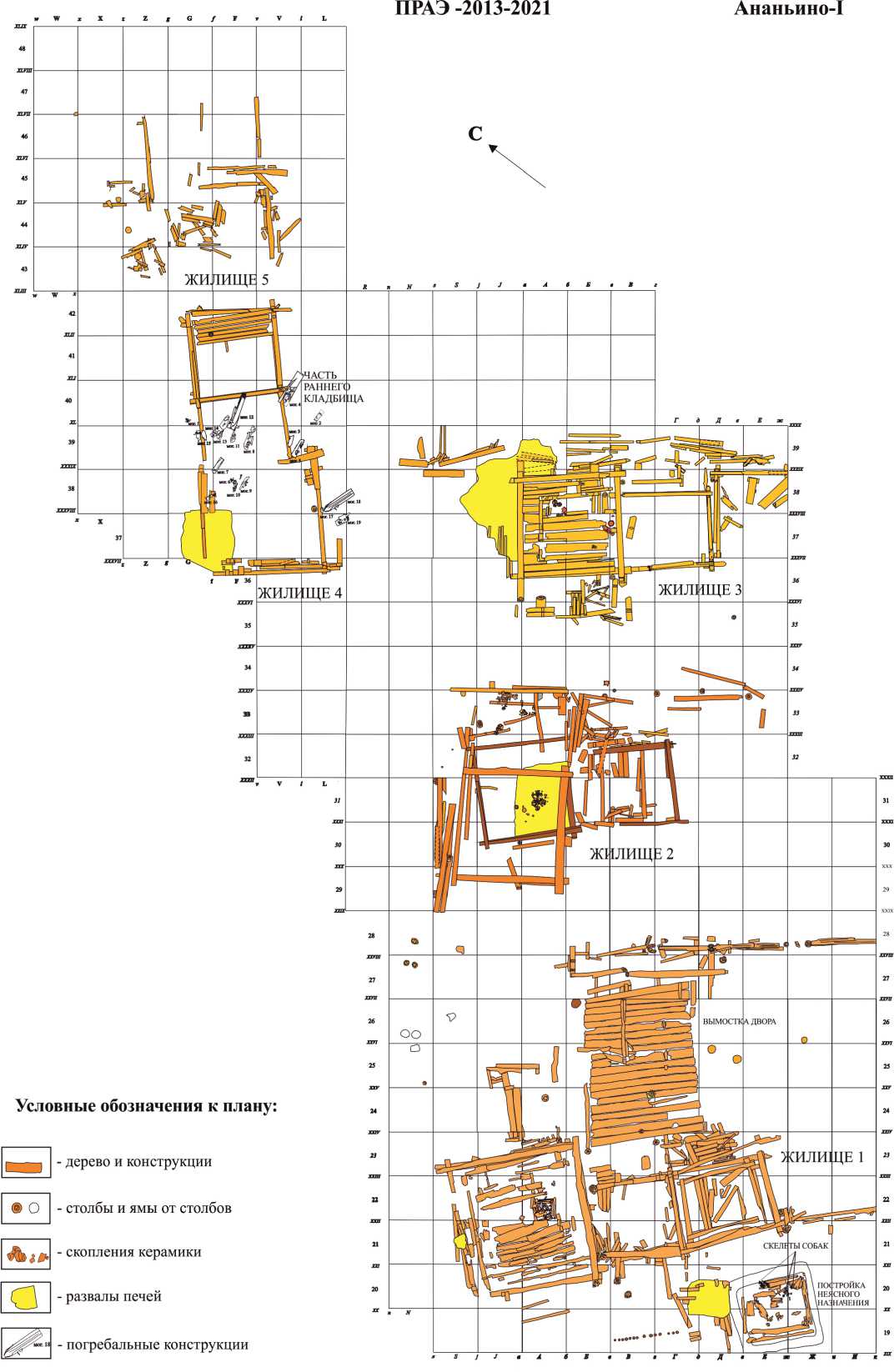
Рис. 1. Поселение Ананьино 1 (Тарский район Омской области), северо-восточная часть.
Планиграфия жилищных комплексов
Fig. 1. Ananyino 1 village (Tarsky district of Omsk region), north-eastern part. Layout of housing complexes
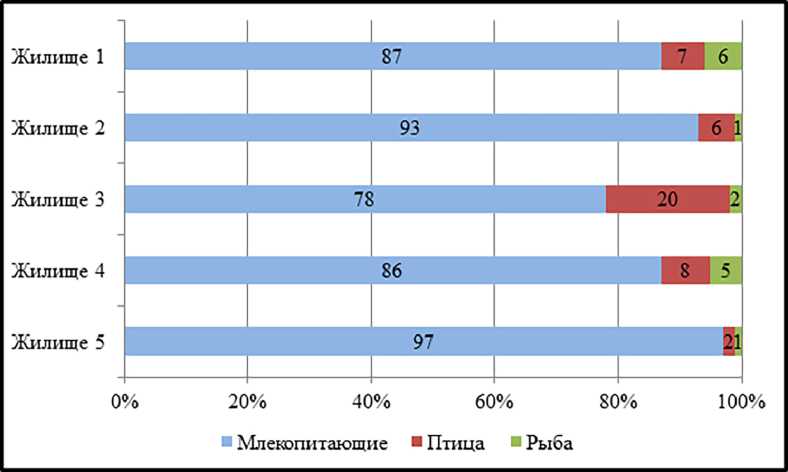
Рис. 2. Соотношение остатков основных групп животных на разных участках памятника
Fig. 2. Ratio of the animal main group remains at different parts of the site
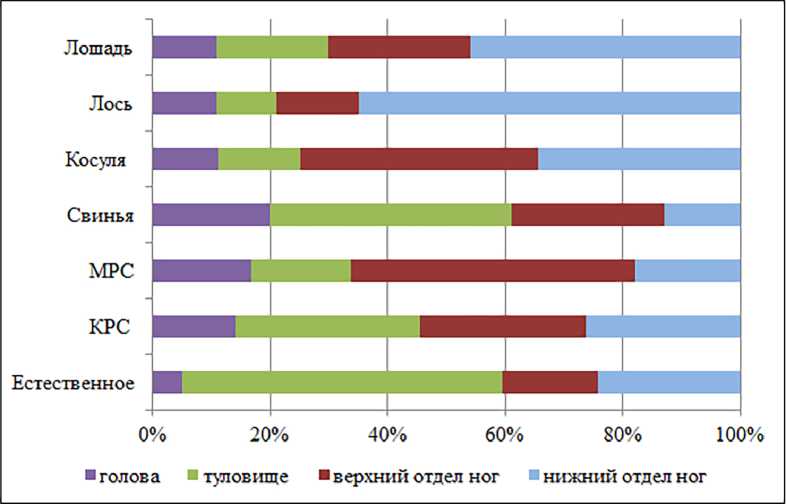
Рис. 3. Соотношение отделов скелета копытных (без учета изолированных зубов) и естественное соотношение в одном скелете
Fig. 3. Ratio of skeletal parts of ungulates (excluding isolated teeth) and the natural ratio in a single skeleton
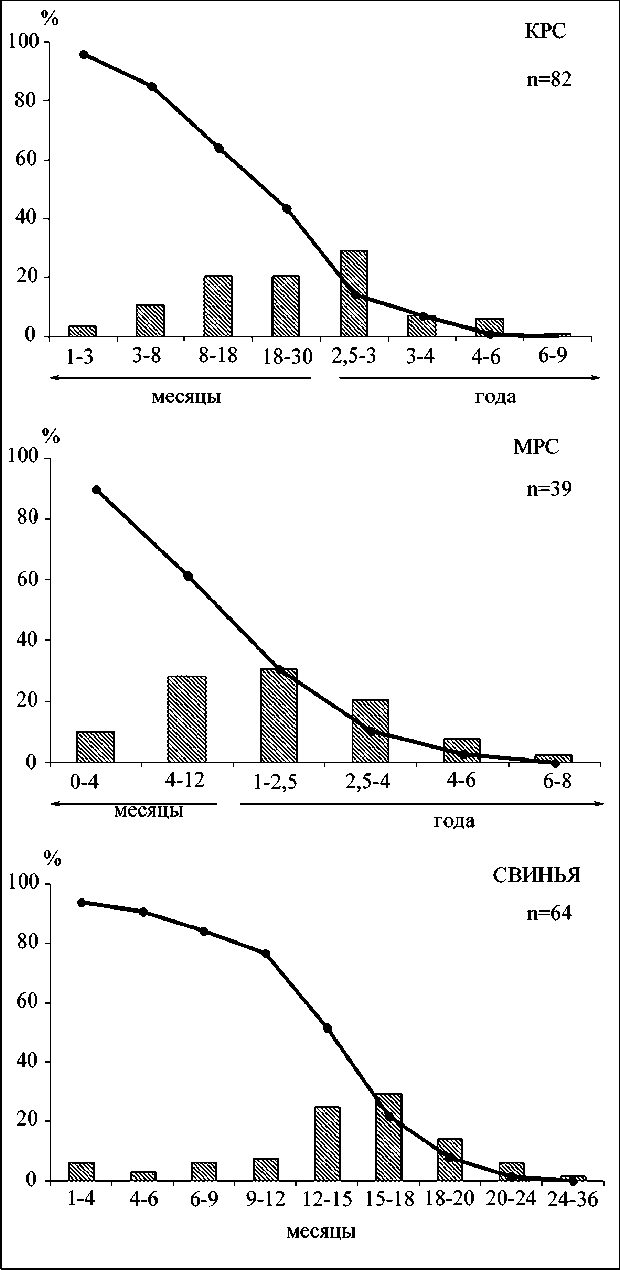
Рис. 4. Возрастная структура стада домашних копытных (график) и соотношение возрастных групп забитых животных (столбчатая диаграмма)
Fig. 4. Age structure of the herd of domestic ungulates (line graph) and ratio of the age groups of slaughtered animals (bar chart)
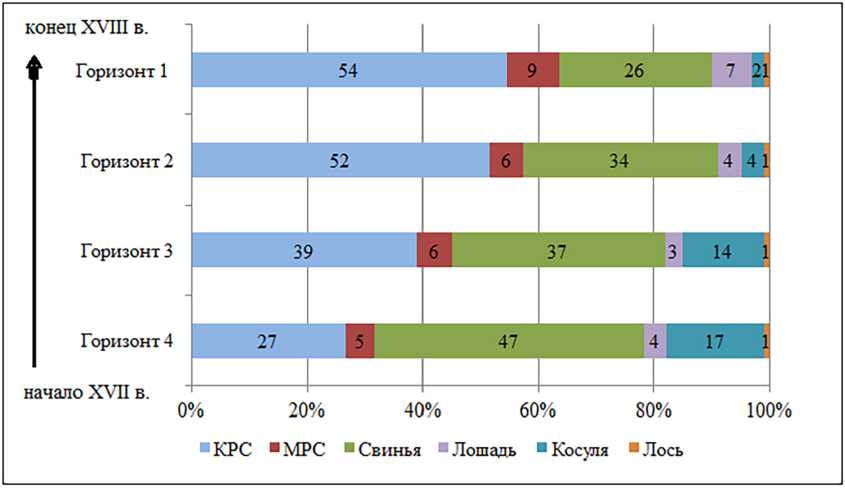
Рис. 5. Соотношение костей копытных в разных хронологических горизонтах памятника
Fig. 5. Ratio of bones of ungulate bones in different chronological horizons of the site
