
Сосуд из уникального погребения осиноозерской культуры Западного Приамурья: технология и хронология
Журнал: Вестник Новосибирского государственного университета. Серия: История, филология @historyphilology
Рубрика: Археология Евразии
Статья в выпуске: 5 т.25, 2026 года.
Бесплатный доступ
В Западном Приамурье под скальным навесом исследовано уникальное захоронение эпохи неолита осиноозерской культуры. В коллекции особо интересен керамический сосуд. Он украшен под венчиком тремя горизонтальными рядами налепных валиков с насечками, переходящими на тулове – в спираль. Изделие изготовлено из слабозапесоченной ожелезненной глины по рецепту глина + песок. Конструирование выполнено, предположительно, на форме-основе с использованием лоскутного налепа. Поверхность изделия (снаружи и изнутри) заглаживалась и лощилась. Рельефные валики сформованы из небольших жгутиков, в выемках орнамента обнаружены остатки охры. На срезе венчика изделия зафиксировано, что нагар перекрывал краситель. При помощи УМС-датирования по образцам из погребения получены четыре радиоуглеродные даты, укладывающиеся в период вт. пол. IV – перв. пол. II тыс. до н.э. Ближайшей аналогией по технологии изготовления и орнаменту является посуда одной из групп гончаров с поселения Осиновое Озеро, использовавших как искусственную добавку песок. Сравнение с посудой других неолитических культур Западного и Нижнего Приамурья показало отличие в технологии изготовления, орнаментации и морфологии.
Похожие статьи в разделе Предыстория. Доисторические остатки, артефакты, древности
Короткий адрес: https://sciup.org/147253843
IDS: 147253843 | УДК: 903.02 | DOI: 10.25205/1818-7919-2026-25-5-62-72
Vessel from a Unique Burial of the Osinovoe Ozero Culture of the Western Amur Region: Technology and Chronology
Purpose. A unique burial site from the Osinovoe Ozero culture was discovered under a rock overhang in the Western Amur region. One ceramic vessel in particular stands out in this collection, decorated with applied rollers that form a spiral ornament with notches. This vessel is the only one in the region that can be reliably linked to a specific burial, making its pottery technique and chronology crucial for analysis. Results. The vessel is made of ferruginous clay with a low natural sand content. The paste is clay and sand. The vessel was constructed on a base mold using patchwork application. The surfaces were smoothed and polished. Residues of ochre were found in the recesses of the ornamentation. On the rim, carbon deposits overlaid the ochre. X-ray fluorescence analysis of the dye on the outer surface of the vessel revealed a high iron content of 31 %. Based on this, we can identify the dye as iron oxide medium ochre. Using AMS dating, four radiocarbon dates were obtained, falling within the period from the second half of the 4th to the first half of the 2nd millennium BC. Conclusion. The analyzed vessel, in terms of its pottery technology, is similar to that of one of the pottery groups from the Osinovoye Ozero settlement, which used sand as an artificial additive. All pottery from the Osinovoe Ozero culture, including the analyzed vessel, significantly differs in its technical and technological characteristics from that of other cultures in the region, such as the gromatukha, novopetrovka, osipovka, mariinka cultures and other.
Текст научной статьи Сосуд из уникального погребения осиноозерской культуры Западного Приамурья: технология и хронология
В 2024 г. на территории Западного Приамурья в окрестностях г. Шимановск был исследован археологический объект, находящийся в пределах полости небольшого каменного навеса на склоне скалистого останца, расположенного на правобережной террасе р. Большая Пёра. Навес сформировался в результате смещения одной из плит к дневной поверхности: ее нижняя часть опирается на землю, а верхняя – на скальный массив. Навес имеет треугольную форму с максимальной высотой у северного края 1,8 м, глубиной 3,5 м. Общая высота навеса снижается до минимума от входа к дальнему углу. Ширина входа в небольшое пространство достигает 2,5 м (рис. 1).
Под навесом было изучено первое одиночное (вторичное) погребение человека в Западном Приамурье, сохранившееся благодаря микроклиматическим условиям. Описание, план погребения и прорисовки сопроводительного инвентаря опубликованы в специальной работе [Коваленко и др., 2025, с. 8–10].
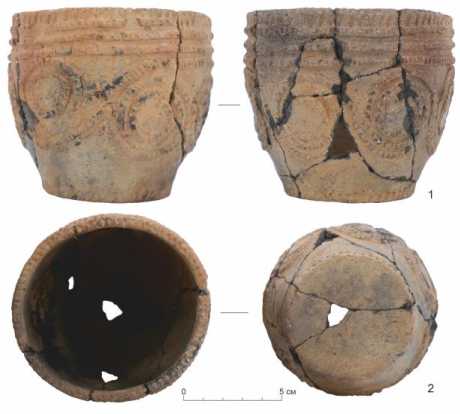
Из коллекции особо выделим обнаруженный у западного края захоронения, совместно с долотовидным каменным орудием, практически полностью сохранившийся керамический сосуд (рис. 1, 2, 3; 2). Он украшен под венчиком тремя горизонтально расположенными на-лепными валиками с насечками, переходящими на тулове в спираль. Следует подчеркнуть, что к настоящему моменту это единственный практически целый сосуд, который имеет надежную привязку к захоронению осиноозерской культуры в Западном Приамурье, что делает описание технологии изготовления, сравнение с ранее опубликованными данными и определение хронологической позиции при помощи УМС-датирования особенно актуальными.
Цель исследования – реконструкция содержания ступеней производства сосуда из одиночного вторичного погребения осиноозерской культуры в Западном Приамурье и определение его хронологии.
Технико-технологический анализ выполнен по методике, предложенной А. А. Бобринским [1978; 1999], в соответствии с естественной структурой гончарного производства при помощи бинокулярной микроскопии (Leica M51). Минералого-петрографический анализ включал обследование шлифов с помощью поляризационной микроскопии (ADF M1).
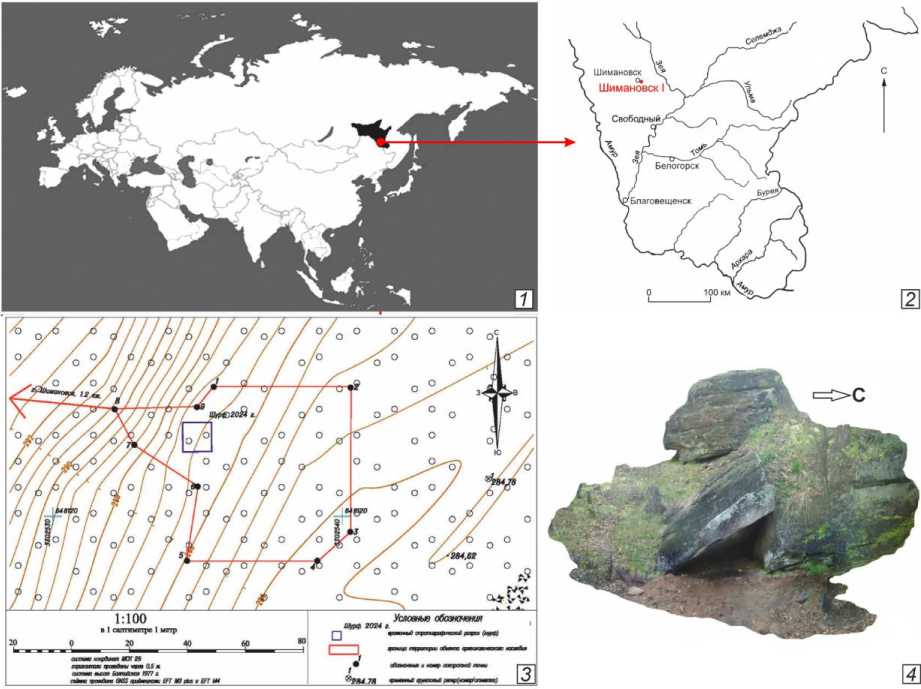
Рис. 1. Местоположение памятника Шимановск I:
1 , 2 – указание местоположения на карте-схеме Евразии и части Амурской области;
3 – инструментальный план памятника Шимановск I; 4 – цифровая 3D-модель скального навеса
Fig. 1. Location of the Shimanovsk I site:
1 , 2 – Location on a map of Eurasia and part of the Amur Region;
3 – Instrumental plan of the Shimanovsk I site; 4 – Digital 3D model of the rock overhang
Рис. 2. Сосуд осиноозерской культуры:
1 – фото стенок; 2 – фото верхней и нижней части
Fig. 2. Vessel of the Osinovoe Ozero culture:
-
1 – photo of the side parts of the vessel;
-
2 – photo of the top and bottom parts of the vessel
Определения элементного состава исходного пластичного сырья и обнаруженного на внешней поверхности красителя проведены при помощи рентгенофлуоресцентного анализатора (РФА) «МетЭксперт».
Пробоподготовка для определения абсолютного возраста выполнена в лаборатории изотопных исследований с использованием оборудования ЦКП «Геохроноло-
гия кайнозоя» ИАЭТ СО РАН (Новосибирск). Радиоуглеродное датирование проведено в ЦКП «Ускорительная масс-спектрометрия НГУ – ННЦ», графитизация коллагена – на AGE-3 (Ionplus, Швейцария), УМС-анализ – на MICADAS-28 (Ionplus, Швейцария).
Результаты исследования керамики
Плоскодонный сосуд баночной слабозакрытой формы был обнаружен рядом с долотовидным орудием. Его высота составляет 8,6 см (приведены средние значения), диаметр венчика – 9,5 см, максимальный диаметр тулова – 9,6 см, диаметр дна – 6,3 см (см. рис. 2). Изделие изготовлено из слабозапесоченной ожелезненной глины. Рецепт формовочной массы – глина + песок. Искусственно введенный песок не калибровался (разм. до 3 мм), концентрация составила 1 : 1–2. Выявлено равное соотношение окатанных и угловатых зерен (рис. 3, 1–3 ). Конструирование полого тела выполнено, предположительно, на форме-основе с использованием лоскутного налепа. Внешняя поверхность, в том числе дно, заглажена твердым орудием и залощена, при этом лощение выполнялось уже после нанесения орнамента в виде рельефных валиков. Внутренняя поверхность также заглаживалась и лощилась. Зафиксирована следующая цветность излома: светло-коричневые внешние и внутренние края до 1 мм, черная центральная часть до 5 мм. Эффект остаточной пластичности отсутствует. Рельефные валики были сформованы из небольших жгутиков и налеплены на внешнюю поверхность (рис. 3, 4 ), сверху нанесены насечки гладким инструментом. В выемках орнамента обнаружены остатки красного пигмента (рис. 3, 5 ). На срезе венчика изделия четко фиксируется, что нагар перекрывал краситель (рис. 3, 6 ). Следы нагара выявлены на обеих поверхностях.
Петрографический анализ показал, что структура шлифа равномернозернистая алевропе-литовая, текстура массивная. Цемент состоит из алевритовой глины со слюдистым иллит-мусковитовым (30 %) и алевритовым (70 %) составом, алевритовая часть глины состоит из плагиоклаза (Pl, разм. зерен 0,1–0,3 мм), калиевого полевого шпата (КПШ, разм. зерен 0,1–0,3 мм), кварца (Qtz, разм. зерен 0,1–0,15 мм), биотита (Bt, разм. зерен 0,1–0,15 мм), амфибола (Amp, разм. зерен 0,1–0,15 мм), пироксена (Px, разм. зерен 0,1–0,15 мм). Кластический минерал представлен равновеликими зернами плагиоклаза (Pl, разм. зерен 0,5–2,5 мм) (рис. 3, 5 , 6 ).
По результатам РФА определено, что в исходном сырье содержится: Al – 13,2 %, Si – 26,5 %, Mg – 3,2 %, K – 1,5 %, Fe – 3,5 %. Содержание остальных элементов составляет менее 1 %. Исследование элементного состава красителя на внешней поверхности сосуда показало высокое содержание Fe – 31 %, что позволяет отнести его к железооксидным средним охрам (табл. 1).
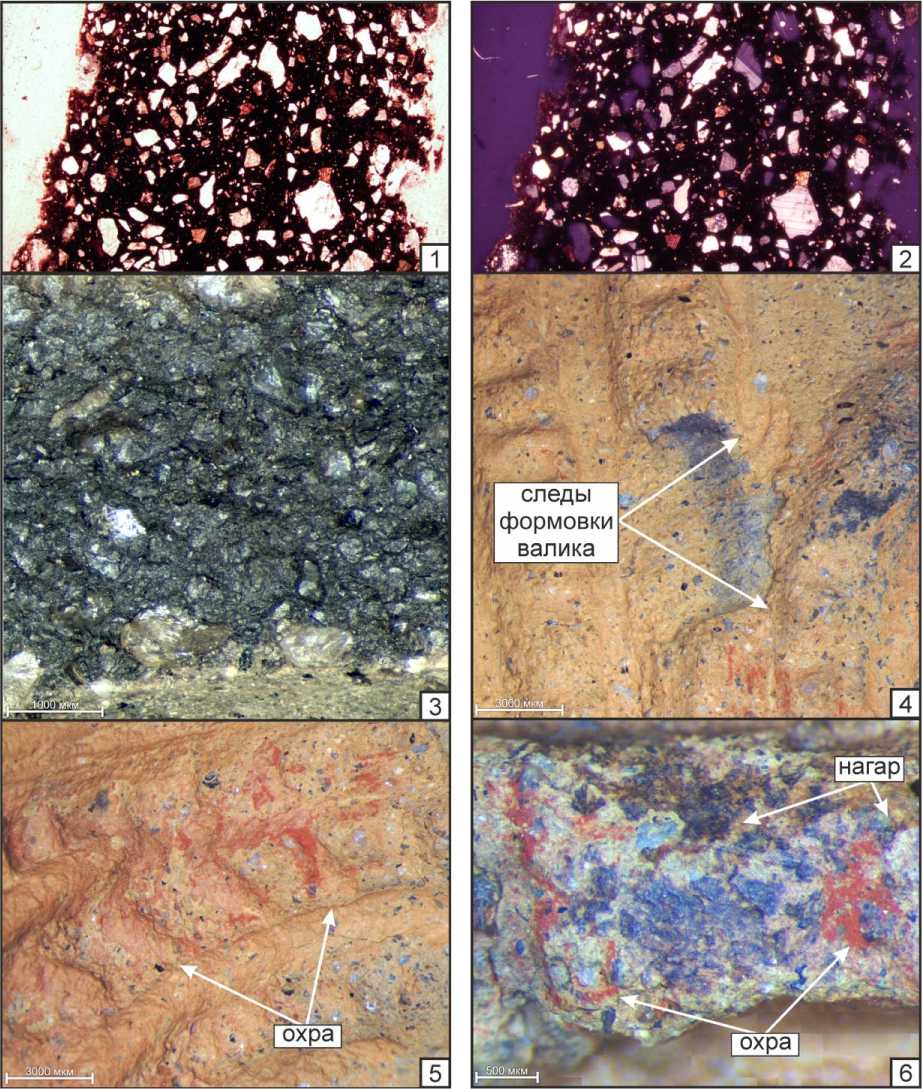
Рис. 3. Микрофотографии изломов, поверхностей сосуда и петрографического шлифа:
1 – участок шлифа в проходящем свете; 2 – участок шлифа в поляризованном свете; 3 – искусственно добавленный песок; 4 – следы формовки валика на внешней поверхности; 5 – охра в выемках от орнамента; 6 – охра, перекрытая нагаром
Fig. 3. Microphoto of fractures vessel, surfaces and the thin section:
1 – thin section of section in transmitted light; 2 – thin section of section in polarized light; 3 – artificially added sand; 4 – traces of bead molding on the outer surface; 5 – ocher in ornamental depressions; 6 – ocher covered by carbon
Таблица 1
Распределение основных элементов исходного пластичного сырья и охры, %
Distribution of the main elements of the original plastic raw material and ochre, %
Table 1
|
Химический элемент |
Излом сосуда |
Краситель |
Химический элемент |
Излом сосуда |
Краситель |
|
Mg магний |
3,204 |
— |
Fe железо |
3,493 |
31,005 |
|
Al алюминий |
13,201 |
8,681 |
Ni никель |
0,006 |
0,006 |
|
Si кремний |
26,465 |
14,889 |
Zn цинк |
0,01 |
0,014 |
|
P фосфор |
0,289 |
0,08 |
As мышьяк |
0,002 |
0,002 |
|
S сера |
0,061 |
1,388 |
Rb рубидий |
0,007 |
— |
|
K калий |
1,543 |
0,629 |
Sr стронций |
0,048 |
– |
|
Ca кальций |
0,751 |
0,458 |
Zr цирконий |
0,014 |
— |
|
Ti титан |
0,388 |
0,18 |
Ba барий |
0,087 |
0,044 |
|
Mn марганец |
0,029 |
0,162 |
|||
При помощи УМС-датирования разных образцов (уголь, береста, кости человека) из погребения были получены четыре радиоуглеродные даты (3736 ± 35 л. н. (GV-05890), 3683 ± 43 л. н. (GV-05891), 3770 ± 34 л. н. (GV-05892), 3761 ± 43 л. н. (GV-05893)), хронологический диапазон которых укладывается в 2282–1945 гг. до н. э. (4307–3970 л. н.), что соответствует рубежу III–II тыс. до н. э. (рис. 4, табл. 2). Эти даты попадают в хронологический диапазон осиноозерской культуры, которая датируется периодом 3338–1452 гг. до н. э. (5363–3477 л. н.), или второй половиной IV – первой половиной II тыс. до н. э.
Обсуждение результатов и заключение
Несмотря на то, что осиноозерская культура была открыта более полувека назад, она остается наименее изученной неолитической культурой региона [Алкин, 2011]. А. П. Окладниковым и А. П. Деревянко было предложено выделять три типа сосудов в зависимости от их размера и формы [Окладников, Деревянко, 1973]. К настоящему моменту опубликованы данные по гончарной технологии эпонимного памятника – поселения Осиновое Озеро [Селин и др., 2025]. Установлено, что керамика на этом поселении изготавливалась из двух групп глин, часть из которых могла отбираться вблизи водоемов. Выделено восемь рецептов формовочной массы, где преобладают два: глина + песок и глина + дресва, что свидетельствует о наличии двух традиций использования разных минеральных добавок, которые выполняли одинаковые функции. Полое тело наращивалось, предположительно, лоскутами.
По данным исследователей [Медведев, Цетлин, 2013; Медведев и др., 2016], для изготовления посуды других неолитических культур Западного Приамурья (громатухинской и новопетровской) гончары использовали «равнинные» или «горные» илы, в редких случаях отмечено применение илистых глин. Выделено две традиции составления формовочных масс:
использование пластичного сырья, в который вводились органические растворы, и использование сырья без искусственных примесей. Полое тело конструировалось лоскутным налепом на форме-основе. Поверхности обрабатывались при помощи динамических приемов и статического воздействия. Наиболее распространенным способом термической обработки являлся длительный обжиг в восстановительной среде при температуре до 550–600 °С [Медведев, Цетлин, 2013; Медведев и др., 2016; Цетлин, Медведев, 2015; 2018; Цетлин, Петрова, 2020].
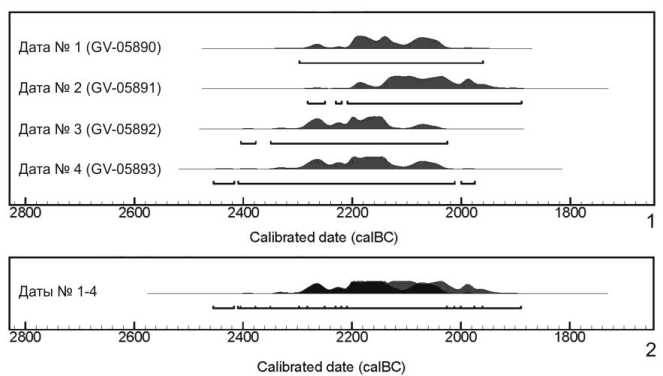
Рис. 4. Календарный возраст радиоуглеродных дат (график построен при помощи OxCal v. 4.4.4)
Fig. 4. Calendar age of radiocarbon dates (graph constructed using OxCal v. 4.4.4)
Таблица 2
Радиоуглеродный и календарный возраст образцов из одиночного погребения памятника Шимановск-1
Radiocarbon and calendar ages of samples from a single burial at the Shimanovsk-1 site
Table 2
|
№ п/п |
Шифр |
Материал |
Радиоуглеродный возраст, л. н. |
Калиброванная дата, гг. до н. э. |
|
|
±1σ |
±2σ |
||||
|
1 |
GV-05890 |
Береста |
3736 ± 35 |
2200–2130 (42,2 %) 2089–2045 (26 %) |
2282–2251 (5,7 %) 2230–2221 (0,9 %) 2210–2029 (88,9 %) |
|
2 |
GV-05891 |
Уголь |
3683 ± 43 |
2139–2022 (62,8 %) 1994–1982 (5,4 %) |
2200–2162 (0,9 %) 2152–1945 (87,6 %) |
|
3 |
GV-05892 |
Кость человека (лопатка) |
3770 ± 34 |
2282–2251 (16,8 %) 2230–2221 (3,5 %) 2210–2138 (48 %) |
2295–2125 (84,5 %) 2093–2040 (11 %) |
|
4 |
GV-05893 |
Уголь |
3761 ± 43 |
2281–2252 (12,4 %) 2230–2222 (2,5 %) 2210–2133 (42,4 %) 2084–2054 (10,9 %) |
2336–2327 (0,7 %) 2299–2032 (94,8 %) |
Примечание : калибровка радиоуглеродного возраста в календарный проведена на основе калибровочной кривой Intcal20 в программе OxCal v4.4.4.
Анализируемый сосуд из захоронения по особенностям технологии изготовления схож с одной из групп посуды гончаров с поселения Осиновое Озеро, использовавших песок как искусственную добавку. Следует отметить, что в формовочной массе публикуемого изделия отсутствует шамот, который не характерен и для керамики с поселения Осиновое Озеро [Селин и др., 2025]. Кроме того, схожий по исполнению орнаментальный мотив был прослежен на фрагментах керамики, полученных в ходе раскопок 1962 и 1965 гг. на Осиновом Озере [Коваленко, Нестерова, 2023, с. 60, рис. 13, 2 , 10 ]. При этом анализируемый сосуд, как и в целом посуда осиноозерской культуры, по технико-технологическим характеристикам значительно отличается от изделий громатухинской и новопетровской культур Западного Приамурья. Кроме того, гончарные традиции осиноозерской культуры отличаются и от неолитических культур Нижнего Амура – осиповской, мариинской, малышевской, кондонской, вознесеновской. Сосуды различаются не только формой и орнаментацией, но и особенностями технологии изготовления (см.: [Мыльникова, 1999; Цетлин, Медведев, 2014; 2018; Медведев, Филатова, 2015; 2017; Цетлин, Петрова, 2020]).
Особо выделяется то, что внешняя поверхность сосуда из захоронения была окрашена железооксидной средней охрой, что не характерно для осиноозерской культуры в целом. Возможно, нанесение краски на анализируемый сосуд было связано с его ритуальной функцией – использованием в погребальной практике как части сопроводительного инвентаря. В целом, применение охры на территории Нижнего Приамурья для украшения сосудов известно для эпохи неолита [Окладников, 1984; Мыльникова, 1999]. В Западном Приамурье также на протяжении всего периода неолита – от раннего до позднего – охра использовалась в ритуальных целях. Минеральным красителем красного, оранжевого и других оттенков в таежной зоне региона оформлялись контуры древних образов и композиций на серых каменных плоскостях. Именно охрой выполнено подавляющее большинство рисунков [Забия-ко, 2024, с. 160–218]. Можно предположить, что рисунки, оставленные на каменных плоскостях вблизи входа под навес, где было обнаружено захоронение, не сохранились, так как это было непродолжительное единовременное посещение данного места, а следы ритуальной краски остались только фрагментарно на стенках сосуда.
Сходные по форме сосуды с близким по художественному исполнению орнаментом были обнаружены в пределах Маньчжурской равнины, в неолитическом слое культуры Анъанси на памятнике Хунхэ в окрестностях г. Цицикар КНР. Здесь неолитический культурный слой является самым насыщенным; он включает три рва в форме кольца, 27 жилищ, 9 могил и другие объекты. Для этого слоя было получено две радиоуглеродные даты: 3900 ± 30 л. н. (калиброванная дата 2470–2297 гг. до н. э.) и 3960 ± 30 л. н. (калиброванная дата 2504– 2399 гг. до н. э.) [Археология и этнография…, 2023, с. 152–157]. Датировки соответствуют хронологическому диапазону существования носителей осиноозерской культуры на территории Западного Приамурья.
Продолжение мультидисциплинарного изучения керамики эпохи неолита Западного Приамурья позволит получить новые данные об особенностях историко-культурных процессов, проходивших в регионе в указанную эпоху.
