
Economic and Social Changes: Facts, Trends, Forecast @volnc-esc-en
Journal articles - Economic and Social Changes: Facts, Trends, Forecast
All articles: 1817
On the normative model of a healthy lifestyle
Scientific article
The formation of a healthy lifestyle among the educational process subjects is one of the main functions of health-saving educational space. This function can be implemented effectively only if the executive bodies in the sphere of education, other agencies, the public and the subjects of the educational process take active part in this process. Such cooperation requires a common understanding in the issues to promote health of all pedagogical process participants, but to date the concept “healthy lifestyle” has not been clearly defined and the effective and optimized pedagogical models for its formation, according to the cross-cutting principle, have not been elaborated. The article analyzes different points of view on this issue. A healthy lifestyle is considered as a complex pedagogical technology to create health culture. Taking into account the scholars' attitudes to the concept “healthy lifestyle” the author identifies three main components of a healthy lifestyle: health culture, health-saving activity and conditions that ensure a healthy lifestyle...
Free
Scientific article
The article investigates possible ways to increase labor productivity at large industrial enterprises with the help of organizational factors. Factors that reduce productivity include inefficient use of working time, excess of engineering and management staff, inefficient design and technological solutions, procedural violations, accidents and related manufacturing defects. These phenomena are due to unco- ordinated work of factory management services, distorting internal factory reporting and losing the ability to adequately analyze the technological and economic situation at the place of production. This problem arose in Soviet times when factory services became functionally subordinate to various government departments that did not ensure consistency of the policy documents they issued. Today, this problem has disappeared, but the working methods of factory services have not changed. The country has no management schools capable of organizing the work of factory services properly. Foreign experience of effective management is inadequate to the situation prevailing in Russian industrial production. Uncoordinated work of factory services forces the leadership of enterprises to manage production in a manual mode. Thus, production is going on, but it becomes fraught with chronic disorganization, which reduces efficiency and productivity. These phenomena, despite their widespread occurrence, are given very little attention in the Russian scientific literature, since there are not enough primary descriptions of situations that arise directly in the workshops. Due to the ineffectiveness of other research methods, this work uses participant observation technique, when the observer is a direct participant in the production process in question. An auxiliary shop is a short-range observation area, and the main metalworking shops represent a remote observation area. In the auxiliary shop, labor standards significantly exceed the actual labor intensity. This creates a specific moral atmosphere. The number of standard hours for a specific order is determined by administrative bargaining between management levels. In the main shops, standards are technologically determined, so workers do not have reserves for labor intensification. The increase in standards leads to an extension of the working week by almost half against the one provided for by the Labor Code, which in the future may create social tension. The article describes an attempt to create an independent trade union. The administration was able to block this attempt, but the possibility of forming a trade union remains. In conclusion we point out that the enterprise, which is the object of observation, has significant reserves for increasing labor productivity, but at the same time there is social tension that can lead to acute social conflicts. Improving the quality of management, including load balancing, can make significant contribution to resolving these issues.
Free
On the practice of strategic approach to administration in the municipalities of the Russian North
Scientific article
The article presents the results of the analysis of institutional prerequisites for and the practice of strategic planning and management in the municipalities of the Russian North. Implementation of a strategic approach in management is particularly important in the Northern municipalities, as it is an important means of tackling such negative trends, as depopulation, migration outflow of population and other socio-economic problems. The article defines the main factors promoting or hampering the application of strategic management technologies in Northern cities, towns and municipal districts.
Free
On the problems of Russia's way out of the economic crisis
Scientific article
In the previous issue of our journal there was published an article by Jacques Sapir, the director of the Center of economic development models research of the School for Advanced Studies in the Social Sciences (Paris, France), with which he spoke at the permanent Russian-French Seminar on Monetary and Financial Problems of the Russian economy, held in Vologda in April 2010. The next meeting of the seminar held in June 2010 in Paris. The French part of the seminar participants, as before, was led by Jacques Sapir. The Russian team members worked under the guidance of Academician V.V. Ivanter, the Director of the Institute of Economic Forecasting of RAS. The abridged transcript of V.V. Ivanter’s speech at the opening and closing sessions of the seminar is published below. Are more low published, with V.V. Ivanters consent, with small reductions of the shorthand report of its performances at opening of a seminar and at final session.
Free
Scientific article
The research topic we have chosen is relevant due to the following factors: a key role of Russian small and medium-sized enterprises in national economic development in a difficult geopolitical situation, specifics of enterprises in this segment, as well as the duality of scientific views on the expediency of strategic planning for this type of business. The aim of the work is to clarify the importance, features of construction and application, as well as the expediency of strategies that are effective tools for the development of the sector in question. Scientific novelty of the research lies in considering strategic planning issues of small and medium-sized enterprises through the prism of how strategies in these companies are designed and applied. We look into theoretical foundations of the influence of strategic planning and strategies on the following aspects of the work of small and medium-sized enterprises: competitiveness, assessment of business achievements, financial performance, productivity, viability, etc.; we review domestic and foreign scientists’ ideas on this issue. Taking into account the fact that the functioning of small and medium-sized enterprises has its own specifics, we identify certain features inherent in small and medium-sized business strategies, namely: integrated approach, multitasking, adaptability, interactivity, inclusivity. We put forward a comparative classification of fundamental features of small (and medium-sized) and large companies’ strategies. Based on the specific analysis of Russian and foreign literature carried out within the framework of the work, we identify reasons impeding the implementation of strategies in small and medium-sized businesses, and estimate the expediency of using strategies in such enterprises. We formulate conclusions about the current state and sentiment in the business environment, drawing upon the results of a survey of representatives of the sector under consideration. In the course of the work we use general scientific methods; the results of theoretical and empirical analysis are interpreted with the help of general logic methods, formalization, abstraction. Methodologically, the study is based on a systems approach and classical and modern theories of strategic planning
Free
Scientific article
The concept of social capital has gained considerable popularity in the social sciences, as well as in practical politics on a national and international scale. Its heuristic potential is confirmed by numerous studies demonstrating the positive impact of the level and types of social capital on a wide range of economic, social and political phenomena, and especially the use of the concept of social capital to study economic growth and development issues. However, there is no universally accepted definition of social capital, and there is no unanimous opinion concerning the ways of measuring it. The paper contains a review of the current status of the theoretical field of the concept; it shows that researchers from different countries are interested in the impact of social capital on economic growth and development at the regional level. Specific comparative studies in different countries and regions strongly support the presence of a correlation that proves social capital is one of the powerful driving forces of development...
Free
On the role of investment in the socio-economic development of territories
Scientific article
The modern stage of Russia’s socio-economic development is characterized by the lack of budgetary resources to finance both strategic and current tasks. The situation is exacerbated by the introduction of political and economic sanctions, the significant fluctuations in oil prices and the ruble exchange rate, the growing mistrust on the part of business, followed by the increase in capital outflow. These circumstances predetermine the search for the ways to solve the socio-economic problems. The studies of leading Russian and foreign scientists prove that investment plays a major role in ensuring sustainable economic growth and solving the problems of territorial development. Moreover, the recently increasing impact of large companies on the country’s development and the low budget lead to the necessity to attract private investment resources for regional development. In this regard, the authors analyze the investment activity in Russia, present the countries’ rankings by the state of investment climate and disclose the successful experience of business’ participation in sociallysignificant regional projects...
Free
On the role of investments in sustainable economic growth
Scientific article
The article raises one of the most acute problems of the economy - promotion of sustainable economic growth. The article substantiates the relevance of the issue for global, national and regional economies. It argues that the goal of ensuring high economic growth rates is a strategic one for the Russian Federation; the achievement of this goal will allow Russia to retain its position among the world leaders. However, this requires, first of all, the transition from the model of economy oriented to raw materials export to the innovation model. The article shows that investments play the most important part in the promotion of sustainable economic growth. Endogenous models indicate that long-term sustainable economic growth requires investments in machinery and equipment, in human capital and in the knowledge sector. At that, the investments in human capital and knowledge are more preferable. The results of the investment processes analysis presented in the article allowed us to draw some conclusions concerning the situation that is taking shape in the Russian Federation...
Free
On the strategy of integrated modernization
Scientific article
The article is continued designing strategy of modernization in Russia and its regions, originally set out by the author in the report at the Conference “The evolution of Russia’s regions and their strategies of socio-cultural modernization» (Vologda, ISEDT RAS, October 2012; see. sat. Conference materials, part 1). Extended meaning of “integrated modernization”, proposed by Professor Chuanqi He. Special attention is paid to the unfinished state of societal transformation as the main limit, modernization of Russia and its regions. Grounded three-phase strategy of integrated upgrades, each of which has its own set of strategic priorities, which should ensure the interaction of industrial and information stages of modernization of regions of the appropriate types.
Free
On the strategy of sustainable development of Russia's economy
Scientific article
The article contains the main provisions of the authors’ report on the economic development strategy and presents a system approach to the analysis of the state and prospects of Russia’s economic development in the conditions of worldwide instability. Furthermore, the article considers the proposals for the implementation of an integrated system of government policy measures aimed at the development and modernization of economy on the advanced structural and technological basis, the implementation of which will enhance economic growth rates and promote the transition to innovation development.
Free
Scientific article
The article presents the research results of science and innovation space in order to identify problem fields as the directions of its possible transformation. The analysis of the unevenness of science and innovation space by several indicators helped to identify the key problem fields in science and innovation activity in specific local fields. The article shows that the results of science and innovation activity in the regions with extractive industries are underestimated. It indicates the need for intensive support of large processing enterprises, the necessity to introduce indicative planning of the activity on the execution of federal and regional scientific and technological programmes. The tendencies of science and innovation space of a macroregion on the example of the Northwestern Federal District, contributing to its transformation in resolving the issues of upsurge in innovation activity, are determined.
Free
Scientific article
The article describes the transformation processes that form the models of information interaction between the authorities, mass media and society in modern Russia. During the Soviet period, the activities of the media in the USSR were determined by the state, which shaped public consciousness in the country with the help of canonical ideological attitudes. By the early 1990s, the model of state domination over society was transformed into a new socio-political state - the domination of society over the state. The transformations also affected the activities of Russian mass media, which made a full turn by the beginning of the 21st century and returned to their original information and communication position. Genetic (state) nature again prevailed in the work of Russian mass media, which determined the formation of a hierarchical model of interaction between the authorities, mass media and society. These processes prove the need for active participation of power structures in the communication and information space of the country, which needs regulation and self-regulation with the help of evidence-based state information policy...
Free
On the way toward crossing the inner Rubicon
Scientific article
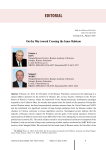
February 24, 2022, the President of the Russian Federation announced the beginning of a special military operation on the territory of Ukraine; this, in fact, became a Rubicon in the 30-year history of Russia’s existence within the framework of the liberal-democratic development paradigm imposed by the Collective West. Six months have passed since the launch of the operation. During this period, Russian society has faced unprecedented sanctions pressure from the United States and NATO and the withdrawal of a significant number of large foreign companies from the Russian market; the situation in Ukraine continues to arouse significant concerns. Sociological surveys indicate that the majority of Russian citizens support the President and the goals of the special operation. However, representatives of different social strata react differently to the events taking place in internal and external political and economic life. The article analyzes trends in social sentiment and the level of approval of the President’s work on the basis of long-term monitoring of public opinion conducted by VolRC RAS in the territory of the Vologda Oblast. We conclude that the broad strata of Russian society feel the effect of the measures taken by the RF President and the RF Government to mitigate the effects of sanctions pressure on the economy and the quality of life and improve the spiritual, moral and cultural atmosphere that corresponds to the goals of national development in the current geopolitical situation; the attitude toward the measures is reflected in the assessments of public opinion. Besides, relying on expert assessments and statistical data, we dwell upon the problem of whether the views of individual representatives of Russia’s ruling circles and financial and cultural elites correspond to the RF President’s goals to “build and strengthen Russia as a strong sovereign power”, whose sovereignty “cannot be segmented or fragmented in the 21st century” as Vladimir Putin noted at the Saint Petersburg International Economic Forum on June 17, 2022. That is, sovereignty must be complete, not only political, economic or military, but, first of all, spiritual, cultural and moral. To achieve the set goals of national development, it is necessary to change the elites in the system of public administration, economy and culture. It is necessary to move from the elite, which was formed during the period of the country’s life in the framework of the liberalcapitalist paradigm before the special operation, to the elites that ensure the sovereign development of Russia based on traditional spiritual and moral values and social justice.
Free
Online retail in China and Russia: current state and development prospects
Scientific article
In recent years, due to the digitalization of the economy, there has been a rapid development of online commerce around the world. China is a global leader in online trade; the country demonstrates the highest volumes of the online sales market. The Russian online sales market is the most dynamic, Russia ranks first in terms of the growth rate of online retail. Within the framework of this study, we analyze the current state of online retail trade in China and Russia over the recent years, assess the contribution of e-commerce to the retail turnover of the two countries, identify factors affecting the active and dynamic development of this sector and promising directions for further development of online consumption in the context of modern socio-economic transformations. In the course of the research, we have found that the successful development of online retail in China is the result of an effective system of political regulation and stimulation of this segment, constant expansion and improvement of Internet coverage, improvement of e-commerce infrastructure and people’s financial situation. In Russia, the widespread use of the Internet, including on mobile devices, the transformation of consumer attitudes, requests and preferences, the increase in sales volumes of the largest marketplaces and online stores reflect large reserves and great potential for further growth and successful development of this sector. The main directions for further development of the e-commerce segment are as follows: improving the standard of living and quality of life, improving the infrastructure of online commerce, mainly in the direction of ensuring the security of online payments and other transactions, expanding the informatization of rural areas and their population, greening online consumption, improving the regulatory framework in the field of e-commerce.
Free
Open and Latent Unemployment in the Context of the Pandemic
Scientific article
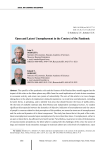
The specifics of the pandemic crisis and the features of the Russian labor model suggest that the impact of this crisis on the labor sphere may differ from the usual implications of crisis-driven recessions in economic activity, and create new points of vulnerability. The aim of this article is to trace changes taking place in the sphere of employment during the pandemic, to reveal how unemployment, including its latent forms, is spreading, and to identify risk areas that should become the focus of public policy. On the basis of available statistics data from Rosstat and independent sociological surveys, we explain significant discrepancies between the dynamics of objective indicators of unemployment and the extent of people’s concerns related to their perception of this problem; we assess the structure of unemployment and the scale and dynamics of its latent component. The study has shown that at the peak of the crisis, latent unemployment exceeded open unemployment by more than three times. Unemployment, either in an open or latent form, has affected every fourth worker. Nevertheless, in general, in terms of the dynamics of macroeconomic proportions, the labor sphere is coping with the challenges of the crisis: the sector of large and medium-sized enterprises managed to maintain almost pre-crisis levels of employment, open unemployment remained within socially acceptable limits, a dangerous surge in latent unemployment was overcome by the beginning of the third quarter of 2020. At the same time, serious shifts have taken place in the usual structure of redundancies: highly qualified and educated workers employed in key sectors of intangible production, who felt confident in the labor market and got used to the stability of their socioeconomic situation, have been considerably affected. Geographically, the crisis has had the most serious impact on large cities with a significant amount of middle class population. This aggravated the acuteness of people’s perceptions of the crisis and jeopardized the preservation and reproduction of elite segments of national human potential.
Free
