
Analysis of restaurant service consumers' preferences: marketing research to increase competitiveness
Journal: Economics and Business: Theory and Practice @economyandbusiness
Article in issue: 12 (130), 2025.
Free access
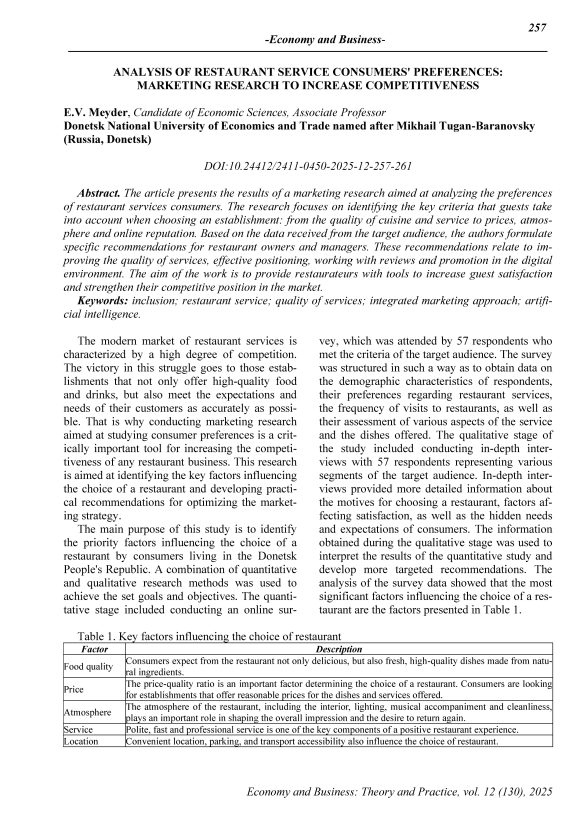
The article presents the results of a marketing research aimed at analyzing the preferences of restaurant services consumers. The research focuses on identifying the key criteria that guests take into account when choosing an establishment: from the quality of cuisine and service to prices, atmosphere and online reputation. Based on the data received from the target audience, the authors formulate specific recommendations for restaurant owners and managers. These recommendations relate to improving the quality of services, effective positioning, working with reviews and promotion in the digital environment. The aim of the work is to provide restaurateurs with tools to increase guest satisfaction and strengthen their competitive position in the market.
Similar articles in the section Business management, administration. Commercial organization

Short address: https://sciup.org/170212500
IDS: 170212500 | DOI: 10.24412/2411-0450-2025-12-257-261
Анализ предпочтений потребителей ресторанных услуг: маркетинговое исследование для повышения конкурентоспособности
Статья представляет результаты маркетингового исследования, направленного на анализ предпочтений потребителей ресторанных услуг. В фокусе исследования - определение ключевых критериев, которые гости учитывают при выборе заведения: от качества кухни и сервиса до цен, атмосферы и онлайн-репутации. На основе данных, полученных от целевой аудитории, авторы формулируют конкретные рекомендации для владельцев и управляющих ресторанов. Эти рекомендации касаются повышения качества услуг, эффективного позиционирования, работы с отзывами и продвижения в digital-среде. Цель работы - предоставить рестораторам инструментарий для повышения удовлетворенности гостей и усиления конкурентных позиций на рынке
Text of the scientific article Analysis of restaurant service consumers' preferences: marketing research to increase competitiveness
The modern market of restaurant services is characterized by a high degree of competition. The victory in this struggle goes to those establishments that not only offer high-quality food and drinks, but also meet the expectations and needs of their customers as accurately as possible. That is why conducting marketing research aimed at studying consumer preferences is a critically important tool for increasing the competitiveness of any restaurant business. This research is aimed at identifying the key factors influencing the choice of a restaurant and developing practical recommendations for optimizing the marketing strategy.
The main purpose of this study is to identify the priority factors influencing the choice of a restaurant by consumers living in the Donetsk People's Republic. A combination of quantitative and qualitative research methods was used to achieve the set goals and objectives. The quantitative stage included conducting an online sur- vey, which was attended by 57 respondents who met the criteria of the target audience. The survey was structured in such a way as to obtain data on the demographic characteristics of respondents, their preferences regarding restaurant services, the frequency of visits to restaurants, as well as their assessment of various aspects of the service and the dishes offered. The qualitative stage of the study included conducting in-depth interviews with 57 respondents representing various segments of the target audience. In-depth interviews provided more detailed information about the motives for choosing a restaurant, factors affecting satisfaction, as well as the hidden needs and expectations of consumers. The information obtained during the qualitative stage was used to interpret the results of the quantitative study and develop more targeted recommendations. The analysis of the survey data showed that the most significant factors influencing the choice of a restaurant are the factors presented in Table 1.
Table 1. Key factors influencing the choice of restaurant
|
Factor |
Description |
|
Food quality |
Consumers expect from the restaurant not only delicious, but also fresh, high-quality dishes made from natural ingredients. |
|
Price |
The price-quality ratio is an important factor determining the choice of a restaurant. Consumers are looking for establishments that offer reasonable prices for the dishes and services offered. |
|
Atmosphere |
The atmosphere of the restaurant, including the interior, lighting, musical accompaniment and cleanliness, plays an important role in shaping the overall impression and the desire to return again. |
|
Service |
Polite, fast and professional service is one of the key components of a positive restaurant experience. |
|
Location |
Convenient location, parking, and transport accessibility also influence the choice of restaurant. |
Statistical processing of the data obtained during the online survey was carried out using the MS Excel software. Methods of descriptive statistics, correlation analysis, and cluster analysis were applied to identify key relationships be- tween various variables and segment the target audience. Based on the results of the cluster analysis, the segments of restaurant service consumers shown in Figure 1 were identified.

"Atmosphere lovers"


Figure 1. Segmentation of restaurant service consumers

"Adherents of traditions"

Segmentation of consumers of restaurant services makes it possible to: more accurately identify the target audience; develop more effective marketing strategies; optimize menus and services; increase customer loyalty; gain a competitive advantage; increase profitability (Table 2).
Table 2. Segmentation of restaurant service consumers
|
Segment |
Description |
|
Thrifty gourmets |
This segment is characterized by high sensitivity to price, but at the same time places high demands on the quality of food. They are looking for restaurants offering promotional offers and discounts. |
|
Atmosphere lovers |
For this segment, the atmosphere and interior design of the restaurant are most important. They are willing to pay more for an original concept and a pleasant environment. |
|
Fans of fast service |
This segment values the speed and efficiency of service. They prefer restaurants where they can have a quick snack and continue their business. |
|
Adherents of traditions |
This segment prefers traditional cuisine and time-tested establishments. Stability and predictability of quality are important to them. |
The processing of the questionnaire data showed that "Atmosphere lovers" (42%) predominate among the respondents, "Economical gourmets" (25%) are in second place, "Fans of fast food" (19%) are in third place, and "Adherents of traditions" (14%) are in fourth place (Fig. 2) This distribution showed that the majori- ty of respondents visit restaurants for the sake of pleasant emotions and enjoying a special atmosphere, as well as a combination of affordable prices and high-quality food. The speed of service and adherence to classic dishes have less impact.
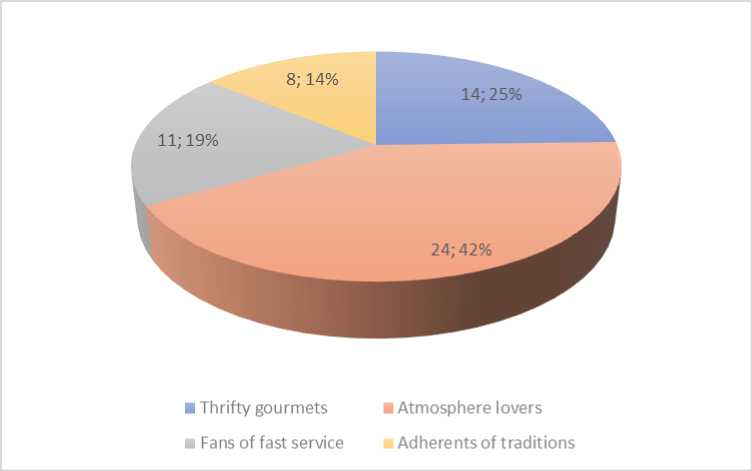
Figure 2. Graphical analysis of segmentation of consumers of restaurant services (by group of respondents)
The study showed that the most effective mar- customers to restaurants are the channels shown keting communication channels for attracting in Table 3.
Table 3. Effective marketing communication channels for attracting customers to restaurants
|
Segment |
Description |
|
Social network |
Facebook Instagram and social media are a powerful tool for promoting a restaurant, showing photos of dishes, promotions, and special offers. |
|
Online reviews |
Consumers actively read reviews about restaurants on specialized websites and in search engines before making a decision. |
|
Recommendations from friends and acquaintances |
Personal recommendations are one of the most reliable sources of information about restaurants. |
|
Online advertising |
Targeted online advertising can effectively attract new customers to a restaurant. |
An analysis of the impact of marketing communications on the receipt of restaurant services by respondents showed that "Recommendations from friends and family" (34%) prevail over other communication channels. This fact highlights the importance of word of mouth and personal experience in choosing an institution. The second place is taken by the Social Networks channel (26%), reflecting the growing role of digital marketing and the influence of bloggers and opinion leaders on consumer behavior. Online advertising is in third place (21%), demonstrating the effectiveness of targeted advertising in attracting attention to the restaurant. Completing the list are "Online reviews" (14%), which suggests that, despite their importance, personal recommendations and an active presence on social media have a greater impact on the decision to visit a restaurant (Fig. 3).
Thus, the results of the study clearly indicate that modern consumers, when choosing a restau- rant, are more guided by the opinions of their immediate environment and information obtained from social networks, rather than by formal advertising or reviews on the Internet. This trend dictates the need for restaurateurs to review marketing communication strategies, giving priority to creating a positive customer experience that will be broadcast through word of mouth, and actively interacting with the audience on social media.
It is important to note that the Recommendations of Friends and Family channel demonstrates not only its impact on initial customer acquisition, but also on the formation of long-term loyalty. Trust in the opinion of loved ones remains the determining factor when deciding whether to visit a restaurant again, which underlines the importance of high-quality service and creating a positive atmosphere conducive to the formation of positive recommendations.
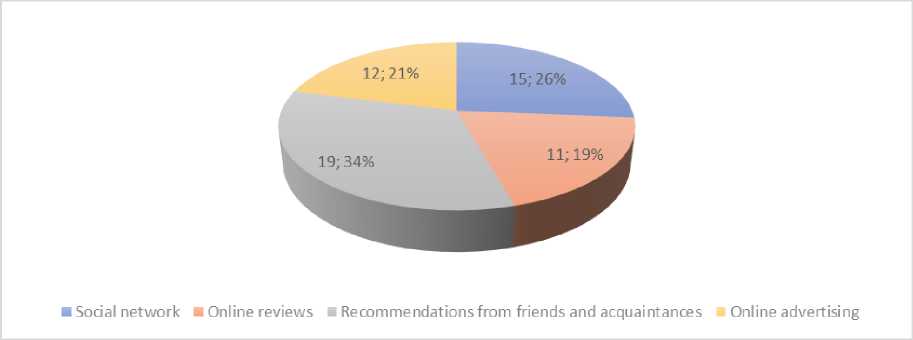
Figure 3. The impact of marketing communications on receiving restaurant services
The active use of social media also provides restaurants with a unique opportunity not only to attract new customers, but also to build long-term relationships with existing ones. The placement of attractive content, contests and promotions, prompt response to customer reviews and questions – all this contributes to the formation of a positive image of the restaurant and increase audience loyalty. It is necessary to carefully analyze the platforms on which the target audience is present and adapt the content to the specifics of each of them.
At the same time, online advertising, especially targeted advertising, should not be neglected. It allows you to reach a wide audience and attract the attention of potential customers who are not yet familiar with the restaurant. However, the effectiveness of online advertising increases significantly when combined with social media activity and positive customer recommendations. An integrated approach to marketing communications that takes into account all channels of interaction with consumers is a key success factor in the highly competitive restaurant market.
The results obtained confirm that choosing a restaurant is a complex and multifactorial process, which is influenced by both objective characteristics of the establishment (food quality, price) and subjective factors (atmosphere, service). The importance of each factor varies depending on the consumer segment, which indicates the need to develop personalized marketing strategies.
The results of the study demonstrate that, despite economic factors, the quality of food remains a key priority for consumers. This confirms the importance of investing in quality in- gredients, qualified staff, and the development of unique recipes.
An analysis of the effectiveness of marketing communications highlights the importance of social media and online reviews. Restaurants need to actively use these channels to promote their services, monitor reviews, and promptly respond to negative comments.
Based on the results of the study, the following practical recommendations were developed to increase the competitiveness of restaurants:
-
1. Menu optimization. To develop a menu that meets the requirements of different segments of consumers, taking into account their preferences regarding the type of cuisine, price and dishes offered.
-
2. Improving the quality of service. Improve staff skills, develop service standards, and implement a customer satisfaction assessment system.
-
3. Creating a unique atmosphere. Invest in creating a unique atmosphere that matches the concept of the restaurant and attracts the target audience.
-
4. Active promotion on social media. Develop a content marketing strategy for social media, including regular posts about dishes, promotions, events, and restaurant news.
-
5. Online reputation monitoring and management: Actively monitor restaurant reviews on specialized websites and search engines, promptly respond to negative comments and work to improve reputation.
-
6. Development of loyalty programs. Implement loyalty programs for loyal customers offering discounts, bonuses, and special offers.
-
7. Personalization of marketing communications. Develop personalized marketing cam-
-
8. Optimization of solutions using information from the data. Conduct regular marketing research to monitor consumer preferences and adjust marketing strategies.
paigns for different segments of consumers, taking into account their preferences and needs.
Conclusion. This marketing research has made it possible to identify the key factors influencing the choice of a restaurant by consumers living in [specify the geographical area of the study]. The results obtained and the recommendations developed can be used by restaurants to increase their competitiveness, attract new customers and retain existing ones. It is important to remember that the restaurant services market is constantly changing, and for successful operation it is necessary to regularly conduct marketing research and adapt your strategies to changing consumer requirements. Further research may be aimed at studying the impact of new trends in the food industry (for example, vegetarianism, organic food, food delivery) on consumer preferences, as well as evaluating the effectiveness of various marketing tools (for example, influencer marketing, mobile applications). A comprehensive understanding of consumer preferences and the use of modern marketing technologies will allow restaurants not only to survive in a highly competitive environment, but also to take a leading position in the market.
