
Artificial intelligence learning model for the development of students’ foreign language communicative competence
Journal: Bulletin of South Ural State University. Series: Education. Pedagogical Sciences @vestnik-susu-ped
Section: Цифровая трансформация и искусственный интеллект в образовании
Article in issue: 1 т.18, 2026.
Free access
The article deals with the issues of developing foreign language communicative competence in the modern context of using artificial intelligence (AI). Globally, there is a steady increase in demand for engineers capable of mastering advanced technologies, mainly presented in English, and participating in international projects using digital platforms. The review of the existing literature has shown the lack of a coherent framework that integrates the potential of artificial intelligence into the process of developing foreign language communicative competence. Having studied practical experience, a request was identified from both educators and learners for effective learning models that combine AI capabilities with the development of foreign language communicative competence within a professional context. Thus, there is a need to develop a model for the formation of foreign-language communicative competence by means of AI that meets the challenges and requirements of professional communication. The article aims to develop and test The Integrated Adaptive Communicative (IAC) Model for the formation of students’ foreign language communicative competence using AI. The study employed theoretical (integrative literature review, modeling) and empirical (pedagogical experiment, descriptive statistics) methods. The experiment involved 51 first-year bachelors, future engineers from the Polytechnic Institute of the South Ural State University. The novelty of the research lies in the creation of an IAC Model for the formation of foreign language communicative competence by means of AI, which makes a significant contribution to the development of professional education. The effectiveness of the developed technology was demonstrated based on the improvement of foreign language proficiency according to the European CEFR scale.
Similar articles in the section Higher education. Universities. Academic study
Short address: https://sciup.org/147254105
IDS: 147254105 | UDC: 378.44:004.8 | DOI: 10.14529/ped260107
Модель формирования иноязычной коммуникативной компетенции средствами искусственного интеллекта
Статья посвящена вопросам формирования иноязычной коммуникативной компетенции в контексте использования искусственного интеллекта. На глобальном уровне наблюдается устойчивый рост спроса на инженеров, способных осваивать передовые технологии, преимущественно представленные на английском языке, и участвовать в международных проектах с использованием цифровых платформ. Анализ литературы выявил отсутствие целостной основы, интегрирующей потенциал искусственного интеллекта в процесс формирования иноязычной коммуникативной компетенции. На основе изучения практического опыта был выявлен запрос со стороны обучающихся и преподавателей на эффективные модели обучения, сочетающие возможности искусственного интеллекта с развитием иноязычной коммуникативной компетенции в профессиональном контексте. Таким образом, возникает необходимость в разработке модели формирования иноязычной коммуникативной компетенции средствами искусственного интеллекта, отвечающей вызовам и требованиям профессиональной коммуникации. Целью статьи является апробация и внедрение интегрированной адаптивной модели формирования иноязычной коммуникативной компетенции средствами искусственного интеллекта. В исследовании использовались теоретический метод анализа современной научной литературы, эмпирический метод обработки математических данных и комплексный метод моделирования и педагогического эксперимента. В эксперименте принял участие 51 бакалавр первого курса инженерных специальностей политехнического института Южно-Уральского государственного университета. Новизна исследования заключается в создании интегрированной адаптивной модели формирования иноязычной коммуникативной компетенции средствами искусственного интеллекта, что вносит значительный вклад в развитие профессионального образования. Была доказана эффективность разработанной модели по критерию уровня владения иностранным языком по европейской шкале CEFR.
Text of the scientific article Artificial intelligence learning model for the development of students’ foreign language communicative competence
The contemporary landscape of higher education is undergoing a profound transformation, driven by the imperatives of globalization and digitalization. Thus, the ability to communicate effectively in a foreign language has turned from a desirable skill to a critical component of academic and professional success.
In the context of digital transformation, artificial intelligence (AI) has become an innovation driver across numerous sectors, including higher education. Within language teaching and learning, AI technologies are increasingly employed to reshape pedagogical practices, offering new possibilities for personalization, adaptivity, and interactivity. Unlike conventional, standardized instructional models, AI-enabled approaches can be tailored to individual learners’ needs, thereby better addressing the multifaceted nature of foreign language communicative competence.
This paper investigates the design, implementation, and effectiveness of an AI model for developing students’ foreign language commu- nicative competence. It proves that a model integrating natural language processing, a conversational AI for dialogic practice, and a data-driven feedback mechanism can significantly enhance learners’ fluency, accuracy, and pragmatic awareness. The study aims to bridge the gap between theoretical potential and practical application by empirically testing the model’s impact on key indicators of communicative competence. It contributes to the evolving discourse on intelligent computer-assisted language learning.
The purpose of this study is to develop and experimentally test The Integrated Adaptive Communicative (IAC) Model for the formation of foreign language communicative competence using artificial intelligence in the conditions of future engineers training. The tasks are the following: to substantiate the theoretical and methodological foundations of the IAC model based on AI, to design the architecture of the IAC model, to implement the model in a pedagogical experiment, to evaluate the effectiveness of the IAC model based on the criteria of increasing the level of proficiency in a foreign language in accordance with the CEFR scale and the balanced development of all components of communicative competence.
Literature Review
Artificial intelligence (AI) is increasingly being used in various fields, including education. One of the areas where AI demonstrates incredible capabilities is teaching foreign languages. Due to its ability to personalize the learning process and provide instant feedback, AI can radically change the approach to language learning in modern conditions [2, 12, 19].
The core objective of modern foreign language education is the development of students’ communicative competence – a holistic construct encompassing not only grammatical accuracy, but also sociolinguistic, pragmatic, and strategic abilities to use language appropriately in authentic contexts, as proved by many scholars: Canale, Swain [6], Hymes [14]. However, traditional pedagogical methods often struggle to provide the personalized, interactive, low-anxiety, and immersive practice necessary to develop this complex competence in large and diverse classroom settings.
The emergence of Artificial Intelligence (AI) presents a paradigm-shifting solution to these challenges [2, 7–9, 11, 12, 16–19, 29]. AI in the form of intelligent tutoring systems, natural language processing, and conversational agents of- fers great opportunities to create adaptive and responsive learning environments. These technologies can simulate real-world communication, provide instantaneous feedback, and analyze individual learner patterns. For instance, as proved by W. Huang, K.F. Hew and L.K. Fryer, “Chatbots appeared to encourage students’ social presence by affective, open, and coherent communication” [16, p. 237]. By using AI, educators can move beyond one-size-fits-all instruction towards a model that supports the development of all the components of communicative competence.
There is the following relationship between artificial intelligence and teaching a foreign language:
-
1. In the context of learning a foreign language, artificial intelligence can significantly change the atmosphere in the classroom. One of the most notable changes that AI brings to the English lesson is the personalized learning experience. Artificial intelligence-based language learning platforms can adapt to the individual needs and learning pace of each student by providing targeted feedback and recommendations for learning the material. This individual approach creates a more positive and supportive atmosphere in the classroom, as students are actively involved in the learning process and are more likely to participate and collaborate with their classmates [1, 16, 21].
-
2. One of the most significant achievements in the field of artificial intelligence is a wide range of dialogue scenarios and topics covering various real-world situations that students may encounter in an English-speaking environment [16, 20]. From everyday conversations to professional interactions, different platforms introduce students to diverse language contexts and help them develop their communication skills in a variety of situations. This individual approach increases the effectiveness of language learning, as students focus on areas that require special attention and make significant progress in their language skills [1, 17, 23].
-
3. Artificial intelligence can also create diverse and engaging learning materials covering a wide range of language contexts and topics. To do this, it is enough to specify the topic and the level of complexity, and the neural network will offer several options for familiarization. You can ask the chatbot to pick up examples, historical facts, or current news on a given topic, come up with and generate a text that includes certain words or grammatical forms, compose questions
for the text, reformulate the given text, prepare a quiz, and so on [3, 26, 29].
The literature review shows that AI tools such as intelligent tutors and chatbots can simulate authentic communication situations, provide instant feedback and adapt to the individual needs of the student [15]. For example, Fryer L.K., Carpenter R. note that chatbots contribute to the development of the social presence of students through an emotionally intense and consistent interaction [11]. However, most of the existing solutions focus either on individual aspects (grammar, pronunciation) or on conversational practice, without providing a systematic, theoretically based approach to the development of the entire set of competencies.
An analysis of global and Russian research reveals the prerequisites for a study: the lack of comprehensive models that combine adaptive diagnostics, personalized practice, metacognitive reflection and formative assessment into a single pedagogical system focused on the development of communicative competence.
Materials and Methods
In order to achieve the goal of the study and fulfill the specified tasks we used theoretical (integrative literature review, modeling) and empirical (pedagogical experiment) methods. We also used the method of descriptive statistics to summarize and analyze the quantitative data collected during the pedagogical experiment.
The research aimed to accomplish the following tasks:
-
• to substantiate the theoretical and methodological foundations of the IAC model based on AI, we conducted a literature review to refine key concepts and identify existing gaps in research;
-
• to design the architecture of the IAC model, we implemented modeling and structuring of architectural components;
-
• to implement the model in a pedagogical experiment we conducted an adaptive diagnostic test and evaluated the results;
-
• to assess the effectiveness of the IAC model we used questionnaires and interviews with 51 engineering students.
Engineering students from the Polytechnic Institute of the South Ural State University took part in the experimental teaching (51 first-year undergraduate students, bachelor program, of 2024/2025 academic year, 2nd semester).
To test the hypothesis about the efficiency of implementing AI into the learning process we have chosen the Touchstone Level 4 curriculum basis of the spring semester. Touchstone Level 4 is an advanced English language course designed for young adult and adult learners. The entire Touchstone series is built upon the findings of the Cambridge corpus. This ensures that the vocabulary, grammar, and conversational expressions taught are not based on intuition but on frequency and use in real-world spoken and written English [13, 25]. Besides, the course emphasizes the lexical approach, championed by Michael Lewis [22, 24]. This approach suggests that “language consists of grammaticalised lexis, not lexi-calized grammar” [22, p. 89] and lexis do not embrace only single words, but more importantly “chunks” and multi-word units (e.g., “to make a significant contribution”, “on the other hand”, “it depends on”). While all four skills are covered, Touchstone 4 places a strong emphasis on integrating listening and speaking in every unit. This fosters learner autonomy and deep cognitive engagement, which are key attributes of successful university students [24, 27]. For university students learning English as a foreign language, Touchstone Level 4 is more than just a language textbook; it is a toolkit for academic and social integration into an English-speaking environment [10, 12].
Before revealing the core findings of the study, which focus on the development, implementation and effectiveness of a learning model using artificial intelligence to improve students' foreign language communicative competence, we examine a case of an initial assessment of a student's knowledge using AI. The short adaptive diagnostic test is designed to be brief, taking only some minutes to complete. It is also adaptive, meaning the difficulty and focus of the subsequent questions change in response to the learner’s answers. It evaluates core skills that are in line with the objectives of the upcoming unit. Table 1 presents an illustration of this test for the “Problem Solving” unit.
If a student answers a grammar question correctly, the next grammar question might be more complex (for example, moving from simple mo-dals to perfect modals). If a student struggles with pragmatic questions, the test will present more items from that category to pinpoint the exact issue (for example, hedging versus directness). The AI uses the diagnostic test results to complete the dynamic profile, which serves as the foundation for all subsequent personalized learning.
Table 1
Structure and Question Types of an Adaptive Diagnostic Test
(Example for Unit 7: Problem Solving)
|
Competence Area |
Question Type |
Example Prompt |
|
Grammatical |
Multiple choice / Gap-fill |
Choose the correct modal verb: You _____ have told me earlier!
|
|
Lexical |
Matching / Synonym selection |
Which phrase is most appropriate for suggesting a solution?
|
|
Discourse |
Ordering sentences / Identifying coherence errors |
Put these sentences in the best order for a problemsolution paragraph |
|
Sociolinguistic / Pragmatic |
Scenario-based multiple choice |
Your colleague missed a deadline. How do you start a diplomatic conversation?
|
|
Fluency / Pronunciation (Optional for speaking practice) |
Short recorded response |
Record a 20-second response: Tell me about a time you solved a difficult problem at work or school |
The Integrated Adaptive Communicative (IAC) Model
The Integrated Adaptive Communicative (IAC) model (Fig. 1) is a theoretically grounded, AI-driven framework designed to move beyond traditional language practice. It develops all components of communicative competence – grammatical, sociolinguistic, discourse, and strategic – by creating a dynamic, personalized, and reflective learning ecosystem. The model uses the structured syllabus of a coursebook Touchstone 4 and enhances it with the power of AI, focusing on meaningful interaction and metalinguistic awareness.
The core theoretical pillars of IAC model include: Canale & Swain (1980): The model’s ultimate goal is the development of the full spectrum of communicative competence [6]; Schmidt’s Noticing Hypothesis (1990): The feedback mechanism is designed to direct learner attention to gaps in their knowledge [27]; Vygotsky’s zone of proximal development: The AI acts as a more knowledgeable peer, providing scaffolding that is gradually removed as the student’s competence grows [28]; The Lexical Approach (Lewis, 2002): the model prioritizes the acquisition of lexical chunks and collocations, which are central to fluency [22]; Dynamic Assessment: Assessment and instruction are inseparable; feedback is integral to the learning process; Barrot (2023):
the model uses automated written corrective feedback, proved effective for developing grammatical and lexical competence [4]. Liu (2021): the model promotes reflective thinking (metacognition) to improve speaking skills [21]. There are four architectural components of the IAC model.
The second component is the task generator. This module creates personalized communicative tasks based on the unit topic and the student’s learner profile. It can generate: role-plays: simulating real-world scenarios (e.g., a job interview for “Careers”); discourse completion tasks: requiring the use of specific pragmatic strategies; picture prompts & storytelling: eliciting narrative language;
Goal
↓ ↓ ↓ ↓ ↓ ↓ ↓ ↓ ↓
Task Bank: illustration of the task generator component
|
Devel |
opment of the full s |
pectrum of communicative competence |
|
Grammatical |
Lexical |
Socioling u istic Discourse Strategic |
Core Theoretical Pillars ↓ ↓ ↓ ↓ ↓ ↓ ↓ ↓ ↓
|
Canale |
Schmidt |
Vygotsky |
Lewis |
Barrot |
Liu |
|
Communicative competence |
Noticing hypothesis |
Zone of proximal development |
Lexical approach |
Written corrective feedback |
Reflectiv e thinking |
Architectural Components ↓ ↓ ↓ ↓ ↓ ↓ ↓ ↓ ↓
|
1 |
Knowledge base & diagnostic engine |
|
2 |
Task generator |
|
3 |
AI-powered communicative loop workflow [.Stimulus & Production •
4.Mctacognitive Prompting .••' A ♦
|
|
4 |
Dashboard and teacher portal |
Fig. 1. The Integrated Adaptive Communicative (IAC) Model
Table 2
|
N |
Topic |
AI powered task with prompts to ChatGPT |
Competence Area |
|
1 |
Problem solving (Unit 7) |
AI Role-Play: The Mediator “Act as my colleague. We have a team conflict where two membe r s are not speaking due to a missed deadline. I will talk to you to strategize how to mediate this. First, h e lp me brainstorm solutions. Then, role-play the conversation with one of the difficult team members. Give me feedback on my use of indirect and diplomatic language” |
Strategic, sociolinguistic |
|
AI-Powered Case Study Analysis “Generate a short business case stu d y about a company facing a logistical problem. I will explain my proposed solution. Analyze my solution for feasibility and then challenge my assumptions to force me to defend and refine my argument using cause-and-effe c t language (e.g., ‘as a consequence’, ‘this would lead to’)” |
Strategic, discourse |
||
|
2 |
Behavior (Unit 8) |
The AI Psychologist “I will describe a recent habit I want to change (e.g., procrastination). Act as a psychologist using cognitive behavioral therapy techniques. Ask me probing questions about the triggers and my mindset. Evaluate my answers and suggest a structured plan. Provide feedback on my use of state and dynamic verbs (e.g., ‘I believe’ vs ‘I am becoming’)” |
Grammatical, discourse |
Table 2 (end)
|
N |
Topic |
AI powered task with prompts to ChatGPT |
Competence Area |
|
Pragmatics Coach: Making Inferences “Generate a dialogue between two people where one person's true feelings are implied, not stated. I will explain what I think is really happening and what cues (body language, tone, vague language) I used to infer it. Then, correct or confirm my interpretation and suggest alternative polite ways they could have been more direct” |
Sociolinguistic, strategic |
||
|
3 |
Material World (Unit 9) |
AI Debater: Consumerism “We are going to debate the statement: ‘Experiences are more valuable than possessions.’ You take the pro position. I will take the con position. After the debate, give me feedback on my ability to use emphasis and focus structures correctly (e.g., ‘What really matters is...’, ‘It's possessions that provide...’)” |
Discourse, grammatical |
|
Virtual “Show and Tell” “I will describe a prized possession to you in detail without naming it. You must guess what it is. Then, analyze my description: did I use vivid sensory adjectives and complex noun phrases (e.g., ‘that beautifully crafted wooden box’)? Suggest three more sophisticated ways I could have described its features” |
Lexical, grammatical |
||
|
4 |
Fame (Unit 10) |
Simulated Press Interview “You are a journalist interviewing me, a newly famous author. Ask me challenging questions about my work and personal life. I will practice deflecting intrusive questions politely and steering the conversation back to my work. Grade my responses on a scale of 1–5 for tact and effectiveness” |
Strategic, sociolinguistic |
|
Celebrity Profile Generator “Generate a profile of a fictional celebrity, including their career, a recent scandal, and their public persona. I will then deliver a short, oral summary of this celebrity for a gossip segment. Transcribe my speech and highlight all instances of simple past vs. present perfect. Correct my errors and have me re-record a flawless version” |
Grammatical, discourse |
||
|
5 |
Trends (Unit 11) |
AI Trend Forecaster “Present me with three emerging trends in technology. I will choose one and argue why it will become mainstream. You will then play devil's advocate, pointing out potential obstacles. Give me feedback on my use of future forms and modals for prediction and certainty (e.g., ‘is bound to’, ‘is unlikely to’, ‘will probably’)” |
Grammatical, discourse |
|
6 |
Careers (Unit 12) |
AI Mock Interview Simulator “Act as a hiring manager for a [Student’s Dream Job]. Conduct a full behavioral interview (e.g., ‘Tell me about a time you showed leadership’.). After my response, do not just say if it was good/bad. Instead, rephrase my answer into a more powerful, structured one using the STAR (Situation, Task, Action, Result) method and provide a model for me to emulate” |
Discourse, strategic, sociolinguistic |
The AI-Powered communicative loop becomes central in the IAC model. This closed-loop system provides the massive, scaffolded, and reflective practice turning learned language into spontaneously used communicative competence. So, it is important to specify how the loop is designed. It is made of 5 steps.
-
1. Stimulus & Production: The AI presents a communicative task from the Task Generator
-
2. AI Interaction & Analysis: The AI analyzes the student’s response across multiple dimensions, comparing it against the target competencies from the Touchstone 4 syllabus and the learner profile.
based on a Touchstone 4 topic (e.g., discussing a career dilemma: “You are in a performance review with your manager. They say you are a good team member but lack initiative. Role-play your response to this feedback. You have 60 seconds to speak.”). The student responds verbally (preferred) or in writing.
-
• Grammatical Competence: Identifies errors in target structures (e.g., misuse of past modals for speculation: “You must have noticed my work”).
-
• Lexical Range & Collocation: Flags simple vocabulary and suggests Touchstone targets (e.g., suggests “take the initiative” instead of “start things yourself”).
-
• Discourse Competence: Analyzes coherence, use of linkers (e.g., “furthermore”, “as a result”), and narrative structure.
-
• Pragmatic Appropriacy: Evaluates tone, formality, and politeness strategies. In the example, it would assess if the student’s response was defensively informal or professionally receptive.
-
• Fluency & Pronunciation: For speech, measures pace, pausing, and identifies phonemic errors that interfere with comprehension.
-
3. Focus Corrective Feedback: The AI provides immediate, specific feedback. Crucially, the AI does not overwhelm the student. It uses a “Focus Rule” algorithm, prioritizing feedback on:
– the “Goal for Today”: A pre-set objective from the teacher or syllabus (e.g., “practice hedging language”).
– a high-frequency error: The most recurring error in the student's profile that is relevant to the task.
– a “Teachable Moment”: A critical error that completely breaks down communication.
-
4. Metacognitive Prompting: The AI forces the student to reflect and self-correct, a key step for autonomy. For example, the AI asks a reflective question: “You used ‘should’ three times. Can you rephrase one of those suggestions using a softer expression like ‘You might consider...’ or ‘One option would be to...’?”
-
5. Iteration & Personalization: The student repeats or revises their response, incorporating the feedback. The AI then adapts subsequent tasks based on the student's persistent difficulties, ensuring the loop is truly personalized. Based on the success or continued struggle, the learner profile is updated in real-time. This data informs the Task Generator, which will create subsequent tasks that continue to practice the challenging area (e. g., more scenarios requiring diplomatic language).
Example Feedback: “Good use of the phrase ‘proactive’. Now, let’s focus on softening your suggestions. Instead of ‘You should give me more responsibility’, try ‘Perhaps I could be given more responsibility’”.
Thus, the dashboard becomes a continuous engine of formative data, providing information on the learning process itself, identifying struggles
Table 3
The comparison of the dashboard and teacher portal and traditional end-of-unit assessment
Results and discussion
The first outcome involved substantiation of the theoretical and methodological foundations of the IAC model based on AI. The IAC model is a smart AI-powered learning system based on solid teaching theories. Traditional language exercises are not as effective as methods that focus on improving all aspects of communication. These include grammar, social language use, conversation flow, and learning strategies. It does this by creating a flexible, personal and thoughtful learning experience. The model starts with using a textbook, Touchstone 4, but makes it much more effective by adding smart AI that encourages meaningful conversation and helps students notice and understand how language works.
Оur focus was on the design of the IAC model for improving students’ foreign language communicative competence. Students complete a short adaptive test. The test assesses key core skills. For instance, correct answers trigger more complex items. These data were used to build a dynamic learner profile, which informs all subsequent personalized instruction.
An adaptive diagnostic test exhibited students' level of proficiency in a foreign language in accordance with the CEFR scale, providing a clear assessment of their communicative abilities.
The heart of the Integrated Adaptive Communicative (IAC) Model (an AI-powered communicative loop workflow) leads to substantial improvements in students' foreign language proficiency. This closed-loop system, blending realtime interaction, AI-powered analysis, targeted feedback and metacognitive prompts, effectively overcomes the limitations of traditional language teaching methods. Through iterative practice and immediate, personalized feedback, students show a measurable reduction in recurring grammatical and lexical errors, for example misuse of state and dynamic verbs, incorrect collocations. The loop facilitates learners in organizing their linguistic skills, resulting in more fluent and accurate spontaneous speech.
The diagram (Fig. 2) presents the research findings by comparing the traditional group with the experimental (AI-enhanced) one across five key competence areas – grammatical, lexical, sociolinguistic, discourse, and strategic – and four proficiency levels: B1, B1+, B2, and B2+. At the beginning of the study, both the traditional and experimental groups demonstrated a comparable baseline proficiency in English – approximately B1 level according to the Common European Framework of Reference for Languages (CEFR). This initial equivalence was confirmed through a standardized diagnostic assessment in line with the course curriculum.
After the implementation of the Integrated Adaptive Communicative (IAC) model, the learning pathways of the two groups diverged significantly. The diagram clearly shows that the AI-powered learning model does not focus on just one skill alone. Instead, it consistently and cohesively strengthens all aspects of communicative competence – grammatical, lexical, sociolinguistic, discourse, and strategic – while coordinating this development with the learners’ current language proficiency levels. The experimental group, using the AI-powered Integrated Adaptive Communicative (IAC) Model, demonstrates significantly higher and more balanced development across all components of communicative competence compared to the traditional group. The personalized, adaptive, and reflective learning ecosystem enables learners to progress systematically from B1 to B2+ levels in grammatical accuracy, lexical range, sociolinguistic appropriacy, discourse coherence, and strategic communication.
The task of our research was to evaluate an AI-driven learning model, the Integrated Adaptive Communicative (IAC) Model, that effectively develops foreign language communicative competence among university engineering students by overcoming the limitations of traditional textbook-based instruction (specifically using Touchstone 4 as a baseline). The findings (Fig. 2) demonstrate that tools and applications designed to create a personalized, adaptive, and reflective learning environment consistently strengthen every aspect of communicative competence – namely, grammatical accuracy, vocabulary use, sociolinguistic awareness, discourse organization, and strategic communication skills. As a result, while the traditional group progressed gradually using standard textbook methods, the experimental group showed considerably greater and more balanced development across all five com- petence areas, advancing from B1 toward B2+ by the end of the intervention. This demonstrates that the IAC model not only upgrades language learning efficiency but also ensures entire growth in foreign language communicative competence.
Theoretical significance of the study lies in its expansion of the understanding o f AI’s role in language education and in assessin g the use of the Integrated Adaptive Communicative (IAC) M odel within the universit y English learning conte x t to improve and perfect the co m municative proficiency of engineering students. The practical value of the research consists in the formulation of the IAC Model, integrating four ma i n architectural components: a knowledge base and diagnostic engine, a task generator, an AI-d r iven comm u nicative loop, a dashboard and teacher portal. T h e novelty of the study i s in redefining the language learning process through a theoretically sound, data-informed and human-centered AI m o del.
Further Discussion
The IAC model represents a par a digm shift from static coursebook exercises to a dynamic, responsive learning environment. By integrating an established syllabus with the personalized, iterative power of the AI-powered communicative loop, it provides the massive, scaffolded, and reflective practice necessary to transfo r m declarative knowledge into procedural skill. This model does not replace the teac h er but empowers them
Impact of Al-Powered Learning on Foreign Language Communicative Competence
■ Traditional Group Б1 ► Б1+/Б2 ■ Experimental Group (Al-Powered IAC Model) Б1 , B2+
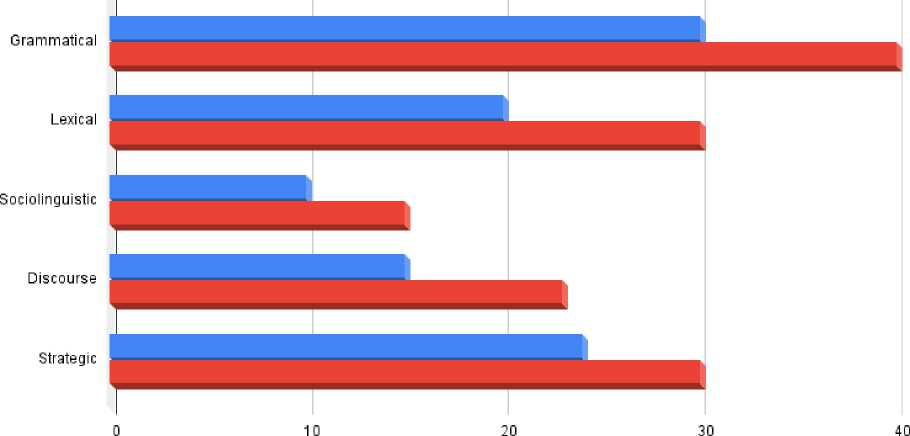
Fig. 2. Impact of AI-Powered Learning on Foreign Language Communicative Competence
with data and automates personalized practice, finally making the development of communicative competence a scalable and achievable goal for every student.
The findings of this study demonstrate the significant potential of the IAC model to enhance the development of students’ foreign language communicative competence. However, these results must be considered within a broader context of pedagogical, technological, and ethical considerations that shape the implementation of such AI-driven learning systems.
The successful integration of the IAC model needs a fundamental shift in the pedagogical ecosystem. Rather than replacing the educator, the model redefines their role from a primary source of information to a facilitator, mentor, and data-driven intervention specialist. With the AI handling repetitive practice and initial feedback, the teacher is freed to conduct high-value, humancentric activities. These include leading complex, open-ended discussions, facilitating collaborative projects, providing nuanced socio-pragmatic coaching, and offering the empathetic support and motivation that AI cannot do. This aligns with a blended learning approach, where the AI delivers personalized, procedural practice, and the teacher guides the strategic, creative, and affective dimensions of language learning.
While the results are promising, this study is subject to several limitations. First, the research was conducted over a single academic semester; the long-term retention of acquired communicative skills and the potential for sustained motivation with the AI system require longitudinal investigation. Second, the participant pool, while representative of our institution, was limited in its linguistic and cultural diversity. The model’s effectiveness across learners from significantly different first language backgrounds and educational cultures remains to be tested.
This study opens several productive avenues for future inquiry:
-
1. Longitudinal and cross-cultural studies: tracking learners over multiple years and across diverse global contexts to assess the long-term impact and cultural generalizability of the model.
-
2. Affective computing integration: exploring the integration of affective computing – where the AI could detect signs of student frustration, anxiety, or engagement through vocal tone or facial expression – and adapt its feedback accordingly to provide emotional support.
-
3. Advanced pragmatics training: developing more sophisticated AI modules specifically designed to teach and assess high-level pragmatic competence, such as understanding implied meaning, managing face-threatening acts, and adapting register in real-time multi-party conversations.
-
4. Teacher-AI collaboration models: Investigating the most effective frameworks for human-AI collaboration in the classroom, defining clear protocols for when the AI should flag a student for human intervention and what form that intervention should take.
Conclusion
In conclusion, the proposed IAC model represents a significant step forward in the field of intelligent computer-assisted language learning. By using the AI-Powered Communicative Loop, it provides a scalable, personalized, and theoretically sound method for developing the complex, multi-faceted construct of communicative competence. The findings confirm that AI can be a powerful tool for delivering the massive, scaffolded practice necessary for language acquisition. Its ultimate success will depend not only on technological advancement, but on our ability to thoughtfully integrate it into a human-centered pedagogical framework, address its ethical implications, and continuously refine it through future-oriented research. The goal is not to create autonomous learners from machines, but to use machines to foster more autonomous, confident, and competent human communicators.
