
О расселении первых мохэских племён по сведениям исторических хроник
Журнал: Вестник Новосибирского государственного университета. Серия: История, филология @historyphilology
Рубрика: Археология Китая
Статья в выпуске: 4 т.25, 2026 года.
Бесплатный доступ
В раннесредневековых китайских летописях нет прямых указаний на места первоначального расселения ранних мохэских племен. Четко в них указано только расположение племен относительно друг друга. Анализ второстепенных сведений из «Вэй шу» и «Бэй ши» дает основание считать, что на самом северо-западе ареала распространения уцзи-мохэ (по среднему течению р. Сунгари и по р. Муданьцзян) проживали хэйшуй. Севернее Когурё и восточнее Фуюй (в верхнем течении р. Муданьцзян) было племя лимо. По летописям, севернее лимо, а по карте, в среднем течении р. Муданьцзян проживали боду. К востоку от них находится долина верхнего и среднего течения р. Суйфун и здесь должны были находиться фуне. Еще восточнее, на территории Приморского края вплоть до моря проживали хаоши. К северо-востоку от территории боду находится оз. Ханка, на западном и, возможно, южном побережье которого обитали аньчэгу. К северо-западу от Ханки находится устье р. Муданьцзян, где, по летописям и приведенным расчетам, должны проживать хэйшуй. Юго-восточнее лимо, на востоке от горного массива Чанбайшань в долинах рек Туманган и Хуньчун обитало племя байшань.
Похожие статьи в разделе География. Биографии. История

Короткий адрес: https://sciup.org/147254124
IDS: 147254124 | УДК: 951.04 | DOI: 10.25205/1818-7919-2026-25-4-159-167
Location of the first Mokhe tribes according to historical chronicles
Forming of mokhe tribes refers to the second half of the V century. From the very beginning they started to play a big role in the history of the Far East people. One of the most relevant questions when studying mokhe tribes is the territory they lived on. Analyzing chronicle sources provides opportunity to clarify the places of locations of each one of the seven mokhe tribes. “Bei-shi” has information about the way from Holun to mokhe and the time it took. Calculations show that heishui tribes lived in the region of the mouth of the Mudanjiang river. The Limo tribe, which, according to sources, lived on the northern border of Koguryo, could not be on the Fuyui territory. It should have lived in the basin of the upper flow of the Mudanjiang river. To the north, in the middle part of the Mudanjiang river, the Boduo tribe was located. To the east of Boduo, in the basin of the Suifun river, was the location of the Fonye tribe. To the east from it and to the beginning of the Sea of Japan (on the territories of Partizansky and Lazovsky districts of the Primorsky region) lived the Haoshi tribe. To the south-east of Funie, on the western bank of Lake Hanka, the Anchegu tribe was located. To the south-west from it, lived the Heishui tribe. On the geographical map there is a river mouth of the Mudanjiang river, where, according to calculations, the Heishui tribe should have been located. To the south-east of Limo, along the lower flow of the Tumenjiang river and in the valley of the Hunchun river, on the territory of the former Northern Wozui state, the Baishan tribe was located. Funie, Anchegu and Haoshi tribes, which used arrows with stone tips, were located on the territory of Krounovskaya archaeological culture. They primarily consisted of Sushen people.
Текст научной статьи О расселении первых мохэских племён по сведениям исторических хроник
,
,
В V в. н. э. на юге современной Маньчжурии после подчинения государства Восточное Фуюй Когурё и бегства нескольких тысяч сяньбийцев из государства Северное Янь к родственному населению в северные пределы Когурё там образовалась общность, получившая название уцзи ( мохэ ). Центром консолидации уцзи являлась территория Восточного Фуюй. Изначально племена уцзи не являлись единым этническим сообществом. На это указывают несколько фактов. Во-первых, в процессе образования мохэских племен, участвовали различные народы группы вэй , а также сушэни и сяньби [Шавкунов, 2023]. Во-вторых, выделение мохэ произошло очень быстро. В китайских и корейских исторических сочинениях после 436 г. исчезают сведения о присутствии на севере Когурё потомков сяньби , а после 459 г. – и о сушэнях . А в скором времени там фиксируются уцзи , которые не могли максимум за два поколения сплотиться в единый этнос. В-третьих, часть из племен ( аньчэгу? , хэйшуй и бай-шань ) получили свои названия не по имени какого-нибудь рода, а по названию географического объекта, возле которого они проживали. В-четвертых, о разнородности состава уцзи-мохэ указывает и фраза из «Суй шу» о том, что племена имеют вождей, но не объединены [Сунь Хун, 2001, с. 80]. В-пятых, об этом же может свидетельствовать тот факт, что в тан-ское время (по «Синь Тан шу») к мохэ стали относиться новые народы, проживающие на восток от тюрок и шивэй вплоть до Охотского моря и Сахалина [Сунь Цзиньцзи, 2001, с. 54]. Перечисленные данные должны свидетельствовать о том, что мохэское общество в целом и отдельные племена в частности не были этнически однородными. И этому не противоречит стоящий в записях о мохэ иероглиф «бу», который обычно переводят как племя, но, помимо прочих, имеющий еще и значение «область» (как административно-территориальная единица) [Полутов, 2016, с. 233]. Вполне возможно, именно в этом значении его и поместили в летописи. Но тогда первоначально перечисленные семь мохэских племен являлись главным образом территориальными объединениями и лишь со временем некоторые из них консолидировались в родоплеменные группы.
Свое обобщенное название ( уцзи-мохэ по-китайски, мульгиль-мальгаль по-корейски) они получили от Северного Воцзюй (Чжиголоу-Мэголоу) [Шавкунов, 2023, с. 49], территория которого с 410 г. была подконтрольна Когурё. Из всего сказанного можно сделать два предположения. Во-первых, выделение мохэских племен началось на территории бывшего Северного Воцзюй (Мэголоу), завоеванного Когурё. Во-вторых, вождями основных семи племен были представители местной знати, являвшиеся подданными Когурё и, вполне возможно, получившие от государства инвеституру на правление. По крайней мере, подобные действия в Когурё практиковались, и есть сведения, о том, что ван Квангэтхо (391–413 гг.)
назначил некоего вождя Модуру наместником Северного Пуё (Фуюй) [Пак Кюджин, 2015, с. 47].
Территориальный вопрос расселения мохэских племен является одним из краеугольных в дальневосточной археологии. Им занимались многие исследователи. Даже простое перечисление различных концепций, не говоря уже об их критике, – дело отдельной большой статьи. Задача данной работы – попытаться уточнить координаты размещения упомянутых в более ранних источниках семи племен уцзи-мохэ .
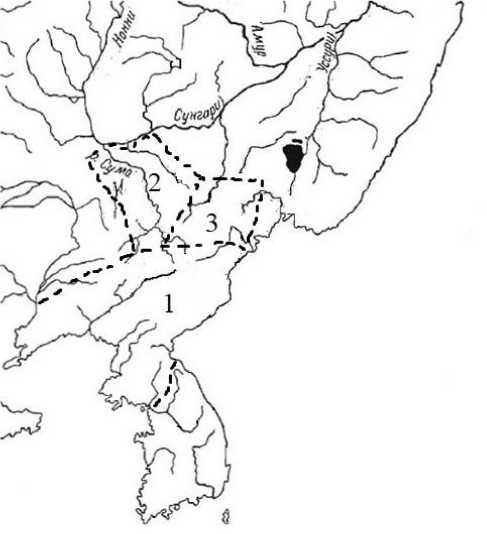
Точную территорию размещения отдельных племен вряд ли удастся установить – летописи такие вопросы не конкретизируют, а выделить археологические объекты, на которых фиксировался бы процесс сращивания разнокультурных элементов в единый комплекс, пока не удавалось. Кроме того, в мохэских племенах была разная доля населения со своими языковыми, хозяйственными и культурными отличиями. Поэтому говорить о сложившейся археологической культуре мохэ ранее VI в. нет достаточных оснований. А вот попробовать, хотя бы приблизительно, установить зафиксированную в летописях территорию, занимаемую в конце V – VI в. н. э. отдельными племенами уцзи-мохэ , можно. Для этого мы исходим из следующих соображений. Территория Северного Воцзюй в III в. н. э. располагалась по берегам р. Туманган недалеко от ее устья. Позже она вошла в состав Восточного Фуюй, а потом стала частью Когурё. Земли Восточного Фуюй простирались от Японского моря и, по-видимому, до среднего течения р. Муданьцзян (рис. 1).
Основными источниками по локализации мохэских племен являются «Вэй шу», «Бэй ши» и «Суй шу». Первая из этих летописей составлена в VI в. Содержащиеся в ней сведения об уцзи почти целиком были перенесены в «Бэй ши» [Полутов, 2016, с. 181] и, видимо, в «Суй шу», которые были составлены примерно в одно время (середина VII в.). Определенная информация о мохэ содержатся в «Цзю тан шу» и в его исправленном варианте «Синь тан шу». Но в этой хронике имеются сведения из «не дошедших до нас источников», при этом касающихся не только мохэ . Вполне возможно, что наличие в ней недостоверной информации и стало причиной того, что сунский император Жэнь-цзун, недовольный содержанием «Цзю тан шу», приказал в середине XI в. составить «Новую историю Тан», которую все равно сделали на основе старой. Поэтому брать информацию из танских хроник следует с большой осторожностью.
Рис. 1. Территории, ориентировочно занимаемые государствами Когурё ( 1 ), Фуюй ( 2 ) и Восточное Фуюй ( 3 ) в начале V в. н. э.
Fig. 1. Territories approximately occupied by the states of Koguryo ( 1 ), Fuyu ( 2 ) and Eastern Fuyu ( 3 ) in the early 5th century CE
Впервые о мохэ в Китае стало известно в 475 г., когда их посольство с дарами прибыло ко двору Северной Вэй. По всей видимости, это были представители племени лимо . Об этом можно судить исходя из обычной житейской логики. Расположение мохэских племен, по «Бэй ши» и «Суй шу», начинается именно с этого племени (вряд ли прибывшие издалека гости начали бы повествование не с себя, а со своих соседей). Также только о лимо и двух их непосредственных соседях ( боду и байшань ) известно точное количество войска (о более далеких от лимо племенах таких данных нет).
Племя лимо в «Самгук юса» названо ливэй [Ирён, 2018, с. 211]. В «Цзю тан шу» и более поздних источниках его называют сумо . Написание иероглифов «ли» и «су», а также «вэй» и «мо» в этих этнонимах очень похожи, и можно предположить, что разночтения в летописях объясняются ошибками переписчиков. В случае с «Самгук юса», скорее всего, так и было. А вот в отношении китайских династийных летописей, не все так однозначно. Ранние источники не сообщают о том, что племя лимо проживает по берегам р. Сумошуй. В «Вэй шу» и «Бэй ши» сказано только, что во владениях уцзи протекает такая река, в «Суй шу», в разделе об уцзи , она вообще не упоминается [Бичурин, 1950, с. 69, 91–93; Полутов, 2016, с. 186]. А вот уже танские летописи племя лимо «переименовывают» в сумо и «поселяют» по р. Сумошуй [Сунь Хун, 2001, с. 81]. К VII в. мохэсцы, несомненно, уже освоили берега верхнего отрезка Сунгари, и для составителей танских хроник было вполне логично поселить их там, а значит, и немного изменить написание иероглифа. Но изначально консолидация мохэских племен должна была происходить несколько восточнее Сунгари, там, где существовало Северное Воцзюй, а чуть позже - Восточное Фуюй [Шавкунов, 2023]. Надо учесть, что, по «Хоу Хань шу», к северу от Когурё находилось Фуюй [Бичурин, 1950, с. 21], которое, по мнению большинства исследователей, занимало территорию по берегам верхнего и правому берегу среднего течения Сунгари (см. рис. 1). Государство Фуюй просуществовало до 494 г., когда его последний правитель вместе со своим семейством перешел под покровительство вана Когурё [Ким Бусик, 1995, с. 89]. Причиной ликвидации Фуюй, по данным «Вэй шу», стало то, что фуюйцы были «вытеснены уцзи » [Бутин, 1984, с. 86]. Скорее всего, процесс этого «вытеснения» начался раньше 494 г., но он свидетельствует о том, что уцзи-мохэ формировались за пределами Фуюй. Происходить это могло только к востоку от него, а это опять нас выводит во владения бывшего Восточного Фуюй, по территории которого р. Су-мошуй не протекала (см. рис. 1).
Тем не менее, сообщение «Бэй ши» о р. Сумошуй во владениях мохэ соответствует действительности. В источнике дано описание маршрута из мохэ в Китай. Представитель мохэ Иличжи плыл вверх по р. Нань на запад до р. Дали (в примечании по р. Нонь-Мурэнь до р. Тор-усу). Там он потопил судно и отправился дальше по суше. Переправившись через р. Лоху, прибыл по западной киданьской меже в Хо-лун [Бичурин, 1950, с. 71]. Здесь Нонь-Мурэнь - несомненно, современная р. Нонни, а Тор-усу - это ее крупный правый приток Таоэрхэ. В «Бэй ши» имеется и описание обратного пути. От Хо-луна в 200 ли на север есть хребет Шань-юй-шань. От него в 13 днях пути на север лежат горы Цили, а еще через 7 дней пути - р. Лосян, шириной около ли. Еще через 15 дней пути на север - р. Тайиолу, а через 18 дней пути на северо-восток находится главный город уцзи [Там же, с. 69]. Упомянутая р. Тайиолу - это та же Таоэрхэ, а р. Лосян должна быть р. Лоху. Так как других рек шириной около 1 ли между устьем Таоэрхэ и Холуном (современный город Чаоян) нет, то с уверенностью можно утверждать, что р. Лосян (Лоху) является р. Силяохэ. От устья Таоэрхэ путники двигались на северо-восток до главного города уцзи 18 дней. По «Бэй ши», Иличжи возвращался домой той же дорогой, которой добирался в Холун. У р. Таоэрхэ он вытащил из воды свое судно и поплыл на нем домой [Там же, с. 71]. Следует учесть, что под р. Нань в середине I тыс. н. э. считали реки Нонни, Сунгари после слияния с Нонни и Амур после слияния с Сунгари и до устья [Нестеров, 1998, с.10]. При этом путь вниз по Нонни, а дальше по Сунгари в целом шел на северо-восток, и, видимо, Иличжи добирался домой по этим рекам.
Указанные выше цифры позволяют высчитать примерное место, где находился «главный город» уцзи . В «Бэй ши» есть четкое указание на то, что от начала Силяохэ (Лоху, Лосян) до устья Таоэрхэ 15 дней пути. По современным картам это расстояние напрямую составляет около 300 км. Добавим 20 % (60 км) на извилистость маршрута по несложной пересеченной местности и получаем 360 км пути за 15 дней, или около 24 км в день. Такое расстояние, даже пешком или на телеге, несложно пройти за 6 часов. Основное количество мохэских посольств в Китай приходилось на осенне-зимний период [Полутов, 2016, с. 192], когда световой день не превышал 12 часов. Поэтому, вполне реально, что именно 6 часов путники тратили непосредственно на передвижение, а остатки светлого времени уходили на сбор дров, приготовление завтрака, прием пищи, сворачивание временного лагеря утром и устройство лагеря и приготовление ужина вечером. Точно такие же действия были нужны и при передвижении по рекам. При скорости течения рек 3,5–4 км в час, сплавляясь по 6 часов в день, за 18 дней Иличжи должен был проплыть от устья Таоэрхэ вниз по Нонни и Сунгари приблизительно 400 км. Получается, что «главный город уцзи » находился на р. Сунгари где-то в промежутке между городами Харбин и Мулань, т. е., скорее всего, за восточной границей Фуюй. Но это, если просто плыть по течению. Если же спутники Иличжи помогали движению лодок веслами или шестами (а, вероятно, так и было), то скорость сплава могла возрасти до 5 км в час. Тогда они вполне могли пройти за 18 дней до 550 км и оказаться в районе устья р. Муданьцзян, и, скорее всего, именно на р. Муданьцзян был «главный город уцзи » [Шавкунов, 2025]. Таким образом, племя, к которому принадлежал Иличжи, изначально проживало по р. Муданьцзян, по всей видимости, простираясь на запад до границы Фуюй. И это были крайние северо-западные земли мест обитания 7-ми племен мохэ , а значит, там проживали хэйшуй . При этом не должно смущать то, что р. Муданьцзян в летописях не названа Хэйшуй (Черной речкой). На мой взгляд, искать речку, на которой проживали хэйшуй , по современному или древнему названию рискованно - «Черных» речек много. Река с таким названием есть в Санкт-Петербурге, Томске, Владивостоке, наверное, есть и в других городах и странах, в том числе и в Китае. По «Наглядно указующим планам», составленным сун-ским литератором Су Дунпо (Су Ши), по крайней мере две «черные» реки были в средневековой Корее [Ирён, 2018, с. 215]. Также неправомерно отождествлять мохэскую Черную речку с р. Черного дракона (Хэйлунцзян) или с маньчжурским названием Амура (Сахаляньу-ла). А вот р. Муданьцзян в дотанское время вполне могла носить название Хэйшуй.
С достаточно большой долей уверенности можно локализовать и юго-западные пределы мохэ, где летописи поселяют племя байшань. В маньчжурском источнике «Циньдинмань-чжоуюаньлюкао» («Высочайшее утвержденное исследование о происхождении маньчжур») есть фраза о том, что династия Цин «по-прежнему [тяготела] к поколению Великой Цзинь... первоначально не выходя из границ Бошань и Хэйшуй» [Кюнер, 1961, с. 260]. И несколько ниже «По справке, имена Бо (Бай) шань (Белые горы) и Хэйшуй (черные воды, реки) впервые появляются в “Бэйши”, но прославились в истории Цзинь. Когда наша [маньчжурская] династия получила повеление неба и воспрянула, подобно дракону, эти [горы и реки] были местом, где красный плод обрел счастье» [Там же, с. 261]. Произведение явно, хотя и по-своему поэтично, намекает на формирование ядра маньчжурского этноса на бывшей территории проживания племен байшань и хэйшуй. Другие мохэские племена не упоминаются. В то же время разные маньчжурские источники сообщают о том, что царский род, правивший в государстве Цин, происходил из г. Одоли, находившегося к востоку от Чанбайшаня [Горский, 1909, с. 110-112]. По «Бэй ши», хэйшуй изначально находились на северо-западе мохэского ареала. На севере от Когурё (и от гор Чанбайшань), находилось лимо, а племя байшань, располагавшееся к юго-востоку от лимо, должно было находиться к востоку от гор Чанбайшань. Это полностью согласуется с данными маньчжурских источников о происхождении правящего рода из г. Одоли, находящегося к востоку от Чанбайшаня на бывших землях байшань. А это как раз те места, где, по расчетам, в III в. должно было находиться государственное объединение Северное Воцзюй (Мэголоу), давшее название будущему этническому пласту мохэ [Шавкунов, 2023, с. 49].
Таким образом, установлены примерные места формирования двух мохэских племен. По среднему течению р. Сунгари, по всей видимости, на восток и на запад от р. Муданьцзян проживали хэйшуй (рис. 2). Оно было «далеко сильнее прочих» [Бичурин, 1950, с. 70] и потому занимало довольно большую территорию. Племя байшань проживало по берегам нижнего течения р. Туманган, скорее всего, захватывая долину р. Хуньчунь. Также можно установить ареал проживания племени хаоши . Это было самое восточное из семи племен и являлось страной древних сушэней [Бичурин, 1950, с. 70, 92]. Сушэни уверенно отождествляются с кроуновской археологической культурой [Шавкунов, 2024], которая занимала территорию южной части Приморского края вплоть до моря. Самые восточные памятники кро-уновцев-сушэней расположены в Лазовском и Партизанском районах и отделены от более западных земель массивом гор Пржевальского. Логично предположить, что там и должно находиться племя хаоши .
Теперь, когда установлены крайние восточные, юго-восточные и северо-западные области распространения ранних мохэсцев, можно вычислить места локации и других племен уцзи-мохэ . По «Бэй ши» и «Суй шу», к северо-западу от байшань , к северу от Когурё и гор Чан-байшань проживало племя лимо . При образовании мохэских племен еще существовало государство Фуюй, которое также находилось к северу от Когурё, занимая долину р. Сунгари. Лимо могло быть только восточнее Фуюй. Учитывая все сказанное, они с наибольшей долей вероятности должны были занимать территорию по верхнему – среднему течению р. Му-даньцзян, а племя байшань действительно оказывалось к юго-востоку от него. К северу от лимо находилось племя боду. По логике оно должно было располагаться по среднему течению р. Муданьцзян. По летописям, к востоку от боду проживало племя фуне , а судя по географической карте, там находится долина р. Раздольной, практически доходящая до гор Пржевальского, восточнее которых находятся Партизанский и Лазовский районы Приморского края, а по летописям, там проживают хаоши , что в целом соответствует приведенным выше расчетам. Для племени аньчэгу , находящемуся, по летописям, к северо-востоку от боду , в наибольшей степени подходит территория к западу от оз. Ханка. Земли, занимаемые,
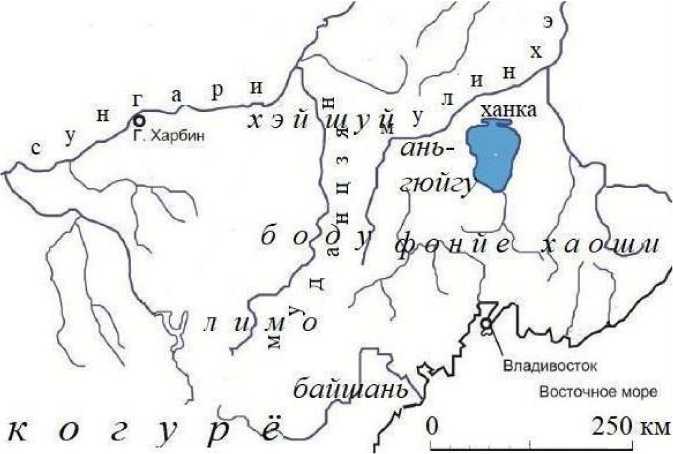
Рис. 2. Места расположения первых летописных племен уцзи-мохэ по «Бэй ши» Fig. 2. Locations of the first chronicled Wuji-Mokhe tribes according to the “Bei Shi”
по приведенным расчетам, племенами фуне и аньчэгу , также были ареалом распространения кроуновской-туаньцзе культуры, и можно предположить, что их основу также составляли сушэни . По такому расположению племен, хэйшуй , как записано в «Бэй ши» и «Суй шу», находились к северо-западу от аньгюйгу , т. е. они должны были располагаться по нижнему течению р. Муданьцзян и, возможно, еще дальше, по среднему течению р. Сунгари), куда они и были отнесены в данном исследовании. Фразу из «Бэй ши» о том, что на восток от Фонйе население использует каменные наконечники стрел и что это древняя страна сушэней [Бичурин, 1950, с. 70, с. 92], вполне можно понимать как на восток от фуне , включая само это племя. Тогда никаких противоречий в записях из «Бэй ши» и «Суй шу», ареалом распространения кроуновской-туаньцзе культуры и предложенной схемой расселения мохэских племен нет. А племена фуне и расположенные восточнее него аньчэгу и хаоши , на вооружении которых, по летописям, были каменные наконечники стрел, находились на территории распространения кроуновской-туаньцзе культуры, и основу их составляли сушэни .
Анализ данных китайских и маньчжурских письменных источников позволяют довольно точно определить места расселения первоначальных семи племен уцзи-мохэ в V—VI вв. н. э. При условии, что зафиксированное в летописях расположение этих племен относительно соседних верно, локализация их на современной карте Восточной Маньчжурии и Приморского края будет следующей (см. рис. 2). Племя лимо ( сумо ), занимавшее территорию севернее Ко-гурё, но не на землях Фуюй, располагалось по верхнему течению р. Муданьцзян. К северу от него, а значит, в среднем течении р. Муданьцзян, находилось племя боду (гудо ). К востоку от боду - на географической карте это область верхнего и среднего течения р. Суйфун (Раздольная) - проживало племя фуне . На восток от него, вплоть до Японского моря (на территории Партизанского и Лазовского районов Приморского края), должны были проживать хао-ши. К северо-востоку от боду находится оз. Ханка, на западном и, возможно, южном побережье которого проживали аньчэгу. К северо-западу от них летописи помещают хэйшуй , а на современных картах там находится долина нижнего течения р. Муданьцзян и правобережье р. Сунгари. Именно там, по приведенным выше расчетам, и должны были проживать хэйшуй . И, наконец, седьмое племя ( байшань ), отмеченное к юго-востоку от лимо , должно было располагаться в восточных предгорьях массива Чанбайшань, включая долины рек Ту-манцзян и Хуньчунь.
