
Strategic Analysis of Market Factors Affecting Investments in the Real Estate Sector in the Republic of Serbia
Journal: International Journal of Management Trends: Key Concepts and Research @journal-ijmt
Article in issue: 1 vol.5, 2026.
Free access
This paper analyses the investment environment and market dynamics of the real estate sector in the Republic of Serbia, focusing on Belgrade as the main urban and economic center. Based on domestic and international literature, it highlights the limitations of traditional financial models under increased uncertainty and complex interdependencies. PESTEL and SWOT frameworks are applied to holistically assess political, economic, social, technological, environmental, and legal factors. The aim of the study is to examine past and current trends and predict future developments, supporting competitive strategy selection at the micro level. The empirical analysis relies on official data from the Republic Geodetic Authority and the Statistical Office of the Republic of Serbia (2014–2024), examining transaction volumes and structure, land distribution, overall market value, and housing price trends in Belgrade. Results show long-term growth, dominance of the residential segment, and the influence of institutional and infrastructure projects on the market.
Similar articles in the section General questions of trade and commerce. Market
Short address: https://sciup.org/170213193
IDS: 170213193 | UDC: 339.13(497.11) | DOI: 10.58898/ijmt.v5i1.83-102
Text of the scientific article Strategic Analysis of Market Factors Affecting Investments in the Real Estate Sector in the Republic of Serbia
The real estate sector represents one of the key areas of investment activity in the modern economy, where investment decisions are made under conditions of increased uncertainty, pronounced market dynamics, and structural changes. Previous research indicates that the real estate market in the Republic of Serbia is characterized by significant spatial disparities, demand segmentation, and periodic fluctuations in property values, which substantially complicate the assessment of investment attractiveness and increase the risk of inefficient decision-making (Marinković, Radović & Radojičić, 2024; Alihodžić, 2024). Official data from the Statistical Office of the Republic of Serbia and the Republic Geodetic Authority further confirm dynamic changes in construction activity, transaction structure, and price movements, particularly in the Belgrade market as the dominant urban and economic center (Statistical Office of the Republic of Serbia, 2023; Republic Geodetic Authority, 2023).
-
*Corresponding author: D125@famns.edu.rs
1 ® © 2026 by the authors. This article is an open access article distributed under the terms and conditions of
the Creative Commons Attribution (CC BY) license .
Contemporary real estate markets are increasingly influenced by the interaction of macroeconomic conditions, institutional quality, infrastructure development, demographic trends, technological transformation, and spatial differentiation. As a result, investment decision-making in the real estate sector has become significantly more complex than in traditional investment environments, requiring broader analytical approaches capable of integrating both quantitative and qualitative determinants of market attractiveness. This complexity is particularly pronounced in transition and emerging economies, where rapid urban transformation, regulatory adjustments, and uneven regional development additionally affect market stability and investment risk assessment.
Although traditional financial evaluation models such as NPV, IRR, and ROI remain widely used in practice, contemporary literature highlights their limitations in analyzing complex, interdependent, and non-linear factors that shape the real estate market (Renigier-Biłozor et al., 2022; Wei et al., 2022).
In this context, real estate investment analysis increasingly extends beyond conventional financial indicators by incorporating institutional, strategic, and spatial dimensions of market development.. Particular attention is devoted to the role of urban policies, infrastructure projects, legal certainty, sustainability standards, and technological innovation, which together influence both investment profitability and the long-term competitive positioning of investment projects.
Against this background, there is a growing interest in the application of integrated and strategic analytical frameworks that incorporate macroeconomic, institutional, technological, and social determinants of the investment environment (Choy & Ho, 2023; Cheung, 2024).
At the same time, existing studies on the real estate market in Serbia are predominantly focused on individual market indicators, price movements, legal aspects, or urban development issues, while relatively limited attention has been devoted to integrated analyses combining strategic, institutional, spatial, and empirical market perspectives within a unified analytical framework.
The subject of this paper is the investment environment and market dynamics of the real estate sector in the Republic of Serbia, with a particular focus on the Belgrade market.
The aim of the study is to examine past and current market trends and to identify possible future development trajectories to support the selection of competitive micro-level investment strategies. The starting hypothesis is that the integration of financial, macroeconomic, institutional, and spatial-strategic factors enables a more comprehensive and relevant assessment of investment attractiveness and competitive positioning of investment projects in the real estate sector, compared to relying solely on traditional financial indicators.
The main contribution of this study lies in the integration of strategic analytical frameworks (PESTEL and SWOT) with empirical market indicators and institutional analysis to provide a more holistic assessment of the Serbian real estate market. By combining theoretical and empirical perspectives, the paper seeks to contribute to a broader understanding of investment decision-making processes in transition and institutionally dynamic real estate markets.
The paper is structured as follows: after the introduction, the methodological approach and research framework are presented, including the application of PESTEL and SWOT analytical frameworks for the holistic assessment of key investment environment factors. This is followed by a literature-based systematization of the main political, economic, social, technological, environmental, and legal determinants relevant to real estate investments. Subsequently, an empirical analysis of market trends is carried out based on official statistical data from the Republic Geodetic Authority and the Statistical
Office of the Republic of Serbia for the period 2014–2024, aiming to identify historical movements and possible future trends. The final part of the paper is dedicated to the discussion of the results, highlighting the most significant factors and assessing their combined impact on investment decisions and competitive positioning.
Materials and methods
The study is based on the hypothesis that the integration of financial, macroeconomic, institutional, and spatial-strategic factors enables a more comprehensive and relevant assessment of investment attractiveness and the competitive position of investment projects in the real estate sector, compared with an approach based solely on traditional financial indicators.
The methodological framework of the study is grounded in the assumption that the real estate market represents a complex and multidimensional investment environment in which market dynamics are shaped not only by financial indicators, but also by institutional conditions, urban development policies, demographic trends, infrastructure development, technological transformation, and legal certainty. Accordingly, the research approach combines strategic analytical frameworks with empirical market analysis to provide a broader interpretation of investment processes and market trends.
From a methodological perspective, the paper relies on a combination of qualitative and quantitative research approaches.
The qualitative component of the research is based on the application of PESTEL and SWOT analytical frameworks. PESTEL analysis is used to identify and systematize the political, economic, social, technological, environmental, and legal factors influencing the investment environment and market development. The SWOT framework is subsequently applied to synthesize the identified internal and external factors and assess their potential impact on investment attractiveness, strategic positioning, and market risks. The combined application of these frameworks enables the analysis of both macro-environmental conditions and the strategic implications of identified market trends.
The empirical analysis of market trends is conducted based on official statistical data from the Republic Geodetic Authority and the Statistical Office of the Republic of Serbia for the period 2014–2024.
The Republic of Serbia, and particularly the Belgrade market, was selected as the focus of the analysis due to its dominant role within the national real estate market, strong concentration of economic activity and investments, pronounced urban transformation processes, and exposure to institutional and spatial development factors characteristic of transition economies.
Based on the results obtained, the study provides an interpretation of market developments and their potential impact on investment decisions and competitive positioning. The integration of qualitative strategic analysis and quantitative market indicators enables a broader understanding of the interdependencies between institutional, macroeconomic, demographic, spatial, and market factors shaping the real estate sector.
ResultsLiterature-Based Identification of Factors Relevant to Real Estate Investment
In the existing scientific literature, investment evaluation in the real estate sector is increasingly understood as a multidimensional process shaped by the interaction of macroeconomic, institutional, spatial, technological, demographic, environmental, and legal factors that jointly influence market dynamics and investment decision-making. Contemporary research emphasizes that the attractiveness and long-term sustainability of real estate investments cannot be adequately assessed solely through traditional financial indicators, since investment outcomes are strongly influenced by broader structural and institutional conditions (Minh et al., 2022). As a result, recent studies increasingly apply integrated analytical and strategic approaches aimed at identifying the interdependencies between political, economic, social, technological, environmental, and legal determinants of the investment environment, as well as their combined influence on investment risk, market liquidity, and competitive positioning. Although various theoretical and methodological approaches are applied, they share a common objective of systematizing political, economic, social, technological, environmental, and legal determinants, as well as identifying key strengths, weaknesses, opportunities, and risks of investment projects. This section provides a thematically structured review of relevant domestic and international studies, aiming to identify dominant theoretical foundations that serve as a basis for further analysis of real estate investments in Serbia.
Political and institutional factors are widely recognized in the literature as structural determinants of investment attractiveness, particularly in transition and institutionally dynamic markets where regulatory predictability, state involvement, and governance quality significantly influence long-term investment security and investor confidence (Zhao & Lio, 2023). Political factors have a significant impact on the investment environment, particularly through the legislative framework, which includes property rights, building permits, and tax policy (Marinković, Radović & Radojičić, 2024). State initiatives in urban development can stimulate investment activity in specific areas (Muminović et al., 2020), while political stability, institutional transparency, and regulatory predictability influence risk assessment and long-term investment strategies (Anelli & Tajani, 2023;
Economic factors are commonly identified in the literature as key drivers of real estate market liquidity, investment profitability, and demand dynamics (Neverauskienė et al., 2025). Macroeconomic indicators such as GDP growth, inflation, employment, and purchasing power directly affect market demand and investment activity (Kwakye & Haw, 2020), while access to credit and interest rate movements determine the financial viability of investment projects (Alihodžić, 2024). Investment profitability further depends on rental price movements, construction costs, and currency risk, particularly in economies with high levels of euroization (Marinković et al., 2024; Anelli & Tajani, 2023;
Social factors are increasingly interpreted in the literature as major determinants of spatial demand differentiation and long-term market structure (Gong & Yao, 2022). Demographic changes, migration, and urbanization directly affect the structure and volume of demand (Kabaivanov & Markovska, 2021), while urban concentration processes contribute to capital accumulation in economically dominant metropolitan areas. Changes in lifestyles, flexible working arrangements, and increasing demand for smaller and more functional housing units are shaping contemporary residential patterns (Choy & Ho, 2023). In addition, quality-of-life factors such as infrastructure availability, public services, and green spaces are becoming increasingly important in differentiating micro-locations and influencing residential preferences and property values (Machala & Koelemaij, 2019; Marinković et al., 2024).
Contemporary literature increasingly interprets technological transformation as a strategic factor affecting market transparency, investment efficiency, and the reduction of information asymmetry in the real estate sector (Khan et al., 2025). Technological factors include infrastructure availability and construction quality, which influence property value and long-term sustainability (Alihodžić, 2024; Agava, 2021). The digitalization of investment processes, including PropTech solutions, virtual tours, and online platforms, improves project evaluation and management (Choy & Ho, 2023; Cheung, 2024). The growing application of advanced analytical tools, digital platforms, and decision-support systems enables more precise market analysis, portfolio optimization, and investment risk assessment, particularly in increasingly complex and data-driven market environments (Guarini et al., 2018). The application of advanced analytical tools and decision-support systems enables more efficient risk management and multi-criteria investment evaluation (Alihodžić, 2024).
Environmental factors are becoming increasingly important in contemporary real estate market analysis, as sustainability considerations are gradually shifting from supplementary investment criteria toward strategic determinants of long-term competitiveness and asset value (Robinson & McIntosh, 2022). Energy efficiency, the application of environmental standards, and sustainable construction are recognized as key elements of quality and long-term project value (Alihodžić, 2024; Choy & Ho, 2023). Urban planning that incorporates green spaces, public areas, and sustainable development principles contributes to environmental quality and spatial market differentiation (Latinović & Jovanović, 2019;
Legal and institutional stability is increasingly regarded in the literature as a prerequisite for efficient market functioning and long-term investment security, particularly in emerging and transition economies (Robinson & McIntosh, 2022). Legal factors define the institutional framework of investment activities through regulations on planning, construction, legalization, and property relations, thereby ensuring legal security and market transparency (Law on Legalization of Buildings, 2023; Law on Special Conditions for the Registration and Recording of Rights to Real Estate, 2025). Regulations concerning foreign investors, anti-money laundering measures, and investor protection rights affect capital accessibility and risk perception (Kabaivanov & Markovska, 2021;
Table 1 Overview of Factors Relevant to Real Estate Investment in Domestic and International Literature
|
Factor |
Description |
Literature |
|
Political |
Legislation on real estate and investments (land ownership rights, building permits, taxation) |
Marinković, Radović & Radojičić, 2024 |
|
State initiatives for the development of urban areas and regeneration of historic districts |
Muminović, Radosavljević, & Beganović, 2020 |
|
|
Political stability and its impact on foreign investment |
Xu, Zhang, Liao & Tong, 2024 |
|
|
Institutional transparency and regulatory predictability |
Anelli & Tajani, 2023; Kabaivanov & Markovska, 2021 |
|
|
Alignment of national policies with international and European regulatory frameworks |
Anelli & Tajani, 2023 |
|
|
Economic |
Macroeconomic indicators (GDP, inflation, unemployment) |
Kwakye & Haw, 2020 |
|
Availability of credit and mortgage interest rates |
Alihodžić, 2024 |
|
|
Rental market and investment profitability |
Marinković, Radović & Radojičić, 2024 |
|
|
Impact of global crises (e.g., COVID-19) |
Alihodžić, 2024 |
|
|
Increase in construction costs |
Anelli & Tajani, 2023 |
|
|
Currency risk |
Kabaivanov & Markovska, 2021 |
|
|
Volume and structure of foreign direct investment |
Xu et al., 2024 |
|
|
Social |
Demographic trends: urban migration, population growth in urban areas |
Kabaivanov & Markovska, 2021 |
|
Consumer preferences (eco-friendly and sustainable buildings) |
Chuweni, Saraf & Fauzi, 2022 |
|
|
Cultural and historical factors in urban development |
Machala, & Koelemaij, 2019 |
|
|
Changes in lifestyles and housing patterns |
Choy & Ho, 2023 |
|
|
Perception of quality of life |
Machala & Koelemaij, 2019; Marinković et al., 2024 |
|
|
Technological |
Infrastructure availability |
Alihodžić, 2024 |
|
Quality of construction materials |
Agava, 2021 |
|
|
Digitalization and PropTech (virtual tours, investment platforms) |
Choy & Ho, 2023 |
|
|
Application of blockchain technology for transaction transparency |
Cheung, 2024 |
|
|
Decision-support systems and risk assessment tools |
Choy & Ho, 2023 |
|
|
Environmental |
Energy efficiency and environmental standards |
Alihodžić, 2024 |
|
Impact of urbanization on the environment and the need for “green” zones |
Marinković, Radović & Radojičić, 2024 |
|
|
Sustainable construction strategies |
Chuweni, Saraf & Fauzi, 2022 |
|
|
Importance of environmental aspects for long-term urban development and environmental protection |
Latinović & Jovanović, 2019 |
|
|
Impact of natural and climate conditions |
Anelli & Tajani, 2023; Alihodžić, 2024 |
|
|
Legal |
Law on spatial planning and construction, land use and environmental protection |
Anelli & Tajani, 2023 |
|
Law on legalization of buildings |
Zakon o ozakonjenju objekata, 96/2015 |
|
|
Law on cadastre of real estate and property rights regulation |
Alihodžić, 2024 |
|
|
Measures to prevent illegal and unregulated construction |
Zakon o ozakonjenju objekata, 96/2015 |
|
|
Role of construction and housing inspections |
Zakon o komunalnim delatnostima, 2011/18 |
|
|
Law on prevention of money laundering and terrorist financing |
Zakon o sprečavanju pranja novca i finansiranja terorizma, 2007/2018 |
|
|
Anti-corruption regulations and transparency mechanisms |
Zakon o sprečavanju korupcije |
|
|
Regulations for foreign investors |
Kabaivanov & Markovska, 2021 |
Literature increasingly emphasizes that the identified determinants of real estate investment attractiveness operate interactively rather than independently. Political and institutional conditions influence market confidence and financing conditions, macroeconomic trends affect liquidity and purchasing power, while spatial, technological, and environmental factors contribute to the differentiation of locations and long-term asset competitiveness. To enable a clearer strategic interpretation of these interrelated influences, the findings from the literature are synthesized through a SWOT analysis, which incorporates both the internal characteristics of the investment environment and the external conditions generating development opportunities and investment risks.
Among the strengths, the growth potential of the real estate market in urban centers stands out, leading to capital concentration in liquid and economically developed locations (Özogul & Taşan-Kok, 2020). The development of analytical tools, multi-criteria models, and decision-support systems enables more precise assessment of project risk and investment attractiveness (Anelli & Tajani, 2023;
Weaknesses of the investment environment relate to the limited availability of standardized data and the complexity of investment risk assessment, which increases reliance on subjective evaluations (Popović, 2015; Kwakye & Haw, 2020). Administrative burdens and lengthy permitting procedures may slow down project implementation and increase costs (Machala & Koelemaij, 2019). Insufficient representation of sustainable and energy-efficient buildings, as well as the presence of illegal construction, further reduce market competitiveness and legal security (Alihodžić, 2024; Chuweni et al., 2022). The risk of real estate being used in money laundering schemes may lead to speculative price increases and stronger regulatory pressure (Law on Prevention of Money Laundering and Terrorist Financing, 2007/2018).
Threats include macroeconomic instability and global crises, which affect capital availability and return stability (Kwakye & Haw, 2020; Di Liddo et al., 2023). Political and regulatory uncertainty, intense investor competition, and issues of illegal construction further increase investment risk and may negatively affect the long-term profitability of projects (Hatem, 2016; Popović, 2015; Agava et al., 2021).
All elements of the SWOT analysis are systematized and presented in Table 2.
Table 2 SWOT Analysis of Factors Influencing Investments in the Real Estate Sector
|
Strengths |
Description/Comment |
Source |
|
Growth potential of the real estate market in urban centers |
Trend of capital concentration in the most economically developed and liquid locations |
Özogul & Taşan-Kok, 2020 |
|
Development of technologies for risk assessment and management |
Trend of investment professionalization through multi-criteria models and decision-support systems |
Anelli & Tajani, 2023; Locurcio et al., 2020 |
|
Interest of foreign investors |
Trend of market internationalization, increased liquidity, and opportunities for more complex projects |
Emmanuel & Chengelela, 2024 |
|
Continuous development of public and utility infrastructure |
Increase in the number of high-quality locations and long-term property value |
Latinović & Jovanović, 2019 |
|
Stable and predictable legal framework |
Trend for regulatory security, increasing investor confidence and market transparency |
Alihodžić, 2024 |
|
Weaknesses |
||
|
Limited availability of data and complexity of risk assessment |
Fragmented digitalization and reliance on subjective assessments |
Popović, 2015; Kwakye & Haw, 2020 |
|
Bureaucracy and lengthy permitting procedures |
Institutional lag behind market changes, increasing costs and risks |
Machala & Koelemaij, 2019 |
|
Lack of sustainable and “green” projects |
Slow adaptation of supply to changes in demand |
Chuweni et al., 2022 |
|
Presence of illegal construction and weak inspection oversight |
Structural legal uncertainty, increased investment risk, and weakened investor confidence |
Alihodžić, 2024 |
|
Risk of real estate being used in money laundering schemes and the placement of illicit capital |
Increased reputational and regulatory risks, tightening of control mechanisms, negative impact on investment attractiveness |
Zakon o sprečavanju pranja novca i finansiranja terorizma, 2007/2018 |
|
Opportunities |
|
Regeneration of historical and urban areas |
Transition from extensive to intensive development, increasing location value and new strategic investment opportunities |
Muminović et al., 2020 |
|
Innovation and digitalization |
Scaling of investment decisions, more efficient project management, and more precise risk assessment |
Naeem et al., 2023; Xu et al., 2024 |
|
Growing demand for “green” and energy-efficient buildings |
Repositioning of the market toward higher-value properties and competitive advantages |
Chuweni et al., 2022 |
|
Continuous development of public and utility infrastructure |
Increase in the number of high-quality locations and long-term property value, creating opportunities for strategic investment |
Alihodžić, 2024 |
|
Incentives and financial support programs |
Easier access to capital, faster project implementation, and reduced financial risks |
Alihodžić, 2024; Kwakye & Haw, 2020 |
|
Threats |
||
|
Macroeconomic fluctuations and global crises |
High sensitivity to external shocks, instability of returns and financing |
Kwakye & Haw, 2020; Di Liddo et al., 2023 |
|
Political instability or changes in legislation |
Unpredictability of costs and deadlines, reduced investor confidence |
Hatem, 2016; Popović, 2015 |
|
Competition from regional and foreign investors |
Compression of returns in attractive market segments |
Agava et al., 2021 |
|
Presence of illegal construction and weak inspection oversight |
Systemic legal uncertainty, increased long-term investment risk, and weakened investor confidence |
Hatem, 2016; Popović, 2015 |
|
Risk of real estate being used in money laundering schemes |
Increased reputational and regulatory risks, negative impact on investment attractiveness |
Zakon o sprečavanju pranja novca i finansiranja terorizma, 2007/2018 |
Holistic Analysis of Real Estate Investments in Serbia
The holistic analysis of investments in the real estate sector in the Republic of Serbia is based on the synthesis of official statistical and institutional data, primarily from the Republic Geodetic Authority, the Statistical Office of the Republic of Serbia, the Serbian Chamber of Commerce, the Belgrade Urban Planning Institute, as well as other relevant institutions and public sources. This section applies PESTEL and SWOT analytical frameworks as tools for a systematic examination of the macro-environment and internal characteristics of the real estate market. A particular focus is placed on the real estate market in Belgrade, given its dominant influence on overall market dynamics in Serbia. The significance of the identified factors, strengths, weaknesses, opportunities, and threats is assessed qualitatively using an intensity scale (+ – low impact, ++ – medium impact, +++ – strong impact) on market dynamics.
Table 3 PESTEL Analysis of Factors Relevant to the Real Estate Market in Belgrade and Surrounding Area
|
Political factors |
Description |
Impact |
|
Strategic state support for large urban projects |
State support and institutional backing for projects such as “Belgrade Waterfront”, EXPO 2027, and related infrastructure, including land sale (long-term leasing) and amendments to urban planning documents |
+++ |
|
Active state role in urban transformation |
Reorganization of transport and urban functions (relocation of the main bus station to New Belgrade, redevelopment of the Sava riverfront) to support new development zones |
+++ |
|
Continuity of government and relative predictability of urban policy |
Long-term political stability at both city and state levels enables continuity in the implementation of urban and investment policies |
++ |
|
Strategic orientation of Serbia toward EU accession |
Alignment of legislation with the EU acquis, strengthening legal certainty, transparency, and investor protection, which positively affects the investment climate |
+++ |
|
State programs and incentives for housing finance and construction |
Subsidized housing loans, guarantee schemes, and support for first-time homebuyers, with a direct impact on demand, particularly in new developments |
+++ |
|
Geopolitical risk factors |
Potential risks arising from complex international relations, sanctions regimes, and geopolitical tensions, which may affect foreign investment and financing |
++ |
|
Efficiency and reliability of inspections |
Weak control enables illegal construction and disrupts market balance |
++ |
|
Corruption and money laundering |
Reduce transparency and increase systemic risks |
+++ |
|
Institutional capacity |
The quality of policy implementation affects the sustainability of investments |
++ |
|
Economic factors |
||
|
Macroeconomic stability and moderate economic growth |
Continuous GDP growth and relative macroeconomic stability encourage investor confidence and sustain demand for residential and commercial real estate |
++ |
|
Increase in construction material prices and labor costs |
Rising construction costs increase new-build prices and reduce investor profit margins |
+++ |
|
Availability of bank financing |
Active role of banks in financing housing purchases and project development, alongside tightening credit conditions |
++ |
|
Inflation and interest rate movements |
Inflationary pressures and higher interest rates affect purchasing power and investment decisions, while real estate retains its role as a store of value |
++ |
|
Foreign direct investment flows |
Reduced dynamics of new foreign investments due to global uncertainty, but continued presence in strategic projects |
++ |
|
Development of transport and regional infrastructure |
Improved connectivity of Belgrade with surrounding areas through roads and railways leads to price growth in suburban zones |
+++ |
|
Concentration of economic activity in Belgrade |
Concentration of business activity, jobs, and services increases demand for residential, garage, and commercial space |
+++ |
|
Changes in demand structure by property type |
Strengthening of residential demand alongside stagnation or decline in interest in certain commercial properties |
++ |
|
Growth of the rental market |
Increased labor mobility, the IT sector, and students drive demand for longterm rental housing |
+++ |
|
Purchasing power of the population |
Real wage growth does not fully keep pace with real estate price increases, gradually limiting part of demand |
++ |
|
Limited availability of construction land |
Limited land supply leads to price increases and stronger competition among investors |
+++ |
|
Land-use conversion |
Conversion of agricultural land into construction land significantly increases land value |
+++ |
|
Privatization of locations |
Greenfield and brownfield projects reshape the urban structure and market dynamics; a representative example is the re-privatization of PKB agricultural land and its conversion into construction land for EXPO 2027 |
++ |
|
Speculative capital |
Short-term investment motives increase market price volatility |
++ |
|
Social factors |
||
|
Continuous population growth in Belgrade and internal migration |
Internal migration and population concentration in Belgrade create stable long-term demand for residential real estate, especially small and mediumsized apartments |
+++ |
|
External migration to Serbia |
Population inflows due to global crises increase housing demand, primarily in the rental market, especially in urban centers |
++ |
|
Age structure and growth of the active labor population |
A high share of the working-age population increases demand for housing for purchase and rent, as well as for garages and small commercial units |
++ |
|
Changes in lifestyles and household structures |
Growth in single-person households and young couples increases demand for functional apartments, new developments, and properties in well-connected micro-locations |
+++ |
|
Increased population mobility and demand for rental housing |
Frequent relocation, labor migration, and the arrival of foreign nationals stimulate the development of both long-term and short-term rental markets |
+++ |
|
Presence and growth of foreigners and digital nomads |
Foreign workers, IT professionals, and digital nomads increase demand for high-quality housing, short-term rentals, and locations in the city center and New Belgrade |
+++ |
|
Educational structure and concentration of universities |
A large number of students and educational institutions generate demand for smaller apartments, rooms, and rentals near faculties and transport hubs |
++ |
|
Social segregation and market polarization |
Differences in purchasing power lead to clear segmentation of the market into luxury, mid-range, and affordable segments, affecting spatial price differentiation |
++ |
|
Changes in the perception of quality of life and microlocations |
Increasing importance of proximity to green areas, recreational zones, and services raises the value of certain city areas and suburban municipalities; proximity to educational, healthcare, and recreational facilities significantly increases location value |
++ |
|
Pressure on infrastructure |
Overburdened utility, engineering, and transport infrastructure may reduce the attractiveness of certain areas |
++ |
|
Technological factors |
||
|
Digitalization of the real estate market |
Widespread use of online platforms for buying and renting real estate increases market transparency, accelerates transactions, and facilitates price comparison across micro-locations and property types |
+++ |
|
Development of platforms for listing and price analysis |
Availability of price data, historical trends, and supply enables more informed decisions and reduces information asymmetry |
+++ |
|
Presence of international short-term rental platforms |
Short-term rental platforms increase investment attractiveness in central and tourist areas, while also contributing to rising rental and purchase prices |
++ |
|
Digitalization of cadastre and public records |
Introduction of e-Cadastre and electronic services accelerates legal and administrative procedures, reduces transaction costs, and increases legal certainty in real estate transactions |
+++ |
|
Development of PropTech solutions |
Application of digital tools for asset management, valuation, and risk analysis increases investment efficiency, especially for large portfolios and commercial properties |
++ |
|
Development of transport and communication infrastructure |
Improvement of transport connections, rail lines, and digital infrastructure connects Belgrade with its wider surroundings and stimulates price growth in suburban and connected areas |
+++ |
|
Technological support for remote work |
Widespread availability of high-speed internet and digital services enables remote work, increasing demand for larger apartments, houses, and properties outside the city center |
++ |
|
Impact of technological clusters and innovation centers |
Presence of technology parks and IT clusters, such as Airport City in New Belgrade, increases demand for residential and commercial space nearby and stimulates the development of new micro-locations |
++ |
|
Core infrastructure |
A fundamental prerequisite for the investment attractiveness of a location |
+++ |
|
Smart buildings |
Increase the competitiveness and market value of properties |
++ |
|
Energy efficiency |
Reduce operating costs and increase long-term value |
+++ |
|
Insufficient infrastructure capacity |
May limit further development and affect quality of life |
++ |
|
Natural risks |
Increase investment risk and insurance costs; in Belgrade, this primarily relates to groundwater presence and flash flood risks |
++ |
|
Environmental factors |
||
|
Environmental quality and air pollution |
High levels of air pollution in certain parts of the city negatively affect the attractiveness of residential real estate, especially for families and higher-income buyers |
++ |
|
Climate change and extreme weather conditions |
Frequent heatwaves and heavy rainfall increase the importance of construction quality, energy efficiency, and adequate infrastructure, affecting construction and maintenance costs |
++ |
|
Development of green and recreational areas |
Investments in parks, promenades, and waterfront areas increase quality of life and the market value of nearby residential and commercial real estate |
+++ |
|
Application of sustainable construction principles |
The growing importance of energy-efficient buildings and “green” certifications encourages investors to adopt modern standards, increasing long-term competitiveness |
+++ |
|
Energy efficiency of buildings |
Energy-efficient buildings have lower operating costs and higher market demand, especially in new developments |
+++ |
|
Waste management and recycling |
Requirements for systematic waste management in new projects may increase costs but also improve image and attractiveness |
++ |
|
Protection of waterfront and sensitive areas |
Regulations related to the protection of rivers, green corridors, and sensitive areas may limit construction but preserve long-term location value |
++ |
|
Local environmental awareness and public pressure |
Growing environmental awareness increases demand for sustainable projects and raises expectations regarding environmental quality |
++ |
|
Green construction |
Increase sustainability and attractiveness of real estate |
+++ |
|
LEED certification and energy performance certificates |
Signal quality and energy efficiency of buildings |
++ |
|
Energy renovation loans |
Encourage renovation of the existing housing stock |
++ |
|
Reduction of green spaces |
Negatively affect quality of life and perception of location |
+++ |
|
Air pollution and noise |
Reduce the market value of properties in affected areas |
+++ |
|
Legal factors |
||
|
Law on Planning and Construction |
Defines conditions for issuing building permits, land use, and construction rules; directly affects timelines, costs, and feasibility of investment projects |
+++ |
|
Urban planning documents and zoning regulations |
General and detailed urban plans define permitted capacities and land use, shaping the market value of locations |
+++ |
|
Law on Legalization of Buildings |
Simplification of legalization procedures allows illegally constructed buildings to enter the formal market, increasing supply and liquidity, especially in the residential segment |
+++ |
|
Law on Protection of Water and Air |
Sets environmental standards and construction requirements |
++ |
|
Law on Public Utility Services |
Affects the quality of infrastructure and services |
++ |
|
Real estate cadastre and ecadastre |
Digitalization of the cadastre increases legal certainty, transparency, and transaction speed, positively affecting investor confidence |
+++ |
|
Tax regulations in the real estate sector |
Property transfer tax, property tax, and VAT in new construction affect overall investment profitability and final property prices |
++ |
|
Rental market regulation |
An underdeveloped and fragmented legal framework for long-term and short-term rentals may increase legal uncertainty for rental-oriented investors |
++ |
|
Environmental protection regulations |
Environmental impact assessment requirements may prolong procedures but also improve the quality and sustainability of projects |
+++ |
|
Labor regulations in construction |
Labor regulations affect labor availability and costs, impacting on construction expenses |
++ |
|
Legal protection of property rights |
The level of property rights protection and the efficiency of court procedures influence risk perception, especially for foreign investors |
++ |
In this section of the paper, political, economic, social, technological, environmental, and legal factors shaping the real estate market in Belgrade have been analyzed.
In the following section, these factors are not considered individually, but rather through the conditions they jointly create, which directly affect the competitive position of investors and overall market development.
These conditions serve as the basis for the SWOT analysis, which is presented in the Table 4.
The analysis refers to the real estate market of Belgrade and its suburban municipalities gravitating toward the city.
Table 4 SWOT analysis of factors relevant to the real estate market in Belgrade
|
Category |
Factor |
Explanation |
Intensity |
|
Strengths |
Institutional and political support |
Active role of the state and city in supporting large urban and infrastructure projects ensures long-term market stability |
+++ |
|
Continuous demand |
Strong and structural demand for residential and commercial real estate driven by urbanization and migration to Belgrade |
+++ |
|
|
Developed financing |
Availability of mortgage loans and housing finance mechanisms |
+++ |
|
|
Diversified market |
Presence of various property types (residential, office, commercial, short-term rental) |
++ |
|
|
Market digitalization |
High level of transparency of supply and prices through online platforms |
++ |
|
|
Developed urban infrastructure |
Central availability of electricity, water, sewage, gas, roads, and internet across most of the city |
+++ |
|
|
Technological solutions in construction |
Smart buildings, remote heating management, and modern energy efficiency systems |
++ |
|
|
Weaknesses |
Dependence on public policies |
Market dynamics strongly conditioned by state and city decisions and individual large-scale projects |
+++ |
|
Spatial imbalance |
Uneven development across different city areas and suburban municipalities |
++ |
|
|
Limited land availability |
Limited supply of attractive construction land in central urban zones |
+++ |
|
|
Administrative complexity |
Lengthy procedures related to permits, planning, and legalization |
++ |
|
|
Sensitivity to interest rates |
Demand reacts to changes in financing conditions and credit policy |
++ |
|
|
Insufficient infrastructure capacity |
Existing infrastructure does not keep pace with the intensity of new construction |
++ |
|
|
Illegal construction |
Unregulated construction disrupts spatial order and urban environment quality |
++ |
|
|
Reduction of green areas |
Intensive construction leads to degradation of public and green spaces |
++ |
|
|
Opportunities |
New investment micro locations |
Development of new zones through large projects (EXPO, urban restructuring) |
+++ |
|
Privatization and brownfield/greenfield sites |
Activation of locations such as PKB and “Marina Dorćol” |
+++ |
|
Land-use conversion |
Conversion of agricultural into construction land increases land value |
+++ |
|
|
Transport connectivity |
Improved transport infrastructure expands the market reach |
+++ |
|
|
European integration |
Gradual improvement of legal certainty and investment climate |
+++ |
|
|
Growth of sustainable construction |
Increasing demand for energy efficiency, LEED certification, and eco-materials |
++ |
|
|
Financial incentives |
Loans and subsidies for energy renovation of buildings |
++ |
|
|
Development of tourism and events |
Increased demand for short-term rentals and commercial real estate |
++ |
|
|
Threats |
Macroeconomic instability |
Inflation and rising interest rates affect purchasing power and investments |
+++ |
|
Geopolitical risks |
Global developments may reduce foreign investment inflows |
++ |
|
|
Speculative capital |
Short-term investments may lead to price bubbles |
++ |
|
|
Price correction |
Risk of overheating in certain market segments |
++ |
|
|
Rising construction costs |
Increase in material and labor costs |
+++ |
|
|
Corruption and money laundering |
Undermines market transparency and institutional efficiency |
++ |
|
|
Weak law enforcement |
Insufficient efficiency of construction inspections and regulatory control |
++ |
|
|
Environmental and natural risks |
Groundwater, flash floods, and flooding risks in certain zones |
++ |
|
|
Environmental pollution |
Individual heating systems, traffic, and industrial pollution sources |
+++ |
|
|
Illegal construction |
Construction without permits, inability to obtain occupancy permits and property registration |
+++ |
The SWOT analysis indicates that the real estate market in Belgrade has strong development potential, based on institutional support, urban growth, and investment demand, while at the same time remaining exposed to macroeconomic and regulatory risks.
A more detailed analysis by property types, along with a quantitative assessment of trends, will be presented in the following section, which includes an analysis of market developments over the past ten years and projections of future growth.
Analysis of Past, Current, and Projected Trends in the Real Estate Market in the Republic of Serbia
The third part of the paper is devoted to the analysis of market developments in the real estate sector in the Republic of Serbia over the past ten years, with the aim of identifying key trends relevant for the future development of the sector. The analysis is based on data from the Republic Geodetic Authority (RGA) and other relevant sources, which enable monitoring of the dynamics of the number of purchase agreements, the structure of transactions by property type, the total market value, and the movement of average apartment prices in Belgrade. The prediction of future trends also relies on the results of the conducted PESTEL and SWOT analyses.
The trend in the number of purchase agreements in the period 2014–2024 (Figure 1) indicates a pronounced long-term upward trend in market activity. After moderate growth until 2016, a decline followed due to the COVID-19 pandemic, after which a strong recovery and acceleration of transaction dynamics occurred, with particularly significant growth after 2020. The highest transaction volume was recorded in 2021 and 2022, when the number of contracts exceeded 138,000, reflecting strong demand under conditions of rising inflation and limited alternative investment opportunities, as well as the effect of deferred demand. A slight decline in 2023, followed by renewed growth in 2024, indicates market stabilization and adjustment to new macroeconomic conditions, including higher interest rates and more restrictive financing conditions.
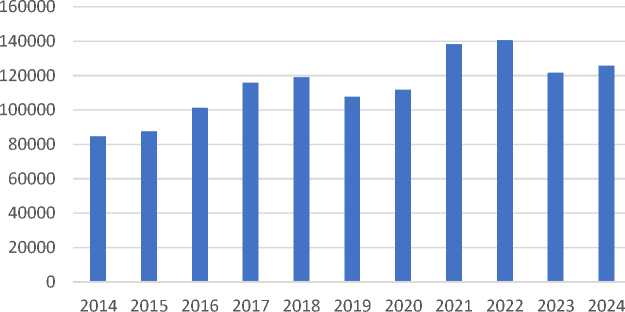
Figure 1 . Number of Purchase Agreements in Serbia, 2014–2024
Source: Author’s calculation based on data from the Republic Geodetic Authority (RGA), 2015–2025
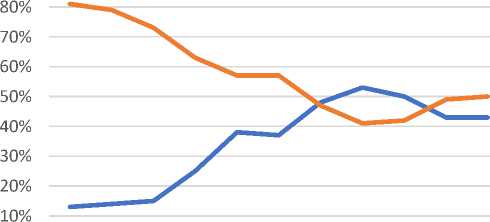
The projection for the upcoming period indicates moderate growth in the number of transactions, without a return to the extreme levels observed in 2021–2022, but with activity remaining significantly above the average of the previous decade. The structural analysis of land transactions (Figure 2) reveals a transformation of the market: whereas agricultural land previously dominated, its share has declined alongside the growth of construction land, particularly in the period 2017–2022, when construction land became the dominant category. After 2022, the shares of both categories have converged, which may indicate a temporary market saturation, a slowdown in new construction, and increased investor uncertainty.
90%
0%
2014 2015 2016 2017 2018 2019 2020 2021 2022 2023 2024
■■■■ *Construction land ^^^^^мAgricultural land
Figure 2 . Structural Analysis of Land Transactions in Serbia, 2014–2024
Source: Author’s calculation based on data from the Republic Geodetic Authority (RGA), 2015–2025
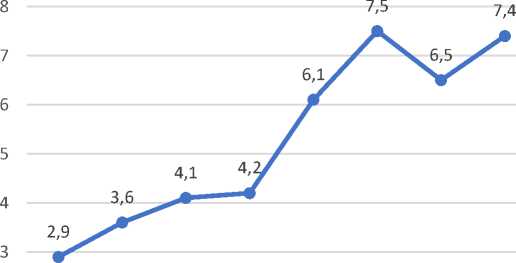
In the upcoming period, a relative balance between agricultural and construction land is expected, along with a possible increase in demand for construction land within the framework of planned urban development projects. The total value of the real estate market in Serbia has shown strong growth from
2017 to 2024, increasing by more than 2.5 times, particularly after 2020, driven by rising prices and investment demand. A slight correction in 2023 was quickly offset in 2024, indicating the resilience and adaptability of the market.
2017 2018 2019 2020 2021 2022 2023 2024
Figure 3 . Total Value of the Real Estate Market in Serbia, 2017–2024
Source: Author’s calculation based on data from the Republic Geodetic Authority (RGA), 2018–2025
The total market value is expected to continue growing at a more moderate pace, with price growth playing a more significant role than transaction volume growth.
The analysis of transaction structure by property type (Figure 4) shows a high level of stability throughout the observed period. Residential properties account for the dominant share of total transactions, ranging between 88% and 95%. In contrast, garage and commercial property transactions remain marginal and relatively stable.
Such a structure indicates the dominance of the residential segment as the primary driver of the market, while investments in commercial real estate play a secondary role.
120%
8 8% 93% 93% 94% 94% 95% 94% 94 %
100%
80%
60%
40%
20% 4% 3% 3% 1% 3% 1% 3% 3%
0%
2017 2018 2019 2020 2021 2022 2023 2024
^^^^вGarage ^^^мCommercial space ^^^в Residential space
Figure 4. Structural Analysis of Transactions by Property Type, 2017–2024
Source: Author’s calculation based on data from the Republic Geodetic Authority (RGA), 2018–2025
In the medium term, no significant shifts in market structure are expected, with residential real estate remaining the main driver of market activity.
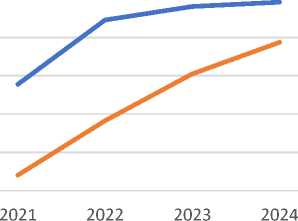
Average apartment prices in Belgrade (Figure 5) show continuous growth in the period 2021–2024, both in the new-build segment and in the existing housing stock. However, the growth dynamics are more pronounced in the existing housing segment, where overall price increases are significantly faster. This trend can be explained by the limited supply in attractive locations, as well as increased demand for properties that do not require long construction periods.
^^^м New-build ^^^a Existing housing stock
Figure 5 . Average Apartment Prices in Belgrade, 2021–2024
Source: Author’s calculation based on data from the Republic Geodetic Authority (RGA), 2022–2025
In the upcoming period, continued price growth can be expected, albeit with a possible slowdown in pace, as well as a gradual narrowing of the price gap between new-build properties and the existing housing stock in central and well-connected urban areas.
Considering the presented results, including the analysis of transaction structure by property type, total market value, and price dynamics, it is necessary to critically review the findings and identify the limitations of the research, as well as opportunities for further studies. The following discussion aims to provide such an objective assessment and highlight open questions in the context of the real estate market in Serbia.
Discussion
The results of the PESTEL and SWOT analyses indicate that the dynamics of the real estate market in Belgrade are not the result of isolated factors, but rather the outcome of their mutual reinforcement and cumulative impact. The intensity of individual factors (++, +++) is primarily determined by their capacity to systematically influence transaction volume, price dynamics, and the spatial structure of the market, which is confirmed by the statistical trends analysed in the third part of the paper. The obtained results support contemporary theoretical approaches that interpret real estate markets as complex and multidimensional systems shaped by the interaction of institutional, macroeconomic, demographic, spatial, and infrastructural determinants rather than by purely financial indicators. In this regard, the findings confirm the relevance of integrated analytical approaches for assessing investment attractiveness and competitive positioning within transition and institutionally dynamic real estate markets.
Systemic drivers of demand and dominance of the residential segment
Factors with the highest intensity (+++) relate to long-term demand for residential real estate. Internal and external migration, as well as the concentration of economic and educational activities in Belgrade, form a stable demand base. This explains the long-term growth in the number of purchase agreements after 2014 and the dominance of residential properties (~94–95%). Even during global disruptions such as the COVID-19 pandemic and the energy crisis, demand experienced only short-term corrections, confirming the key role of demographic and spatial factors. These findings are consistent with studies emphasizing the importance of metropolitan concentration, migration flows, and urban centralization as structural drivers of residential market growth in emerging and transition economies. The results additionally indicate that demographic and spatial determinants may have a more persistent influence on market resilience than short-term macroeconomic fluctuations.
Spatial constraints and supply dynamics as drivers of price growth
The second group of high-intensity factors (+++) includes spatial constraints and supply structure, primarily limited construction land, land-use conversion, and the privatization of brownfield locations. In certain periods, real estate price growth has outpaced the number of transactions, indicating the impact of constrained supply. Large public projects and urban restructuring, including preparations for EXPO 2027, further increase the attractiveness of micro-locations, acting as a demand multiplier and strengthening price trends. The findings therefore confirm the growing strategic importance of spatial and infrastructural factors in shaping investment attractiveness and price differentiation within urban real estate markets. Large-scale infrastructure and redevelopment projects not only stimulate construction activity but also contribute to the strategic repositioning of urban zones and the concentration of investment capital in selected micro-locations.
Institutional and political factors as market amplifiers
Institutional and political factors play a dual role in the real estate market. Active state support for major projects and predictable urban policy stabilize the market (++/+++), while corruption, inefficient supervision, and illegal construction increase risk and reduce transparency. Negative factors do not directly stimulate demand but affect supply quality and risk perception and are therefore assigned medium to high intensity. These findings support institutional approaches emphasizing the importance of governance quality, legal certainty, and regulatory predictability for long-term investment confidence and market efficiency. At the same time, the analysis suggests that institutional weaknesses characteristic of transition economies may coexist with strong market growth, although such growth may be accompanied by increased structural and reputational risks.
Macroeconomic and financial conditions as sources of short-term fluctuations
Macroeconomic factors such as inflation, rising interest rates, and construction costs strongly influence short-term market dynamics and represent a key SWOT threat (+++). However, they have not caused a long-term decline in market value, confirming the role of real estate as a store of value; their impact is high but primarily as a risk factor rather than a structural driver. This finding partially confirms previous research suggesting that real estate assets often retain their attractiveness during periods of economic uncertainty despite reduced liquidity and increased financing costs. The results also indicate that macroeconomic instability primarily affects the pace and structure of market activity rather than fundamentally altering long-term demand trends in dominant urban centers such as Belgrade. Technological and environmental factors as value differentiators
Technological and environmental factors have a moderate intensity (++), as they do not currently shape overall market dynamics but do influence price differentiation. Digitalization and PropTech solutions increase transparency and valuation accuracy, while infrastructure development and energy efficiency strengthen long-term property liquidity. Environmental awareness and sustainable construction increase costs but also project competitiveness, making these factors increasingly important for future demand structures. The findings support recent literature emphasizing the growing strategic role of digitalization, sustainability standards, and energy efficiency as emerging determinants of market competitiveness and long-term asset value. Although these factors currently play a secondary role compared to demographic and institutional drivers, their importance is expected to increase with further technological transformation and the gradual strengthening of environmental standards within the real estate sector.
Natural and environmental risks as localized factors
Natural risks such as groundwater and flash flooding have a limited impact and mainly affect the attractiveness of specific micro-locations without causing systemic disruptions (++). Nevertheless, the increasing relevance of climate-related risks in urban planning and investment analysis suggests that environmental resilience may become a more important component of long-term investment evaluation in the future.
Conclusions
Based on the conducted holistic analysis, which includes the application of the PESTEL and SWOT frameworks, as well as the empirical analysis of market data for the period 2014–2024, it can be concluded that the real estate market in Belgrade is characterized by long-term dynamic development with a pronounced influence of institutional, infrastructural, and large-scale urban projects on spatial structure and price movements. Political, economic, social, technological, environmental, and legal factors form a complex framework for investment decision-making, while the SWOT analysis indicates the simultaneous presence of significant development potentials, as well as structural weaknesses and risks.
The obtained results confirm the main hypothesis of the study that the integration of financial, macroeconomic, institutional, and spatial-strategic factors enables a more comprehensive and relevant assessment of investment attractiveness and the competitive position of real estate investment projects, compared to relying solely on traditional financial indicators. The analysis of past trends and the prediction of future developments indicate a continued growth in transaction volume and residential property prices, along with further transformation of specific micro-locations under the influence of large development projects.
From a practical perspective, the obtained results may be relevant for investors, urban planners, policymakers, and financial institutions involved in the real estate sector. The analysis indicates that longterm investment competitiveness increasingly depends not only on financial profitability, but also on institutional stability, infrastructure development, urban transformation processes, and the strategic positioning of micro-locations. The growing importance of sustainability standards, technological transformation, and spatial differentiation further suggests that future investment decision-making will require increasingly integrated and multidimensional analytical approaches.
However, the results must be interpreted with certain limitations. The analysis is based on aggregated data from official institutions, which does not allow for a more detailed insight into differences at the micro-location level, property quality, heterogeneity of investment risk across individual projects, or the impact of speculative purchases. An additional limitation is the inconsistent time coverage of certain statistical indicators, as well as the inability to directly include behavioural factors of investors and buyers.
Despite these limitations, the results of this study may serve as a relevant basis for micro-level investment decision-making, the development of competitive investment strategies, and future empirical and methodological research of the real estate market in the Republic of Serbia. Future studies could further expand the analysis through the inclusion of behavioural investment factors, micro-location comparative models, and advanced quantitative forecasting approaches to provide a more detailed understanding of long-term market dynamics and investment risk in the real estate sector.
Acknowledgments
The author expresses gratitude to Professor Dr. Đorđe Jovanović for all the support received during the preparation of this paper.
Conflict of interests
The author declares no conflict of interest.
