
The Peopling of Tajikistan by Homo sapiens Denisovan
Journal: Archaeology, Ethnology & Anthropology of Eurasia @journal-aeae-en
Section: Paleoenvironment, the stone age
Article in issue: 4 т.52, 2024.
Free access
The study published in the previous issue of this journal addressed the dispersal and early morphological and genetic evolution of H. s. denisovan in Iran, following the split of the ancestral taxon H. heidelbergensis into two taxa, Neanderthals and Denisovans, in the Levant ~400 ka BP. The latter taxon was first described owing to the sequencing of DNA extracted from the fragment of the fifth finger phalanx from layer 11.2 of Denisova Cave, Altai. Having left the Levant 400–350 ka BP, Denisovans began to spread via Iran to Central Asia and eventually to the Altai. Humans appeared in Denisova Cave ~300 ka BP, having crossed vast territories of Central Asia different in terms of environment, climate, landscape, flora and fauna, and partly populated by aborigines—the late populations of H. erectus. Adapting to changing environments, assimilating native humans, and undergoing natural selection, H. s. denisovan evolved both genetically and morphologically. Here, the spread of Denisovans in Tajikistan will be discussed.
Similar articles in the section Palaeontology


Short address: https://sciup.org/145147475
IDS: 145147475 | DOI: 10.17746/1563-0110.2024.52.4.003-028
Text of the scientific article The Peopling of Tajikistan by Homo sapiens Denisovan
The Paleolithic in Tajikistan is a key topic in the prehistoric studies of the Central Asia. V.A. Ranov and his colleagues executed a tremendous amount of archaeological studies in the loess-paleosol deposits in Southern Tajikistan, and managed to discover the most ancient Early Paleolithic site, Kuldara. The culture-bearing layers of the site in the soils of pedocomplexes 11 and 12 are overlain by a more than 100-meter thick stratum of loess and paleosols (Ranov et al., 1987; Ranov, 1988; and others). Initially, the site was dated to about 800 ka BP (Ranov, 1992a, b), later, a date of 915– 950 ka BP was proposed (Ranov, Lomov, 2001). The excavations of the site yielded only 40 distinct lithic artifacts, representing an unusual small-sized pebble-flake industry. But this was an outstanding discovery: Kuldara is the only site of such an old age in Central Asia. Pedocomplexes 10–7, overlying the Early Paleolithic cultural layers, contained only few artifacts, which did not provide reliable grounds to assert that H. erectus still inhabited Tajikistan at a later period. They could have died out due to the small number of population, or migrated to the regions with more favorable environment.
Consequently, there was a long break (200– 300 thousand years) in the peopling of Tajikistan. In pedocomplexes 6–4, an Early Paleolithic industry was discovered, which Ranov designated as the Karatau (Ranov, 1977; Lazarenko, Ranov, 1977). Researchers attribute six sites to this culture. Five sites (Karatau-1, Lakhuti-1, Obi-Mazar-4 and -6, and Khonako-3) were explored in the 20th century, Lakhuti-4 was found in
2021 (Anoikin et al., 2021, 2023; and others). At the Karatau sites, deposits were exposed over an area of about 800 m2; >2000 diagnostic artifacts were discovered.
The development of the Karatau Lower Paleolithic industries is divided into the early and the final stage. The early stage is associated with cultural layers traced in pedocomplex 6, dated to 650–600 ka BP, and pedocomplex 5, 520–480 ka BP. Lithic artifacts of the final stage have been identified in pedocomplex 4, dated to 425–364 ka BP.
The assemblages of artifacts attributed to the early stage of the Lower Paleolithic are dominated by flakes, shatters, chips, manuports, and poorly preserved unidentifiable animal bones (Ranov, 1980a, b; 1988; Ranov, Karimova, 2005; Khudjageldiev, 2007; and others). Primary reduction is characterized mainly by cores of the pebble type, poorly shaped, with striking platforms retaining pebble cortex; some cores bear few traces of trimming. Flakes were detached usually in an irregular manner; however, negative scar of the previous removal was often used as a striking platform. Many flakes are of amorphous shapes. Ranov argued that the presence of “citron slices” or simple crescents (which are blanks removed from pebbles, usually curved and retaining pebble cortex on the dorsal side) points to the pebble technique. There are numerous wedges—varieties of citrons; these were probably unintentionally produced during pebble flaking (crushing technique) (Ranov, 1986, 1988, 2005; and others). The platforms of the flakes are plain or retain natural cortex. Manuports and waste products make up a significant share (up to 70 %) of the assemblage. Laminar flakes and blades are rare.
The tool kit does not show any specialization of lithic products. The identified types include tools often shaped on different blanks. Retouch is usually marginal, not extending to the ventral and dorsal planes, one-stepped, often denticulate. Products with regular and extensive retouch are rare. Choppers, which were possibly used as chopping tools and cores, as well as side-scrapers, scraper-like products, and atypical end-scrapers, predominate in the collection. Denticulate and notched tools are also present. Flakes often exhibit signs of irregular retouch and negative scars, which suggests their use without additional preparation for performing various tasks.
The industry of the Final Karatau culture was identified in pedocomplex 4 of the sites of Obi-Mazar-4, Khonako-3, and Lakhuti-4 (Ranov, 2005; Ranov, Schäfer, 2000; Ranov, Khudjageldiev, Schäfer,
2004; Khudjageldiev et al., 2023; Anoikin et al., 2023; Rybalko et al., 2023; and others).
Pedocomplex 4 was associated with the period corresponding to MIS 11; it was formed in the chronological range of 425–364 ka BP. Obi-Mazar-4 yielded the most abundant and informative finds. In this regard, noteworthy are the inferences made by V.A. Ranov and J. Schäfer (2000) concerning the industry of this technocomplex. When characterizing the primary reduction, the researchers noted smallsized cores as a feature distinguishing this industry from all the others (discovered in pedocomplexes 6 and 5). These cores demonstrate various shapes: cuboid, ovoid, discoidal, sub-prismatic, triangular, and pyramidal. But most importantly, all the cores show prepared surfaces. The researchers argued that such cores might well be found at Mousterian sites. Thus, certain technical features observed in the Obi-Mazar-4 industry bring it closer to the industries of the Middle Paleolithic, despite the fact that in general it demonstrates Lower Paleolithic characteristics and undoubtedly belongs to the Karatau culture (Ibid.: 29).
The emergence of new Middle Paleolithic elements in the hominin lithic industry in pedocomplex 4, dating back to 425–364 ka BP, can only be explained by the appearance on the territory of Tajikistan of a new taxon—Denisovans, with a different industry.
Initial peopling of Tajikistan by the Denisovans
DNA sequencing of ancient hominins has revealed that the Denisovans and Neanderthals diverged 430– 380 ka BP in the Levant (Reich et al., 2010; Meyer et al., 2012; Prüfer et al., 2014). The essence of this phenomenon was that the single ancestral taxon H. heidelbergensis split into two taxa. The population of one taxon settled in Europe, where the genetic and morphological evolution of H. s. neanderthalensis took place in the process of assimilation of the indigenous population and adaptation to the changing environment 200–150 ka BP (Derevianko, 2022, 2024a). Another part of the H. heidelbergensis population moved through the Iranian Plateau and settled in Central Asia and Altai; here, in Denisova Cave, a new taxon was identified—Denisovans (Derevianko, 2019, 2022, 2024b). The genetic and morphological development of the Denisovans, same as Neanderthals, occurred in the process of assimilation of the late forms of H. erectus, natural selection, and adaptation to changing environmental conditions.
The dispersal of the emerging Denisovan taxon in Asia began around 400 ka BP; the lithic industry of the sites in Southern Tajikistan, discovered in pedocomplex 4, evidences the beginning of dispersal of the emerging Denisovan taxon over this area.
In the territory of Tajikistan, representatives of the genetically and morphologically evolving Denisovan taxon contacted with H. erectus population, carriers of the pebble-flake Lower Paleolithic industry. Since both the indigenous population and the newcomers had an open genetic system (Derevianko, 2019, 2022), they were able to interbreed and produce fertile offspring. Furthermore, there occurred a diffusion of industries, which was reflected in the technocomplex of the Final Karatau.
Pedocomplex 3 of Tajikistan loess-paleosol deposits have produced quite few artifacts as of yet. Generally, no Paleolithic sites dating to 350– 240 ka BP have been found in this region. Therefore, currently there are no reliable grounds to evaluate the development of the industrial complex in the Early Middle Paleolithic. Hopefully, the Joint Russia-Tajikistan Expedition, which has been studying the loess-paleosol deposits of Southern Tajikistan since 2019, will discover new sites that will fill the existing hiatus in the Paleolithic records of this territory.
A well-developed Middle Paleolithic industry was uncovered from pedocomplex 2 at Khonako-3 (Ranov et al., 2003; Schäfer, Ranov, Sosin, 1998). Cultural layers were located at a depth of 30 m below the daylight surface. The first lithic products were discovered by Ranov at the bottom of the excavation area (Ranov, 1980a). In 1984, J. Schäfer and A. Paster were the first to find lithic artifacts in pedocomplex 2. In 1995–1997, excavations of pedocomplexes 1 and 2 were carried out at this site. The most extensive studies were organized in 1997: the excavation area reached 43 m2; in total, 283 lithic artifacts were uncovered (6.6 artifacts per 1 m2). Excavations at the Khonako-3 site were carried out over five seasons; an area of approximately 80 m2 was excavated, and more than 600 lithic artifacts were collected (Ranov, Karimova, 2005).
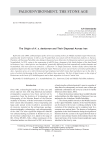
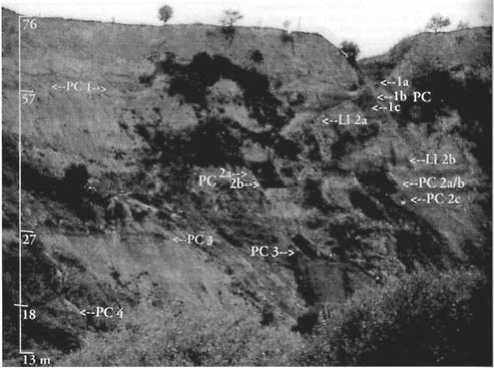
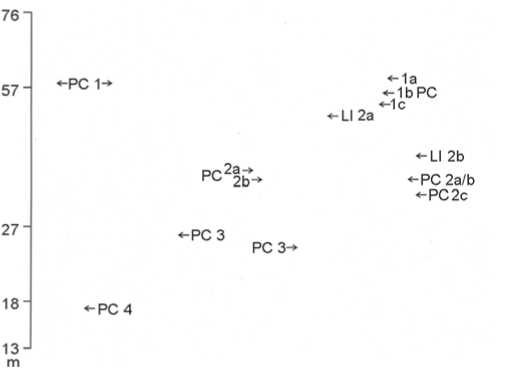
Since the site was excavated over several years, difficulties arose in correlating the profiles and the finds from different excavation areas (Ranov et al., 2003: 25–30). Publications of the archaeological materials from Khonako-3 provide somewhat different information on the occurrence of finds in pedocomplexes 2 and 1. Taking this into account, I refer to the paper by J. Schäfer and his co-authors, since it presents data on the geochronology of the finds (Schäfer, Ranov, Sosin, 1998). The article contains a map of the excavation area (Ibid.: Fig. 7), but unfortunately it is illegible, so the diagram of the stratigraphic sequence is provided (Fig. 1). The site contains: pedocomplex 4 with materials of the Final Karatau culture, pedocomplex 3 with solitary finds, pedocomplex 2 comprising three paleosols 2a–2c; pedocomplex 1 with three paleosols 1c, 1b, and 1a, and loesses LI 2a and LI 2b lying between the latter two pedocomplexes.
а
b
Fig. 1 . Khonako-3 stratigraphic profile (after (Schäfer, Ranov, Sosin, 1998)). a – photo; b – diagram.
The researchers note that lithic artifacts occurred throughout pedocomplex 2 (MIS 7; 242–186 ka BP) and in loess-paleosol and loess deposits separating pedocomplexes 2 and 1 (MIS 6; 186–127 ka BP); pedocomplex 1 (MIS 5; 127–71 ka BP) yielded stone tools dating back to the Middle Paleolithic.
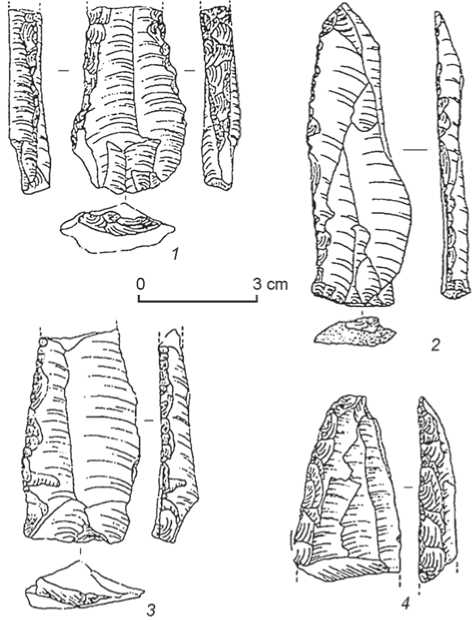
According to the description given by Schäfer and his colleagues, the lithic artifacts were deposited more or less horizontally in the sediments of pedocomplex 2, which was formed during the climatic optimum of MIS 7. The oldest finds (ca 230 ka BP) were attributed by the researchers to paleosol 2b. In the western part of the excavation area, many lithic artifacts were deposited within and between the paleosol sediments during the middle and late stages of MIS 7 (220–200 ka BP) (the sediment complex between paleosols 2b and 2a). Notably, the lithic collection from paleosols 2b and 2a contains a significant number of complete and broken blades, as well as a few Levallois flakes and shatters. Cores are rare and heavily exhausted. The scholars provide drawings of four tools—three longitudinal side-scrapers on convergent blades detached from Levallois cores (Fig. 2, 2–4 ) (Ibid.: Fig. 9), and a fragment of a Levallois point (Fig. 2, 1 ). Noteworthy are the signs of thorough shaping of these items. Lithic artifacts from loess LI 2a attract special attention.
This collection includes blades (33 %), flakes (40 %), and shatters (15 %). Of particular interest are three pyramidal (conical) cores (Fig. 3) (Ibid.: Fig. 10) found in the 180 thousand years old deposits. Their typological characteristics points to the Upper Paleolithic. Given their old age, we can ascertain the high level of primary reduction technique used by the Denisovans in the Late Middle Pleistocene.
The archaeological materials of excavations of pedocomplex 2 unfortunately have not yet been published in full. Ranov and Schäfer (2000) listed 530 finds recovered during all the years of field studies of pedocomplex 2.
The materials of 1997 excavations were described in most detail (Ranov et al., 2003). The researchers assumed that lithic artifacts were distributed throughout the entire soil stratum of the climatic optimum, since humans inhabited this site despite the microclimatic fluctuations during the soil accumulation. In contrast, the loess sediments that were formed in cold and arid climatic conditions yielded practically no finds.
At Khonako-3 pedocomplex 2, lithic artifacts were dispersed vertically; and since the excavations were carried out by different research teams in different years, with and without the participation of soil scientists, later there arose difficulties in the attribution of the artifacts positions to specific units of the multilayered pedocomplex.
The excavations of 1997 produced 283 finds, including: cores ( n =3; 1.1 %), blades ( n =28; 9.9 %), blade fragments ( n =29; 10.2 %), laminar flakes ( n =4; 1.4 %), flakes ( n =70; 24.7 %), shatters ( n =83; 29 %), pebbles ( n =11; 3.9 %), and bones ( n =55; 19.8 %). Raw materials used by hominins for the tool manufacture were felsite-porphyry, metamorphic silicified rocks, fine-grained quartzite, silicified shales, and limestone. Pebbles were collected at the talus slopes of disintegrating Pliocene conglomerates underlying the soil-loess sequence. All the artifacts uncovered in 1997 in the rudimentary soil and the climatic optimum soil at a level of 47.60–52.64 m, i.e. in a 5-meter thick stratum, are considered by the researchers as a single complex.
Fig. 2 . Lithic artifacts from paleosol layers 2b–2a in Khonako-3 pedocomplex 2 (after (Schäfer, Ranov, Sosin, 1998)).
1 – fragment of Levallois point; 2 – 4 – longitudinal side-scrapers on blades.
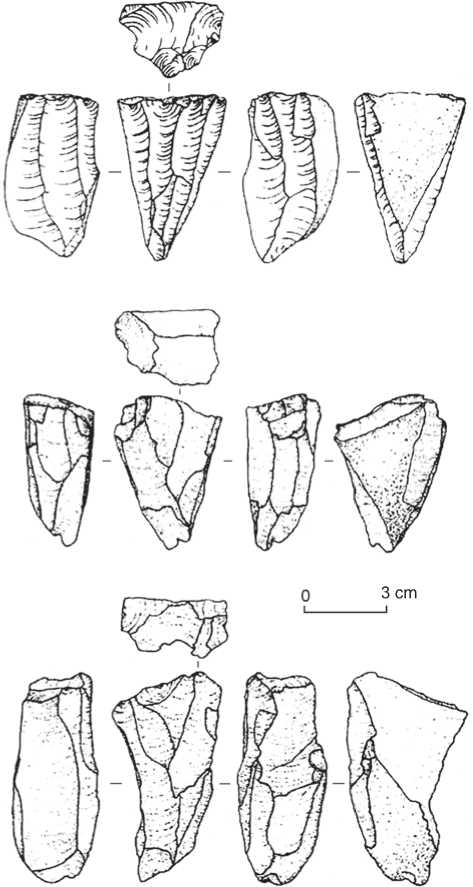
Fig. 3 . Cores from layer LI 2a in Khonako-3 pedocomplex 2 (after (Schäfer, Ranov, Sosin, 1998)).
During the excavations, three cores were found. One of the cores was recovered from the rudimentary soil layer, and was classified by the researchers as a “well-prepared prismatic core” (Fig. 4, 1). The core is large, 13.4 × 11.7 × 6.9 cm. Its striking platform is wide and bears rejuvenation scars along the edge. The second core is oval in plan view, bears traces of radial removal of shortened flakes (Fig. 4, 2). It was deposited in the climatic optimum soil layer, less than 1 m below the prismatic core. The researchers note that similar cores were found at the Final Middle Paleolithic site of Khudji, and in paleosol 4 at Obi-Mazar-4, which contained Final Karatau artifacts. The back of the second core shows different-sized negative scars, which can be classified as the preparation of the striking platform; large flakes are blanks. One more core was classified as a preform.
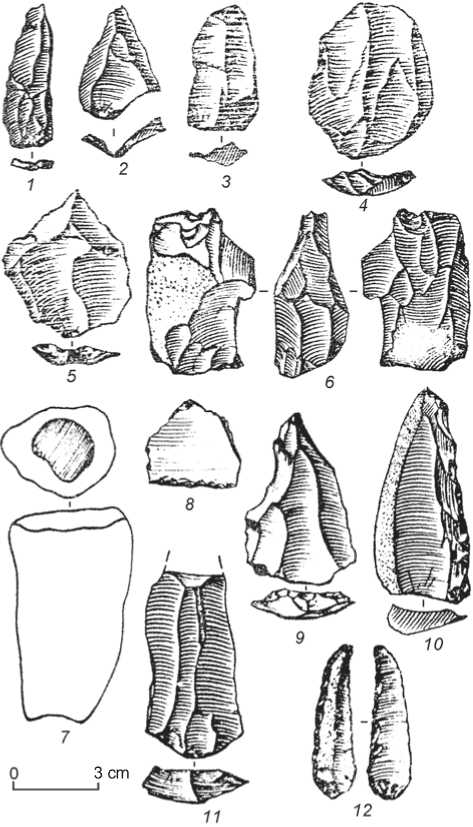
In total, 26 tools were identified. One half of them, according to the researchers, were recovered from the rudimentary soil, another from the paleosol of the climatic optimum. The most numerous group consists of side-scrapers made on blades and blade fragments ( n =9), and on flakes ( n =4). Two scrapers are classified as bifaces prepared on blades. One of them was considerably damaged (Fig. 5, 7 ). It was fashioned on a blade with a triangular cross-section and a thick proximal part. One of the edges shows traces of dorsal and stepped retouch; the opposite edge, fine and abrupt retouch. The other side-scraper (knife?) was partially destructed (Fig. 5, 3 ). It was manufactured on a large blade of a regular shape, triangular in cross-section. One of the edges demonstrates traces of one-stepped large-faceted retouch, while the other edge, fine and abrupt retouch. There are two fragmented bifacial side-scrapers. One of them was made on a large thick blade, triangular in cross-section (Fig. 6, 1 ). One edge shows abrupt, almost vertical denticulate retouch on the dorsal face, with the working edge rejuvenated by fine retouch. The opposite edge is partially treated with abrupt retouch. The second side-scraper, represented by only a small medial part (Fig. 6, 2 ), was made on a blade with a trapezoidal cross-section. The edges are shaped with abrupt retouch on the dorsal face.
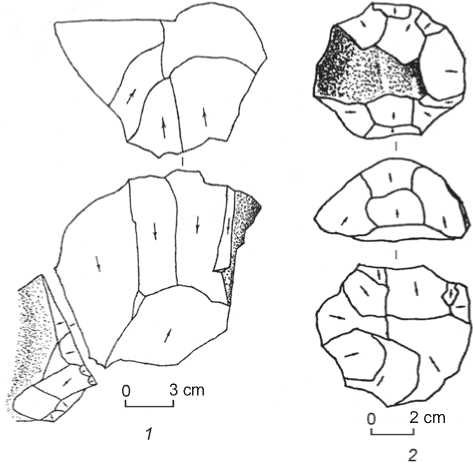
Fig. 4 . Cores from Khonako-3 pedocomplex 2 (after (Ranov et al., 2003)).
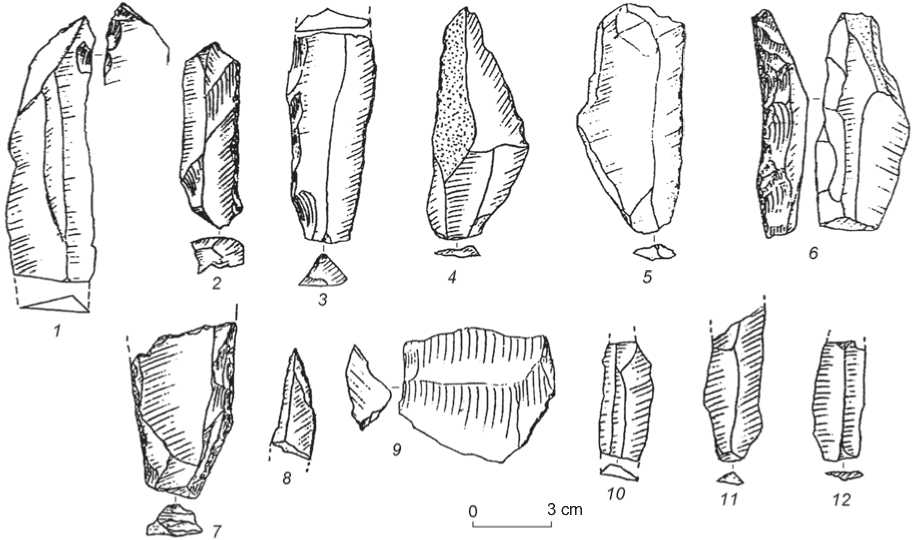
Fig. 5 . Retouched lithic artifacts from Khonako-3 paleosol layer 2 (after (Ranov et al., 2003)).
1 , 2 , 5 , 6 – unifacial side-scrapers; 3 , 7 – bifacial side-scrapers; 4 – knife; 8 – beveled bladelet; 9 – end-scraper; 10 – 12 – blades.
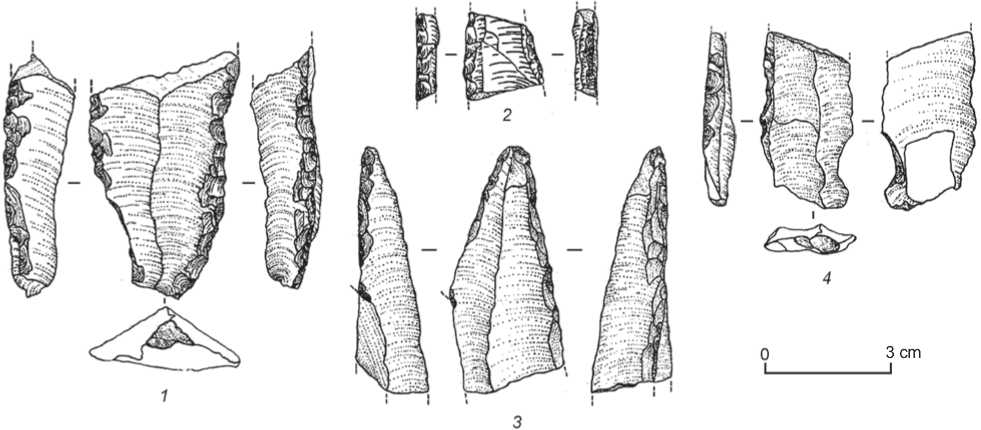
Fig. 6 . Lithic artifacts from Khonako-3 paleosol layer 2 (after (Ranov, Schäfer, 2000)).
1 , 2 – fragments of bifacial side-scrapers; 3 – combination tool end-scraper–side-scraper; 4 – combination tool (notched side-scraper).
Four longitudinal unifacial side-scrapers on blades were identified. One of them shows a slightly curved profile (see Fig. 5, 6 ). Its distal end is sharpened by two spall removals from the ventral surface. One edge was first prepared by differentsized removals; after that, fine sharpening retouch was applied to the proximal part. A side-scraper on a blade of trapezoidal cross-section (see Fig. 5, 1 )
is trimmed at the distal end on the ventral face. One flattening spall was detached from the dorsal face. The researchers determine this part of the tool as the working area resembling the edge of a carinated scraper. Another unifacial side-scraper is fashioned on a small blade with a heavily thickened proximal part (see Fig. 5, 2). Its platform is partially removed by two wide detachments. One edge is prepared by fine abrupt stepped retouch. On the ventral surface, the researchers have identified two small areas with traces of retouch or use-wear.
Side-scrapers on flakes exhibited a more rough working as compared to those made on blades. A side-scraper (knife?) on a sub-triangular flake (see Fig. 5, 4 ). Its longitudinal edge, partially retaining natural cortex, bears traces of fine abrupt retouch. The opposite edge also shows irregular retouch. Another side-scraper is made on a flake partially retaining pebble cortex (Fig. 7, 7 ). One edge is partially treated with abrupt retouch. There is a notch in the distal part. The researchers argue that two spurs formed by the notch were used to perform certain operations. In their opinion, the poorly shaped side-scraper on a flake resembles Quina-type scrapers. The retouch is marginal and one-stepped. The surface of the tool is heavily weathered, the retouch is poorly visible (Ranov et al., 2003) (Fig. 7, 8 ).
Two combination tools. One tool shows a combination of an end-scraper and a side-scraper made on a thick fragmented trihedral blade (see Fig. 6, 3 ). One edge is prepared through abrupt one- and two-stepped retouch along the entire length; the opposite edge demonstrates partial retouch. The distal part bears abrupt, blunting retouch, which suggests that this tool was also used as an end-scraper. One trihedral blade was modified into a side-scraper by treating its edge with fine abrupt retouch (see Fig. 6, 4 ). In the proximal part of the opposite edge, a deep notch was made, with traces of partial fine retouch.
Other types of tools are represented in the form of isolated specimens. A point with a broken tip is made on a very thin laminar flake (see Fig. 7, 1 ). Both edges forming the tip are faceted through fine vague retouch, which is described by the researchers as “ephemeral”. The retouch is light, one-stepped, barely affecting the tool’s edges. The knife is made on a large laminar flake (see Fig. 7, 5). The retouch is fine, barely visible, and can be traced along the edge of the item. The proximal end of the item is missing, and the researchers believe that it was broken intentionally; the break could have served as a finger rest. One more knife with casual, very fine marginal retouch was fashioned on a blade with a missing proximal end. A small notch is noted there, too. An end-scraper on a robust flake, whose working edge covers the distal part and the adjoining right area (see Fig. 5, 9 ). The retouch is fine, parallel, and one-stepped. The researchers also distinguish a pseudo-Levalloise point with irregular retouch, and blades with fine abrupt or sharpening abrupt, but not denticulate, retouch, covering some portion or the entire length of one edge (see Fig. 5, 8 , 10–12 ; 7, 3 , 4 , 6 , 9 ).
Ranov notes that the proportions of blades in the two paleosols of pedocomplex 2 are 25 and 44 %, respectively. These are well-faceted blades of more or less regular shapes; some of the blades and flakes can be attributed to Levallois artifacts (2000: 34). The researcher mentions the fact that at Khonako-3, a significant number of finds were deposited not
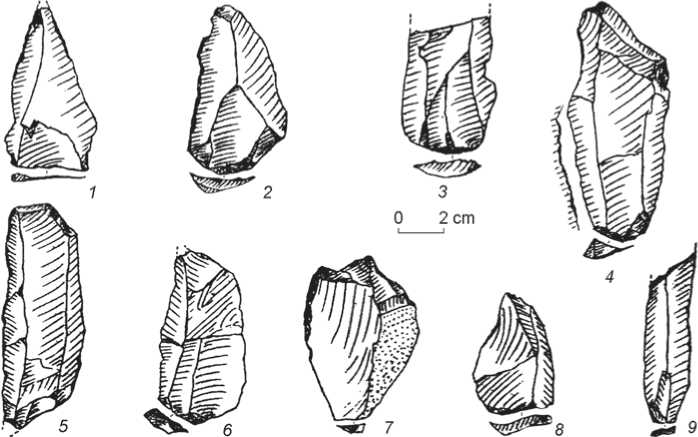
Fig. 7 . Lithic artifacts from Khonako-3 paleosol layer 2 (after (Ranov et al., 2003)).
1 – point; 2 – unifacial side-scraper; 3 , 6 – blades; 4 – blade with ventral fine retouch; 5 – knife; 7 – side-scraper with large-faceted retouch; 8 – side-scraper with small-faceted retouch; 9 – prismatic blade.
in the soil of the climatic optimum, but partly in the rudimentary soil. Among other known loessic Paleolithic sites, this site was the first where four spots of burnt soil (their basal parts) were discovered, which fact suggests that the hominins used hearths.
Ranov and his co-authors compared the lithic artifacts discovered in 1997 with the materials from previous excavations, and came to the conclusion that these finds constituted a single whole and represent a lithic industry different from the Karatau. The latter can be attributed to the Levallois-Mousterian facies of the Central Asian Mousterian in its blade version, with a predominance of tools on blades reaching 12 cm in length, and very rare tools with regular retouch (2003).
Excavations of pedocomplex 1 yielded significantly fewer archaeological materials than pedocomplex 2 (Ranov, 2000). The industry of pedocomplex 1 is also defined as blade-based, but the amount of blades is much smaller here than that in the collection of pedocomplex 2. The shares of blades in two paleosols of pedocomplex 2 are 25 and 44 %, while those in pedocomplex 1 are considerably fewer. Ranov notes that the industries of these two pedocomplexes differ primarily in the lithic raw materials used. The artifacts (flakes and a small number of blades) from pedocomplex 1 are made mainly of less ductile quartzite-like dark gray sandstone. These two pedocomplexes are separated by a significant chronological gap—about 60 thousand years. Pedocomplex 2 is dated to 242–186 ka BP and corresponds to MIS 7, and pedocomplex 1 is dated to 127–71 ka BP and belongs to MIS 5.
The results of excavations of Khonako-3 pedocomplexes 2 and 1, carried out in the late 20th century, turned out to be completely unexpected for researchers. Ranov considered the occurrence of Upper Paleolithic tools in the interstadial soil layer lying 2 m above pedocomplex 2 and dating to ca 180 ka BP as an unusual phenomenon. The specific feature of this lithic industry is the presence of prismatic cores, from which narrow blades of the Upper Paleolithic type were detached (Ibid.: 35). The scientist noted that the emergence of the industry of pedocomplex 2 could be reliably associated with the migration of hominins from the Near East, while the emergence of the Khonako-3 pedocomplex 1 industry remained unclear (Ranov, 1990a, 2000).
The inferences made in the late 20th century can be considered quite correct. However, the discovery of a new taxon (Denisovans, who diverged from Neanderthals and migrated through Central Asia to the Altai 400–350 ka BP) requires a revision of the previous conclusions. Furthermore, pedocomplex 4 at Obi-Mazar-4, Lakhuti-4, and Khonako-3, displays changes in the technocomplex of stone tools, which are clearly visible at the final stage of the Karatau culture and are associated with the emergence of well-prepared cores in the primary reduction and the Middle Paleolithic artifacts among the tools. These changes can be correlated with the onset of dispersal over the territory of Tajikistan of the new taxon, Denisovans. The lack of local sites falling within the chronological range of 370 (350)–240 ka BP precludes the reconstruction of the complex process of interaction between the indigenous H. erectus population and the migrants—early Denisovans.
The lithic industry from Khonako-3 pedocomplex 2, dated to the range of 240–180 ka BP, belongs to the well-developed Middle Paleolithic, rather than to its early stages. Only two cores were found—a prismatic core and a discoidal one with traces of radial flaking. But given that tools were fashioned mainly on blades and laminar flakes, this industry can be conventionally attributed to the middle stage of the Middle Paleolithic.
The site of Khonako-3 is located approximately half-way the transit route of the early Denisovans from the starting point in the Levant to the destination point in the Altai. Notably, the comparisons of the Middle Paleolithic industries of the relevant period from Denisova Cave, Khonako-3, and the Levant have shown their similarity, but not identity. This is understandable: the industries are separated by vast territories; moreover, the Denisovans of Denisova Cave and Khonako-3 lived in different environmental and climatic conditions and, consequently, used different subsistence strategies. The chronological period of 240–180 ka BP in the Levant corresponds to the final stage of the Qesem industrial complex and the initial stage of the Misliya technocomplex; in Tajikistan, the industry from Khonako-3 pedocomplex 2; and in Denisova Cave, the industry of the final Early to the beginning of the middle stage of the Middle Paleolithic. All the above industries, despite the sparsity of finds in Khonako-3, demonstrate many parallels. I have no doubt that the industry from Khonako-3 pedocomplex 4 marks the initial stage of the Denisovan dispersal over Tajikistan, where they assimilated with the Karatau people, H. erectus . The industry from Khonako-3 pedocomplex 2 illustrates the developed stage of the Middle Paleolithic; it belonged to the Denisovans.
In 2022–2023, the teams of the Joint Russian-Tajik Geoarchaeological Expedition of the Institute of
Archaeology and Ethnography of the Siberian Branch of the Russian Academy of Sciences and the Donish Institute of History, Archaeology and Ethnography of the Tajik Academy of Sciences carried out smallscale excavations at Khonako-3 (Kurbanov et al., 2022; Khudjageldiev et al., 2023). The excavations have revealed very few, but important new materials: in pedocomplex 2, Upper Paleolithic tools were deposited, and pedocomplex 1 contained quite a lot of laminar blanks, including pointed ones.
Dispersal of H. s. denisovan over the territory of Tajikistan in the Late Pleistocene
R.N. Kurbanov and co-authors analyzed the industries from Khonako-3 pedocomplexes 1 and 2, and came to the conclusion that the emergence of blade industry in pedocomplex 2 was possibly the result of the initial peopling of this region by early H. sapiens , which did not stay long here and were subsequently replaced by Neanderthals (Kurbanov et al., 2022: 160).
Hypothesis as to the possible emergence of modern humans on the territory of Tajikistan ca 240 ka BP is not proven. Even if we accept that the fossils from Misliya belonged to modern humans, then, given their age <200 thousand years (Hershkovitz et al., 2018) and the lack of sites with Misliya-type blade industry in the transit zone from the Levant to Tajikistan, the conclusion made by Kurbanov and his colleagues cannot be considered valid. The small artifact collection from Khonako-3 pedocomplex 1 does not include any diagnostic items that could be attributed to the European Mousterian.
By 1971, Ranov had identified 21 sites in Tajikistan, which he classified as the Mousterian (1971). The researcher noted that only one of these sites was subjected to large-scale excavations, four other sites were partially excavated, and the rest 16 localities yielded few lithic artifacts (Ibid.). All these sites chronologically fall within the Upper Pleistocene. In total, about 11 thousand artifacts were discovered; 7747 artifacts were collected at Kara-Bura, and all the other sites produced a small number of lithics.
Over the past 50 years, new sites were discovered and studied in Tajikistan: those with long stratigraphic sequences and those with surface occurrence of artifacts. The sites yielded abundant artifact collections, including diagnostic implements. However, the lack of geochronological data complicates the construction of a reliable chronological classification of the sites, and does not provide grounds to trace the evolution of the Middle Paleolithic industry identified. To solve these issues, it is important to know whether one or several human taxa inhabited the territory of Tajikistan. As was mentioned in the first part of this paper, H. erectus tribes with pebble-flake industry were the first settlers in this region; 400–350 ka BP, the evolving Denisovans began to disperse here. A part of the indigenous population was assimilated by the migrants, others likely died out gradually. No Paleolithic sites dating back to the chronological period of 350–240 ka BP have been found in Tajikistan. Culture-bearing layers in Khonako-3 pedocomplex 2 contain the Middle Paleolithic blade industry of the Denisovans. The comparatively small, but informative, collection includes pyramidal cores, a Levallois point, and end-scrapers on blades dating back to ca 180 ka BP (see Fig. 3, 4). This collection suggests that the Denisovans with the Middle Paleolithic industry close to the Denisovan type continued to disperse over Tajikistan in the Late Middle Pleistocene. Notably, the Denisovan industry of the Altai and Tajikistan, in terms of the primary reduction strategy and tool kits, reveal both similarities and distinguishing features, which are likely due to the significant distance between the regions and differences in environmental settings.
In Tajikistan, no Paleolithic sites dating back to the Late Middle Pleistocene have been found; the few and uninformative lithic artifacts from Khonako-3 pedocomplex 1 dating back to MIS 5, do not provide any evidence on the continuity of these two technocomplexes. The hiatus in the Middle Paleolithic industry from pedocomplexes 1 and 2 will likely be filled by materials from further studies on the Khargushon Plateau in Southern Tajikistan. Earlier, on this plateau, excavations were carried out at the Dusti site (Ranov, Khudjageldiev, Schäfer, 2001; Ranov, Amosova, 1993).
At Dusti, during two short field campaigns, 229 lithic artifacts were uncovered from pedocomplex 1. These artifacts are characterized as rough, well-prepared both technically and typologically as compared to similar products from Khonako-3. The researchers believe that this is due to the site type: Dusti is clearly a hunting camp. It is quite possible that hominins took the best implements away, and the site served as a short-term occupation camp (Ranov, Khudjageldiev, Schäfer, 2001: 207).
Notably, the hominins used poor-quality lithic raw materials to manufacture tools; this added to the peculiarity of the Dusti lithic industry. An attempt to determine the age of the cultural layer at Dusti using the RTL-technique turned out to be useless: the date of 71.5 ± 15.6 ka BP was derived from a sample of loess lying 1 m above the top of the pedocomplex containing cultural remains, and the date of 26.8 ± ± 2.9 ka BP was generated on a sample of loess deposited 6.5 m lower than the above-mentioned sample. But this sample was taken from a test pit located 5.5 m to the south of the excavation area (Laukhin et al., 2004).
Researchers argue that the excavations on the Khargushon Plateau, where surface finds have been recorded at 20 more localities, should be continued, because owing to the special geological conditions that led to the strong erosion of pedocomplex 1, the artifacts were spread over dozens of square kilometers.
Ranov distinguished three main trends of development in the Middle Paleolithic of Central Asia and Kazakhstan, in terms of technology and typology, the relevant local groups being: the Levallois-Mousterian (including the Levallois and Levallois-Mousterian facies); Mousterian (Mountain Mousterian); and Mousterian-Soan (1971). He divided the Central Asian Middle Paleolithic industries into four varieties: the Levallois—Khodzhakent, Dzhar-Kutan, and Obi-Rakhmat (?); the Levallois-Mousterian—Kayrak-Kum, Kapchigay, and Tossor (?); the Mousterian (Mountain Mousterian)— Teshik-Tash and Semiganch (?); and the Mousterian-Soan (or Mousterian of Soan tradition)—Kara-Bura and Ak-Dzhar (?) (Ranov, 1988).
Scholars of the Central Asian Paleolithic express also other opinions about the periodization and identification of local industry varieties in the Middle Paleolithic of this region, but they all proceed from the fact that this vast region was inhabited by Neanderthals with the Mousterian. With the discovery of the new taxon, it is necessary to consider all the local Middle Paleolithic varieties of Central Asia from the Late Middle to the first half of the Upper Pleistocene within the framework of single Denisovan industry associated with H. s. denisovan . Judging by the results of genetic studies, the Denisovans dispersed over the vast territory of Central, East and Southeast Asia (Meyer et al., 2012; Prüfer et al., 2014), and in the future, plenty of local varieties of Middle Paleolithic industries are to be identified.
One of the well-studied sites of the initial stage of the Upper Pleistocene is Ogzi-Kichik cave. The cave is located at an altitude of 1200 m above sea level. Five excavation trenches with slightly different stratigraphic sequences were established in the cave (Ranov, 1975, 1977, 1980b; Ranov, Amosova, 1983; and others). The total area of excavation was about 200 m2 (Ranov, 1988).
The greatest amount of finds was discovered in 1977 in excavation 5. The researchers noted that stone products and animal bones were mainly in a “suspended” state, and did not form any clearly distinguishable levels that could be identified as the remains of habitation horizons (Ranov, Amosova, 1983).
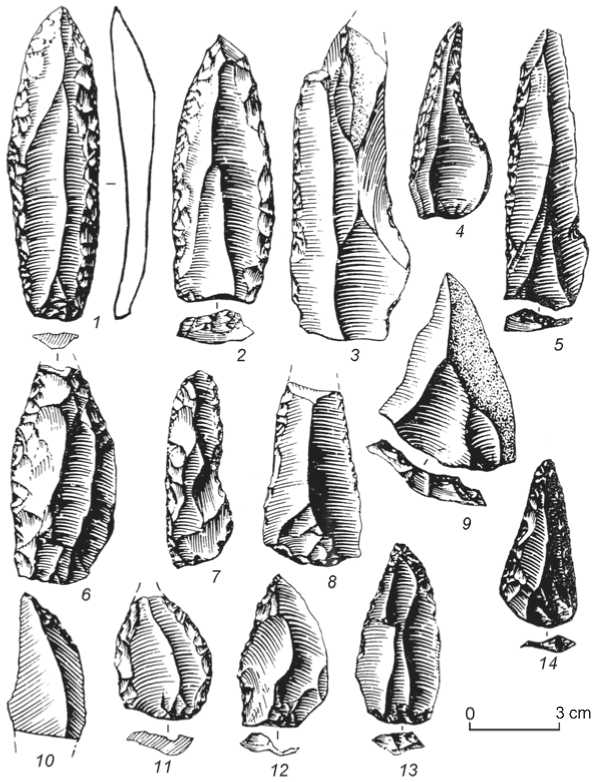
Lithic artifacts from excavation 5 did not differ in their technical and typological features from those found in other excavation trenches. Hominins used mainly flint rocks for the production of tools; according to the researchers, the features of primary and secondary flaking depended on the quality of raw material. Few cores were found in excavation 5 ( n =4) (as generally in the cave); all the cores were heavily exhausted. One of the well-preserved subprismatic cores was used for the detachment of small blades and flakes (Fig. 8, 6 ). The collection contains 308 fragments and shatters, including flint – 175 spec., non-flint – 52 spec.; 125 flakes, including flint – 73 spec. and non-flint – 52 spec. Among the flakes noteworthy are Levallois-type laminar blanks with rejuvenated and faceted striking platforms (Fig. 8, 2–5 ), and pseudo-Levallois pointed blanks (Fig. 8, 9 , 11 ). Judging by the available blanks, hominins inhabiting the cave used Levallois, subprismatic, and discoidal cores.
Ranov identified 12 tools in the lithic collection from excavation 5, seven of which were made on flakes, and the rest on blades and laminar flakes. The tools are dominated by longitudinal side-scrapers: double – 3 spec., notched backed – 2 spec. (Fig. 8, 1 , 10 ), and transverse – 3 spec. Noteworthy are a sidescraper with abrupt alternate retouch (Fig. 8, 12 ) and an end-scraper.
Ranov notes that the Ogzi-Kichik lithic industry as a whole does not demonstrate any technical and typological differences between the artifacts depending on their position in the stratigraphic sequence. He considered the assembled artifacts as a single collection (Ranov, 1988). The proportion of tools is very high – 27 %, the Levallois index is 32.7 %. Among blanks, there are numerous blades and laminar flakes. Noteworthy is the large number
Fig. 8 . Lithic artifacts from Ogzi-Kichik excavation 5 (after (Ranov, Amosova, 1983)).
-
1 , 10 – side-scrapers; 2 – 5 – flakes and blades with faceted striking platforms; 6 – sub-prismatic core; 7 – a calcareous encased flint geode; 8 – side-scraper (raclette) with straight edge; 9 , 11 – pseudo-Levallois points; 12 – side-scraper with abrupt alternate marginal retouch.
of side-scrapers (Fig. 9, 2 , 4 , 6 , 7 ) and points (Fig. 9, 1 , 5 ); Ranov classified them into 21 and 5 subtypes, respectively. These artifacts are thoroughly retouched, mainly on the dorsal face. Other tools, few in numbers, include points, end-scrapers, limaces, carinated endscrapers, burins, knives (Fig. 9, 3 ), and denticulate-notched tools. Flakes with irregular retouch are rather numerous.
The Ogzi-Kichik Middle Paleolithic industry, in terms of technology and typology, can be attributed to the developed Middle Paleolithic. The primary reduction strategy was based mainly on the Levallois and blade technique. The most typical tools are points and side-scrapers of various types. The retouch is dorsal, multifaceted, and heavy. Ventral scaly retouch was used quite rarely. In general, this industry has much in common with the materials of the developed stage of the Denisovan Middle Paleolithic industry. The proportion of the Upper Paleolithic tools at the site is only 1.89 % (Ibid.).
Age estimation of the site of Ogzi-Kichik is problematic. Several radiocarbon dates were derived (from profile top to bottom): 24,780 ± 380 BP (GrA-10968), 25,530 ± 370 BP (GrA-10966),
3 cm
J
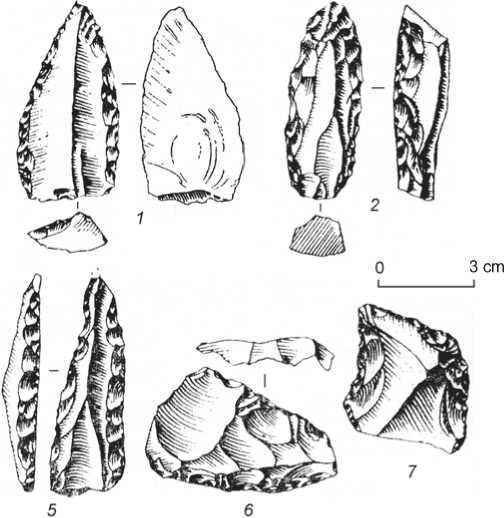
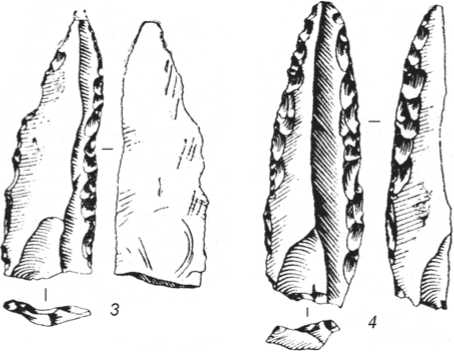
Fig. 9 . Lithic artifacts from the Ogzi-Kichik site (after (Ranov, Nesmeyanov, 1973: Fig. 33)).
1 , 5 – points; 2 , 4 – convergent side-scrapers; 3 – knife; 6 – sidescraper; 7 – canted scraper.
13,050 ± 230 BP (GrA-10969). The date for the GrA-10967 sample is 38,360 ± 390/380 BP (Ranov, Laukhin, Van der Plicht, 2002). The date for the lowermost deposits proved to be the youngest— about 13 ka BP. The age of samples from the upper part of the deposits is 15–16 ka BP; between them, there are layers producing the dates of 24, 25, and 38 ka BP. The researchers concluded that radiocarbon dating of the Ogzi-Kichik stratigraphic sequence isn’t possible because of the dusty structure of the analyzed deposits and the small amount of organic matter in the samples (Ibid.).
Later, the thermoluminescence method was used to determine the age of this complex. In 1997, five dates were obtained for the samples from different levels of the stratigraphic sequence: two dates for the upper layers – 104 ± 26 ka BP (RTL-914) and 138 ± 35 ka BP (RTL-909); two dates for the middle layers – 110 ± 26 ka BP (RTL-910) and 126 ± ± 31 ka BP (RTL-907); and one date for the lowermost layer – 178 ± 44 ka BP (RTL-902) (Volgina et al., 2017). Based on the dates for the upper and middle parts of the profile, the age of the site was estimated as not younger than 87 thousand years, but unlikely older than 160 thousand years.
A large amount of faunal remains was discovered at the site: over 20 thousand animal bones, most of which were split by humans. The total of 26 species of mammals, 2 species of reptiles and birds were identified (Sharapov, 1998). The fauna is represented mainly by modern species, although several species exotic for this area were also identified, for example, the Late Pleistocene Merck’s rhinoceros (Ranov, Karimova, 2005). Taking into account the technical and typological features of the industry, as well as the faunal composition dominated by modern species, the site of Ogzi-Kichik should be attributed to the first half of the Upper Pleistocene and dated to ca 70–80 ka BP.
The majority of the known Middle Paleolithic sites in Tajikistan are those with a destroyed cultural layer or surface scatters of artifacts. Noncontemporaneity of lithics in these complexes and the lack of established chronological sequences often make it impossible to conduct an objective analysis of the materials collected. Researches rely on their experience, knowledge, and intuition, i.e. the influence of a subjective factor is quite possible. Particularly difficult is the analysis of workshops and sites with the surface occurrence of artifacts attributed to various stages of the Paleolithic.
An example of sites with surface scatters of archaeological materials are localities in the KairakKum region, in the south of Tajikistan. These were discovered by A.P. Okladnikov in 1954. The greatest number of finds was accumulated on terraces 2 and 3 of the Syr Darya River (Litvinsky, Okladnikov, Ranov, 1962). The initial location of archaeological material was identified. The researchers argued that hominins settled mainly on Middle Pleistocene terrace 4 of the Syr Darya, near the mouths of its tributaries. Over time, the lithics were redeposited to the newly forming lower terraces of the river.
The researchers subdivided the stone tools into two main groups: Khodzhi-Yagoninskaya (7 loci) and Naukatskaya (24 loci). In total, 1040 artifacts were collected at 31 loci (Ibid.).
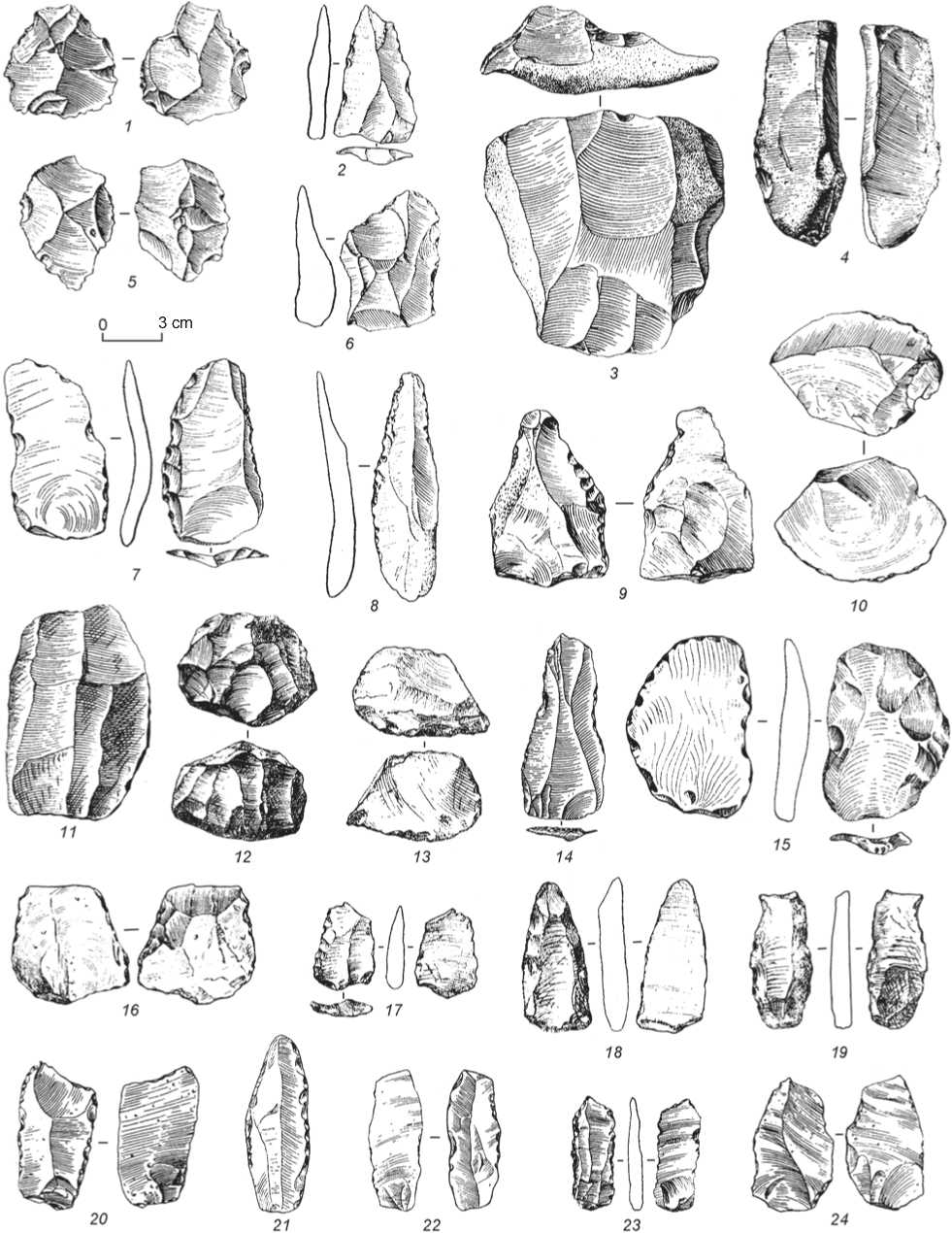
Primary reduction was based mainly on radial and Levallois strategies. Many pointed and laminar blanks bear faceted striking platforms. According to the calculations made by Ranov, the KairakKum finds contain 69 porphyrite cores: 23 discoidal (Fig. 10, 1 , 5 ) and typologically close, 21 Levallois (Fig. 10, 3 , 12 ), 13 elongated, 8 cuboid, 3 subprismatic (Fig. 10, 11 ), and 1 subtriangular core. 25 cores were manufactured from siliceous rocks, including 10 discoidal and typologically close cores, 8 Levallois, 3 cuboid, 2 elongated, 1 subrectangular, and 1 conical (subprismatic) core. Many cores were used for the removal of blades and laminar blanks. The cores are mostly exhausted; some of them retain significant size: from 5 to 10 cm. Most of the cores show trimmed platforms, including faceted varieties (Ranov, 1965).
The proportion of blades in the Kairak-Kum collection is rather large. It makes up 20 % of the total number of finds, which is significantly higher than at other Paleolithic sites in the Central Asian region. Among the products of this category, blades with a triangular shape in plan view are the most numerous (38 %); rectangular-elongated blades make up 32 %. The cross-section of these blades is predominantly triangular, more rarely trapezoidal. Blades and laminar flakes were mainly used in tool manufacturing.
Two types of tools predominate: side-scrapers – 34 spec. (Fig. 10, 6 , 7 , 10 , 13 , 15–17 , 19 , 20 , 24 ) and pointed tools – 43 spec. (Fig. 10, 2 , 8 , 9 , 14 , 18 , 21 ). Other tools (11 spec. in total) include retouched blades (Fig. 10, 22 ), a chisel-like tool, burins (Fig. 10, 4 ), and points ((Fig. 10, 21 , 23 ).
Many points are fashioned on thick blades. Ranov notes that this collection includes no light thin tools,
•W-r
3 cm
J
Fig. 10 . Lithic artifacts from the Kairak-Kum localities (after (Litvinsky, Okladnikov, Ranov, 1962)).
1 , 3 , 5 , 11 , 12 – cores; 2 , 8 , 9 , 14 , 18 – points; 4 – burin-like implement; 6 , 7 , 10 , 13 , 15 – 17 , 19 , 20 , 24 – side-scrapers; 21 , 23 – points;
22 – retouched blade.
typical of many Late Mousterian sites in Europe. The researcher emphasizes that the Kairak-Kum localities contain quite homogenous points (in contrast to some European and Crimean Mousterian sites), and this feature brings them close to the less diverse points from the Levallois-Mousterian layers of Palestinian caves (Skhul and Tabun) (Ibid.).
At the sites under consideration, unifacial sidescrapers prevail over bifacial varieties. The vast majority of side-scrapers show longitudinal working edges. The edge is usually straight and rarely has any convexities, which is determined by its natural shape and not by intentional modification. Few side-scrapers bear slightly marked notches. Most of the tools are retouched on the dorsal face.
At the Kairak-Kum localities, all artifacts were collected from the surface, which made it very difficult to date the sites. Ranov, following Okladnikov, attributes these materials to the Acheulean-Mousterian period or to the Late Acheulean, which he considers the lower chronological boundary; and the upper boundary, in his opinion, should be not younger than the Early Mousterian (Ibid.: 29).
According to the main technical and typological features, the Kairak-Kum lithic artifacts correspond to neither the Acheulean nor the Mousterian. The Kairak-Kum industry shows the prevalence of radial, Levallois, and blade reduction; the tool kit is dominated by side-scrapers and points. Ranov believes that the Acheulean-Mousterian sites in Northern Tajikistan belong to the group of Lower Paleolithic sites without handaxes (Ibid.). But such an old age estimation raises doubts not only by the absence of handaxes. At the Kairak-Kum localities, only a small amount of lithics show slightly patinated surfaces. The main feature of the Kairak-Kum industry is a significant proportion of blade-based products. Consequently, we can classify it as a variety of the Denisovan Middle Paleolithic, and tentatively date it to a wide chronological range of 100–60 ka BP. The Kairak-Kum industry also differs from those of the European Mousterian and Teshik-Tash.
In northern Tajikistan, Ranov explored a site near the village of Dzhar-Kutan on the left bank of the eponymous river on the southern edge of the Shakhristan Basin (Ibid.; Nesmeyanov, Ranov, 1962; Ranov, Krivoshapkin, Shalagina, 2015). According to the researcher, Mousterian artifacts were collected mainly at the level of the Middle Pleistocene terrace complex. In order to determine the deposition features of the finds, a test pit and two trenches were dug out at the upper level, and two pits and two trenches, with a total area of 22 m2, at the lower terrace level. Lithic artifacts were discovered at different depths both on the upper and lower ledges. Ranov argues that the artifacts were redeposited and, regardless of where they were discovered—within a layer or on the surface, the collection constitutes a single synchronous complex, which is confirmed by “completely similar raw materials, identical techniques of stone working, typology of artifacts, and the same degree of patination” (1965: 31).
The Dzhar-Kutan collection comprises 670 lithic artifacts. Ranov identifies 93 blades, 76 flakes, 25 cores, 18 side-scrapers, 14 points, 2 notched tools, 9 retouched blades and flakes, 46 core-like products, and 387 fragments and shatters.
Ranov distinguishes discoidal (unifacial) cores – 4 spec., double-platform cores – 13 spec., and singleplatform cores – 8 spec. At the same time, describing the lithic reduction strategy, he notes that the specificity of the laminar blanks suggests the widespread use of “Levallois cores, while the flakes removed from discoidal cores usually bore percussion bulb beveled with regard to the long axis” (Ibid.: 40). Judging by the available drawings, hominins inhabiting the Dzhar-Kutan site used three main types of cores: Levallois, discoidal, and prismatic. Most likely, at the initial stage of reduction, the cores were quite large, as evidenced by the sizes of laminar blanks.
A.I. Krivoshapkin and A.V. Shalagina reexamined the Dzhar-Kutan collections (Ranov, Krivoshapkin, Shalagina, 2015). Based on the study of cores and flakes, they came to the conclusion as to the unreasonably exaggerated role of Levallois technique in the primary reduction. In the Dzhar-Kutan assemblage, this technique was of secondary importance.
The researchers classify Dzhar-Kutan as a workshop site, since there is a lot of primary flakes (the evidence of rocks testing), and a few tools, including isolated well-shaped artifacts. Most of the tools show use-wear but not intentional retouch, which precludes their classification by types. Burin-cores are identified, which were used for the detachment of small blades and bladelets. The researchers reasonably correlate the Dzhar-Kutan technocomplex with the Late Obi-Rakhmat cultural tradition (Ibid.), which, in turn, is a version of the Denisovan Middle Paleolithic industry (Derevianko, 2001, 2022).
The site of Semiganch, excavated by Ranov 30 km eastwards from Dushanbe, the republic’s capital city, contains a lithic industry similar to Dzhar-Kutan in terms of technology and typology (Ranov, 1972).
In total, 316 lithic artifacts were collected at this site. Among them, blade and flake cores (laminar and discoidal forms) are distinguished. Tools ( n =14) are represented mainly by side-scrapers and scraper-like products.
The site of Kara-Bura occupies a special place among the Middle Paleolithic sites in Tajikistan (Ranov, 1965, 1973; and others). It is located on the left bank of the Vakhsh River, 5 km northeast of the village of Jilikul and 37 km southwest of the city of Kurgan-Tyube. This area contains several hills separated by basins. Three trenches were established at the site, which yielded finds at different levels; most of the lithics were located in the middle part of the profile, at a depth of approximately 40 to 100 cm. In terms of degree of preservation and patination, the finds recovered from trenches at various depths do not differ significantly from each other. The researchers express different viewpoints on the conditions of the culture-bearing horizon’s development at Kara-Bura. According to Ranov, the materials of the site were redeposited; they shifted from higher terraces, “the eluvial-proluvial accumulation of Kara-Bura pebbles (and, consequently, burial of the tools) occurred in the Middle Quaternary, Ilyak period, most likely in its second half” (1965: 54). Judging by the occurrence of artifacts and the inclination of pebble layers at the Late Ilyak level, S.A. Nesmeyanov assumed that initially the artifacts were located on the higher, now eroded, terraces to the north of the modern hill (Ranov, Nesmeyanov, 1973: 74).
The raw materials mainly included porphyrite of various colors. The large number of cores and flakes, including primary ones, suggests attribution of this site to the workshop type.
Ranov identifies the following types of cores at Kara-Bura: discoidal unifacial ( n =160) and bifacial ( n =17), single-platform ( n =51) and double-platform ( n =16), micro-cores ( n =40), nuclei of a “special shape” ( n =17), semi-prismatic ( n =8), nuclei at the initial stage of preparation ( n =41). No Levallois cores were found at Kara-Bura; yet, Levallois-type blanks were noted.
Unifacial discoidal core, most often of irregular shape, is the leading form of Kara-Bura cores (Fig. 11, 23 , 30 , 39 , 41 ); this feature distinguishes Kara-Bura from other Levallois-Mousterian sites. Less common are double-platform cores demonstrating significant differences in the flaking strategy (Fig. 11, 31 , 40 , 42 ); bifacial discoidal cores are very rare (Fig. 11, 27 ). There are blanks (represented mainly by flakes) – 1244 spec., blades – 15 spec., and laminar flakes – 90 spec.
The tool collection of the site is dominated by side-scrapers and scraper-like tools (Fig. 11, 1–6 , 8–10 , 15 , 25 , 26 , 28 , 29 , 32–38 ). The side-scrapers are prepared primarily on flakes. This category of tools includes transverse (Fig. 11, 1 , 3 , 5 , 6 , 10 ), longitudinal unifacial (Fig. 11, 9 , 17 ), longitudinal bifacial (Fig. 11, 4 , 15 ) varieties, those with a convex edge (Fig. 11, 18 , 19 ), and those shaped by flaking and retouching all over the margins (Fig. 11, 2 , 8 ). The side-scrapers are retouched primarily on the dorsal surfaces. The retouch is mainly one-stepped, abrupt, fine- and large-scaly, occasionally denticulate with conchoidal fractures. Scraper-like tools are also made on flakes, but their retouch is irregular and partly covers the working edges. The scraper-like tools show various forms in plan view (Fig. 11, 25 , 26 , 32–37 ).
The proportion of tools in the Kara-Bura collection is only 2 %, apart from scraper-like tools, choppers, and chopping tools. With scraper-like tools, the tool assemblage will make up 6.8 % of the total number of finds; and with choppers and chopping tools, 13.7 %.
Points are especially noteworthy in the tool kit (Fig. 11, 12–14 , 20 ). There are only eight of them. Four points are fashioned on blades, and one point on a laminar flake. Three other points are manufactured on Levallois blanks. The retouch is abrupt, one-stepped, mostly fine-faceted. The tip are shaped with extra care. Two points demonstrate retouched bases. The Kara-Bura points are distinguished by their shape and thorough preparation.
The Kara-Bura lithic industry differs from the Levallois-Mousterian of Tajikistan not only in the peculiarities of primary reduction, but also in the presence of rough cutting tools such as choppers and chopping tools – 143 spec. (Fig. 11, 7 , 11 , 21 , 22 , 24 ). Ranov designates some of these items as “pebble handaxes”. Some of them were possibly used as flake cores, but they all were shaped as typical chopping tools. Rough cutting tools (choppers and chopping tools) are specific to the Kara-Bura industry.
The comparison of the industry with those from the sites of the adjacent regions, including European, has shown that is the availability of pebble tools that gives grounds for the attribution of a site to the Soanian tradition. At the same time, the researcher points to the peculiarity of this industry as a part of the Soanian culture. The researcher describes the Kara-Bura industry as an intermediate link between the classic Mousterian of West Asia and the contemporaneous industries of India and Southeast Asia. On this basis, Ranov proposed to estimate the Kara-Bura age (in the
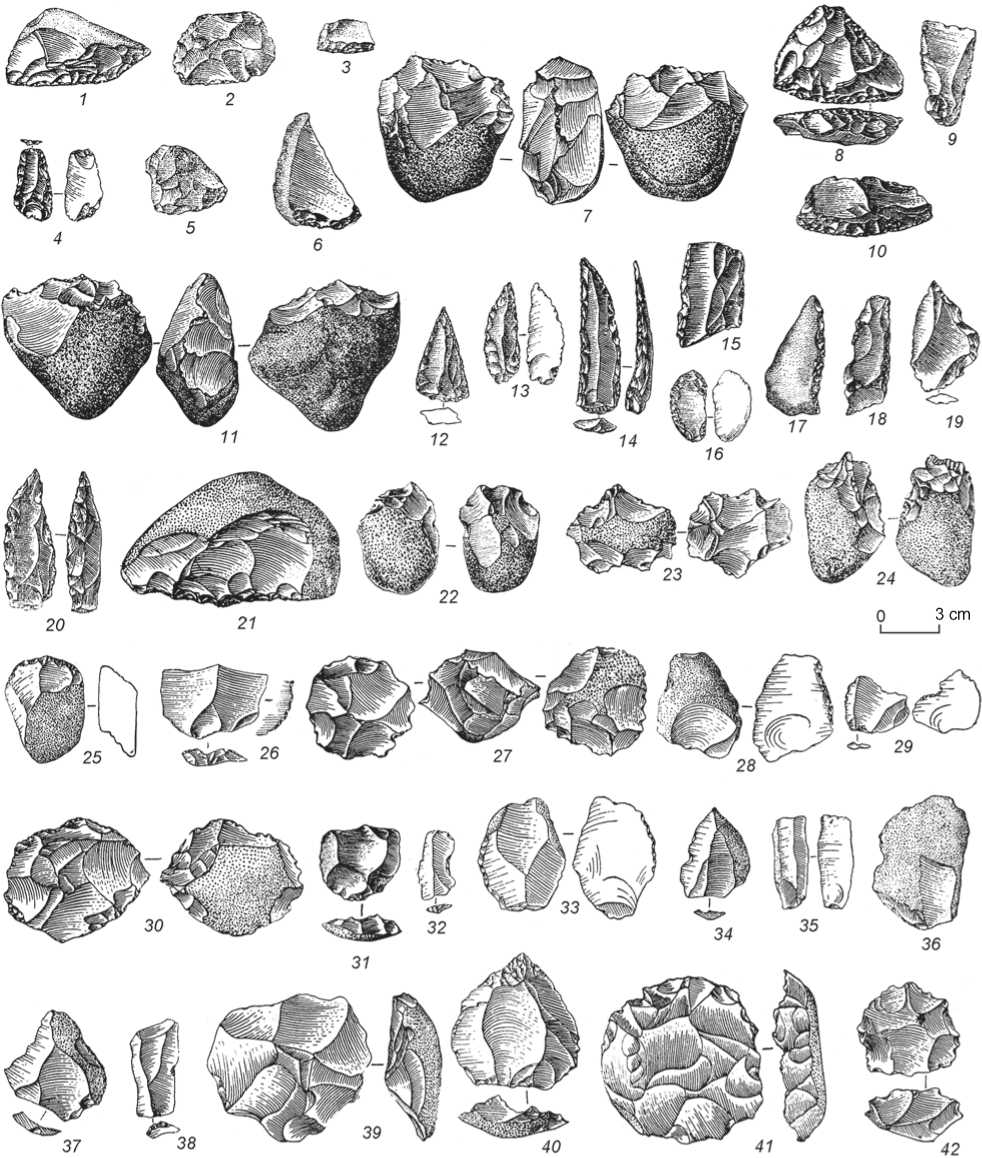
Fig. 11 . Stone tools from the Kara-Bura site (after (Ranov, 1965)).
1 – 6 , 8 – 10 , 15 – 19 , 25 , 26 , 28 , 29 , 32 – 38 – side-scrapers and scraper-like tools; 7 , 11 , 22 , 24 – chopping tools; 12 – 14 , 20 – points;
21 – chopper; 23 , 27 , 30 , 31 , 39 – 42 – cores.
European scale) as the Late, but not Final, Mousterian (Ranov, 1965: 80).
For that time, Ranov’s conclusions as to the Kara-
Bura industry affiliation can be considered quite correct. But in the light of present-day knowledge, with the discovery of the new taxon H. s. denisovan, which dispersed in Central Asia in the Late Middle to Upper Pleistocene, a different approach to the interpretation of this industry is required. Apparently, the Kara-Bura industry exhibits a clear regional specificity. However, having compared this industry with the technocomplexes of other Central Asian sites (Kairak-Kum, Teshik-Tash, Khodzhakent, Dzhar-Kutan), Ranov identified certain similarities and differences between them. The main distinguishing feature of this site from the Levallois-Mousterian localities, as he correctly considered, was the absence of Levallois reduction manifestations and the presence of obvious pebble tradition elements in the industry.
This industry should be interpreted with the consideration of data about what taxon could have dispersed in Tajikistan at that time. Any migration of populations with the Soanian industry can be excluded, because the only similarity between the Kara-Bura industry and the Soanian is the presence of pebble tools of chopper/chopping type. However, there are certain distinctions in that point, too: the Soanian industry is dominated by choppers, while the Kara-Bura by chopping tools.
The Kara-Bura industry differs from those of all the above-mentioned sites dated to the first half of the Upper Pleistocene in a large percentage of pebble products, the lack of the Levallois reduction, and a very small proportion of laminar blanks used for tool shaping. This does not make it possible to attribute this technocomplex with the Denisovans and the Denisovan Middle Paleolithic industry.
The lithic collection from Teshik-Tash Cave is an example of the Neanderthal industry in Central Asia. The primary reduction here is also dominated by radial flaking of discoidal cores; however, the proportion of laminar blanks in Teshik-Tash is considerably higher than that in the Kara-Bura assemblage, while pebble chopping tools are rare. Unfortunately, there are no absolute dates for the Kara-Bura site. If we assume that the Kara-Bura age is 50–60 thousand years, then, it was probably inhabited by the Neanderthals with an industry somewhat different from that of Teshik-Tash. But this assumption cannot be considered a definitive solution to the problem of the origins of this industry and its attribution to the Neanderthal taxon.
The site of Khudji is classified by Ranov as the Middle Paleolithic. In 1997, Ranov and his team excavated an area of over 40.2 m2 at this site, and uncovered most of the finds in the lowermost layer of loess-like deposits with traces of amorphous soil (Laukhin, Ranov, Khudjageldiev, 1999). Another horizon, containing a small number of lithic artifacts, animal bones, and hearth spots, was recorded ca 2 m higher up the profile, between sandy-loamy- grus lenses. In two test pits, isolated lithic artifacts were found below the layer containing the main concentration of finds. A series of radiocarbon dates was generated on charcoal pieces: from 35,930 + + 710/–650 years (GrA-13306) to 42,110 + 2440/ –1870 years (GrN-23686) (Ranov, Laukhin, Van der Plicht, 2002).
The lithic industry obtained at Khudji during the 1978 excavations was studied in more detail by a group of researchers after the death of V.A. Ranov; almost the entire collection of finds ( n =8178) was analyzed (Ranov et al., 2015). The lithic collection included the following types: production waste (chunks, chips, shatters) – 1247 spec. (27.4 %), cores – 185 spec. (3.1 %, excluding production waste), core-like fragments – 146 spec. (2.5 %), core-trimming elements – 230 spec. (3.9 %), blank spalls – 5222 spec. (88.0 %), tools – 148 spec. (2.5 %).
Eight main types of cores were identified: those exhibiting simple parallel flaking pattern, broadfaced – 32 spec.; longitudinal-convergent flaking pattern, broad-faced – 32 spec.; bidirectional flaking pattern, broad-faced – 17 spec., truncated-faceted – 29 spec.; narrow-faced – 28 spec.; centripetal flaking pattern – 16 spec.; Levallois – 8 spec.; longitudinal-transverse flaking pattern – 14 spec. (Fig. 12). Each type was subdivided into several subtypes.
The most numerous are cores exhibiting parallel flaking pattern, with a wide flaking surface (81 spec.). Such cores were used mainly for the manufacture of rectangular (Fig. 12, 1 ) and pointed (Fig. 12, 2–4 ) laminar blanks. There are flattened and volumetric varieties. Flattened cores are mainly those aimed at detachment of rectangular blades. Truncated-faceted cores on flakes are quite numerous (Fig. 12, 5–7 ). They were used to detach small flakes and blades. In terms of chaîne opératoire and shaping technique, these cores find close parallels with lithic artifacts of the Obi-Rakhmat industry (Krivoshapkin, 2012).
Researchers pay special attention to the narrowfaced cores, which are subdivided into narrow-faced, narrow-faced wedge-shaped, longitudinal burin-cores, and bidirectional burin-cores (Fig. 12, 8–10 ). These are mainly small in size (from 40 to 70 mm long). Flaking surface of such a core is located on the narrow side face of the blank, and has a pointed lower part. Cores of this type were made both on small blanks and on thick flakes. A small group of combination cores is also identified, whose flaking surface is located both on the wide and narrow face (Fig. 12, 14 ).
The Khudji collection contains few burin-cores. They are made on medium and large (5–12 cm long)
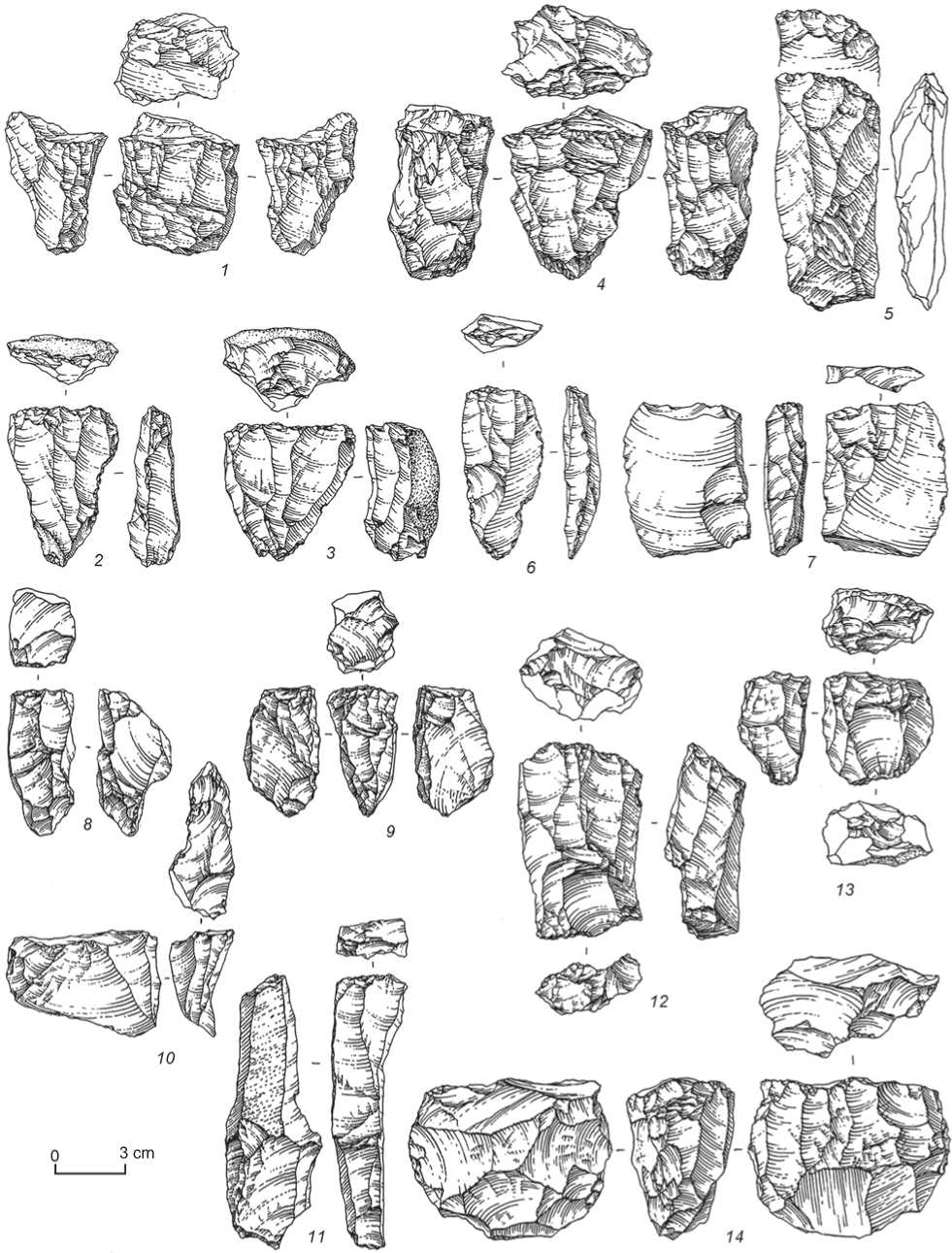
Fig. 12 . Core types from the Khudji site (after (Ranov et al., 2015)).
1 – with simple parallel flaking pattern; 2 – 4 – with longitudinal-convergent flaking pattern; 5 – 7 – truncated-faceted; 8 – narrow-faced; 9 , 10 – narrow-faced wedge-shaped; 11 – bidirectional burin-core; 12 , 13 – with bidirectional flaking pattern; 14 – combination core.
blades and laminar spalls (Fig. 12, 11 ). Flaking surface is located on one of the long margins. Platforms are either prepared by several removals or natural. Researchers believe that cores of this variety were intended for short-term use and produced one or two blades. The groups of cores with bidirectional flaking pattern (Fig. 12, 12 , 13 ), Levallois, radial, and multidirectional cores contain few artifacts each. The cores were subjected to unifacial flaking; bifacial reduction was less common.
The Khudji lithic industry does not contain any microcores; however, a small number of bladelets are identified. Such blanks were probably obtained during the reduction of cores of other types, for example, narrow-faced cores. Based on the analysis of the Khudji primary reduction technique, researchers identified two separate flaking strategies used at the site: simple parallel and longitudinal-convergent flaking. The occurrence of pointed blanks at the site indicates the use of a special technique of core preparation and its subsequent rejuvenation during flaking process rather than the frequent use of the Levallois strategy (Ranov et al., 2015: 115–116).
The Khudji collection of tools discovered during 1978 excavation season is dominated by side-scrapers (Fig. 13, 3–8 , 11 ), which V.A. Ranov and A.G. Amosova classified into simple (Fig. 13, 3 , 5–8 ) (straight, convex, concave) – 48 spec., double (straight, straight-concave, biconvex (Fig. 13, 11 ), convex-concave) – 7 spec., convergent – 3 spec., transverse (straight, convex) – 3 spec., and those with alternate retouch – 1 spec. In addition, the following tool types were identified: typical and atypical end-scrapers – 10 spec., typical and atypical burins – 10 spec., a knife with a back formed by a longitudinal flake removal; points (Fig. 13, 1 , 2 , 9 , 14 ), truncated points – 6 spec. (Fig. 13, 10 ,
Fig. 13. Tools from the Khudji site (after (Ranov, Amosova, 1984)).
-
1 – elongated point; 2 – point or convergent side-scraper; 3 , 5 , 8 – simple straight side-scrapers; 4 – combination tool – straight-concave side-scraper-borer; 6 , 7 – simple convex side-scrapers; 9 – pseudo-Levallois point; 10 , 12 , 13 – truncated points; 11 – double biconvex sidescraper; 14 – point on Levallois spall.
12 , 13 ), tranchet – 2 spec., notched-denticulate tools – 24 spec., cutters (thick flakes with ventral trimming) – 4 spec., choppers – 2 spec., a combination tool (Fig. 13, 4 ), spalls and flakes with traces of regular and irregular retouch. The most common stone working technique is marginal one-stepped and extensive retouch. “Heavy” Quina retouch and stepped retouch with conchoidal fractures are rarely noted (Ranov, Amosova, 1984: 29–31).
The Khudji site produced the dates in the chronological range of 42–37 ka BP. Initially, Ranov attributed the Khudji industry to the Late Mousterian and, possibly, to the transitional stage from the Middle to the Upper Paleolithic. He noted: “…From the point of view of archaeology, the Khudji industry contains many elements that suggest association of this site with the Mousterian to the Upper Paleolithic transition period; therefore, it can be assumed that its age should be somewhere between 40 and 50 thousand years” (Ranov, 1998: 71).
The Khudji industry is usually attributed to the Middle to the Upper Paleolithic transition period.
Primary reduction was primarily aimed at producing blades and laminar blanks. The typical tools are: sidescrapers of various modifications and pointed tools, as well as typical Upper Paleolithic products: burins, end-scrapers, truncated points, etc. The tool kit reflects regional specificity of the subsistence strategy of hominins (Denisovans?) inhabiting the site. However, in the strict sense, the site cannot be attributed to the transition period, because currently, no sites of the Final Middle Paleolithic have yet been discovered in Tajikistan, whose technocomplex would clearly illustrate the continuity with the Khudji industry.
Discussion
According to the results of the nuclear genome studies, the split between Denisovans and Neanderthals occurred ca 400 ka BP. This event meant that one part of the H. heidelbergensis population—the ancestral basis of Denisovans and Neanderthals—began to disperse in Europe, where H. s. neanderthalensis evolved 200–150 ka BP, and the other part of H. heidelbergensis population migrated through the Iranian Plateau to Central Asia, where H. s. denisovan evolved. The process of genetic and morphological evolution of each of these taxa took a long time; Denisovans assimilated the indigenous population of H. erectus and adapted to the changing environment (Derevianko, 2019, 2022, 2024). In the process of evolution, representatives of the Denisovan taxon disseminated over the territory of Tajikistan 400– 350 ka BP (MIS 11). This is confirmed by the emergence of Middle Paleolithic elements in the assemblage of the Final Karatau culture from pedocomplex 4 at Obi-Mazar-4, Khonako-3, and Lakhuti-4.
The Obi-Mazar-4 excavations produced the most convincing evidence. The lithic industry from pedocomplex 4 differs from those found in pedocomplexes 6 and 5 primarily in the presence of small-sized cores. But most importantly, almost all the cores show surface preparations (Ranov, Schäfer, 2000). Researchers argue that such cores have parallels in Mousterian collections. Particularly noteworthy is a bifacial tool of the handaxe type, as well as artifacts of the Middle Paleolithic appearance identified in the tool kit.
The noted changes can only be explained by the arrival in the territory of Tajikistan of a new taxon (Denisovans) with a different industry. During the dissemination over transit regions, tribes of future Denisovans encountered the indigenous population (late H. erectus) with pebble-flake industry. Since these two taxa were genetically open systems (Derevianko, 2019, 2022), they could assimilate; as a result of interbreeding, fertile offspring were born and a diffusion of lithic industries occurred. This process marked the initial stage of the morphological and genetic evolution of H. s. denisovan.
A completely different technical and typological complex of lithic artifacts, as compared to the Final Karatau industry, is presented in pedocomplex 2 at Khonako-3 (Ranov, 2000: 34). The Final Karatau industry from pedocomplex 4 (427–364 ka BP) and the technical and typological complex of lithic artifacts from pedocomplex 2 (242–186 ka BP) of this site do not demonstrate any continuity. Nevertheless, pedocomplex 3 yielded isolated archaeological materials that could have belonged to the transitional industry. But the sparsity of finds does not allow us to reconstruct its specific features. Thus, based on the results of the Tajikistan Paleolithic studies, it can be concluded that ca 400–350 ka BP this territory began to be populated by a new, morphologically and genetically developing taxon—Denisovans. In the future, we may be able to discover sites that will allow us to trace in detail the regional development of the Denisovan-type lithic industry in the territory of Tajikistan.
Ranov carried out excavations at Khonako-3 in the late 20th century, and on the basis of analysis of the materials from pedocomplex 2 hypothesized that the change from the Lower Paleolithic to the Middle Paleolithic culture was the result of migration of hominins from the west, most likely from the Near East.
The finds from pedocomplexes 2 and 1 are separated by a time gap of almost 60 thousand years. We can agree with Ranov that the available materials provide no possibility to trace the continuity between the industries from these two pedocomplexes (Ranov, 1990b, 2000). Although the 2022 excavations of Khonako-3 pedocomplex 1 uncovered a larger number of blades than before (Kurbanov et al., 2022), the issue of continuity between the industries of pedocomplexes 2 and 1 at Khonako-3 still remains unclear. In this regard, the Ranov’s assumption as to the association of the industry from Khonako-3 pedocomplex 1 with the Neanderthals needs to be considered.
In Central Asia, a small amount of anthropological remains has been discovered as yet. The earliest finds came from Selungur Cave in Kyrgyzstan. Layer 2 of excavation 8 of the cave yielded a fragment of the occipital bone of the skull and scattered human teeth
(Islamov, Krakhmal, 1995), and layer 3, a fragment of the humerus (Islamov, 1990). The teeth and fragments of the humerus were studied by various researchers (Islamov, Zubov, Kharitonov, 1988; Islamov, Krakhmal, 1995; Zubov, Khodzhayov, 1997; Zubov, 2009).
On the basis of this relatively small amount of uninformative remains (heavily worn incisors and premolars), anthropologists tried to determine the taxonomic affiliation of the Selungur individual. Comparative analysis of the premolars morphology provided a more reliable taxonomic affiliation of this fossil hominin. The constructed sequence illustrating the position of the Selungur hominins in the evolutionary continuity of Homo habilis , H. erectus , H. s. neanderthalensis , and H. s. sapiens shows that this individual occupies a position between paleoanthropes and archanthropes. At the same time, this individual deviates significantly from the general evolutionary lineage owing to the exceptionally large buccolingual diameter of the crown (Islamov, Zubov, Kharitonov, 1988; Zubov, Khodzhayov, 1997), which brings these finds closer to the Denisovans.
Selungur cave also provided the low half of the diaphysis and the lower epiphysis of the humerus of a fossil human. Based on the fusion of the block with the diaphysis, V.M. Kharitonov estimated the age of the individual as close to 10 years old by modern standards (Islamov, Zubov, Kharitonov, 1988). Hence, this hominin was close in age to the Teshik-Tash boy. Comparison of the Selungur humerus with that from Teshik-Tash revealed the greater robusticity of the former. The index reflecting the ratio of the minimum thickness of the medullary cavity to the diameter of the diaphysis (on the radiograph) is 28 % for the Teshik-Tash individual, 28 % for the Sinanthrop, and 15 % for the Selungur individual, which suggests the older age and archaic morphology of the finds from Selungur (Islamov, Krakhmal, 1995: 94).
After the emergence of new anthropological materials in the late 20th to early 21st century and owing to doubts of some researchers about the attribution of the dental finds to the genus Homo, A.A. Zubov thoroughly reexamined the Selungur teeth (2009). As a result of his study, Zubov inferred that according to the main traits (robusticity and thickness of the premolar roots, arcuate curvature of their vestibular contour, which is unusual for modern humans, talonid expansion and mesial shift of metaconid, subrectangular shape of the premolar crowns, marked curvature of the root of the upper lateral incisor) the Selungur samples have parallels among the teeth of fossil Pleistocene humans, especially Asian Homo erectus (Ibid.: 143). In the paper addressing these findings, he cites the opinion of A.B. Savinetsky, the Head of the Laboratory for Biogeocenology, Historical Ecology, and Evolution of the Severtsov Institute of Ecology and Evolution, Russian Academy of Sciences, which opinion is based on the study of Selungur teeth: the hypothesis as to their attribution to deer or bears is untenable (Ibid.).
According to an alternative point of view, the morphological characteristics of the teeth suggest their attribution to deer and cave bears rather than humans; the humerus corresponds to the variability of the parameters of Neanderthals (Viola, Krivoshapkin, 2014). In my view, this conclusion, made by anthropologist B. Viola, is not reliable, because it is not supported by convincing arguments. Zubov is a recognized dental anthropologist in Russia and worldwide of the second half of the 20th to early 21st century. He is the author of a large number of fundamental works, and I am sure he was able to distinguish human teeth from those of bears or deer.
Unfortunately, at the modern stage of research, it is not possible to determine the absolute date of human habitation in Selungur Cave. Taking into account that hominins inhabited the cave for a long time, it seems reasonable to estimate the time of initial occupation of the cave by humans as the Late Middle Pleistocene (MIS 6). The presence of osteological remains of small mammals in the layers is very important for dating the site. A. Markova found out that there were no bones of Early Pleistocene rodents in Selungur Cave (2013). The remains of archaic Microtus (Neodon) ex gr. juldaschi , which became extinct in the Late Pleistocene, are indicators of the possible age (Velichko et al., 1990). Bone remains of this species of vole were recovered from cultural horizons 3–5, but did not occur in horizon 2. The date of 126 ± 5 ka BP was generated on a piece of travertine from the layer overlying cultural horizon 1 (Ibid.).
In their morphological features, the dental fossils from Selungur Cave differ from those of the Neanderthal, and show similarities with the dentition of Asian H. erectus . This inference confirms my hypothesis as to the assimilation of the evolving Denisovans with H. erectus in the course of Denisovan dispersal over the territory of Tajikistan. As a result of interbreeding between migrants and locals, the born offspring gained a dentition close to that of Asian H. erectus (Derevianko, 2022).
The fact that Denisovans inherited their dental morphology from Asian H. erectus is also evidenced by anthropological finds from Obi-Rakhmat Grotto in Uzbekistan (Grot Obi-Rakhmat, 2004). Obi-Rakhmat Grotto is a unique site with a lithic industry obviously based on blade reduction technique and showing similarities with the Denisovan industry of the Final Middle Paleolithic in technical and typological features (Derevianko, 2001, 2022). In layer 16 of the Grotto, anthropological remains were uncovered in association with a 50–60 thousand years old lithic industry of the Middle to Upper Paleolithic transition period. Anthropological finds (OR-1) included six isolated permanent teeth from the maxilla and about 150 small fragments of the skull (Glantz, Viola, Chikisheva, 2004; Viola, Seidler, Nadden, 2004; Glantz et al., 2008; Bailey et al., 2008).
Anthropologists attributed all the dental finds to a single individual, and determined his age as ca 9– 12 years old. They noted the archaic morphology of OR-1, expressed in larger bucco-lingual sizes of the dentition. Such sizes are typical of Early Pleistocene hominins, including H. erectus (Glantz et al., 2008). Anthropologists have not come to a definitive conclusion about the taxonomic affiliation of the anthropological finds from Obi-Rakhmat. They write: “Given current models of late Pleistocene hominin systematics… we are left with either identifying OR-1 as a Neandertal or a modern human” (Ibid.: 235). Anthropologists note that the ear labyrinth morphology of the OR-1 individual was close to the Neanderthal type. But in this case, this similarity is not a proof, because the Neanderthal morphology of the bony ear labyrinth is also observed in some Upper Paleolithic humans, for example, in Sungir (Razhev et al., 2024). The Neanderthal dentition is completely different from that of OR-1, closer to the Denisovans; hence, it should be identified as a Denisovan. The OR-1 fossil cannot be classified as a Neanderthal also because Teshik-Tash Cave contains the Mousterian industry, while Obi-Rakhmat Grotto demonstrates the typical Denisovan Middle Paleolithic industry— starting from the lower cultural layer and up to layer 16 containing anthropological finds. Thus, we have every reason to assert that Obi-Rakhmat Cave, from the very start of its occupation by humans ca 80 ka BP, was inhabited by genetically and morphologically mature Denisovans (Derevianko, 2022).
In the Late Middle to the first half of the Upper Pleistocene, the evolving Denisovan taxon settled not only in Central Asia, but also in adjacent regions. This assumption is confirmed by the Xiahe hominin mandible, ca 160 thousand years old, from Baishiya Cave in the Chinese Province of Gansu, northeastern
Tibet; the fossil was identified as Denisovan based on morphological and genetic traits (Chen et al., 2019; Zhang et al., 2020).
Baishiya Cave is located at the northeastern edge of the Tibetan Plateau, at an altitude of 3280 m above sea level. Denisovan DNA was extracted from several lithological layers of the site; hence, it was established that these hominins lived in the cave in the chronological range of at least 100–60 ka BP. Denisovan mtDNA is also present in lithological layers dating back to 30–50 ka BP, but given the character of sedimentation, researchers are not sure whether the Denisovans survived in the cave until the arrival of modern humans 40–30 ka BP (Zhang et al., 2020). In my opinion, Denisovans could have lived in Baishiya Cave, as in Denisova Cave, up to 40 ka BP.
Notably, Denisovans shared not only morphological characteristics with hominins inhabiting Tibet in the Pleistocene, but also genetic traits with modern population. A particular feature of the genetic code of the indigenous population of Tibet is a specific variation in the EPAS1 gene, which is responsible for human adaptation to high-altitude hypoxia. Comparison of the DNA of Tibetans and Denisovans has shown that the Tibet people are genetically much closer to Denisovans than other modern people, and the mechanism of adaptation to high-altitude environment was launched thanks to the genes inherited from Denisovans (Huerta-Sánchez et al., 2014).
Sequencing of DNA extracted from the Xiahe fossil and from modern Tibetans has confirmed the conclusion that during their dispersal over Central Asia and adjacent regions, including highlands, the early Denisovans gained some archaic morphological features as a result of assimilating the indigenous population ( H. erectus ); and the adaptation to living at high altitudes resulted in the development of a gene providing them with the ability to withstand hypoxia.
Neanderthals migrated from the Middle East to Central Asia ca 60 ka BP. In Central Asia, Neanderthal remains and the Mousterian industry were recorded only at Teshik-Tash Cave. In the territory of Tajikistan, no undoubted Neanderthal remains have been found.
At the site of Khudji, in 1997, the crown of a lower right deciduous tooth with a part of root was discovered, which belonged to a 3–5 (max. 7) years old child. The crown is heavily worn; its dimensions correspond to the average size of Neanderthal teeth. It differs from many Neanderthal teeth in the extremely weak development of the marginal ridges and lingual cusp (Trinkaus, Ranov, Laukhin, 2000). E. Trinkaus attributed this anthropological find to Neanderthals, and A.A. Zubov and N.I. Khaldeeva (1989; Zubov, 2004), to archaic H. sapiens. The taxonomic affiliation of this uninformative find is disputable, because the above-mentioned chronological stage was associated with only two taxa—modern humans and Neanderthals. Furthermore, the Khudji industry differs from the Teshik-Tash and the Mousterian of European Neanderthals. The question as to the taxonomic affiliation of the Khudji fossil remains open. Hopefully, in the future, fossil remains of modern humans and Neanderthals will be discovered in the territory of Tajikistan, which will provide the opportunity to distinguish between the sites dated to the second half of the Upper Pleistocene in this region on the basis of taxonomic affiliations of their inhabitants.
Unfortunately, in Tajikistan, the sparsity of sites with reliable and continuous chronology corresponding to the second half of the Middle and Upper Pleistocene makes it impossible to trace the development of the Middle Paleolithic industry. However, from my point of view, the available material suggests that 400– 350 ka BP, this territory was inhabited by some part of the H. heidelbergensis population that migrated through the Iranian Plateau to Central Asia; as a result of the assimilation with indigenous population ( H. erectus ), natural selection, and adaptation to changing environment, a new taxon was formed— H. s. denisovan .
