
Textiles as Product and Symbol. Ritual Gift Exchange among the Karakalpaks and Its Central Asian Parallels
Journal: Archaeology, Ethnology & Anthropology of Eurasia @journal-aeae-en
Section: Ethnology
Article in issue: 4 т.52, 2024.
Free access
This article focuses on the structure, content, and symbolic form of gift exchange practices among the Karakalpaks in the 20th and early 21st centuries, drawing on methodologies used by Russian and Western ethnographers. Our approach is based on a comparative analysis of practices and ideology of donating textile products among the Turkic peoples of Central Asia. We used field, archival, and published materials on the ethnography of the Karakalpaks, Kazakhs, Kyrgyz, Altaians, etc. Characteristics of gift exchange traditions are outlined, functions and symbolism of textiles in rituals are described, and tendencies of their transformation in modern society are assessed. Findings suggest that among most Turkic peoples of Central Asia, gift exchange using textiles has traditionally accompanied many social practices. In Karakalpak family rituals, pieces of cloth were regarded as both material and spiritual values, and their exchange ensured the transfer of vital forces and strengthening the clan structure. As the analysis of modern Karakalpak gift exchange practices has shown, textiles are no longer regarded as products, but have retained their symbolic function at the level of social communication. Such an exchange has become a symbolic expression of mutual aid and solidarity at the family, clan, ethnic, and national levels.
Similar articles in the section Cultural anthropology. Ethnography. Customs. Manners. Traditions. Way of life

Short address: https://sciup.org/145147479
IDS: 145147479 | DOI: 10.17746/1563-0110.2024.52.4.141-151
Text of the scientific article Textiles as Product and Symbol. Ritual Gift Exchange among the Karakalpaks and Its Central Asian Parallels
Gift exchange practices among the peoples of the world have been a traditional subject of research in ethnology, and social and cultural anthropology. The emergence and conceptual development of the theory of gift exchange is associated with the names of B. Malinowski, M. Mauss, E. Crawley, C. Lévi-Strauss, M. Sahlins, W. Hamilton, K. Gregory, K. Polanyi, M. Godelier, and other scholars. According to historiographers, their studies provided the foundation for understanding utilitarian and postutilitarian exchange as a main mechanism of cultural
dialogue and social integration, which accompanied the development of humans and humanity (Sykes, 2005; Fomashin, 2020).
After the publication of Mauss’s work “The Gift: Forms and Functions of Exchange in Archaic Societies” in 1923–1924, in addition to social and economic aspects, anthropologists gained the interest in the worldview attitudes of gift-giving (Mauss, 2011). Modern scholars perceive the phenomenon of the gift (after Mauss) as the cornerstone of social existence, since “it encapsulates the concern with what it means to be human” (Sykes, 2005: 4; Martynova, 2021: 547). In this regard, an important point, made by Mauss, was that in archaic and traditional societies, gift exchange as “a connection through things is a connection of souls, since the thing itself has a soul, comes from the soul. It follows that to give something to someone is to give something from one’s self’” (2011: 151–152). This point has prompted many scholars to study the underlying motivations for gift-giving and their symbolic manifestations.
During the 20th century, dozens of works were written on gift exchange in the archaic, traditional, and modern local and ethnic communities of the world. Traditions of gift-giving and mutual assistance among the nomadic Turkic-Mongolian peoples of Central Asia were discussed in the studies of N.L. Zhukovskaya (1986, 2014), A.A. Badmaev (2013), M.M. Sodnompilova (2018), O.B. Naumova (2023), and others. The works by N.Z. Shakhanova (1998), S. Werner (1998, 2000), Z.K. Suraganova (2009), I.V. Oktyabrskaya and Z.K. Suraganova (2010, 2012), S.Z. Tokhtabaeva (2013), L.F. Popova and A.B. Shalmanova (2021), and other scholars focused on systematic study of ideology, pragmatics, social practices, as well as mythological and ritual accompaniment of gift exchange, using the evidence of the Kazakh culture, outlining the development of the topic, and setting vectors for comparative research.
The subject of this analysis is the unfolding transformation of the Karakalpak culture from the past to present. The origin of this ethnic group, like many Turkic peoples of Central Asia, was associated with the Kipchak environment. The Karakalpaks reached the consolidation stage by the 16th century, and by that time, they settled in the lower reaches of the Syr Darya River, which belonged to the Bukhara khans. Throughout history, the most significant ties for the Karakalpaks were those with the Uzbek, Kazakh, Nogai, Turkmen, and Kyrgyz communities, which had a great influence on the formation of social and normative culture of this people. The history of the Karakalpaks in the 16th–18th centuries was a history of migrations, wars, and tribute paying, which interlinked the destinies of the Turkic peoples of the macroregion. In the early 19th century, the Karakalpaks were conquered by the Khiva khans. After annexation of Turkestan by the Russian Empire, they became a part of the Syr Darya Region of the Turkestan Governorate General.
In the late 19th century, the Karakalpaks were an essential part of the Muslim world. They practiced cattlebreeding and agriculture, and were involved in regional production-and-market relations. A significant part of the lands was used by individual tribes, which were divided into clan groups. Although in the 20th century, with the creation of the Karakalpak Autonomous Republic as a part of the Uzbek Soviet Socialist Republic, the importance of clan structures decreased, they have survived until today.
There is a revival of interest in the traditional values in the present-day Republic of Karakalpakstan—a part of Uzbekistan. Their systematic study began in the mid-20th century. The studies of T.A. Zhdanko (1952), A.S. Morozova (1954), A.T. Bekmuratova (1969), K. Esbergenov (1963), K. Esbergenov and T. Atamuratov (1975), A. Allamuratov (1977), and others analyzed various aspects of everyday life and ritual practices, as well as artistic and spiritual values of the Karakalpaks. The problem of gift exchange as an important part of intra-ethnic relations has not been specifically addressed, although starting from the 1980s, this topic has been discussed using the evidence from other Turkic and Mongolian peoples of Central Asia.
A comparative study of practices and ideology of gift exchange among the Karakalpaks and Kipchak Turkic people determined the content of this work. We used the evidence from field research in 2017–2022 in various regions of Karakalpakstan, as well as information collected in the Issyk-Kul Region of Kyrgyzstan, in the Russian Altai, and in East Kazakhstan. The data from the archive at the Karakalpak Research Institute for the Humanities of the Karakalpak Branch of the Academy of Sciences of the Republic of Uzbekistan and a wide range of published ethnographic information were also used. This study introduces the example of ritual exchange of textiles among the Karakalpaks for revealing the nature of gift exchange as the most important tool of social communication in the past and present.
Traditional gift exchange among the Karakalpaks in the comparative research
The studies by ethnologists, anthropologists, and political scientists in the recent decades have been describing the paternalistic relations in traditional societies of the Central Asian Turkic peoples through the lens of exchange. The exchange was used for the development and redistribution of resources, power, and family ties as a form of stabilization and ethical justification of the system based on a natural economy, as well as tribal, clan, and community relations (Suraganova, 2009).
Gift exchange was a form of traditional paternalism, which accompanied many production and social (including guest-oriented) practices and rituals in the life of most Turkic peoples of Central Asia. Among the Karakalpaks, various types of gift exchange were called alis-beris (‘take-give’) and qatnasyq (from Karak. qatnasiw ‘participation, communication’). The Kazakhs had similar definitions: qarym–qatynasta bolu ‘be in a relationship, in connection’; practices of exchanging gifts were designated by the concept of alys–beris ‘take–give’ and aralasu ‘mix/mingle’ (Ibid.: 25, 175).
Celebrations with obligatory exchange of gifts included Karakalpak family feasts, in structure and content similar to those of the Kazakhs, Nagaibaks, and other related peoples. Such feasts were called shashiw toy (cf. Nogai shashkyshlav , Kazakh shashu ) ‘scatter’, since during their celebration, coins, grain, and sweets were scattered among the guests. The birth of a child, his admission to school ( papki toy ), circumcision ceremony ( sunnet toy ), initiation of a boy into manhood ( aydar toy ), graduation from a higher educational institution ( diplom toy ), weddings, as well as funerary and commemorative rites of the Karakalpaks involved a large number of guests. The number of people invited to large family events could have reached 500 persons. In public opinion, the more people came to the house for a joyful or sad occasion, the higher the status of the family was (Esbergenov, Atamuratov, 1975).
In the rituals accompanying family celebrations, the Karakalpaks, like other Turkic peoples of Central Asia, widely used textiles. These were designated by the words gezleme (cf. Kazakh and Kyrgyz kezdeme ‘fabric/textile) and tawar . The word tawar goes back to the Old Turkic tabar ‘property’, tavar ‘assets, wealth, goods’ (with the derivatives of tavarlїɣ ‘rich’, tavarluq ‘treasury’) (Drevnetyurkskiy slovar, 1969: 526, 542). The Karakalpaks also used this word to refer to a ritual gift in the form of a two-meter piece of fabric. Tawar was used in life cycle rituals, as well as rites accompanying economic practices, including mutual assistance kómek .
One of symbolically marked processes in the traditional culture of the Karakalpaks was providing assistance in the construction of a house jay kómek . When builders laid the sharqirawiq beams for window and door openings during the construction of the walls, the hosts invited their relatives and friends, and performed the sharqirawiq kade ritual. The guests brought pieces of fabric and scarves. The gifts were hung on the beams and then distributed to those who helped. This decoration of a house under construction corresponded to the arrangement of wedding space. The ritual’s designation partly coincided with name of wedding (or farewell to the bride)— el káde toy . The word káde (Arab. ‘basis, rule, principle, example’) emphasized the obligatory nature of the ceremony.
Similar traditions existed among the Kazakhs; their pre-wedding rituals included a regulated exchange of gifts káde , which most often consisted of fabrics (Oktyabrskaya, Suraganova, 2012: 400).
Gift exchange was an integral part of a wide range of social practices among the Karakalpaks. One of them, i.e. inclusion of a child into the system of kinship ties, took the form of the besik toy ceremony, during which women sat down around the besik cradle. Host of the ceremony approached the cradle, threw her leg over it, and imitated riding a horse. She held an improvised bridle in one hand and the child in the other hand. Other participants in the ritual “bought” the baby from her for a symbolic price. After that, they placed the baby in the cradle covered with seven items of clothing and pieces of fabric that they brought. If there was a girl in the cradle, the number of pieces increased. It was believed that the more clothes and fabrics were thrown over the cradle, the greater the ransom would be given for the girl when she becomes the bride (Bekmuratova, 1969: 19). Some of the clothing items and pieces of fabric given on the occasion of child’s first celebration were distributed among close female relatives. Older women (especially those with a good disposition and large families) took the most active part in this gift exchange.
The Karakalpaks also used textiles as gifts during the rite of tisaw kesiw ‘cutting the fetters’. The ceremony implied that by cutting the rope on the feet of a child who took his first steps, a successful, light-footed woman opened the path of life for him. In gratitude, she was given jagali kiyim ‘clothes with a collar’ (blouse, jacket, etc.), which was considered the most valuable; but most often she was rewarded with a piece of expensive fabric.
The greatest number of gifts in the form of woven products and pieces of cloth accompanied the Karakalpak wedding ceremonies. They started with the visit of matchmakers to the bride’s house— qudaliq toy . The groom’s parents gave gifts to bride’s parents. Their acceptance of the piece of fabric meant the consent to the marriage, and acceptance of gift in return confirmed the agreement with conditions put forward to the groom’s family. The official agreement quda túsiw was also sealed with a gift. At the same time, the parties agreed on the amount of the bride price. The bride price and dowry essentially equalized each other, strengthening the kinship ties between the families and expanding their joint resources.
On the day of the bride’s departure, the el káde toy farewell party was held in her parents’ house. The main celebration was big úlken toy wedding in the groom’s house, which included the ritual of kórimlik (from kóriw ‘see’). During the bet ashar ceremony of uncovering the bride’s face, those who saw the girl for the first time, gave her and her family money and tawar pieces of fabric. In some families, a large sum of money and much fabric
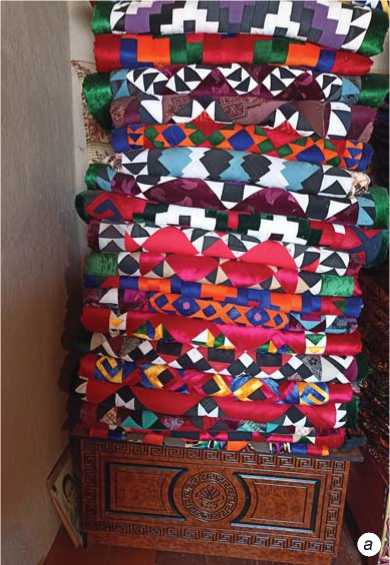
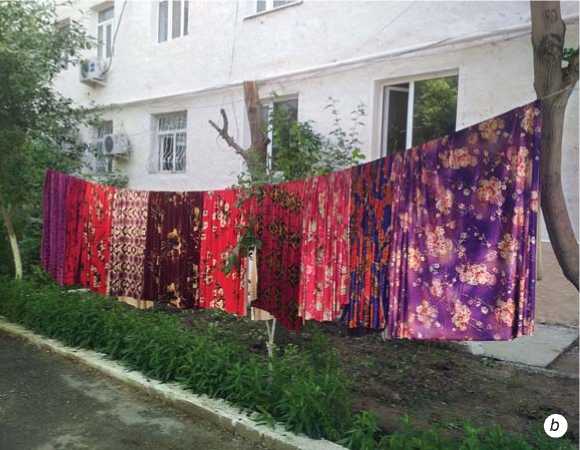
Fig. 1 . Dowry of a Karakalpak bride: chest and stack of kirpeshe ( a ), pieces of tayar fabric on a syryk string, given as a gift ( b ). Hereafter, photos by Z.K. Kurbanova .
were collected during kórimlik . The Karakalpak bride’s dowry always included a chest, stack of kórpeshe (thin cotton mattresses in patchwork covers), and kórpe-tósek bedding items. Traditionally, the chest was opened in the presence of close relatives so they could see the qizdin dunyasi (‘goods/property of the girl’) with their own eyes (FMA, 2018–2022*).
At Karakalpak weddings, great attention was paid to textiles. The pieces of fabric presented as a gift were hung for everyone to see at the entrance to the house on a specially stretched siriq rope. The ritual was called siriqqa saliw (from saliw ‘put’). The more pieces of fabric hung on the siriq , the more influential the family was considered (Fig. 1).
Dissatisfaction of one of the parties with the quality of fabric during the wedding exchange sometimes became a cause of discord. To prevent this, the tawar bólistiriw “auditing” was performed. It was led by a woman who was entrusted with recording the received valuables and providing reciprocal gifts. This role was usually assigned to Jenge —the wife of the elder brother or any older female relative of the hostess, and in some cases, to biy apa —the wife of the head of the community. This woman of great authority knew how to achieve mutual understanding between the parties. Giving of gifts, among which fabrics played an important role, was an obligatory element in the post-wedding cycle during the traditional
*Field materials of the authors collected in the villages in Shimbay, Kegeyli, Khodzheili, and Moynaq Districts of Karakalpakstan in 2018–2022.
visits of matchmakers quda shaqirispaq . According to the custom, the bride’s father was given a Jagali kiyim— a suit or shapan (traditional robe) and skullcap, and bride’s mother was given a piece of expensive fabric and headscarf. Other close relatives, such as bride’s sisters and aunts, also received gifts. Similar gifts were given in return to groom’s parents and relatives. The exchange of gifts (fabrics) between two families was of a ritual nature (FMA, 2018–2022).
Much textile was used during the funerary and commemorative rites of the Karakalpaks. In the past, the Jirtis ritual (from Jirtiw ‘tear’) was always performed during a funeral. The family of the deceased gave away his clothes, pieces of fabric, food and money. Clothes were always given to the relatives of the deceased and to those who performed his ablution (Esbergenov, 1963: 35; Kurbanova, 2020: 127). Among the Kazakhs, belongings of the deceased were distributed a year after death. The entire set of his clothes and utensils was called tul ‘widowed, barren’, it was considered a ritual substitute for the person. The distribution of the components of the set among the relatives was accompanied by distribution of jirtis scraps (FMA, 2017-2019*) (Kazakhi, 2021: 219, 543, 778).
Back in the 1970–1980s, during funerals or commemorations, especially if the deceased was of advanced age, it was customary for the Karakalpaks to give a similar piece of fabric as a gift to everyone who brought it. Rolls of fabric (velvet, brocade, chintz) were purchased for distribution among the relatives. The pieces were given to those who brought cattle and Jagali kiyim ‘clothes with a collar’ to the ceremony. All those who came with gifts were sure to receive tawar (Kurbanova, 2020: 132).
Similar practices were widespread among the Turkic peoples of Central Asia. The Jirtis scraps among the Kazakhs, zhyrtysh , zhirtysh / yirtych among the Kyrgyz, and yirtysh among the Uzbeks were similar to tawar scraps among the Karakalpaks. They were used in the rituals of economic, cultural, funerary, and commemorative nature, as well as rituals of wedding and children’s cycles, and were an obligatory part of gift exchange.
The ritual of teberik ‘offering, sacred, bringing happiness’ (cf. Kazakh ‘prayer, offering, gift’; cf. Kyrgyz ‘sacred, revered, bringing happiness’) among the Karakalpaks has similar meaning and form as ritual of Jirtis . Until the 1980s, the bodies of the deceased, which were carried out of the house, were sprinkled with small coins, fruits, and cookies, collected by women and children. It was believed that grace of the deceased was transferred into the scattered offerings, especially if he was an old man with many descendants. The Karakalpaks considered Jirtis and teberik to be division of property and “life force” of the deceased among the members of his family clan (Esbergenov, 1963: 35). In modern funerary rites, personal belongings of the deceased are distributed at the iyis (‘smell/spirit’) ceremony to the persons who took part in the ritual ablution. Its content is determined by the principle: Iysin taslamay júr ‘carry the smell (spirit) with you’. It is believed that clothes and textiles preserve the life force of the deceased among his descendants (Kurbanova, 2020).
Functions and symbolism of textiles in gift exchange among the Karakalpaks and other Turkic peoples of Central Asia
Traditionally, textiles played an important role in life support system, as well as social and normative world of the Turkic peoples of Central Asia. The emergence and development of weaving accompanied their cultural genesis. Words denoting thread processing technologies and various fabrics appeared in Old Turkic times. They included not only tawar , but also bóz —coarse cotton fabric, etc. Etymologically, the word boez was associated with the Old Turkic böz/büz ‘fabric, canvas, calico’ (with the derivative bozci ‘weaver’) (Drevnetyurkskiy slovar, 1969: 118–119, 135).
The horizontal narrow-beam loom (like the órmek among the Karakalpaks and Kazakhs, and ormok among the Kyrgyz) was known to many nomads of the macroregion. Fabrics were usually made by women. Setting up the loom and adjusting the tension of threads required the help of female relatives and neighbors. The beginning and end of the process were accompanied by good wishes and had a ritual form (Glushkova, Oktyabrskaya, 2007).
For weaving at home, the Karakalpaks used both the narrow-beam órmek looms and improved qozaq looms, which were widespread in Central Asia. Fabrics brought from Bukhara, Karshi, Urgench, Kokand, and Namangan, where large textile centers had been formed since the Early Middle Ages, were widely used in their culture (Tomina, 1980, 1989).
Central Asian fabrics were in great demand in the Eurasian markets. In the Turkic world of Central Asia, textiles served as one of the monetary equivalents for a long time—they were used in paying taxes, trade transactions, and other payments. In the traditional Karakalpak gift exchange system, tawar pieces were a part of high status sarpay gifts, which were intended for older relatives during wedding celebrations. Such gifts could be scarves, open fronted sweaters for women, and suits for men. Sarpay was given both to the bride’s side and to groom’s relatives during mutual visits.
Rituals accompanying circulation of textiles were based on a system of ideas which go back to mythological narratives of nomads, including ideas about vital technologies—clay molding, forging, churning kumis, making felt, weaving, and sewing, with the help of which the world, humans, and culture were created by the will of the supreme creators (Lvova et al., 1988).
According to traditional beliefs, the goddess Umai possessed creative power (her name has been known since the Old Turkic period) among the inhabitants of the upper world. The Great Mother Goddess was in charge of life and death, helped women in labor, protected children, and was the giver of strength and fertility. The image of Umai was known to the Altaians, Khakass, Shors, Bashkirs, Kazakhs, and Kyrgyz. In addition to small bow and arrow, her symbols among the Turkic peoples of Siberia were white scraps of fabric and tinsel threads.
With the spread of Islam in Central Asia, functions and attributes of Umai were redirected to Saint Fatima (the daughter of the Prophet Muhammad)—Pirim Bibi Patma among the Karakalpaks. Assisting in labor at her will and in her name, the midwives of the Kazakhs and Kyrgyz ( kindik sheshe – literally, ‘mother of the umbilical cord’) might cut the umbilical cord of a newborn girl by placing a spindle under it. Among the Karakalpaks, the kindik sheshe wrapped the umbilical cord into a piece of cloth and hung it from the cradle as a talisman or buried it in a secluded place. Fatima/Pirim Bibi Patma was considered the patroness of births and women’s handicrafts including weaving.
In the traditional culture of the Central Asian Turkic peoples, fabrics created under the supervision and with blessing of the deities were perceived as measures of destiny and life. According to the perception of values, adjusted by Islam, the parts of the akret (burial shroud) were the symbol of the end. When cutting the shroud, the Karakalpaks used white cotton fabric: for men its length was 9 m; for women it was 12 m, since the female body was considered sinful and required more thorough covering. The shroud (for men consisting of three scraps, for women of five scraps) was a symbol of the transition of the soul to the afterlife (Poleviye materialy…, 1989).
The Kyrgyz considered the basis of the akret a strip of fabric that married women wrapped around their heads to create a turban. Depending on the wealth of the owner, “a 20–30 m long piece of fabric could be used… it (the turban) could have a practical use: if a woman was giving birth outside her home, she could untie the turban and swaddle the child in white fabric; it could also serve as a shroud for the deceased during nomadic journey” (Dzhanabaeva, 2019: 48). Fabric torn into pieces marked the turning points in person’s life.
The Kazakhs widely used scraps of fabric during funerary and commemorative ceremonies. In accordance with norms of traditional culture, scraps of fabric (scarves/ flags) were raised on a peak or pole above the yurt of the deceased: white if the deceased was an old man; black if he was a mature man; and red if he was a young man. These scraps were included in the tul , which recreated the image of the deceased, and were left until the end of the mourning. Throughout the year, the widow lamented the death of her husband near them and kept them, like the entire tul , during nomadic migration. Disassembling the tul , breaking the pike, burning the mourning flag, and distributing the jirtis signified the completion of the farewell to the soul of the deceased to the other world after the end of the year. According to traditions, the kasiet grace-filled power of the deceased was transmitted to the living via jirtis and scraps of clothing. Such ideas were primarily associated with clothing of those deceased who had crossed the sixty-year mark (Kazakhi, 2021: 546–550).
Communion with grace of the deceased through receiving pieces of fabric during the funeral was known to many Turkic peoples of Central Asia, and in a reduced form has survived until the present day (Kazakhi…, 1995: 165–166). Scholars consider this tradition in development, viewing the ritual of tearing the clothes of a revered person (ruler, elder) to be the original form of sacrifice (Oktyabrskaya, Suraganova, 2012).
Overcoming posthumous “entropy” was embodied in the collection of scraps. In the rituals of the family cycle among the Kazakhs, Kyrgyz, Karakalpaks, Nogai, and other peoples, scraps of fabric symbolized the happiness of their owners who managed to live to extreme age, marry off their daughter, celebrate the birth of the heir, etc. Even in the early 20th century, some groups of Kyrgyz had “zhirtysh—pieces of fabric that were distributed to all the women present in the kibitka with the deceased while all posthumous rituals and funeral were in progress, if the deceased was an old man. These pieces of fabric were kept for the children so they would live to the same advanced age” (Fielstrup, 2002: 100). Women sewed a dowry for their daughters with wishes of having many children and cattle from such scraps. It was believed that the more scraps there were, the more grace would be passed on from the people who possessed it during their lifetime. The Karakalpaks, Kyrgyz, and Kazakhs made children’s clothes using patchwork technique (FMA, 2020– 2021*) (Fig. 2).
Among many Turkic peoples, patchwork sewing was called quraq . The Kyrgyz use this word to denote scraps, threads, trimmings, as well as time and age. The word quraq is derived from the verb kura ‘make up from separate scraps, collect, accumulate, grow rich’, and also ‘unite, put in order’. It had the same meanings in the Karakalpak language. In the Kazakh language, the word quraq (from quru ) has the following meanings: ‘create, make up, build, die, disappear, be destroyed’ (Yudakhin, 1985: 447; Karakalpaksko-russkiy slovar, 1958: 41; Shaigozova, Naurzbaeva, 2023: 237). The combination of opposite meanings in a single concept determines the semantics of patchwork things that mark the boundary states of life and death.
By using scraps of tawar and old clothes, the Karakalpaks made various items with the quraq technique, primarily cradle equipment and clothes for newborns. Sometimes the first shirt and hat for the baby were sewn from old things of the parents. However, most often these items were made of 40 conventional scraps by the 40th day of birth. From this day on, the child was shown to strangers, was “brought out” into the world of people. It was believed that patchwork items were able to ward off the evil eye and evil powers, and carried the energy of good wishes and capacity for longevity of all relatives who gave clothes and pieces of fabric. Given these beliefs, pieces of clothing of old people who lived a long, happy life were sewn onto patchwork hats of small children (Kurbanova, 2015).
Joining of scraps together marked the emergence not only of new life, but also of new families. Patchwork items and pieces of fabric were important components of decoration at Karakalpak weddings. At the beginning of the ceremony of entering the future husband’s house, the bride was behind the shimildiq curtain made of different pieces of fabric. The chemildiq / shimildiq /
b
а
Fig. 2 . Children’s jacket – kurte ( a ) and old hat – toppy ( b ), acting as amulets. Quraq patchwork technique. From the collection of the Savitsky Art Museum (Nukus, Republic of Karakalpakstan).
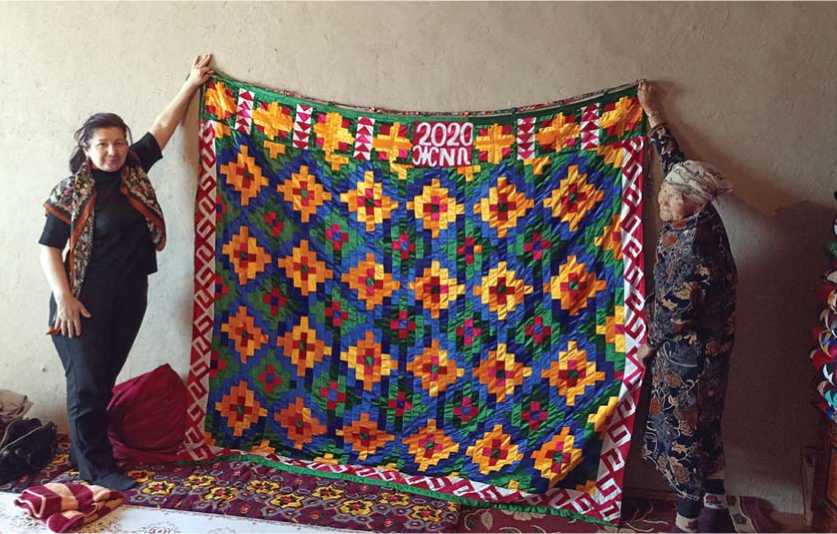
Fig. 3 . Wedding curtain shimildiq . Quraq patchwork technique.
chimildiq curtain was known among the Kazakhs, Nogais, and Uzbeks. The Kyrgyz and Altai Turkic people called it koshogo / kozhogo . The patchwork curtain served as a talisman, acted as a symbol of the newlyweds’ home, and was intended to promote the increase of the family and property, and fertility of livestock. The number of patches determined the
“producing capacity” of the family. Many household items were made using that same technique (FMA, 2018–2022) (Fig. 3, 4).
Thus, at the level of mythological and ritual life scenarios, the quraq patchwork technique among the Karakalpaks and other Turkic peoples of Central Asia evoked the creation paradigm that entailed
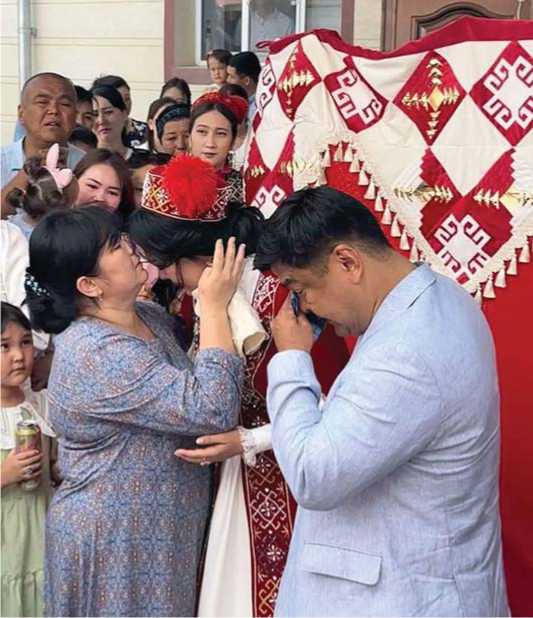
Fig. 4 . Seeing off the bride to groom’s house with the shimildiq wedding curtain on the background.
the transmission of divine grace from ancestors to descendants, continuity of the family clan and its integrity (Oktyabrskaya, Suraganova, 2010).
Trends in the transformation of gift exchange among the Karakalpaks, and its modern versions
In the traditional gift exchange of the Karakalpaks, fabrics acted both as material asset and symbol. The inclusion of the Karakalpaks in the system of regional and then imperial Russian social, political, and economic relations initiated the transformation of their social and normative practices. Functions, content, and scale of the ritual use of textiles changed. It became rationalized throughout the 20th century.
Noticeable changes were observed in the structure of dowry and kalym, which balance each other. In the past, the dowry ( kyzdyn zhugi – the girl’s property) included a yurt (house), home furnishings and decoration items, as well as clothing and fabrics. Later, the dowry began to include furniture, dishware, household appliances, carpets, and bride’s clothes. The kalym was paid in money or cattle (currently, cattle is used only in rural areas) (FMA, 2018–2022).
By the mid-20th century, the bes kiyim (‘five costumes’) ritual of handing over new things to the bride emerged in Karakalpakstan as a component of the wedding gift exchange. Today this ritual is perceived as a part of traditional normative culture. Clothes have traditionally been a marker of status, but the bes kiyim set was an innovation. Its appearance was caused by low standard of living among the population and implied material support for the new family. Since the mid-20th century, Karakalpaks began to use new things in the rituals of the life cycle. Local versions of bes kiyim in funerary and commemorative practices were based on the custom of distributing clothes to people who took part in ablation of the deceased, but gradually, specially purchased clothes began to be used for that. Old things were accepted as a gift only from very old people as a blessing for the heirs (Kurbanova, 2020). In the structure of ritual gift exchange in the second half of the 20th century, tawar scraps turned into “commodity”; they primarily became indicators of wealth and prestige.
During transformations, the basis for reproduction of gift-exchange traditions among the Karakalpaks was preservation of the uriw clan (exogamous) structures. The main ones were and still remain six large uriw paired together by marriage: qtai-qypshaq, keneges-mangyt, and muyten-qonyrat. It is known that all of them are united into arys-Qonirat and On tort uriw, and, in turn, are divided into tiyre, and those into kóshe (Davletiyarov, 2022). Preservation of unity is based on the knowledge of the common origin and is reinforced by sophisticated system of gift exchange in family feasts, weddings, and funerals.
Connections determining personal relationships and individual characteristics of the heads of families and their senior members emerge in modern Karakalpak society along with stable forms of traditional interactions. Neighborhood-territorial communities (qonsilas), kinship relations (agayin-tuwisqan), marriage unions (shinaraq), associations of classmates (gruppalas), colleagues (kásiples), and friends (joralas) remain relevant. These structures form a system of social networks of the Karakalpaks, where various types of gifts circulate. Similar phenomena were observed by S. Werner in the modern society of the Kazakhs (1998, 2000).
At present, there are several most common types of gift exchange among the Karakalpaks, including súyinshi (Kaz. suyinshi, Kyrg. suyunchu)—a small reward given to a person who brings good news. This is most often money, but in the past, fabric, cattle or other valuables were used as gifts. Paygazi (Kaz. baigazy) is a gift given to relatives or friends on the occasion of purchasing one’s own new clothes; usually this is a small amount of money. Kórimlik (Kaz. koerimdik, Kyrg. koerumduk) is a gift received for showing something new (including the bride). A piece of fabric, scarf, or money can be used for this (Fig. 5).
Jetkersin is a gift that is customarily given to a guest during family celebrations. It symbolizes a wish that the recipient may also experience favorable changes in life. A piece of fabric, scarf, or man’s shirt can be used as such gift.
In modern gift exchange among the Karakalpaks, pieces of fabric still play an important role. They constitute over 50 % of all gifts and significantly more together with textile products. Previously, pieces of fashionable fabric of good quality were used in rituals, but by the 2000s, the principles of choosing tawar changed. Today, the Karakalpaks bring inexpensive pieces of fabric which are, as a rule, subsequently regifted, even to important ceremonies. The nominal value of fabric is not of great importance. In the system of clan, family, neighborly, and corporate relations, the exchange of tawar scraps is a form of symbolic maintenance of social ties.
Conclusions
The evidence presented above indicates that gift exchange was and still remains one of the most important elements of the Karakalpak culture. As a part of traditional life cycle rituals, the system of gift exchange implied mutual obligations, which today contribute to cohesion of Karakalpak society and ensure stability of social networks. According to field observations, mutual exchange of textiles among Karakalpaks takes on a symbolic nature. In the urban environment, pieces of fabric are sometimes replaced by monetary equivalent. However, generally, the process of gift exchange still imposes interconnected obligations on its participants: to give, to take, and to reciprocate. Deviation from even one of them may entail public sanctioning. These rules, with the universal nature in traditional societies, retain their significance even today (Mauss, 2011: 134–288).
In the modern Republic of Karakalpakstan, which is a part of Uzbekistan, traditions of ritual textile exchange, as in the past, are supported by public opinion. In addition to practical interest in textile exchange, there is a demand for maintaining kinship ties and mutual assistance with its help. Nowadays, the purpose of gift exchange using
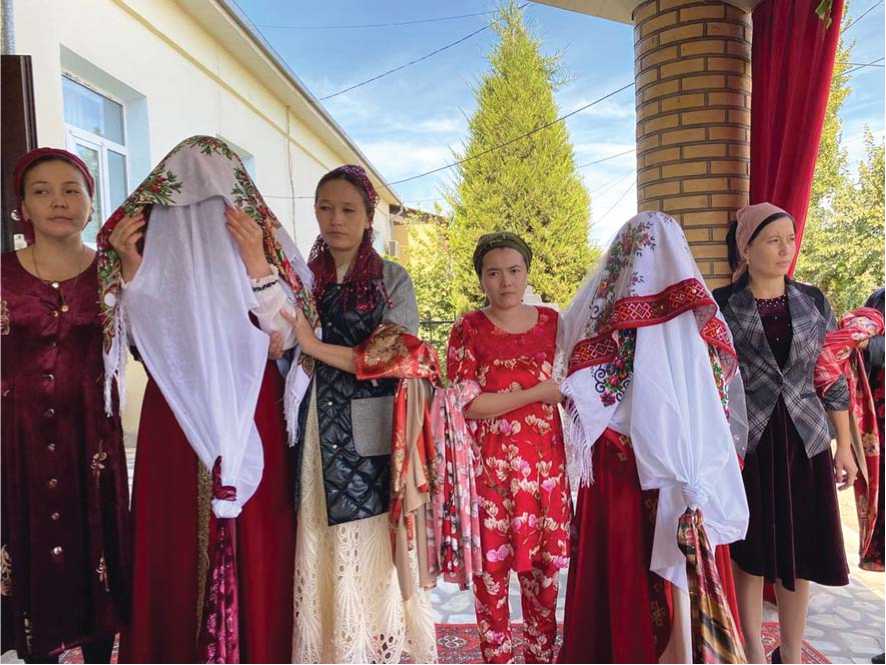
Fig. 5 . Wedding ritual bet ashar —uncovering the bride’s face.
textiles is primarily to form the maximum number of connections and the system of mutual obligations. The expediency of mutual exchange is explained by the unity of origin, which is confirmed by genealogy and memory about the common ancestors and patrons.
Thus, exchange of gifts among the Karakalpaks in the early 21st century acts as a social mechanism, which provides regulatory and communicative functions. Analysis of current gift exchange practices proves their effectiveness in structuring and self-preservation of the society with a sophisticated tribal composition including several dozen units at different levels. These practices contribute to sustaining traditions, cultural values, mutual assistance, and solidarity at the ethnic and national levels.
Acknowledgment
