
Economic and Social Changes: Facts, Trends, Forecast @volnc-esc-en
Journal articles - Economic and Social Changes: Facts, Trends, Forecast
All articles: 1817
Health and living conditions of the rising generation
Scientific article
The article presents the research results of the rising generation’s quantitative and qualitative characteristics in Russia and in the Vologda Oblast. The main trends characterizing children’s health, their living conditions and lifestyle in their families are revealed in the article. Today the primary task of social policy in terms of child population increase is to provide the rise of their qualitative potential and living standards.
Free
Health care modernization assessed by population and health workers
Scientific article
At present, the reduction in the quantity and quality of human resources poses a serious threat to society. In order to improve the quality and availability of health services and promote public health, the Healthcare Modernization Programme is being implemented. The paper highlights the main problems of the healthcare system and contains the assessments of the modernization programme by the Vologda Oblast population and healthcare workers.
Free
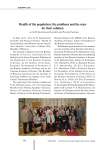
Health saving activity as a health-promoting factor: the gender aspect
Scientific article
The article analyses health-saving behaviour of population in the two countries - the Republic of Belarus and the Russian Federation (the case study of the Vologda Oblast) in the context of the gender aspect. The aim of the article is to highlight the specifics of behaviour of men and women in their choice of strategies of health-saving activity, which, in turn, influence their health condition. The results of an international multidisciplinary research testify that gender determines the choice of health-saving behaviour strategy.
Free
Scientific article
Under the conditions of conceptual transition of public health policy from considering citizens as passive consumers of medical services to their awareness of their own active position in health preservation, it becomes fundamentally important to understand the types of health care attitudes of the population. The aim of the study was to make a typology of the population according to the nature of health-saving attitudes and to study its influence on the dissemination of healthy lifestyle practices. We have analyzed and summarized approaches to the interpretation of health-saving motivation and classification of health care motives. We reviewed the experience of applying cluster analysis in studies of health behavior. We found that most of them use self-preservation practices as indicators for typology, while the equally important value-motivational component is most often left out of sight. Our study is designed to fill this gap. The results of the sociological monitoring of the physical health of the Vologda Oblast population in 2020 served as the information base. The motives of health care were considered in inseparable interrelation with the degree of health care and responsibility for it. We used the cluster analysis method (hierarchical and k-means method) to make a typology of the population. In the course of clustering we identified three groups of population according to the nature of health saving attitudes: 1) responsible, but unmotivated, caring little or no concern for health, 2) sharing responsibility, motivated and caring for health, 3) responsible, motivated and caring for health. We defined a socio-demographic portrait of representatives of each cluster. Representatives of the third cluster lead the healthiest way of life, while more than half of the respondents of the first cluster do not take any measures in relation to health. The results of the study have an explicit practical value in terms of managing self-preservation behavior.
Free
Healthcare Access and Quality for Older Adults as a Special Socio-demographic Group
Scientific article
The article considers healthcare access and quality for older adults in modern Russia. Based on literature sources and sociological research data, we substantiate the high level and special nature of the needs of older people in medical care. The aim of the work is to assess healthcare access and quality for older adults in the Vologda Region in comparison with other age groups, as well as in the context of the private and public health sectors. The information base includes data from sociological surveys of Vologda Region population collected during 2018-2024, which provided an opportunity to track the dynamics of respondents’ opinions, including in the context of the COVID-19 pandemic. Healthcare access and quality are assessed by appropriate indices, which helps to interpret the data using graphical visualization of results in a two-dimensional assessment field. Based on the analysis, we identify the conjugation and dichotomy between the parameters of healthcare access and quality, reflecting common features, as well as significant differences, for various age groups. The practical value and special relevance of the results obtained is due to their correlation with the practices of healthcare commercialization, the division of respondents’ assessments between public and private medical organizations. The novelty of the study consists in testing an alternative methodological approach to assessing healthcare access and quality, identifying age differences and the specifics of elderly patients’ response to changes in healthcare in the context of the COVID-19 pandemic.
Free
Scientific article
Improving population’s quality of life is a key goal of the state. In this regard, it is very important to correctly measure its level and, accordingly, classify the country’s regions by quality of life indicators. Most research in this area involves dividing variables into groups, unifying variables in each group and building an integral indicator, grouping or clustering objects as a linear convolution of variables with weights. Such approaches have their drawbacks due to the subjectivity of expert estimates, instability of the coefficients of the main component, inability to work with ordinal data, etc. Thus, the purpose of this study is to build a methodology for classifying the regions of the Russian Federation by quality of life indicators devoid of the above disadvantages. The proposed method is based on the concept of Pareto optimality well-known in Economics according to which all the regions are divided into disjoint classes. After dividing variables into groups we recommend using Pareto class as a representative of the category instead of the traditional unification and construction of intra-group convolutions, which is obtained after the intra-group Pareto classification, and building the final Pareto classification of the regions of the Russian Federation on the basis of the obtained intra-group Pareto classes. The advantage of the proposed approach is that it can be applied on the ordinal data, that is, when some variables are characterized only by their order and there are no exact values for each region. In addition, the algorithm is undemanding for computing power and does not use expert estimates, except for the selection of research variables. The main results of the study are the construction of a classification of the Russian Federation regions by quality of life indicators, comparison with traditional approaches and analysis of the features of the proposed methodology.
Free
Hierarchical and spatial effects in the development of municipalities
Scientific article
. Thepaperpresentstheresultsofanalysisoftheinfluenceofseparatelevelsofpublicadministration hierarchy (regional, municipal) and neighboring territories on the indicators of socio-economic condition of municipal entities. The study was conducted in the context of 300 municipal entities of six subjects of the Russian Federation. The hierarchical and spatial effects were determined in several stages. The impact of separate administration levels on the results obtained by municipal entities was assessed with the use of hierarchical linear modeling (HLM), which is applied in other scientific fields to analyze group and inter-group relations. The connectedness of municipalities was evaluated with the use of spatial statistics methods (Moran Index). The analysis has shown that both vertical and horizontal connections of municipal entities are important. They determine spatial and hierarchical effects. Assessing the change in a given indicator, taking into account both the internal potential and the existing external horizontal and vertical links simultaneously is the most difficult but necessary step in the formation of management decisions regarding municipal entities...
Free
Historical examples of various methods for recovery from crisis
Scientific article
The crisis creates measures to combat it. The following text (with some abridgements) is the first chapter of the book by Makarov V.L. Social clusterizm. Russia’s challenge / M.: Business Atlas, 2010. - 272 p. In the introduction to the book, the author points out the following: In this book the reader will find a set of proposals and arguments about society and economy without devastating crises. People do not like crises, they want them to come to an end, and even better that there would be no crises at all. But on the other hand, crises purify, they mobilize to super efforts. It is after crisis when the world updates. Then is it necessary to strive for a society without crises? I’m trying to convince the reader that it is necessary... We give strong arguments in favor of the fact that it is Russia that can show an example of building such a society to the rest of the humanity (p. 10)... The basic idea of the book is looking for and hopefully finding in relation to modern society the right balance between rigidity and flexibility, which ensures stability of the system (p. 11).
Free
Home construction activity in the region: problems and their solving ways
Scientific article
In this article on the basis of the questionnaire data of the population and the building organizations’ heads the basic problems interfering the house-building development in the region are presented, the key directions of the house-building volumes’ increase are revealed, and the mechanisms for their realization are offered.
Free
Scientific article
Human capital has been established as one of the central concepts in the system of national development projects in Russia for 2019-2024. The updated national projects have maintained the high relevance of the human capital factor in achieving the goals of economic development in Russia for 2025-2030, but have focused on realizing the potential of each person, developing their talents, and achieving technological leadership. Despite the presence of many publications by Russian and foreign scientists on this topic, which mainly reflect the genesis of the term, its measurement and multilateral assessment, such aspects as changing the content of dominant factors in the context of technologization, digitalization of the knowledge economy in modern society, as well as issues of human capital development through the prism of institutional theory (according to a group of development institutions) are not sufficiently elaborated on. The aim of the study is to identify dominant elements in the context of the technologization of the economy in the matrix of factors affecting human capital, to identify and systematize the most sought-after economic development institutions, as well as to study best practices based on comparative express-analysis using the example of Russia, Belarus, and Kazakhstan. Based on the analysis of modern conceptual approaches to understanding the essence of human capital in the context of the revealed paradigm shift from innovative economic development to technological development, it is concluded that while maintaining the importance of health capital, the knowledge and intellectual component of educational capital comes to the fore, with a predominance of the share of individual talent development (with creative thinking) and its increment by using development institutions at the macro and micro levels. A comparative express-analysis of the development institutions of the Russian Federation, the Republic of Belarus, and the Republic of Kazakhstan has shown that the first type of development institutions meet the needs of the countries' technological development. Among the best practices of the second type of development institutions, such as centers for importing creative behavioral models, personnel training systems with their localization in industry clusters, including competence centers, and corporate employee retraining programs tailored to the demands of the digital economy have been identified. The application of the identified best practices will accelerate the movement of countries toward achieving technological leadership
Free
Scientific article
The present article is a continuation of the previously published paper [6] and it reviews the methodology, conceptual approaches to sociological analysis, modelling, monitoring and management of human and social potential of neo-industrial development of the Russian Arctic. The successful implementation of this task and the preparation and adoption of efficient management decisions require reliable analytical and diagnostic information about the social situation in this macro-region and opportunities for supplying the planned investment projects with human resources. The aim of the study is to create a sociological ground that will help obtain necessary sociological information in the preparation and adoption of administrative decisions of government agencies in the monitoring mode and regulate social processes in the Arctic region more efficiently. With the help of the methodology of socio-spatial and socio-territorial identification and with the use of social simulation we carry out our own analysis of the current status and trends of human potential (quantitative and qualitative characteristics of human resources, their health and level of professional training) and social potential (social ties, trust, involvement in the regional community)...
Free
Human capital as an indicator of sustainable development of the territory
Scientific article
Human capital is a component of national wealth, therefore, in the formation of regional policy its development should be considered as a factor of enhancing the sustainability of the territory. The analysis conducted by the authors shows that the trends of human capital development lead to a decrease in the stability of the region, as evidenced by the aging population, declining the quality of labor potential, and, above all, its intellectual characteristics and health capital.
Free
Human capital competencies in high-tech and knowledge-intensive sectors of the economy
Scientific article
Modern society is a knowledge economy. A person who is able to assimilate, analyze, and transform information, received from outside, into knowledge comes to the fore. The requirements for professional and general cultural competencies of the leader’s personality are determined by his position in the system of two types of relations: formal ones, due to the power vertical of responsible dependence, and informal ones, related to interpersonal likes and dislikes and intergroup relations in the performance of direct official and public functions. Within the framework of assessing the personal qualities of a leader in high-tech and knowledge-intensive sectors of the economy, there are criteria for indicators and development levels of his/her competence. A successful leader in high-tech and knowledge-intensive sectors of the economy should not only have value-based ideas about the organization of labor and have high professional competencies but also be able to effectively and lawfully manage human capital and know the mechanisms of the labor economy. Knowledge becomes the leading production segment, commodity exchange. In the leading countries, from 75 to 90% of the gross domestic product is created at the expense of scientific and technological progress, research and development work. The mechanism of knowledge production has been launched, which is a combination of fundamental science, universities, business schools, knowledge transfer, information flows, etc. In this regard, a leader of an organization and staff should have formed competencies for working in conditions of quantitative data overload, irrelevant and blurry information, information and emotional overload. Effective management style of a leader involves the formation of competencies for localization of information pressure, which is aimed at developing information culture in the organization. Our purpose is to determine the dominant characteristics of the qualities of a leader - a manager, working in the field of high-tech and knowledge-intensive industries, to develop a model of the formation and development of competences of a leader in the field of human capital management in the process of his professional activity, as well as the model of the leadership institute development. The authors adhere to the basic idea of the need to analyze abilities, knowledge, and skills, acquired and formed at an university, and to assess general professional and personal qualities of graduates that are required by employers. The main applied methods include desk and sociological research based on systematic and integrative approaches.
Free
Scientific article
The purpose of the research presented in the article is to study the attitude of various social groups of residents of the Far North - the Arctic zone of the Russian Federation to health, taking into account extreme natural and climatic conditions. Geospatial conditions are imposed by the socio-spatial vector of development of the Russian Arctic, which should coordinate neo-industrial development of certain parts of this territory, the formation of a new transport and logistics system, and the reproduction of the agro-industrial complex. There are groups of actors in each of the identified areas, who carry out their activities in the Arctic territories on a permanent or temporary basis, which makes the northerners' health issues highly specific and requiring a comprehensive analysis, including the sociological one. The scientific novelty of the research and its results presented in the article consists in a combination of geo- and socio-spatial approaches to studying the attitude to health among various social groups of northerners, and analysis of their specifics in Arctic conditions. The Yamalo-Nenets Autonomous Okrug is the base region of the study. Its health care system has both positive results and unresolved issues in the field of population health. The authors reveal the possibilities of its further improvement based on sociological and interdisciplinary research from a systemic perspective, taking into account the fact that the main resources of health saving are lifestyle, nutrition, quality medical care, and the environment. The authors note that the situation significantly differs in large and small cities of the Arctic, villages and shift settlements, and among nomads in the tundra. The materials of statistics, mass representative surveys, and comparative expert assessments are analyzed. The research findings illustrate the identified opportunities for improving the health of different groups of the Arctic population and indicate the need to significantly strengthen the comprehensive scientific support of Arctic projects, including sociological monitoring. The materials and results of the work are particularly relevant due to the upcoming Russia's presidency in the international Arctic Council.
Free
Human potential formation of children in the system of general education
Scientific article
Improving the quality of human potential is a priority area of socio-economic development of Russia. The solution to the issues of breakthrough scientific, technological and socio-economic development of Russia up to 2024 set in the national projects depends on it. One of the important elements of the national project “Education” is to update the content, methods and standards of education, including the development of the 21st century skills and the new literacy, the introduction of modern educational practices aimed at increasing independence and motivation for knowledge. One way or another, all these objectives are connected with the formation and development of human potential of the Russian child population. The number of groups of young population in Russia today is insufficient to compensate for the demographic losses of the society. Therefore, it is important to preserve and increase the country’s human potential, strengthening these processes in all social institutions, including family, education, healthcare, etc. The purpose of the paper is to analyze the opportunities of the modern system of general education to form child human potential, as well as improve the quality of relations “parents - school”, “children - school”. The research framework is based on surveys conducted by the Vologda Research Center of RAS in the Vologda Oblast. The surveys were attended by parents with children aged 3-17 (2018) and teachers of secondary schools (2011, 2015, 2017). The research novelty of the study lies in the evaluation of relations “parents - school”, “children - school”, which demonstrate a high dependence of formation and development of intellectual and social characteristics of the child population on their quality. Thus, human development rate is higher (0.822 units) among children whose parents are involved in their school life than among the rest, even among those who are not deprived of their parents’ attention (0.786 units - answers: often). The study shows that the less parents and children contact in relation to reading, the lower the indicators of child human potential (with constant reading practice, the rate is 0.840 units, with occasional - 0.781 units.). The research results are useful for experts in education and organizations working with parents of schoolchildren.
Free
Human potential of Russia's rural areas: assessment and interpretation
Scientific article
The paper proves that the market transformations of the 1990s resulted in a crisis that affected all aspects of life of rural residents. Despite the measures taken to support the village, its problems still linger; and they include a reduction in the rural population and its outflow to the cities, and the condition of social infrastructure that is worse in comparison with that in the cities. All this reduces the opportunities for reproduction and development of human potential in Russian villages. The diversity of theoretical approaches to the definition of human potential, the lack of unified views on its structural components and methodological approaches to its analysis lead to the necessity to develop a comprehensive methodology for assessing human potential in rural areas; such a methodology should combine not only quantitative analysis based on statistical data, but also qualitative analysis that would involve the use of sociological research findings. In our paper, we present domestic studies on this problem and group them according to three scientific schools, determine their specific features and their positive and negative aspects...
Free
Hybrid organizations in the non-governmental sector of social services: a sociological analysis
Scientific article
Issues regarding the development of the third sector are among major ones in research on Russia’s modern socio-economic system. Current trends in the transformation of the social services sector include the emergence and development of hybrid organizations whose activity combines social goals and commercial objectives. At the same time, hybrid forms in the social sphere have not been given due attention; Russian authors consider hybrid organizations mainly in relation to the development of public-private partnership in the field of economics. The aim of our research is to analyze theoretical approaches to understanding the hybrid model of organizations and consider specific examples of implementation of hybrid forms among Russian non-governmental organizations, which determines the scientific novelty of the work. Another task is to identify the most successful and innovative practices in the development of hybrid organizations representing the relationship between non-governmental and business structures. To solve it, we analyzed two cases: Penza and Kislovodsk, which represent a cluster of organizations providing services to children and adults with special needs. The results of the study showed that the tendency toward the development of hybrid forms for non-governmental organizations is largely related to the desire to achieve financial security. Currently, there exist other hybrid forms besides publicprivate partnerships and non-governmental organizations founded by large commercial organizations and affiliated with them; there emerge new institutional forms when non-governmental organizations establish commercial enterprises that, as a rule, provide additional services or replicate successful social practices on a commercial basis. Such organizations are intended to ensure financial stability of nongovernmental organizations, since part of the profit goes to support the latter. This process opens up significant opportunities for the development of the non-governmental sector, but requires finding a balance between the commercial and social components of such a partnership. The hybrid format creates new prospects for the third sector, allowing for the diversification of resources through the interaction of non-governmental and commercial structures and building more effective interaction with regional authorities. Further research in this area may be related to analyzing the effectiveness of hybrid forms in comparison with traditional NGOs, as well as studying long-term consequences of hybridization for the development of the third sector.
Free
Scientific article
During the years of market transformation Russia witnessed significant reduction in the share of science-intensive sector in the national and regional economy (there has been a decrease in the demand for the results of RD the real wages of researchers declined; the value of professional research activity decreased in the eyes of the public; the inflow of young people in science reduced as well). Overcoming these negative trends requires new approaches to the formation of the country's research potential. The integration of education and science is the most important of these approaches. The article covers the experience in this area, gained at the Institute of Socio-Economic Development of Territories of RAS through the establishment and organization of the work of the Research and Education Centre (REC) for Economics and Information Technologies, which has been functioning for ten years already. The article presents certain conceptual and methodological approaches to the formation of REC, the teaching methods used for educating young people in the chain “school - university - postgraduate studies - research activity”...
Free
