Economic and Social Changes: Facts, Trends, Forecast @volnc-esc-en
Journal articles - Economic and Social Changes: Facts, Trends, Forecast
All articles: 1817
Implications of precarization in the context of generational groups: direct and indirect effects
Scientific article
The effects of employment precarization are the subject of active discussion in the scientific literature. Despite the novelty of the topic, the negative impact of this process on the labor and daily life has been subject of a large number of works over the previous decade. At the same time, age specifics have not been widely reflected in studies: as a rule, authors focus on the population as a whole or its individual categories, for example, youth. The purpose of the article is to analyze and generalize the existing experience of studying the impact of employment precarization on generational groups of the economically active population. For this purpose, we have examined the situation of young, middle-aged and older workers involved in unstable labor relations. The information base is the Russian and foreign sources of empirical orientation; in the work we have used general scientific methods. The results show that the impact of employment precarization on generational groups has serious specifics. For young people, job instability mainly affects the planning of their own future forcing them to postpone the issues of starting a family and having children, leaving the parental home, etc. Prolonged transition to stable employment harms mental health, which is most pronounced in adulthood, when instability becomes part of everyday life. It can be difficult to get out of the “precarity trap” because low earnings and social insecurity limit the ability to change the current situation. The effects of employment precarization for older people are ambiguous. Even taking into account all the disadvantages of unstable labor relations, having at least some work is often a necessity to maintain a habitual lifestyle. The main limitation of the research is the generalization of information obtained using various conceptual constructions and methodological tools.
Free
Import of institutions: theoretical aspect and practical experience
Scientific article
The article is devoted to the problem of import of institutions, which is manifested in the form of society's borrowing of traditions, customs, and norms of behavior that developed in a different institutional environment. Such import is quite often accompanied by atrophy, regeneration of institutions and dysfunction of institutional macrostructure. Emerging so-called institutional traps cause serious risks for development of recipient countries. A historical example of the implementation of such risks was an attempt to transplant institutions of orthodox or radical liberalism in post-Soviet countries which expected modernization of their economies but received a diametrically opposite result - the primitivization of structures. An alternative to this course of events could be the usage of social market economy institutions (SME). Since the essence of the SME concept is a combination of market self-regulation mechanisms with a systematic state interventionism, it was possible to carry out a systemic transformation with, first, lower social costs and, second, without total deindustrialization. There is an existing need for a broader perspective on the formation of market equilibrium, which implies the inclusion in a number of independent market entities of the state that seeks to maximize its own function of social utility. It is the only approach that ensures the optimization of modern society's institutional environment in general and criteria for selecting imported institutions in particular. The novelty of the work is the justification of considering the interdependence of an exporting country's institutions, while choosing the most efficient one, and the need to assess consequences of its implementation in a recipient state's institutional environment. The authors conclude that the import of corresponding institutions should be accompanied by a synthesis of “social” and “market”. It could be achieved only with the harmony of complementarity of both these aspects, not with the construction of a hierarchy between them.
Free
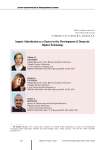
Import substitution as a factor in the development of domestic digital technology
Scientific article
According to global economic development trends, digital technology is a necessary factor in increasing competitiveness, labor productivity, reducing resource costs and optimizing business processes. In Russia, its development is one of the factors that drive the economy. As a result of the changing geopolitical situation, large foreign companies operating in the field ofdigitalization have begun to withdraw from the Russian market since 2022. This has brought to the fore the problem of import substitution (development of own digital and information technology) at the state and corporate level. Addressing the issue of import substitution will not only reduce imports, but also increase the production of high-tech goods and support domestic producers. In this regard, the aim of the study is to identify barriers to and opportunities for import substitution of digital technology in Russia. Based on the systematization and review of scientific works in the field of import substitution, we highlight approaches to its implementation. The article substantiates the need to implement the third approach in the context of Russian reality. We analyze the volume of high-tech exports of Russia as compared to other countries. We assess the high-tech export trajectory pursued by constituent entities of the Russian Federation in the context of commodity groups that promote digitalization. We highlight trends and problems of import substitution in the field of digitalization and investigate support measures and state policy aimed at import substitution in the field of digital technology and developments. As a result of the research, we have designed a toolkit to support the development of domestic digital technology based on import substitution. Using the toolkit helps to present the contribution of economic entities and its specifics in the field of information technology. Proposals have been prepared for the formation of an import substitution strategy in the field of digital technology, taking into account industry specifics. The results of the study can be applied by the state authorities of constituent entities of the Russian Federation in the field of digitalization.
Free
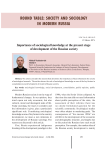
Importance of sociological knowledge at the present stage of development of the Russian society
Scientific article
The article considers the reasons that determine the importance of data obtained in the course of sociological research. The author shows the role of sociological knowledge as one of the key factors in consolidation and development of modern Russian society.
Free
Scientific article
The article substantiates the necessity to change the role of the state in technological and socio-economic development of the agricultural sector. The author considers the forms and methods of state regulation and analyses the current budget support provided to agriculture; he highlights its drawbacks with regard to sub-arctic and arctic territories of the Republic of Komi. The article shows the influence of state support on the farmers' level of income and identifies modernization risks and threats under Russia's WTO membership. The author proposes measures to improve state support of the agrarian sector and change the adverse conditions of its functioning. He substantiates the approach that helps improve the state regulation of the agrarian sector in the framework of regional and municipal programs for rural development.
Free
Improvement of the mechanism for the management of innovation activity in the manufacturing industry
Scientific article
The transition of Russia’s economy from raw materials exporting model of development to the innovation model is a national priority, since it contributes to intensive and sustainable economic growth and reduces economic dependence on external markets. GDP growth rate of 75-90% in the developed countries such as the USA, Japan, Germany, the UK, France, and also in the newly industrialized countries of Southeast Asia and China, is achieved due to the “progress of knowledge” - the intellectualization of the main production factors. Due to this fact, the increase in the standard of living in Russia, as well as overcoming its technological and economic lagging behind the more developed countries is possible only on the basis of the increase in productivity, enhancement of Russia’s competitiveness in international markets of innovative products, modernization and sustainable development of industrial enterprises through the creation of new innovation capabilities and the extensive utilization of that which have already been accumulated...
Free
Scientific article
The emerging imperatives of innovation economic development in Russia determine the content of conceptual and institutional constraints to the development of regional economic systems (RES). They consider the regional planning system as a leading priority in its inseparable unity with modern public administration tasks. However, the practice of development of long-term plans in the RF subjects proves that the innovation challenges of economic policy are not reflected properly in them or they are significantly distorted. The following reasons reduce the effectiveness of modernization processes in the RF subjects and hamper the appropriate reaction of RES on their impact: the lack of coordination between socio-economic and spatial regional plans, the imbalance of interaction between state authorities engaged in long-term planning, the lack of real prerequisites for the implementation of innovation initiatives in the regions. Systematization and analysis of long-term plans make it possible to substantiate the consistency of the spatial approach to regional planning expressed in the dominance of the transformational function that synchronizes the configuration and parameters of RES, and to establish ways to integrate spatial components in the system of regional planning through optimization of its tool support...
Free
Improving governmental support for the export credit of foreign trade in the Eurasian space
Scientific article
The development of common approaches to the provision of governmental support to export credit within the Eurasian Economic Space streamlines the entry of national producers into foreign markets and the development of foreign trade. The paper aims to justify the need to harmonize the rules according to which the government provides support to foreign trade within the Eurasian Economic Union (EAEU). We analyze principles for determining the minimum rates on export credits (CIRR, Commercial Interest Reference Rates) in national currencies, describe a methodology for determining the value of CIRR and calculating the minimum premium for credit risks adopted by the OECD, and define basic conditions for the provision of related export financing in the OECD. The novelty of our research consists in the fact that we calculate CIRR for EAEU member states in their national currencies in accordance with the provisions of the OECD Arrangement on Export Credits. The calculation technique that we propose contributes to the establishment of harmonized conditions to support the export of industrial products within the EAEU...
Free
Scientific article
This article examines methodological approaches to studying the socio-economic genotype, as well as practical aspects of its application in the context of regional development. The obtained results demonstrate, for the first time, a stable and statistically significant relationship between the quality of life of the population and the socio-economic genotype within a regional framework. The study identifies three fundamental genes of the socio-economic genotype: production, innovation, and institutional-social, and elucidates their economic nature. The concept of the “genotype core” is refined, defined as the minimal set of indicators sufficient for identifying a region's type. As a result of the research, regions were grouped according to the dominant gene, which revealed stable economic patterns, strengths and weaknesses of different groups, “hidden” regional patterns, and specifics of regional development that impact the population's quality of life. The proposed regional classification is based not on traditional sectoral specialization, but on the identified genetic profile, which is analyzed within the context of quality-of-life quartiles – an approach not previously documented empirically. Statistical analysis using the Chi-square test confirmed a statistically significant relationship between the genotype core and the integral quality of life index. By comparing the genotype map and the quality of life index, it was established that the institutional-social gene contributes the most to a high quality of life, whereas the production gene, without reinforcement from innovation and institutional-social factors, does not lead to increased well-being. The paper concludes by justifying the integration of the socio-economic genotype into regional strategies and monitoring systems for socio-economic programs, thereby expanding the toolkit for governance. The scientific novelty lies in applying a new approach to studying regional development issues, involving the analysis of the simultaneous interaction between the socio-economic genotype and quality of life. The theoretical significance of the work is defined by the development of a conceptual model of the socio-economic genotype, based on a triad of socio-economic genes (production, innovation, and institutional-social) and the subsequent construction of the genotype core using the Frobenius norm applied to indicator matrices as a quantitative assessment of territories’ internal potential. The practical significance stems from the creation of a methodological toolkit that enables more precise and effective development of regional strategies aimed at improving the population's quality of life.
Free
Improving the system of management of risks of the income base of regions' consolidated budgets
Scientific article
Budgetary risks of the Russian regions have been characterized by a sustained upward trend since the beginning of the 200-2009 crisis. This hinders the achievement of target indicators and fails to provide financial stability and sustainable socio-economic development of territories, which makes it important to search for solutions to the scientific issue of improving the system of management of risks affecting the income base of regions' consolidated budgets. It is necessary that the authorities made timely management decisions aimed at minimizing the impact of negative risk-contributing factors on public finances of the constituent entities of the Russian Federation. Informational and analytical basis of such operational decisions may include methodological tools of assessment of the impact of budgetary risks on the sustainability of the regional budgets' income base. However, such tool is currently missing. The novelty of the research lies in the fact that the authors have proven that when assessing budgetary risks, principles of comprehensiveness and objectivity need to be complied with, these principles imply the consideration of the risk of failure to perform the budget, the risk of imbalance and the risk expenditure non-implementation in connection with the repayment of the region's debt...
Free
Improving the tools for assessing and managing export activities of SMEs in the region
Scientific article
Internationalization of small and medium-sized enterprises (SMEs) through the access to foreign markets is one of the key issues in economics. Currently, the urgency of tasks related to the pace of economic growth, the increase in the gross regional product, and the expansion the territories’ budget revenues is increasing. Non-resource exports are mentioned as one of the sources of growth of the Russian economy until 2024 in the “May” decrees of the President aimed at increasing its competitiveness. Increasing the share of SMEs up to 10% in the total volume of non-resource exports is one of the key tasks of the national project “SMEs and support for individual entrepreneurial initiative”. At the same time, there is a number of problems hindering the effective use of the existing SMEs’ export potential as a source of economic growth at the regional level of the Russian Federation. The most acute ones are the following: low competitiveness of the SME manufacturing sector; lack of experience in foreign markets and absence of effective measures to support SME exporters; lack of strategies for using SMEs’ export potential, as well as of effective mechanisms and tools for their implementation at the regional level. In this regard, the aim of the research is to develop an approach to managing export activities of SMEs in the region. The article systematizes the research results in various scientific areas and theories related to the management of export activities of SMEs in the region, allowing to identify the main characteristics and features of this process. The author has developed an approach to assessing the specifics and specifications of SMEs in exports and their contribution to the total regional exports, allowing to determine directions for further support areas development. The analysis of the existing export promotion system is carried out. The directions, regulations and tools for the Federal and regional levels forming a unified system of SMEs management and support in terms of export activities are proposed.
Free


In search of patriotic activism: Between declaration and reality
Scientific article
The historical period marked by a shift in the world order and the transition from a unipolar to a multipolar system presents the world's key nations with a set of existential challenges related to spiritual, moral, and cultural self-determination over the strategic horizon. This challenge is especially urgent for Russia, which, since the start of the special military operation in Ukraine, has been undergoing a comprehensive transformation of all spheres of life. At the heart of this transformation lies a rejection of the liberal-capitalist paradigm and the adoption of a sovereign course of national development, based on traditional cultural and moral values and on the country's self-definition as a civilization-state. Although recent legislation has outlined the contours of Russia's desired future, these contours still require further specification, as evidenced by ongoing debates around such concepts as ideology, the image of the future, and so forth. One such concept is patriotism – a term that Presidential Decree 809 of November 9, 2022, includes in the list of traditional values that shape the worldview of Russia's citizens. This circumstance lends urgency to scholarly inquiry into the content and key characteristics of patriotism and into how it is perceived today by various groups of Russian society. The present study aims to contribute to this inquiry. Its objective was to identify the relationship between the level of patriotic self-identification and subjective assessments of the population's civic engagement – including people's sense of responsibility for the state of affairs at different levels of social life – drawing on the case of the Vologda Region, one of Russia's federal subjects. The empirical basis of the paper includes the findings of a sociological survey conducted by the Vologda Research Center of the Russian Academy of Sciences in the region in April 2025 (N = 1,500). The data were processed using cross-tabulation analysis, with Cramér's V coefficient computed to gauge the strength and significance of the associations among the nominal variables. The analysis yielded a socio-demographic profile of the respondents who identify themselves as patriots, and an assessment was made of the relationship between the degree of patriotic self-identification across different categories of citizens. In substantive terms, people's perceptions of patriotism were found to be dominated by the worldview component, which prevails over the activity component – a pattern manifesting itself in the combination of a high degree of patriotic self-identification with a relatively low level of civic engagement. The study also compares the data obtained with the results of similar surveys conducted at both the federal and regional levels. Our contribution lies in developing a methodological approach to investigating the characteristics and perceptions of citizens regarding patriotism that rests on empirical data, thereby making it possible to use this approach for comparative analysis in similarly themed research projects, as well as in the practice of public administration
Free
Inclusion of population in digital space: global trends and inequality of Russian regions
Scientific article
The issue of digital inequality and development of a methodology for measuring it has been at the center of attention of researchers, members of public administration, companies directly involved in the provision of Internet communication services, and other interested parties for more than twenty years. This issue became relevant with the increase of the rate of the Internet spread in certain parts of the world, and, accordingly, the lag of other countries behind them in the late 90s and early 21st century. The sphere of information and communication technologies is one of the most rapidly changing ones, which is probably why the theoretical and methodological foundations of the study of digital inequality are still not clearly defined, which actualizes research in this area and the importance of monitoring trends in the world and individual states. The purpose of our work is the usage of the three-level model of digital inequality for assessing first-level differences among population of Third World countries and Russian regions. It is assumed that the research results will create prerequisites for continuing study on other levels of digital asymmetry among Russian population, which will allow revealing not just the fact of its inclusion in digital space but the level of digital competencies and opportunities provide by the usage of modern information technologies. We use a set of scientific methods; for measuring inequality, the author resorts to the calculation of the variation coefficient, grouping of countries or regions based on levels of Internet connectivity. Conclusions are drawn about the existence of the first-level digital inequality in the world, despite a significant decrease of the differentiation of countries by Internet connectivity. It is revealed that Russia, in comparison with other countries, shows a significant increase of the share of Internet users, and there are elements of digital divide within Russian regions even with the decrease of variation coefficients. The scientific novelty of the study is the assessment of the scale and dynamics of the first-level digital inequality among population at the country and regional levels, grouping of countries, and Russian regions by the share of Internet users and the usage of mobile devices to access the network.
Free
Scientific article
During the past decades, sustained economic growth in emerging countries (and among them, BRICS countries) has attracted much attention in the western world. Multinational companies have been lured by the growing purchasing power of a significant part of the population, often presented as the “promised land” of consumer spending in durable goods, high tech services and fashion products. Of course, increasing incomes imply also significant socio-economic changes within these countries as well. A growing number of studies have been carried in order to track the evolution of income distribution in BRICS countries, and the formation and composition of a social group usually called “middle class” in western countries (Kharas (2010), SIEMS (2010), Levada (2012), Ernst and Young (2013), Kochhar R., Oates R. (2015)). In this paper we try to assess the impact of recent macroeconomic fluctuations on Russian households income levels. We analyse the Russian trajectory in three different ways...
Free
Increasing the competitiveness of preserved milk products on the food market
Scientific article
The article deals with the assessment of the product quality of some milk canneries in the Vologda, Belgorod, Moscow, Smolensk Oblasts, etc. It shows that the quality of Sukhonsky Dairy Plant's products is the best one. Most consumers trust just these products. Respondents' preferences have been revealed by the survey; they allow the authors to draw a conclusion about the characteristics of a competitive product that should be considered when designing new kinds of canned sweetened condensed milk.
Free