
Nanotechnologies in Construction: A Scientific Internet-Journal @nanobuild-en
Journal articles - Nanotechnologies in Construction: A Scientific Internet-Journal
All articles: 652
The inventions in nanotechnologies as practical solutions. Part V
Scientific article
A brief review of patents is given. The research performed by scientists, engineers and specialists in the area of nanotechnologies and nanomaterials resulted in increased efficiency of construction, housing sector and adjacent fields of economy. For example, the invention «A method to produce fireproof wood-polymer composites on the basis of secondary polyolefine» can be used in construction, car industry, shipbuilding, machine manufacturing, furniture trade and other industries. The method includes following stages: drying of composite components, mixing and heat forming of them by means of extrusion in extrusion Co- Kneader plant under treatment temperature120оС–150оС and conveyor screw rotation speed 350–450 RPM with further granulation. The obtained fire-resistant wood-polymer composite possesses high performance characteristics. The specialists can also be interested in the following inventions in the area of nanotechnologies: a method to produce strengthened nanocomposite with additional properties, anodic material for lithium-ion battery and a method to produce it, a method to rise breaking strength of composite material by preliminary impregnation of carbon fibers with carbon nanotubes, a method to produce carbon metal-containing nanostructures, a method to produce volume microscale structures from nanoparticles and a device to perform it, antistatic floor coating with carbon nanotubes and other.
Free

Scientific article
This study presents an investigation of the effects of high temperature on the thermal and microstructural properties of cement mortars modified with nanosilica. In the first stage of the research, the effects of nanosilica (NS) and silica fume (SF) on the hydration and compressive strength of cementitious composites were compared. In the second stage, four different types of cement mortars, containing an optimal dosage of NS, were produced. Two of them contained a normal weight aggregate (quartz or limestone), whilst two contained a heavy weight aggregate (barite or magnetite). Specimens without NS were produced for control purposes. The specimens were exposed to 300, 450, 600 and 800°C, with their post-heating properties – including thermal conductivity, specific heat, solvent absorption and cracking behavior – analyzed. The results show that NS exhibits significantly higher reactivity with cement than SF. NS accelerates the cement hydration process and contributes more significantly to the 28 and 365 day compressive strength of mortar, as compared to SF. The incorporation of NS in a composite substantially decreases the amount of CH in the mixture and leads to the production of additional C–S–H gel phase, which improves microstructure. The study also shows that NS contributes to a decrement in the thermal conductivity and density of mortar, both prior to and after heating. The incorporation of NS has a beneficial effect on decreasing the deterioration rate of mortars after heating, by decreasing absorption rate and the amount of cracks in in them.
Free
Scientific article
This study presents an investigation of the effects of high temperature on the thermal and microstructural properties of cement mortars modified with nanosilica. In the first stage of the research, the effects of nanosilica (NS) and silica fume (SF) on the hydration and compressive strength of cementitious composites were compared. In the second stage, four different types of cement mortars, containing an optimal dosage of NS, were produced. Two of them contained a normal weight aggregate (quartz or limestone), whilst two contained a heavy weight aggregate (barite or magnetite). Specimens without NS were produced for control purposes. The specimens were exposed to 300, 450, 600 and 800°C, with their post-heating properties – including thermal conductivity, specific heat, solvent absorption and cracking behavior – analyzed. The results show that NS exhibits significantly higher reactivity with cement than SF. NS accelerates the cement hydration process and contributes more significantly to the 28 and 365 day compressive strength of mortar, as compared to SF. The incorporation of NS in a composite substantially decreases the amount of CH in the mixture and leads to the production of additional C–S–H gel phase, which improves microstructure. The study also shows that NS contributes to a decrement in the thermal conductivity and density of mortar, both prior to and after heating. The incorporation of NS has a beneficial effect on decreasing the deterioration rate of mortars after heating, by decreasing absorption rate and the amount of cracks in in them.
Free
The photocatalytic activity of cement-sand plaster under the influence of natural solar radiation
Scientific article
Introduction. Concrete and cement composites can be considered as the most demanded and versatile building materials nowadays. Recently, photocatalytic building materials containing nano- and finely dispersed oxides and salts photocatalyst particles, especially titanium dioxide of anatase modification, are becoming widespread. Under the influence of light, the surface of these materials becomes capable of self-cleaning. The materials photocatalytic activity is usually determined in the laboratory conditions by irradiating samples with an artificial source of light with certain wavelength, which does not fully characterize the behavior of the material in real-life conditions. Therefore, the purpose of this study is to evaluate the photocatalytic activity of cement-sand plaster samples under natural solar radiation. Materials and methods of research. In this study, the properties of cement-sand plaster modified with an additive of industrial TiO2 were studied. The additive was introduced into the plaster compositions in amounts of 0.3; 1.0; 1.7; 3.0; 5.0 and 10.0 wt.% during the dry mixing of the components. At the first stage, the effect of the additive on physical and mechanical properties of the samples was investigated. The second part of the research is devoted to the study of the photocatalytic properties of the material. Mineralization of the model pollutant Methylene blue was carried out in real-life conditions under sunlight irradiation, the photocatalytic activity of the samples was evaluated in accordance with the European standard UNI 11259-2016. Results and discussion. As a result of the study, the authors found that the maximal increase in compressive and flexural strength corresponds to the sample with 5.0 wt.% of TiO2, and the maximum degree of Methylene blue decomposition corresponds to the sample with 10.0 wt.% of TiO2. Thus, compressive strength increases by 69% at 2 days age, by 58% at 7 days age, and by 50% at 28 days age compared to the control sample. Flexural strength increases by 10, 13, and 50% at 2, 7, and 28 days age, respectively. The strength of the samples with 10.0 wt.% of TiO2 remains approximately at the level of the control sample. Compositions with TiO2 starting from 3 wt.% demonstrate photocatalytic activity (R), the highest R corresponds to 10 wt.% sample with R value is 40–78%. It is also noticeable that the maximum Methylene blue mineralization (58–78%) is observed after 2 days of sunlight irradiation, after 7 days there is a significant decrease in the degree of pigment decomposition. Conclusion. As a result of the research, the authors concluded that the optimal amount of TiO2 photocatalyst in the cement-sand plaster is 5.0–10.0 wt.% since these samples exhibit maximum strength characteristics combined with a high ability of model contaminant degradation.
Free
The physical and mechanical properties of concrete with multifunctional additive
Scientific article
Introduction. It is known that concrete is the main building material, despite the introduction of new technologies. The combination of strength and durability makes this material indispensable for the construction of civil and industrial infrastructure. However, the impact of aggressive external factors on concrete structures, such as an acidic or alkaline environment, temperature fluctuations, and the presence of water at low temperatures, can lead to a significant decrease in their strength characteristics. The introduction of various additives based on organic and inorganic compounds into the composition of concrete allows for the regulation of its performance properties and protect concrete structures from the negative impact of the environment. Therefore, research works aimed at improving physical and mechanical properties and quality of concrete structures are relevant. Methods and materials. The objects of our research were concrete samples, prepared with and without the use of a multifunctional additive called “Betomix-ITH Gel”, which was developed by the researchers of the Institute of Theoretical and Applied Mechanics of the Ural Branch of the Russian Academy of Sciences (ITC UB RAS). The physical and chemical properties of the compared samples were studied in accordance with Russian and interstate regulatory documents in accredited laboratories of the Russian Federation and the Republic of Turkey. Results and discussion. As a result of the research, we have found that the introduction of the multifunctional additive "Betomix-ITH Gel" to the concrete mixture significantly increases the water resistance, frost resistance, and strength of concrete samples, compared to samples without the additive. It has been shown that Betomix-ITH Gel imparts the property of "self-healing" to concrete, with cracks up to 0.5 mm in size, and increases the resistance of steel reinforcement to corrosion. Conclusion. The research has proved experimentally the effectiveness of the Betomix-ITH Gel additive for improving the quality characteristics for concrete of various classes, which allows the use of this additive in concrete mixtures in the construction of reinforced concrete structures located in aggressive conditions.
Free
The potential of nanotechnology: issues of heat supply and heating of buildings
Scientific article
The article explores the possibility of using nanotechnology to improve the efficiency of centralized and autonomous heating systems on the way to a new technological model. A logical sequence of the development of heat supply and heating is given, conservative equipment and technologies that are used to supply thermal energy to consumers is marked. In the context of the urgent tasks of heat supply and heating of buildings, the concepts of the use of nanotechnologies that meet the goals of maximum heat transfer intensification are considered. Heat conduction analysis, concentration, size, mass and velocity of nanoparticles assesses are the basis for assessing the possibility to use nanofluids as a coolant for improving heat exchangers and to reduce heat losses in heating systems to maximize efficiency of their work. It is shown that the use of nanostructures affects the saving of coolant flow as the main task of the qualitative and quantitative regulation of the heat supply system. Attention is focused on the application of nano-structured materials in low-temperature fuel cells used decentralized heating systems for heating houses.
Free
Scientific article
Introduction. The volume of industrial, agricultural, and household waste generated annually in Vietnam has been steadily increasing, while the demand for building materials is growing. This study evaluates the feasibility of using cement-free "green" concrete based on thermal power plant fly ash, blast furnace slag, and glass waste to produce translucent decorative elements. Materials and methods. The study used research methods that comply with current Vietnamese standards, as well as a specially developed experimental setup to determine the light transmittance coefficient of decorative “green” concrete samples. Cement-free binders were produced using fly ash from the Pha Lai Thermal Power Plant and finely ground granulated blast furnace slag from the Hoa Phat Steel Plant, combined with an activator consisting of a 1:1 mixture of aqueous solutions of NaOH and Na2SiO3. The concrete mixtures also included glass waste of various colors, crushed to particles sized 5.0–20.0 mm, decorative fine aggregate with a fraction of 2.5–5.0 mm, and a superplasticizing admixture under the trade name MVN-SR manufactured by Silkroad Hanoi. Synthetic polypropylene fibers in the form of individual filaments and steel mesh fiber were used to provide dispersed reinforcement for decorative translucent products to improve their crack resistance and mechanical properties. Additionally, various pigment powders in red, yellow, blue, and other colors were used to impart the desired color range and aesthetic properties to the decorative products. Results. Four compositions with waste glass contents ranging from 5 to 20% by weight were developed to analyze their effect on the workability of concrete mixes, as well as the physical and mechanical properties and light transmittance of decorative products. The obtained results showed that with an increase in the glass content, the workability of concrete mixes according to the cone flow decreased from 25 to 19 cm, while their average density increased from 2068 to 2169 kg/m 3. After curing for 28 days, the compressive strength of concrete samples was 38–46 MPa, tensile strength in bending was at least 4.9 MPa, wear resistance was 0.3–0.51 g/cm3, water absorption by weight was from 7.3 to 8.5%, and the light transmittance coefficient increased from 11.8 to 20.5%. Conclusion. The resulting light-transmitting decorative products are suitable for interior and exterior decoration, simultaneously providing the required performance characteristics and creating a soft light diffusion effect indoors. Furthermore, the use of high-volume industrial waste helps reduce natural resource consumption and carbon dioxide emissions, confirming the potential of this decorative finishing material to enhance the architectural expression of residential and public building interiors.
Free
The strength and deformability of cement stone and powder-activated concrete. Part I
Scientific article
Introduction. During the operation of buildings and structures, reinforced concrete structures are subject to various loads that can cause deformation and destruction. The strength and elastic-plastic properties, as well as the durability of modern concrete, are controlled using superplasticizers, nanoadditives, fillers, and aggregates. The potential of using nanohydrosilicate technologies is demonstrated. This article examines the physical and mechanical properties of cement stone and powder-activated concrete – one type of next-generation concrete. Materials and methods. The influence of the water/cement ratio, the presence of a carboxylate superplasticizer, and a modifying additive were considered as structure-forming factors for cement stone, and the influence of the water/cement ratio, modifying additive, superplasticizer, finely dispersed filler, rheological fillers and reactive fillers were considered for concrete. Results. The article presents the results of a study establishing the relationship between the density of cement stone and powder-activated concrete with the porosity and strength indicators under static and dynamic loads. The rational compositions of the developed composites are characterized by a set of improved physical and mechanical properties. It was found that an increase in the W/C ratio from 0.267 to 0.35 causes a decrease in the compressive and tensile strength of cement stone when splitting by 22–30%. The addition of the superplasticizer ”Melflux 1641F“ led to a significant decrease in the water-cement ratio – from 1.56 times compared to the composition of normal consistency and by 2.04 times – compared to the composition with an increased W/C ratio, as well as a corresponding increase in compressive strength properties – by 1.20 times and 1.72 times – in flexural tensile strength. Conclusion. It was found that the introduction of finely dispersed fillers into the composition of sand concrete led to an increase in compressive, flexural, and tensile strength when splitting by 1.62 to 2.55 times, which is explained by a denser packing of quartz filler, causing an increase in the density of such samples by 9.5%, the plasticizing effect of microquartz, and the high activity of microsilica. The impact strength of the cement composite was studied. It was found that plasticized highly filled compositions of the new generation demonstrated high values of the maximum contact force, contact duration, and impulse magnitude. The composite containing microquartz, quartz filler, fine aggregate, and Melflux 1641F superplasticizer has a maximum contact force of 4.530 N, compared to a similar value of 2.073 N for a cement stone composition made from normal consistency paste. Moreover, the contact duration and impact impulse magnitude are approximately twice as high. The addition of microsilica to the highly filled compositions caused even better results. The maximum contact force at which the samples failed was 4.530 N. This is more than twice that of cement paste based on normal consistency.
Free
Scientific article
Introduction. In the context of the global fight against climate change, the reduction of CO2 emissions and its utilization is a topical theme. One of the promising directions is the utilization of CO2 in construction, in particular, in concrete production. The present research investigates the effect of carbon dioxide on the formation of nanoscale structure and physical and mechanical properties of concrete mixtures. Methods and Materials. A special unit for mixing cement, sand, water and CO2 under pressure was developed for the research. The obtained concrete specimen were subjected to compressive and flexural strength tests using MATEST E161-03N automatic dual range testing press. The microstructure of the specimen was also analyzed using scanning electron microscope (SEM). Discussion. The experimental results showed that the introduction of CO2 into the concrete mixture promotes the formation of nanoscale structure, which improves its strength properties up to a certain pressure. With further increase in pressure, deterioration of these characteristics is being observed. Additional mixing time and increase in water volume also affect the strength of concrete and its microstructure. Conclusion. The use of CO2 in concrete production can significantly reduce the carbon footprint of construction materials and improve their physical and mechanical properties due to the formation of nanoscale structure. Further research and optimization of mixing parameters are necessary to create stronger and more stable concrete mixtures.
Free
The study of the formation of a hollow cellular structure with a given geometry
Scientific article
Introduction. The use of superplastic forming technology presents a number of challenges, including the lack of experimental and analytical data and the absence of specialized processing facilities. Another crucial factor limiting the widespread use of this methodology is the uniqueness and complexity of the equipment for performing the superplastic forming operation. The study is aimed at determining the optimal shape of the primary blank for the superplastic forming (SPF) process in order to obtain acceptable elongation of the bridges and minimal shrinkage. Methods and materials. Titanium alloy grade VT-6 was used as the material for obtaining the samples. The shape of the initial workpiece was optimized using a model sample, in which the ratio of the height and width of the fillets varied from 3:2 to 3:6 mm. The sample was obtained from a sheet 5 mm thick, by mechanical processing. The two halves of the sample were pre-welded together along the contour using argon-arc welding and sealed after pumping out the air from the cavity between them. Diffusion welding of the sample took place in an autoclave. The SPF was carried out in a limiting container at a temperature of 900±10 °C, argon was supplied according to the law ensuring optimal metal drawing in superplasticity modes. The width of the welded surfaces was from 2 to 4 mm. Modeling and finite element analysis of the SPF process were performed in the MSC Marc software package. The microstructure of the samples was studied using an Altami MET 1C microscope (with a USB 3.0 5 MPix camera). Results and discussion. The results of finite element analysis and a full-scale experiment of SPF are presented to verify the modeling results. During the research it was found that in order to minimize the depth of the resulting sink marks it is necessary to ensure an optimal ratio of the fillet radii equal to 3:5 and 3:6. The difference in the width of the platforms before SPF and the lintels formed after SPF was determined. The smallest narrowing of the lintels is characteristic of the widest platforms. Conclusion. The combined use of finite element modeling and a full-scale experiment made it possible to preliminarily identify the optimal ratio of the height and width of the outer fillet, which allows for acceptable elongation of the bridges and minimal shrinkage.
Free
Scientific article
Introduction. The use of modifying nano-additives in the production of binding building materials is one of the most effective ways to control the technological parameters of concrete by conducting good control of the rheological characteristics reliability. Plasticizing additives increase the water-holding capacity of building compositions, which leads to the dispersed nanosystems stability. This article is focused on examining the physical and chemical mechanisms of the supramolecular effects of polycarboxylate ethers on technological and rheological characteristics of cement nanobinders. Methods and materials. This study describes controlled hardening processes of concrete nanocompositions with demanded technological characteristics in the presence of highly effective plasticizers. Moreover, this paper carries out the analysis of the innovative trends in regulating the consistency of building nanocomposites with the use of new comb-like polycarboxylate esters, which as superplasticizers allow to purposefully influence the kinetics of structure formation of cement nanocomposites. Results. Electrostatic and steric repulsion mechanisms, as well as the dispersing effects of innovative and traditional plasticizing nanoparticles, affect the adsorption and diffusion layers of the hydrated cement nanobinders ultrastructure. The most effective plasticizing properties are shown by comb-like polycarboxylate esters (CPE) with a linear chain molecular weight of ≈12000 g/mol and a length of side branches which correspond to a molecular weight of ≈750 g/mol. The supramolecular mechanism of nanosteric van der Waals repulsive forces begins to be detected at a distance of ≈11 nm, and the elasticity of the lateral branches of innovative CPE is ≈ 5 nm. Individual segments of CPE macromolecules enter the diffuse layer of dispersed nanosystems due to lateral interactions of anions of functional groups, hydrophobic fragments, etc.; they enhance the plasticizing effect of cement binders in concrete nanocompositions. Discussion. When using superplasticizing CPE, the density of concrete nanocomposites can be increased by reducing the amount of water mass to the cement mass ratio to the optimal 0.3; at the same time, technological pumpability and reliability control of the joint hardening kinetics with fillers are preserved within the framework of the technological problems system solutionsconcept. Supramolecular interaction of «anchoring» functional groups of polyacrylic acid containing solid phase cations of cement microparticles, fractal clusters of calcium hydrosilicates and simultaneous steric stabilization of polyethylene glycol radicals give the necessary rheological characteristics to construction nanocompositions and allow the construction of high-strength 55÷80 MPa building materials. Conclusions. The branched comb-like nanostructure of polycarboxylate esters exhibits effective technological characteristics of superplasticizers for concrete, building mortars and dry building mixes.
Free
The use of geosynthetic materials to increase the bearing capacity of soil cushions
Scientific article
Introduction. The development of Kazakhstan's megacities has led the construction sites to the territories with weak, macroporous soils. Construction on such soils requires a set of measures to strengthen and improve their mechanical properties. Methods and Materials. The article discusses the development of a method of surface hardening by replacing weak soil. This development is associated with the use of different types geosynthetics. The principles of operation of a soil foundation reinforced with various geosynthetic materials are considered. The mechanical properties of geotextiles, geogrids and geogrids used to harden embankment soils have been studied. A new test procedure for geosynthetic materials has been developed. This procedure differs from the traditional method specified in GOST 32491 with a constant deformation rate. Results and Discussion. Tests of geosynthetic materials in kinematic mode have shown that a decrease in tensile strength is observed for all materials. The reduction ranges from 28% to 42% for different types of geogrids. The elongation at break decreased for the hexagonal and biaxial geogrid by 8.6% and 30%, respectively. An increase in relative elongation was noted for a uniaxial geogrid. According to geotextile, the tensile strength decreased by 15.7%, and the elongation increased by 26.5%. Conclusion. Research results have shown the effectiveness of the recommended reinforcement methods to increase the bearing capacity of the bases and the possibility of their application in various regions of Kazakhstan.
Free
The use of nanomaterials in pipe insulation
Scientific article
The nanotechnologies applied in engineering will increase its energy efficiency. The use of nanomaterials will make it possible to reduce costs. Currently, the search for nanomodified materials is relevant for the construction industry. Various carboncontaining structures are used as nanodispersed modifiers. Taunit has been selected as carbon nanomaterial. This nanomaterial is packaged multilayer nanotubes with a conical shape of graphene layers. To conduct this research samples of foam concrete cements have been studied. To improve the mechanical properties of the cement stone, elongated nanoparticles with high strength were used. They reinforce cement mortar, at the same time being the centers of crystallization and increase the strength of the nanomaterial. In the course of experiments, carbon nanotubes «Taunit» were added to the foam concrete in the amount of 0.005–0,0005% by weight of cement. In the manufacture of nanomodified foam concrete it is important to ensure uniform distribution of nanoparticles. The studied cement stone chips were sprayed with Au / Pd alloy in a Quorum 150T ES vacuum unit in a 80/20 ratio. The microstructure of solid samples of cement material was investigated by means of a high-resolution auto-emission electron microscope Merlin of CARL ZEISS. When multi-layered carbon nanotubes of “Taunit” brand were introduced into the cement mortar, the relief microstructure of the cement was characterized by a heterogeneous and loose structure. In the course of testing the strength of the investigated samples, the following results were obtained: under bending loads applied to cement-sand mortar for 7 days, hardening increased by 35%, and after 28 days – by 30%; under compressive loads, the increase in strength is 42% and 22%, respectively, relative to the original composition without the addition of nanomodified materials. The addition of nanodispersed modifiers to the cement stone made it possible to increase the strength of concrete and foam concrete. Based on the obtained nanomodified foam concrete, a device for insulating pipelines has been proposed.
Free
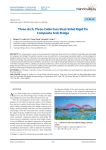
Three-Arch, Three-Cable Face Steel-Sided Rigid Tie Composite Arch Bridge
Scientific article
This essay proposes a new structural system for a large span three-arch, three-cable face steel edge main beamrigid tie composite arch bridge. The authors invented a new structural form of a steel edge main girder rigid tie, and developed and designed a key arch-bar three-dimensional six-way space node structure. The analysis of results show that: compared with the traditional arch bridge, the large span three-arch three-cable face steel-sided main beam rigid ties composite arch bridgeis beautiful in shape, hasareasonable structure and efficient construction. It is a high-strength, high-performance composite structural system, with better strength, stiffness, stability and dynamic performance, which overcomes the large span ultra-wide bridge deck arch bridge horizontal thrust, poor transverse stability, and the key technical problems of acable joint control. The proposed structural form has a wide range of engineering application prospects.
Free
Trends in the development of industrial robotic manipulators
Scientific article
Introduction. Industrial robotic manipulators are becoming an integral part of modern enterprises due to their versatility and ability to perform complex operations with high precision and speed, including in extreme conditions. Effective implementation and operation of robotic manipulators requires an understanding of their design features, control methods, and manufacturing technologies. Main part. This review presents a classification of robotic manipulators based on their design features, number of degrees of freedom, and drive types. Their application areas and market trends are analyzed. This review points to the steady growth of the industrial robotic manipulator market, driven by the transformation of production processes in line with the concept of Industry 4.0. This article examines the structural components of robotic manipulators: the mechanical part, the drive, and the control system. It also presents an overview of modern materials used in the production of manipulators. A method for enhancing the performance properties of structural components through the use of materials with a nanocrystalline structure is proposed. Current development trends in industrial robotics are identified. It is noted that the integration of machine vision and artificial intelligence into manipulator control systems is becoming a key trend in robotics. Such solutions enable rapid response to changing operating conditions and the prevention of potential accidents. Conclusion. Industrial robotic manipulators continue to evolve, opening up new opportunities for automation and increased efficiency in production processes. Their further improvement requires an interdisciplinary approach combining engineering, software, and technological solutions. The results of this review can be used for selecting, designing, and implementing industrial robotic manipulators in enterprises, as well as for further scientific research in the field of robotics.
Free
