
Economic and Social Changes: Facts, Trends, Forecast @volnc-esc-en
Journal articles - Economic and Social Changes: Facts, Trends, Forecast
All articles: 1817

Lifelong education in the context of innovation development of Russia and Belarus
Scientific article
The article presents the results of indicators analysis characterizing lifelong education in the context of transition to innovation-based development in Russia and Belarus. Problems of developing lifelong education and main directions of integrated educational space formation in both countries are defined.
Free

Lifelong learning as a condition for human capital formation
Scientific article
The article gives the grounds for lifelong learning as one of the conditions for human capital formation. The parameters that can be a base for evaluating the involvement of the population in the educational process are defined. Professional training of population was studied at the regional level on the basis of opinion polls. The results of the analysis allowed the authors to reveal the conditions that promote and hinder the development of lifelong learning system in the region.
Free
Lifelong learning in Russia as a mechanism for the reproduction of human potential: gender aspect
Scientific article
The article presents a study of the peculiarities of the involvement of Russian men and women in lifelong learning. The analysis of both Russian and foreign studies allowed putting forward the hypothesis that women and men may have different approaches to the construction of a lifelong learning educational path. The purpose of this study is to assess the parameters of women's and men's involvement in lifelong learning, including the goals and sources of funding, in order to identify similarities and gender asymmetry of lifelong learning path in Russia. The data of the sample survey of population involvement in lifelong learning, conducted by Rosstat in 2020, show that women and men's age profiles are similar, but their levels of involvement in different types of lifelong learning are not the same: men participate more actively in non-formal education, and women - in self-education. The current segregation of additional studies for qualification and field generally reflects the existing sectoral and occupational segregation in employment. At the same time, both women and men rarely associate their additional training with the expanded career opportunities, which may indicate the absence of a full-fledged system of vertical professional mobility based on the human potential growth. Our calculations show that employers more often invite men than women to take additional education and, accordingly, women more often than men pay for it themselves. Women with young children experience particular difficulties in participating in non-formal education and more often than others have to pay for themselves. This, in our view, contributes to the formation of gender inequality of opportunities for participation in lifelong learning, which makes it important to consider the gender factor in state programs of lifelong learning development in order to maximize its contribution to the human potential reproduction.
Free
Scientific article
Social partnership between authorities and business is a strategic factor of a territory’s socio-economic development and increase of the level of competitiveness among local tourist products and services. The purpose of the study is to identify the key limitations in the formation of social partnership between government and business in the context of solving the issues of developing the tourist attractiveness of municipalities of the Russian Federation. The authors used general scientific research methods (generalization, systematization, etc.) and analytical procedures based on comparative and system analysis methods. The key method was a questionnaire survey of experts - heads of municipalities (N = 306). The study was conducted in 2019. As a result of the survey, we identified the key problems of implementing social partnership projects in the tourism sector that do not allow local authorities to form sustainable interaction strategies with business: lack of interest among business, unfavorable investment climate, lack of efficient support for projects in mass media, etc. The authors justified the expediency of using municipal property on the principles of the cooperation economy as a tool for the development of social partnership in the tourism area. By summarizing successful practices of business participation in the development of municipal tourism and analyzing the survey results, we developed the areas for improving activities of local authorities to create conditions for the formation of tourist attractiveness based on social partnership (creation of museum and tourist clusters, branding of the territory, active informational support and popularization of tourist destinations in mass media, organization of project offices for tourism development, etc.). The authors conclude that the institutional environment for the development of social partnership in the tourism area is currently at the formation stage. It requires further study.
Free
Linen textiles - a reserve of economic growth
Scientific article
The paper deals with the possibility to set up production of linen textiles, one of the main products in the domestic light industry. It is proved that to solve this problem it is necessary to strengthen the government support of the linen complex not only at the stage of flax growing but at the following stages of industrial processing - up to turnout of linen products. The author gives a detailed description of a prospective pilot project “Development of the linen complex in Vologda oblast” and its effectiveness.
Free
Localization of foreign production as a tool to develop the export base of the Russian Federation
Scientific article
The relevance of our paper lies in the fact that in the conditions of the “new normality” of the world economy and amid international competition and protectionist measures, developed partner countries of Russia replace imports with localization of production. The main idea and goal of the paper is to substantiate the essence of the strategy of localization of foreign production for various stages of geo-economic development and the implications for the national economy. Its scientific novelty consists in the fact that it develops theoretical provisions that identify motives for the use of the strategy of foreign production localization by host economies at various stages of geo-economic development; the paper also classifies and assesses possible effects that a country obtains in the process of localization (on the example of Russia). We use the following research methods: analysis of localization experience of different groups of countries; synthesis of the experience of localization of foreign production in Russia in terms of using the institutional framework to promote localization and systematization of localization effects based on the analysis of the opinions of its participants and content analysis of press releases about their activities (companies included in the rating of major companies operating in Russia, and the list of special investment contracts); statistical analysis of the relative scale and some effects of localization; and analysis of the regulatory framework. The analysis has revealed that in the context of global challenges for foreign companies the localization of production in Russia, involving exports, becomes a way to preserve their positions in the Russian market. It provides the Russian economy with a number of positive effects, both quantitative (growth of investments, production and export volumes, tax revenues, and the number of jobs) and qualitative (inflow of technologies and specialists; import substitution, contribution to the revival of manufacturing; diversification of production and exports; training of local specialists, development of local production of components; improving the competitiveness of products produced in Russia and the image of Russian territories and participating companies). The results allow us to move toward the formation of a comprehensive vision in assessing the impact of the institutional factor on the foreign economic activity of territories.
Free
Long-term dynamics of the impact of gravitational factors on foreign trade of the Russian Far East
Scientific article
The aim of the research is to assess the dynamics of the impact of gravitational factors on foreign trade of the Russian Far East; the factors include physical distance, size of economies participating in trade, and the presence of a land border. The data array generated for the Far East in the “new” territorial boundaries for 2000-2021 indicated the focus of foreign trade of the Russian macroregion on the neighboring and large economies of Northeast Asia with a gradual dominance of China, as well as a decrease in the share of the southern Far East regions in trade turnover with border countries. Based on the technique of solving the “distance puzzle”, estimates of gravity dependence indicate an increase in the positive impact of the size of economies on the foreign trade of the Far East by 9.1% by 2021 compared with 2000 and a decrease in the negative impact of physical distance by 4.3%, respectively. According to the estimates obtained, we reveal the long-term dynamics of the Far East economy “gravitating” toward the foreign rather than domestic market. The positive impact of the presence of a land border on the foreign trade of the Far East regions was determined only in the 2000s. It contributed to an increase in their trade turnover by 209% in 2000 and by 86% in 2009. The leveling of the positive impact of the land border on the foreign trade of the Far East border regions in 2010-2021 was revealed due to the following reasons: mass exports to China from regions that do not have a land border with China; orientation of border regions toward the market of the rest of the Russian regions; decrease in the intermediary role of border regions between China and other Russian regions; small scale, volatility and specificity of trade with Mongolia and the DPRK; negative impact of quarantine measures related to the pandemic. It is assumed that in the context of current restrictions in relation to Russia, an important aspect of the development of the Far East economy should include diversification of trade interactions between the regions of the Far East and China, including through promoting cross-border cooperation.
Free
Scientific article
The article presents the results of identification of groups with low level and quality of life among Russian economically active population. Its relevance is determined by the clarification of national goals and targets for Russia’s development until 2030, as well as the reduction of population’s level and quality of life considering socio-economic consequences associated with measures to counter the spread of COVID-19. The results of the research complement other publications devoted to the study of multidimensional poverty and the social structure of society, offering criteria and social standards for identifying the lower groups by the level and quality of life among economically active population. Social standards for assessing the employment situation, education, material and property provision of households (monetary income, savings, and real estate), as well as social standards taking into account self-assessments of the level and quality of life, are overviewed. When identifying the employment situation, it is proposed to identify key and additional features of precarious employment with the identification of the most vulnerable groups among the employed. Based on the analysis of RLMS data, we obtained estimates of the scale of groups with low level and quality of life in Russia for 2018, which include more than 40% of economically active population. Among them, precariously employed people are the most widely represented, while a significant part of them is characterized by a concentration of signs of precarious employment. The structure of groups with a low level and quality of life is determined, and the core, extended core, and periphery are identified in their composition. The proposed methodology makes it possible to develop targeted social policy measures taking into account typical problems in the area of employment, material and property provision, etc. Further research may be linked to development of a methodology for multi-criteria identification of groups that are characterized by a more prosperous situation in terms of the level and quality of life, including the study of the prevalence of precarious employment among them.
Free

Macrosocial determinants and public health risks in Russia's regions
Scientific article
The article presents the results of the comprehensive analysis of the macro-economic factors that determine the medical and demographic situation in Russia, using the methods of mathematical modeling. The authors have constructed regression models to determine the proportional contribution of macro-social determinants to a negative deviation of population health indicators. The authors have carried out the cluster analysis and highlighted six types of territories with similar socio-economic and demographic situation. They have also calculated additional cases of general and infant mortality determined by macro-economic factors for each type of territories. In addition, the authors have assessed health risks associated with the effect of social factors at the macro-level.
Free
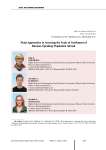
Main approaches to assessing the scale of settlement of Russian-speaking population abroad
Scientific article
Russian diaspora is one of the largest in the world and, according to various sources, includes from 10 to 40 million expatriates. It has been forming since the 18th-19th century during periods of unrest, wars and political change. Natural decline of Russian population, reduction in the migration growth of the population of Russia, and changes in ethnic composition determine the need and relevance of assessing the scale of the country’s repatriation potential. The aim of the work is to analyze existing data sources and approaches to estimating the number of Russian-speaking population and to identify the countries in which it is concentrated, for subsequent assessment of Russia’s repatriation potential. The article presents main approaches to identifying Russian expatriates, estimates the number and describes the geographical distribution of Russian-speaking communities abroad. The interpretations of such widely used concepts as “emigrants”, “diaspora”, “compatriots” and “Russian-speaking communities” are considered in detail and comprehensively, as well as the specifics of their definition and statistical accounting. We use data from the United Nations, national statistical services of various countries, and expert assessments. The data presented emphasize the importance of Russian-speaking communities in the context of globalization and international migration. The article provides statistics on international migration flows from Russia, including an analysis by country of residence and the dynamics of the number of emigrants since 1990. We discuss differences in migration statistics presented in Russian and foreign sources, methods of determining the basis (by place of birth, by ethnic origin), as well as new forms of emigration, including labor emigration and episodic emigration. The analysis of the territorial distribution of Russian-speaking communities shows their geographical diversity with significant presence in Russia’s neighboring countries (Ukraine, Kazakhstan, Uzbekistan) and in other regions, including North America (USA, Canada), Europe (Germany, France, Baltic countries), and the Middle East (Israel, Turkiye, UAE). The findings of our research can be useful in the development of state migration policy and assessment of geopolitical implications of migration processes, including the repatriation potential of the Russian Federation.
Free
Scientific article
Agricultural production in the rural periphery of the North requires modernization because it is necessary to overcome the backwardness of its technical and technological level, to improve the provision of the population with local food products, to create competitive advantages in the local and regional markets, to use natural and human capital rationally, to raise the standard of living and quality of life of agricultural workers, to retain young people in rural areas, to reduce significant differentiation in socio-economic development of remote and suburban areas. The period of market reforms was marked by the destruction of the material-technical base of agriculture, the sharp reduction in cultivated agricultural land, number of animals, number of workers, the deterioration of their professional level and quality of life, the decline in production of all kinds of agricultural products. In the period of market reforms the facilities and infrastructure basis of agriculture was destroyed, the volume of cultivated land reduced greatly, as well as the population of livestock, and the number of employees; their professional level and quality of life deteriorated, the production of all kinds of agricultural products reduced...
Free
Scientific article
Analysis of the List of Orders of the Russian Federation President Vladimir Putin has shown that many priority challenges of the fishing industry development, including promotion of fish production with a high degree of processing and its exports have not been solved. Analysis of exports of cod, haddock and saithe from Russia (Murmansk Oblast) and Norway proves that there is a wider range of products from Norway with high added value. The unit cost of the same products from Norway is also significantly higher. The consequence of these factors is the low unit cost of Russian exports, compared to Norwegian. For 2009-2013 the average unit cost of cod is lower by 2.66 US dollars (47.9%), of haddock - by 0.23 US dollars (10.6%). The article estimates foreign currency revenues, which were not fully received due to the reasons mentioned above. The author points out key directions of increase of economic efficiency of Russian exports of cod, haddock and saithe: 1. Change in the access of economic agents to marketable resources by stimulating the obtainment of larger quotas of biological resources at the expense of profit ratio...
Free
Scientific article
Modernization caused deep and extensive socio-cultural changes in the Russian society. According to the research conducted by the Centre for the Study of Social and Cultural Change of the Institute of Philosophy of the Russian Academy of Sciences, modernization processes in Russia are different on the national and regional levels. The republic studies1 show that indexes and phase values of modernization in the Republic of Bashkortostan are lower than in Russia as a whole. Like Russia, the Republic is now in the phase of mature primary modernization. With regard to secondary modernization2, Russia has entered the phase of high medium development and Bashkortostan - a phase of medium medium development. The processes of integrated modernization in Russia are already at the medium medium level, in the Republic - at the low medium level. The secondary modernization leads to the formation of the society that is based on knowledge, and on information and communication systems...
Free
Major city development forecast: designing the innovative future
Scientific article
The article describes the results of application of the authors' approach to forecasting the development of the city (in the case of one of the largest Russian cities - Ekaterinburg). The main results of the development of multi-variant long-term forecast of Ekaterinburg socio-economic development are presented: the provisions of the approach used to create such documents are set out, a brief description of the forecasting methodology is given, the key aspects of city life in the context of the proposed development scenarios are forecasted, the main risks of long-term development of the city are described. The study is based on the use of the whole set of forecasting methods such as mathematical modeling, balance and cohort-component methods, extrapolation methods and expert evaluation method. The article describes the situation in Ekaterinburg regarding other cities and evaluates key development prospects of a municipal unit. It is recommended to use the approach based on the given scenario “junctions” (each of which gives two alternative scenarios); this helped identify eight options for the city transformation...
Free
Management of the implementation of strategic documents of territorial development
Scientific article
The article deals with the application of stakeholder management concept in the territorial subsystems functioning and development management on the subregional level in order to ensure the balance of interests between the major territorial subjects. The notion of a subregion and its stakeholders is specified, their main groups are defined. The article describes the organizational-role management mechanism of strategic documents implementation which enables interfunctional and informational interaction between the main stakeholders of a subregion and determines their project roles and functions.
Free
Scientific article
The article studies the theoretical and practical aspects of the management of the region’s economy on the basis of interaction between the authorities and business structures. The authors prove that partnership is an optimal form of such interaction under the conditions of chronic budget deficit. Partnership facilitates the achievement of strategic goals of the territory’s development and structural adjustment of domestic economy; it also enhances the interest of the parties in achieving successful results of cooperation, and helps attract innovation technology and significant extra-budgetary investments in the economy. In addition, as world experience shows, public-private partnership is an effective tool to remove infrastructure constraints to economic growth, to improve the availability and quality of public services. The article shows that at present the development of partnership between the government and business is hindered by a number of organizational, legal and financial-economic problems and barriers. The authors identify priority directions for regional public policy and propose several measures to use the available potential of cooperation for dealing with territorial development issues.
Free
Management of vertically integrated systems formation and development in the Russian economy
Scientific article
The article reviews the essence, nature, features and basic approaches to the interpretation of vertical integration. It proves that one of the key conditions for modernizing and neo-industrializing domestic economy and transforming Russia into an industrialized country is overcoming technological fragmentation of business entities, as was the case in the Soviet Union and is now observed in the developed countries. In this situation, it is vertical integration which can ensure the diversification and restructuring of the economy, the linkage between the extractive and processing industries. Based on the results of analyzing the activities of major multinational corporations (Royal Dutch Shell, Sinopec Corp., Valio Ltd. etc.) it has been proved that these integrated systems supply competitive products with high degrees of processing and serve as growth drivers in developed economies. To justify this, the author calculated the companies' value added multiplier. Currently, vertically integrated systems such as PhosAgro PJSC, LUKOIL PJSC, Miratorg agro-industrial holding company, KamAZ OJSC, Arkhangelsk pulp and paper mill PJSC operate in various economic sectors...
Free
Management tools for the region's socio-economic development
Scientific article
The purpose of the research is to assess the focusing of existing management tools on socio-economic development (SED) of the Russian Federation constituent entity. The practical rationale of the research is caused by general problems of regional development and the need to develop methodological approaches to their solution. The author used qualitative methods of cross-sectoral analysis, document analysis, and quantitative methods (those of principal components, variance calculation, correlations, regressions, and index construction). The novelty of the research is related to comparing management tools at the federal and regional levels, as well as to designing a number of administrative staff based on these tools. As a result of the study, the author proposes a method of management tools evaluation (SED strategy, priority projects, state programs), approves the methods of SED indices calculation and public services development, as well as the methods of rationing the number of managerial staff in line with SED priorities. The main conclusion is that the assessment of stated goals’ achievement is complicated by a low level of program documents’ compliance with official statistics indicators. Since the sectoral distribution of a number of state apparatus employees is not optimal, the author proposes its adjustment, focusing management personnel on achieving region’s development priorities. The results obtained are correlated with the labor market trends. The applied forecasting of the employees number is limited by the correctness level of SED and labor productivity target indicators. When developing management tools, the regions are recommended to take into account statistical indicators that are relatively objective and to focus the performers on achieving final socially significant results. The proposed method has the potential to be replicated in the constituent entities of the Russian Federation addressing similar problems in the field of SED.
Free
Managing agglomeration development in the face of multiple competing goals: challenges and solutions
Scientific article
The emergence of agglomerations as new objects in the public administration system makes it necessary to create and define a set of indicators that will assess their economic growth and development. This management problem justifies the relevance of the study, the aim of which is to assess the information and analytical sufficiency and quality of indicators recommended for use in the elaboration of longterm plans for the socio-economic development of large and largest agglomerations and determined by documents of strategic planning at the federal level, using the example of the Saint Petersburg agglomeration. The methodological basis of the research includes the publications of Russian and foreign scientists and experts on the problem of spatial development and management of urban agglomerations; the current legal framework regulating certain aspects of the national spatial development policy; official statistics data. Based on the results obtained during the study, the following conclusions are drawn: 1) indicators for assessing the economic growth of agglomerations, which are unambiguously defined by federal documents of strategic spatial planning, can be accepted as minimally sufficient and exclusively for the implementation of an extremely concise version of express analysis; 2) the process of institutionalization of urban agglomerations management has not been completed; at the current stage, we are dealing with a “soft” form of both requirements for determining the composition and boundaries of agglomerations and rules for the formation of long-term agglomerations development programs; 3) it is necessary to develop existing experience in creating strategic plans for the development of urban agglomerations. The new methodology should combine modern spatial development concepts that help to find a compromise between state control and the potential of agglomeration management; to overcome the problem of fragmentation of management and the blurring of the institutional structure of agglomeration management; to use the tools of quality economics (metrology, standardization and quality management) in the development of strategies and long-term plans for the development of urban agglomerations.
Free
