
Economic and Social Changes: Facts, Trends, Forecast @volnc-esc-en
Journal articles - Economic and Social Changes: Facts, Trends, Forecast
All articles: 1817
Welfare of the population as an indicator of modernization potential of the territory
Scientific article
The article presents the results of a research into population's welfare as the basis of modernization processes. The authors carried out a comprehensive analysis of statistical and sociological data and highlighted the specifics of welfare in Russia and in the Vologda Oblast in terms of formation and use of money income; they also revealed the proportion of the population who are objectively ready to economic modernization. The authors revealed the emerging positive trends that show increasing involvement of the population in the savings-and-credit models. However, the scale of changes is not so great, and it covers only a small part of highly well-off population. In order to assess regional specifics, the authors grouped the RF subjects according to the level of income inequality of the population and other parameters of welfare that have an impact on the modernization potential of a territory. Judging by the indicators of the selected four groups of regions, the largest socio-economic potential of modernization is observed in the subjects with high income inequality...
Free
Scientific article
This article is the third in a series of editorial publications released in April – August 2025 and dedicated to analyzing expert opinions on the necessity and feasibility of creating an official state ideology in the country. The relevance of this issue is driven, on the one hand, by national security concerns, which have sharply intensified since the start of the special military operation in Ukraine, and on the other hand, by the goals of national development related to the need to define a vision for Russia's future in the context of the transition from a unipolar to a multipolar world order. A synthesis of expert assessments, facts, statistical data, and monitoring sociological studies, which reflect the state of society and people's subjective opinions about the situation in the country, leads to the conclusion that one of Russia's key internal problems is the unsatisfactory quality of its ruling elites. A significant portion of them are unprepared for change, continue to live by the principles of the country's departing era of “liberal fog”, and in every way, willingly or unwillingly, hinder Russia's transition to a new stage of historical development, thereby jeopardizing its present and future. In this sense, the ideology proposed by many experts, which would be “mandatory for those who aspire to join the cohort of leaders of the Russian state” (S.A. Karaganov), appears to the authors as a completely logical and necessary step on the part of the President and the ruling political party. As long as there is no clear answer to the question “What kind of state are we building?” at all levels of government, such an answer is also absent among the general public, and as a consequence, people's real lives often diverge from the public rhetoric of the authorities. The article focuses on the practical possibilities of implementing an ideology that could take on the character of a “philosophy of a common destiny” (Zh.T. Toshchenko) and form the basis of a new Social Contract, the need for which many experts have noted for our country. The authors' contribution consists of the systematization of expert opinions, statistical data, and public opinion polls covering Russia's historical development from the late 1990s (from the final years of Boris Yeltsin's presidency), as well as actual cases of corruption and high treason within the country's ruling elites (which primarily indicate that many of their representatives cannot be relied upon, as they are guided by personal interests that differ from the interests of the country, state, and society), and the administrative decisions made by the President, the Government, and the State Duma of the Russian Federation in the context of the pressing task of developing an ideology and forming a new Social Contract in Russia
Free
What capitalism does Russia need?: methodological guidelines of the “new industrialization”
Scientific article
Modernization of the Russian economy should be carried out taking into consideration global trends and contradictions of the country's socio-economic development. The first trend is predetermined by the transition to the sixth technological mode: the creation and development of bio-, genetic and nanotechnology, quantum computers and new composite materials. Countries that missed the stage of preparation for the beginning of a new Kondratieff wave (the growth potential is laid in the first 15-20 years of the beginning of the cycle), will at best enter the stage of catching-up development. The second trend is defined by global competition for human capital and consists in the outflow of talented Russian youth to the West. Russia should develop a concept for the preservation and enhancement of human capital, which will create natural barriers against the loss of intellectual capital. The undervalued “live labor” forms the basis of strategic contradictions of Russia's socio-economic development between the declared policy of innovative development of the economy and a weak demand for innovation on the part of private enterprises...
Free
What hinders the development of small businesses: the view of the Murmansk oblast entrepreneurs
Scientific article
In recent years there has been a slowdown in the growth rate of Russia's sector of small and medium entrepreneurship; this issue once again brings to the fore the search for new ways and mechanisms in the management of its subjects. A necessary condition for such a search consists in focusing on the problems that hinder the development of this sector and that can be revealed exclusively in the formation of valuable and accurate information - the collective views of its representatives. In this regard, the information base for the analysis was found in the results of several studies initiated by the all-Russian public organization “OPORA Rossii” (Moscow), its regional branch in Murmansk and the Northern Chamber of Commerce and Industry; the results were obtained in the course of the questionnaire survey, which was conducted among entrepreneurs with the purpose of revealing their assessment of the terms of doing business. The generalization of the research results and information obtained by the author in cooperation with representatives of small business and workers of the Prosecutor's Office has identified the main problems, their causes and consequences of their impact on the activity of the Murmansk Oblast business sector...
Free
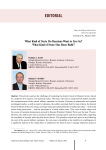
What kind of state do Russians want to live in? What kind of state has been built?
Scientific article
This article examines the challenge of translating the desired vision for Russia's future, shared by a majority of its citizens, into practical reality. The issue's relevance is analyzed both before and after the commencement of the special military operation in Ukraine. Drawing on nationwide and regional sociological studies, as well as expert evaluations, the authors conclude that for most citizens, the desired future for Russia is that of a strong, sovereign nation grounded primarily in traditional values – with social justice being paramount – and the principles of a social welfare state. This vision broadly aligns with the course of national development pursued by Russian President Vladimir Putin over the past 25 years. However, the authors also note a persistent skepticism among experts and the broader public regarding the feasibility of actually achieving this desired future. This problem existed both prior to and following the start of the special military operation. Its root cause is identified as the inability or unwillingness of a significant portion of the ruling elites to implement the head of state's strategic objectives aimed at strengthening national sovereignty. As a result, the future of Russia remains uncertain in the eyes of many of its citizens. Consequently, Russia's struggle for continued sovereign development is framed not only as a conflict with the Collective West but also as an internal battle against the nation's own protracted domestic issues. For the President, a key imperative thus becomes laying the groundwork to bring the system of state governance into alignment with the public's vision for the country's future. This entails, above all, concluding the special military operation on terms favorable to Russia and selecting a successor capable of continuing and reinforcing the quarter-century-long course of national development. The empirical foundation of the research is based on the authors' own sociological monitoring data, nationwide surveys, and assessments from a broad spectrum of experts. The authors' contribution lies in developing the theoretical and methodological framework for scholarly inquiry into defining the contours of Russia's future vision and identifying the obstacles to its practical implementation.
Free
Scientific article
In the article, we tried to express our opinion in the framework of aacontroversy that unfolded between the New Zealand researcher John Hattie and his opponents. The dispute concerns the validity of the arguments made by the scientist in his book Visible Learning (2009) on the size of external and internal effects that influence the performance of secondary schools. The subject of discussion in the article is not chosen randomly. Hattie's ideas are widely used in the educational policy of foreign countries (especially Australia), but will they be relevant in the Russian reality? A number of educational innovations borrowed from Western countries do not have unequivocal approval in Russian society (this applies to the final exam in the form of testing, the Bologna system of higher education etc.). In our study, we analyze Hattie's arguments and evaluate their scientific validity. For this purpose, we generalize arguments of the scientist and his opponents (for some reason the criticism by his opponents is not mentioned in the Russian-language literature). Hattie's book offers a scientific approach to the substantiation of indicators that affect school education performance to varying degrees. Among these parameters, a special role belongs to productive activities of teachers aimed at self-education and creating a positive climate in the classroom, whereas the contribution of the amount of professional competences of the teacher in lesson planning and content is clearly undervalued. Such thoughts, not fully accepted by the scientific community, became the basis for further controversy. Our article highlights methodological and cultural approaches to the criticism of “visible learning”. It is found that the arguments of Hattie's opponents relate to different aspects of his research, but are purely theoretical. We calculate the coefficients of variation and carry out a statistical analysis of the estimated model (which has not been done before). Having interpreted the data obtained, we find out the heterogeneity of the sizes of the effects in Hattie's model. On this basis, we make practical conclusions about the methodological and conceptual possibilities of using the New Zealand researcher's approach in the realities of Russian education. The article will be of interest to both educators and all those interested in social policy issues.
Free
Scientific article
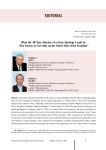
The paper analyzes the problem of the lack of a state ideology in Russia. The increasingly urgent need for state ideology is indicated by the regular appearance of “black swans” such as the attempted armed coup carried out by E. Prigozhin, head of the private military company Wagner Group (June 24, 2023), the arrest of Deputy Defense Minister T. Ivanov (April 23, 2024), the detention of ex-governor of the Kursk Region A. Smirnov (April 15 2025), etc. Such events in the country’s life pose a real threat to national security, especially in the context of the special military operation and the ongoing “acute” phase of the civilizational conflict between Russia and NATO countries. Their consequences are difficult to overestimate, since human lives and the threat to the existence of Russian statehood are behind them. Our view (based on expert opinions, facts, analysis of the legislative activities of government bodies, public opinion polls) proceeds from the fact that the reason for the appearance of such “black swans” has deep socio-cultural and moral grounds: corruption at all levels of government, inability and unwillingness of the ruling elites to meet the agenda of the future dictated by SMO goals; they are a consequence of the deformation of the “cultural code” of the Russian civilization, which occurred as a result of almost 35 years of influence of the Western culture of the “consumer society” on the consciousness of Russian society. This is especially true with regard to the country’s ruling elites - in relation to them, we should talk about the almost 70-year period (since the time of the Khrushchev Thaw) of the penetration and dominance of Western values, which are based on the achievement of personal material gain. The experience of the Republic of Belarus, where Directive 12 “On the implementation of the foundations of the ideology of the Belarusian State” was adopted on April 9, 2025, also indicates that in the current extremely difficult geopolitical conditions, the need for a state ideology has objectively matured. At the same time, despite the active policy of the state to combat corrupt officials in the management system, to create educational conditions for the prevention of this problem in the long term, for future generations of Russians, it has not yet been possible to solve it. Many experts point out that this cannot be done without an appropriate “ideology of rejection of corruption”, both among civil servants and in society as a whole. Our contribution consists in analyzing the socio-cultural and historical foundations of the current state of the problem of corruption in power and, more broadly, considering it as one of the many manifestations of the value orientations of a significant part of the ruling elites formed under the dominance of the Western ideology of the “consumer society”
Free
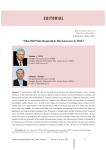
What will Putin bequeath to his successor in 2024?
Scientific article
In accordance with the title of the journal Economic and Social Changes: Facts, Trends, Forecast, in the editorial article we analyze objective and real trends and facts in Russia’s domestic and foreign political and socio-economic life. Trying to distance ourselves from a subjective viewpoint, we rely in our analysis on the assessments given by experts from different fields of knowledge (economists, sociologists, public figures, etc.), as well as on a long-term database of sociological data, formed on the results of our own observations for the period since 1996 up to the present time. For more than 20 years now, every two months, we analyze the data of a sociological monitoring, which shows that there are significant and largely positive changes in the President’s foreign policy, but the dynamics of the domestic socio-economic situation in Russia are stagnant: during the period from 2000 to the present time, the key issues of concern to people have not changed, and the relevance of many of them has even increased...
Free
What will be the emerging new world order?
Scientific article
A new “world order”, a notion that originated with the idea of an institutionalization of international relations that developed at the beginning of the 17th century, is emerging. The old “world order”, inherited from the end of the Second World War and essentially centered on Western countries and the United States, had become dysfunctional since the beginning of the 1990s. It had gradually fragmented since the international financial crisis of 2008-2010. We can follow the trace of this fragmentation in the study of international trade, in the failures suffered by the United States in its multiple military interventions, but also in the emergence or re-emergence of new economic powers. The two major shocks constituted by the COVID-19 pandemic and the international crisis that has unfolded since the start of the conflict in Ukraine have put an end to it. This new world order will likely unfold based on the probable development of the BRICS. It could give rise to more balanced international relations. This could allow a new social contract to emerge in many countries.
Free
Where does the soullessness of the ruling elites lead?
Scientific article
On April 21, 2021, President V.V. Putin once again addressed the Federal Assembly of the Russian Federation and outlined the country's key upcoming development areas. Presidential Address was mostly social and aimed at solving domestic problems: comprehensive support for population and business in the “post-covid” period, restoration of the economy and social sphere's normal functioning, as well as the ability of the Government to maintain health of citizens and improve the demographic situation. The President touched upon many important issues that were demanded by a wide range of Russian society, gave instructions to the Government of the Russian Federation and regional authorities, and announced specific measures to support people in difficult life situations. Meanwhile, the issues of Russia's foreign policy and its positioning within the framework of international relations remained basically outside this Presidential Address. The President only hinted that “those behind provocations that threaten the core interests of our security will regret what they have done in a way they have not regretted anything for a long time”, “we ourselves will determine in each specific case where the red line will be drawn with regard to Russia”. However, as many experts note, after the victory of J. Biden in the US presidential election, there was the beginning of the culmination of the struggle between global forces for the return of dominant positions in the world that they have gradually lost over the past decades, for a unipolar or multipolar form of the future world order, prospects for the transition of world civilization from modernism to postmodernism. In these conditions, the issues related to Russia's civilizational self-determination and awareness of a kind of the state we are building, reasons that prevent us from effectively implementing the welfare state principles in the country, many of which were embodied in the amendments to the Constitution of the Russian Federation in July 2020, become more relevant than ever.
Free
Who in Russia embodies the struggle for the preservation of mankind?
Scientific article
The paper provides an analysis of the main ideas of the article by S.Yu Glazyev “Russia is fighting for the preservation of mankind” (newspaper Zavtra, April 6, 2022), in which an important, actually central place is occupied by reflections on the role and significance of social consciousness and state ideology. However, the article pays little attention to the questions of WHO embodies the struggle, WHO the bearer of social consciousness is, and WHOSE INTERESTS should be expressed by the state ideology in modern Russia. In accordance with this goal, an analysis of the role of social consciousness in the historical destinies of peoples, the place and role of state ideology is carried out. The characteristics of the main classes and communities (strata) in modern Russian society and their worldview attitudes and orientations are given. Particular attention is paid to the precariat, which, in the author’s opinion, determines the face of modern Russian society. The conclusion is substantiated that worldview, ideological positions are not only a part of public life, but a certain penetrating component that concerns not only culture, but also all spheres of economic, social and political activity.
Free
Scientific article
The following article by the Academician of RAS Sergey Glazyev was published in the newspaper “Zavtra” (№ 9, 2012) a few days before the presidential elections in Russia. In the opinion of the Editorial Board, the main advantage of the article consists in the fact that it outlines the key conditions that make it possible to realize the priority development policy in Russia. The article is a reissue of a newspaper text; it has been reprinted with the consent of the author.
Free
Why is the self-sufficiency of urban districts budgets not growing
Scientific article
Urban districts occupy a special place in the system of municipalities due to their potential and role in the implementation of governmental economic policy. Possessing the most developed infrastructure, facilities and a good financial basis, large and medium-sized cities accumulate the major part of budget revenues. However, the predominant part of their revenues that amounts, according to various estimates, to 70-85% [1, 6, 15] goes to superior budgets. As a consequence of the reforms of intergovernmental fiscal relations and local government that were held in 2000-2009, cities were left without stable, legislated fiscal revenue sources that were sufficient to fulfill their obligations to the population. Currently, city government can fully dispose of single tax on imputed income, individual property tax and land tax. Significant imbalances in the distribution of budget revenues make cities dependent on the financial assistance of higher levels of public authority and lead to an accumulation of problems...
Free
Work and well-being: An empirical analysis using the regional database
Scientific article
Drawing on the concept of work-related well-being, this article tests a methodological toolkit designed to comprehensively assess an individual's standing in the world of work. The authors' approach to measuring work-related well-being relies on data from the Vologda Region labor potential quality monitoring survey. The uniqueness of the proposed study is due to the capabilities of its information base, which helps to construct a three-tier system of work-related well-being indicators. Alongside objective, factual indicators, this system incorporates two sets of subjective assessments that capture different dimensions of subjective well-being. The main findings of the study are as follows: 1) across most key dimensions, the level of work-related well-being is fairly high, largely because subjective indicators tend to outpace the factual ones; 2) assessments of work-related well-being in virtually all of its dimensions are directly correlated with a family's level of material well-being; 3) the most acute problem areas in the profile of work-related well-being are found in its non-monetary aspects, primarily, professional development; 4) the crucial factors that positively influence the level of well-being are the level of professional education – provided it matches the requirements of the workplace – and the stability of employment; 5) the level of work-related well-being is only weakly correlated with age but is closely associated with the qualitative characteristics of the worker's labor potential. The practical significance of the study lies in its potential to produce well-grounded management decisions at both the corporate and the regional level, aimed at creating higher-quality and more decent employment that helps improve a person's standing in the world of work.
Free
Working Out Social Guidelines for the Industry Development of Metallurgy
Scientific article
At present, traditional methods used in forecasting the development of economic sectors no longer provide acceptable results; thus it becomes relevant to work out new methods and approaches to industry forecasting. The paper proposes an approach to forecasting the development of industries under the influence of processes taking place in the social sphere. We consider major contradictions caused by the influence of metallurgical production on the formation of socio-economic conditions in Russia. We show that social factors played a significant role in making decisions on the establishment of metallurgical enterprises and the management of the metal market. We highlight major social functions performed by metallurgy. The study of the commodity market of metal products is supplemented by an analysis of changes in the positions of metallurgical enterprises in the capital market and the labor market. We note that social expenditures help metallurgical companies to gain public recognition of their performance results and change the level of their capitalization. This made it possible to develop a methodological approach to assessing the prospects of industry development with the use of guidelines for Russia’s social development. We propose to use the following economic criterion: assessment of accumulation of funds invested in the development of production, preservation and growth of capital. We estimate social impact generated by development of metallurgical production under various scenarios of managing the decision-making system in Russia. We compare a business-oriented scenario, a scenario involving state paternalism, and a scenario of radical social transformations. We substantiate the conclusion about the advantages that the social variant of development of the state provides for creating a promising image of national metallurgy. This scenario will ensure high dynamics of metal production, growth of business capitalization and quality of life in Russia.
Free
Working conditions as a factor of increasing its productivity in Russia's regions
Scientific article
Labor productivity growth depends on various factors: labor potential quality and its use efficiency, improving management and working conditions at enterprises, updating material and technical base of enterprises and introduction of modern technologies in real economic sector, etc. In the study, we considered the impact on labor productivity of such factors as the loss of working time from industrial injuries. It is closely linked to the health-saving problem of working population, as in Russia, according to the statistics there is a super-mortality of working-age population, caused to a certain extent by unfavorable working conditions. The purpose of the study is to analyze the impact of working conditions on its productivity and to assess the potential GRP losses from workers' disability injured at work. The research used economic and statistical methods, grouping methods, and comparison methods. The information base for the analysis was the data of the Federal State Statistics Service and sociological monitoring on the assessment of population's qualitative characteristics carried out by the FSBIS VolRC RAS in the Vologda Oblast (no. = 1500). The article analyzes the dynamics of labor productivity in the regions of the Northwestern Federal District in 2005-2018, determines the share of the NWFD regions in the district's total labor productivity, evaluates health impact of employed population on labor productivity both on the basis of sociological data, and by grouping the regions by labor productivity and assessing the level of constant nervous tension, stress, the impact of production factors and other inconveniences of workplaces. The paper calculates the losses of gross regional product from disability time of injured at work. The authors prove that GRP loses from 17 to 26% in the presence of even a small number of disability days of injured at work. The practical significance of the research is to confirm the hypothesis about the influence of working conditions (the basic component of the integral indicator of the quality of working life) on its productivity which gives grounds for developing management decisions to pay special attention to the quality of workplaces.
Free
