
Journal articles - Arctic and North
All articles: 1008
Scientific article
The problems of historical and cultural monuments are connected with solving ecological problems, combination of the national and international, class and common to all mankind in modern culture. Exposure of unique features of Russian inhabitants and other peoples, culture gives opportunity to use the achievements of the past in modern culture. The special value of historical and cultural monuments of the Extreme North is connected with the little number of written sources on ancient history of this region, lack of writing traditions of Northern peoples, small number of sources of early period of Russian Arstic navigation, lack of Log-books and diaries, a lot of unsettled questions of tragic death of members of dirferent polar expeditions.
Free
Algorithm for Overcoming the Monoprofile of the Arctic City: The Case of Norilsk
Scientific article
The research question of the article — identifying ways to overcome the single-industry nature of the city of Norilsk — have been concretized by solving the following tasks: to substantiate the “specificness” of Norilsk among the largest Arctic cities of Russia; to determine the role of the agglomeration effect in strengthening the support of Norilsk for the projects of Taimyr and the entire Eastern Arctic; to determine the potential of Norilsk Nickel’s service structures and urban entrepreneurship for new mining and infrastructure projects in the Eastern Arctic; propose mechanisms for implementing the Norilsk Support Strategy. The methodological base of the study was formed by the concepts of technological modes, development blocking of old-industrial / mono-industrial territories and supportive settlements. Main results: Norilsk is the most specific among the largest Arctic cities of Russia according to the composite index, made up of nine key demographic, economic, socio-cultural indicators. Non-standard approaches are needed to diversify its economy. The agglomeration effect can constructively contribute to Norilsk’s transformation from a single-industry city into a base city for the development of the Eastern Arctic. The most important areas of structural transformation of Norilsk’s economy include strengthening the practice-orientation and geographical expansion of consumers of services of the local scientific and educational complex; establishment of an entrepreneurial layer in new industries and types of production activities; and entry of the city's entrepreneurship together with the plant's service structures into the market of projects and settlements in the Eastern Arctic. The main mechanisms for the implementation of the Norilsk Strategy are: “mirror” actions in the eastern Arctic of the city and the Norilsk Nickel combine; transformation of Norilsk into a center for the provision of security services for the territories of the eastern Arctic; a center of formation of the Arctic cruise tourism from Dudinka to Anadyr; a center for accumulating best practices of renovation of the Arctic housing and communal services for their replication in the cities and towns of the Eastern Arctic. Recognition of Norilsk’s success in becoming a base city in the Eastern Arctic will be an increase in its administrative status: transformation into a city of federal significance.
Free
Scientific article
The purpose of the article is to present to a wide range of readers the All-Russian scientific and educational project “Preserve the Nenets Language and Culture Together”, which is implemented at the Northern (Arctic) Federal University in cooperation with other institutions and organizations related to the study of the Nenets language and the preservation of Nenets culture. The problem that representatives of science, education, politics, economics, and social sphere are working to solve is to find effective mechanisms for preserving the languages and culture of the indigenous peoples of the Arctic region, which include the Nenets as the target group of the project. The paper provides a scientific rationale of the project, outlines the theory and practice of studying, describing, the possibilities of preserving the language and culture of the Nenets people. The authors describe the interdisciplinary activities and forms of work within the framework of the project being implemented since 2022 on the basis of current data of linguistics, pedagogy, cultural studies. Monitoring studies, academic activities, research projects, cultural and educational work, decisions and agreements reached are presented, aimed at transferring knowledge and achieving synergy in preserving the Nenets language and culture. The article substantiates the necessity of further implementation of the project, which allows coordinating the work of specialists of different organizations and structures, to build a language educational policy of interregional and regional levels in the Arctic territories of the Russian Federation, aimed at balanced preservation of the language and culture of the Nenets people.
Free
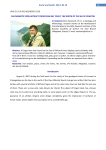
An enigmatic iron artifact from Oksa bay coast, the North of The Sea of Okhotsk
Scientific article
A forged iron item found on the Sea of Okhotsk shore displays some similarity with items representing different cultural traditions, but, however, it appears somewhat different from all of them. It can be a walking-stick, pick, graze or poker. Its ethnic origins, place and time of its manufacturing can be established, if providing similar artifacts are reported from other areas.
Free
An estimate of the ecological risc. Analitical review of Publications
Scientific article
Based on a review of contemporary publications in the article examines the role of modeling in risk assessment examines the concepts of environmental risk, the risk to human health, reveals problems and ecological risk assessment methodology. All of these issues are directly related to the situation in the Arctic.
Free
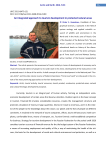
An integrated approach to tourism development in protected natural areas
Scientific article
The article presents the assessment of tourist activity in terms of development of economy and a result of increased interest of people to rest and travel in the Arctic. Development of the ecotourism in the protected areas is in focus of the article. A draft concept of tourism development in the National park “Russian Arctic” and the state nature reserve of federal importance “Franz Josef Land” are discussed in the context of the most promising approaches to the their development.
Free
Analysis of Forecasting Documents for the Socio-Economic Development of the Russian Arctic
Scientific article
The tasks of forecasting the development of Russian territories, in particular the territory of the Arctic, are the most problematic due to the urgent need of the economy and management for a reliable forecast, the uncertainty of the near future caused by the turbulence of geopolitics, and the ongoing impact of the COVID-19 pandemic on socio-economic processes, which are also not fully measurable. The purpose of the article is to present the initial grounds and forecast of the socio-economic development of the regions of the Russian Arctic with a lead time up to 2023. The methodological peculiarity of the research is to take into account geopolitical, national, regional, industrial factors and development trends on the basis of using: 1) the analysis results of real and perspective global trends recorded in statistical indicators, forecast documents of the IMF, WTO, Central Bank, Ministry of Economic Development of Russia; 2) generalizations, comparisons of official forecasts and development plans of the AZRF adopted at the federal, regional levels, as well as forecasts, plans of corporations operating in the AZRF; 3) analysis of real statistical data using the author's econometric models. Given the considerable amount of analytical information received, the aspects and factors that have a key influence on the prospects of socio-economic development of the Arctic are outlined and classified according to the following levels: global, national, regional. Forecasts are made for the regions entirely located in the Arctic zone — Yamalo-Nenets, Nenets and Chukotka Autonomous okrugs, the Murmansk Oblast with an anticipation period up to 2021-2023. The importance of scientific forecasting in modern conditions is emphasized, encouraging reflection, new hypotheses, discussions.
Free
Scientific article
The article examines foreign experience in implementing regional financial policy in relation to the Arctic territories. It assesses the experience of such sub-arctic countries as Canada, Finland, Denmark, Norway, Sweden, and the USA. The paper identifies two groups of financial instruments of territorial development: within the framework of general regional policy (instruments of fiscal capacity equalization, taxation instruments, instruments to increase investment attractiveness) and within the framework of special policy for the development of Arctic territories (program-targeted instruments, special development funds, direct allocation of funds for current expenses and development). It is concluded that the Arctic countries apply different approaches and tools to the development of the regions located in the Arctic zone, the choice of which is determined by the type of state structure, the degree of financial independence of the regions in the sphere of financial regulation, the level of development of the northernmost subjects compared to the rest of the country. In the conditions of Russia, it is possible to use the best foreign experience in the sphere of financial regulation of development of the regions located in the Arctic zone. In particular, it is possible to use the experience of applying program-targeted development tools, the formation of special development funds, which are based on revenues from the use of natural resources of the Arctic, as well as the experience of creating favourable conditions to attract investors for the implementation of economically attractive projects.
Free
Analysis of Regional Development Management Tools in the Nordic Countries
Scientific article
One of the main goals of Russian Federation state policy at the present stage is the formation of prerequisites for sustainable socio-economic development, accompanied by improvement of the quality of life of citizens through the elimination of existing interregional disparities. These circumstances determine the high relevance and scientific and practical significance of analyzing the world’s best practices in regional development. In order to carry out such an analysis, we selected countries with geographical, natural and climatic conditions similar to the regions of the North-West of the Russian Federation: Norway, Sweden, Finland, and Denmark. The fundamental documents and organizational mechanisms of sustainable development by international organizations of which the Russian Federation is a member (in particular, the United Nations) were also considered. The use of general scientific methods of cognition (deductive, comparative, synthesis, analysis, modeling of socio-economic processes) made it possible to ensure a high level of reliability of the results and conclusions obtained by the authors. The main instruments for implementing the state policy of regional development of the Nordic countries are established: consistent consolidation of municipalities in order to simplify administration; high level of social spending, especially in terms of human capital development (education, healthcare, social protection); high level of government spending on development of road and transport infrastructure in order to ensure the territorial coherence of the country; targeted government support for various sectors of the economy (taking into account the specifics of territorial localization) in the form of direct participation in corporate capital, provision of preferential tax regimes, administrative preferences; cluster approach to organizing regional development, implying the identification of the core of economic activity due to the optimal combination of available resources, creation of administrative, organizational and economic conditions for intensifying growth rates; stimulation of interregional (intercountry) integration economic processes. The results of the study can be used by the government bodies and constituent entities of the Russian Federation in forming the directions and activities of the state policy of socio-economic development.
Free
Scientific article
The article examines the issues of financing the development of the Russian Arctic territories and the participation of banking structures in this process. A set of strategic documents for the development of the Arctic zone of the Russian Federation is considered, the dynamics of approved amounts of funding for Arctic development programs are analyzed, and the structure of sources of financing for investment in fixed assets in regions whose territory belongs to the Arctic zone of the Russian Federation is studied. It is concluded that banks are not sufficiently involved in investment activities in most of the Arctic regions (except the Yamal-Nenets Autonomous district, where the active role of banking institutions is due to participation in the financing of large gas and oil production projects in the Northern part of the region), and in recent years, foreign banking structures decline investment activity. The article describes the prospects of participation of the largest Russian banking structures in implementing large-scale projects in the Arctic, such as VTB Bank, Sberbank of Russia, and Gazprombank. The analysis of the possibilities of concentration of banking capital, as well as the use of mechanisms of public-private partnership based on the creation of a single financial institution with state participation is performed. The most effective form of improving the efficiency of financial flows management in the framework of strategic development of the Arctic territories can be the creation of The Bank for reconstruction and development of the Arctic.
Free
Scientific article
According to the results of the building expertise of facilities that are constructed, operated and repaired in the Arctic zone of the North-West Russia the authors made a critical analysis of pricing and the estimated valuation. A number of shortcomings revealed and suggestions on improving the pricing were made. Implementation of the proposals could form an unbiased starting price of construction projects.
Free
Scientific article
The process of urbanization of the oil and gas production complex in the north of Western Siberia in the 1960s-1980s was marked by the active introduction of scientifically based approaches designed to minimize the negative effects of the Arctic and sub-Arctic climate on residents of new cities under construction. One of the serious problems in implementing project approaches to the formation of the urban environment in the Arctic was that they were only capable of predicting the specifics of the economic, social and environmental development of the new city in the relatively short term. The main aim of this article is to analyze the effectiveness of the urban planning theory developed by the LenZNIIEP team on the case of the city of Nadym, founded in the early 1970s. The study is based on the research work of LenZNIIEP. In order to obtain subjective assessments of the development and use of the urban environment of Nadym, a series of thematic interviews were conducted with experts and residents of the city. In addition, recent scientific literature on the topic of research has been analyzed. During the study, the features of design solutions and the evolution of the development of four urban planning subsystems of Nadym were considered. The task of urban planning physics was to minimize the discomfort caused to the city’s population by the harsh landscape and climatic conditions. An important result of the development of urban ecology was the successful greening of open urban spaces in the Arctic climate. The main task of urban planning psychology was to create color schemes for buildings that are comfortable for Arctic conditions. The tasks of urban planning sociology included the adaptation of the urban environment to the demographic and socio-economic characteristics of the young Arctic city. The case of Nadym demonstrates that effective implementation of all urban planning subsystems can mitigate the effects of the harsh Arctic climate on the city residents and improve quality of their life. At the same time, due to the paradigm change in urban development of the Russian Arctic, the development of an “adaptive” approach is becoming increasingly relevant, as it was designed to identify and implement individual strategies for organizing a comfortable urban environment, taking into account the characteristics of local natural and climatic conditions.
Free
Article
The anthropogenic changes of permafrost conditions in the key areas of the European North of Russia − village Koida (Mezenskaya tundra), village Nes (Kanin peninsula), village Shoina (Kanin peninsula), Mezen city, Vashutkini lakes (Bol'shezemel'skaya tundra), Amderma (Yugorsky peninsula), the northern part of the island Vaigach. Geocryological characteristics of sites and the main types of anthropogenic changes in permafrost conditions describe.
Free
Scientific article
The article studies the legal approaches of the USA, Canada, Greenland, Norway and Iceland towards regulation of the oil and gas drilling on the Arctic shelf. Similarities and differences in the legislation are highlighted based on analyzing the legal provisions of each state. The criteria for the comparative analysis are the extent of legislation development, flexibility of provisions, division of regulative and control functions among the state bodies, etc. The author concludes that while legislation of Iceland and Greenland is only on its way to a final drafting and mainly refers to international stand-ards, Norway, on the contrary, is an example of a state with well-developed legislation enabling it to be one of the leaders in oil and gas industry. Though the USA and Canada have elaborated system of regulation of oil and gas companies’ activities on the Arctic shelf. Both are notable for strict provisions that contributed to the outflow of private operators from the Arctic shelf.
Free
Approaches to Assessing and Monitoring of the Budget Potential Use in the Far North
Scientific article
In the current crisis conditions, improving the financial security of the territories as a factor of development and investment attractiveness of the regions is a key task. An important role in its solution is played by assessment of the budget potential, which allows creating the information basis for the development of recommendations on the mobilization of financial resources and their effective use. It has defined the goal of this article: substantiation of the methodological approach to assessing the level of budgetary potential use. It has been determined, that an increase of budget potential can be influenced by the activity of regional authorities in the course of implementation of the budget process. Within the developed methodological approach to evaluation of the budget potential, based on application of the integral and matrix approaches, selection of indicators is substantiated with the allocation of two groups characterizing financial security of the regions and quality of the budget process governance. In the course of the methodology approbation on the basis of data from the Far North (FN) regions, the calculations of the total integral index, assessing the level of use of budgetary potential in the regions, and its components — individual integral indices — were carried out. The FN regions are leveled by the budget potential use. Matrices grouping the regions on the level of financial security and governance quality are formed. The comparison of typological groupings and analysis of coefficients included in calculation of the integral index made it possible to study the tendencies, to reveal the specificities and problems of forming and using the budget potential in region of the Far North. It is found out that the FN regions with high and moderate levels of the budget potential use are characterized mainly by governance problems. In the regions with reduced or low level of the budget potential use, the financial problems are amplified along with managerial problems. The problem areas identified in the course of the study are a guideline for development of measures aimed at effective governance of the budget potential.
Free
