
Journal articles - Arctic and North
All articles: 1008
Scientific article
The research group of the Arctic Museum and Exhibition Center, Peter the Great Museum of Anthropology and Ethnography, in cooperation with the Marine Heritage Association and the media group of the Marine Technical College in St. Petersburg are implementing the Arctic Oral Memory project, supported by the Presidential Grants Fund. The project involves the creation of an open Internet resource https://arcticmemory.ru/ with video recordings of oral histories of famous Russian polar explorers. The article is devoted to the results and experience of the implementation of this project, which is at the intersection of journalism (popularization), cultural anthropology and history, providing the opportunity to see and hear first-hand information from those who personally participated in the study and development Arctic.
Free
The Republic of Korea and the Arctic region: from policy formulating to policy making
Scientific article
The following article is a policy review paper devoted to the general analysis of the Arctic policy of the Republic of Korea. The analysis includes the explanation of the country’s demand for conducting its own policy in the Arctic that mostly resides in the peculiarities of South Korea’s geographical position and economic conditions and demands. The policy of South Korea in the Arctic region is highlighted in the three stages: before joining the Arctic Council, during the first master plan for the Arctic, and after the updated Arctic policy was issued. The brief history of the Korea’s participation in the Arctic activities is highlighted. Also, the provisions of Korea’s first master plan for the Arctic are highlighted, and some conclusions are made regarding its implementation. Then the updated Arctic policy of South Korea is examined. The core conclusion is that during 20 year of participation in the Arctic-related activities, the Republic of Korea has transformed its Arctic policy from being research-oriented only to providing national economic benefits from the multilateral inclusion in the Arctic cooperation institutions and events. Some further reflections on Korea’s further Arctic policy are provided at the conclusion.
Free
Scientific article
The decline in the birth rate, the increase in migration outflows and the deterioration of the health of the Russian Arctic population make it necessary to find innovative solutions to these issues. The scientific problem is to reveal the mechanisms of the influence of innovations and methods of their implementation in the sphere of the formation and realizing of the Arctic demographic potential. The aim of the article is to study the perception of innovation by the population of the Arctic territories when solving personal demographic issues and to assess the relationship between this perception with socio-demographic characteristics. The novelty of the study is in an attempt to link demographic and innovation processes in the Arctic. It was reflected in the substantiation of the theoretical model. The key element of the model is the zone of innovations perception by the population, formed on the basis of the interaction of demographic and innovation processes and combining the following directions of perception: population innovative activity, the desire to learn, the willingness to invest in innovations, the assessment of the innovations availability and willingness to use them, the inclusion of the population into the digital environment when solving demographic problems. The empirical basis was formed by the author's sociological survey of the Arctic municipalities population of the Arkhangelsk region, conducted in 2019. It was revealed that innovation perception is mainly influenced by the age and education and, to a lesser extent, by the level of their income. The results obtained can be used to develop a state regional policy for the demographic development of the Arctic territories based on the use of innovations.
Free
The Role of Norway and Sweden in US and NATO Military-Strategic Planning in the Arctic (mid-2020s)
Scientific article
Against the backdrop of Stockholm’s official accession to NATO (March 2024), the significance of Sweden and Norway’s power for the plans of the community of “Western democracies” is examined. Methodologically, the theory of armed forces construction (for the Scandinavian states, NATO as an institution) and the concepts of securitization are used. The paper determines why the Alliance’s forward deployment force network does not de jure extend to Norway, even though Norway consistently contributes to the formation of the bloc’s permanent groups. The article explores a set of measures aimed at building up forces in the provinces of Troms and Finnmark as a “springboard” for Western strategic penetration to the Arctic. The evolution of the US presence in northern Norway is shown, with a focus on the 2021 and 2024 agreements on access to the Kingdom’s bases. The content and consequences of decisions to significantly increase Norway’s ground forces are examined. The goals and characteristics of Sweden’s future presence in Finnish Lapland are revealed. It is proven that the United States is the key beneficiary of the measures under consideration. Relying on the increased military resources of its Scandinavian partners, the White House has been strengthening the basis for the penetration to the Arctic Ocean (from Europe), increasing the effectiveness of “containment” of the Russian Federation. The conclusion is drawn that the West has a dangerous desire to catch up with and surpass the Russian Federation in terms of the number of Arctic troops.
Free
Scientific article
The problem of preserving human capital in the context of globalization is due to processes in the economic, social and cultural spheres. The search for a solution to this problem in the field of humanities is associated with aspects of personality self-development. Among the most important components of personality self-development, the majority of researchers in the humanities note self-education as a motivator for labor and social activity. Therefore, the identification of socio-cultural factors affecting the level and need for self-education requires a comprehensive interdisciplinary approach with regional specifics taken into account. Objective is to identify the factors influencing the level of self-education of residents in the modern economic and socio-cultural conditions of the Republic of Karelia. The material for cultural analysis was the results of field studies obtained during a scientific expedition to the Karelian Arctic, northern and southern border regions of Karelia. As a research methodology, an integrated cultural approach was used. Among the effective methods were focus groups on thematic cases, standard and non-standard questionnaires, interviews, polls, factor analysis, statistical and normative methods. For the first time in scientific practice possible sources, channels and preferences of the population of Karelia in self-educational activities have been researched. As a result, it was concluded that the combination of economic indicators is the determining socio-cultural factor for self-educational activity of the residents of the investigated areas and geographical indicator, which allows the inhabitants of Karelia to realize their spiritual and material needs at a high level and to preserve human capital as the main value of society in the unstable situation of a globalizing world.
Free
The Role of training in the innovative development of the Russian Arctic
Scientific article
The paper considers the problem of training and retraining for innovation and technological development of the Russian Arctic.
Free
Scientific article
This article examines the legal status of the Northern Sea Route (NSR), which has been a subject of dispute between the Soviet Union\Russia and the United States for over fifty years. The main legal issue of the analysis is the question whether straits of the Northern Sea Route are international, where the freedom of navigation applies, or whether the straits are internal waters of Russia and they are subjected to national rules of navigation. The case of the Northern Sea Route straits is considered from a historical perspective and with references to relevant provisions of the contemporary international law of the sea. A similar dispute between Canada and the USA over the Northwest Passage is assessed as well. The author concludes that the USA has a disadvantageous position in the disputes due to difficulties in proving that both routes can meet necessary criteria for international straits developed by the international law. So far, the debate on legal status of the NSR waters is more of theoretical nature and has no practical implications. However, the situation might change with the Arctic sea ice melting and Russia planning to use the NSR on a much larger international scale.
Free
The Russian Arctic Image at the Present Stage of Development: Romance or Pragmatism?
Scientific article
The purpose of the article is to identify the characteristics of the Russian Arctic image at the present stage of its development in terms of a romantic and pragmatic context. In order to achieve this purpose, the content analysis of publications on the Arctic topic in the federal and regional media was carried out. A pilot sociological survey of the European part of the Russian Arctic zone residents was used as an additional research method. The study results showed that pragmatic orientation prevails in the “Arctic” content of modern media. The Arctic is presented in a positive way as a special priority territory of the country, the power and strength of the Arctic territories are emphasized, the images of the Arctic and their unique potential are revealed. In the population minds, the Arctic images are presented in a more romantic way — the associations of local residents are associated with the nature splendor, love for the North and beautiful winter. It is substantiated that the integrated development of the Arctic territories requires qualified personnel, not only filled with the romance of northern beauty, but also pursuing specific practical goals. The results of the study will be useful and interesting to specialists involved in the Arctic territories development, to executive bodies of state power, as well as to the general public.
Free
The Russian Arctic, Sanctions Pressure and Geopolitical Instability
Scientific article
The development of the Arctic region was strongly influenced by the international situation — on February 24, the Russian Federation launched a special military operation in Ukraine. The United States, Great Britain and the EU, as well as several international and regional organizations imposed extended sanctions restrictions against Russia in the fields of politics, economics (transport, finance, trade, defense industry, aviation) and scientific research, which had regional consequences. The article describes the factors that determine the Russian Arctic's development under the collective West sanctions pressure. The interrelation of the state policy and social and economic development of the Arctic regions of Russia during the period of general geopolitical instability is investigated. The study uses the dialectical method, as well as general logical, theoretical and empirical research methods. The study examined the measures taken by the Russian government to ensure sovereignty and economic and technological independence in the Arctic. The conditions for increasing stability in the Arctic zone are also decompounded, a number of proposals that are of the brightest and most pronounced interest for the formation of stability in the region are presented, and the established goals and motives of economic development are outlined. The authors analyzed the geopolitical conditions for the development of the Arctic region today, trying to reflect the intentions of the main Arctic players in the current situation and determine the vectors of their further political decisions. The conclusion is made that it is necessary to increase further efforts on the Arctic track, to strengthen defense and security in the Arctic region. The necessity of creating suitable conditions for the integrated economic development of the Russian Arctic is substantiated.
Free
The Russian Far East North Attractiveness for Chinese Investment: Problems and Prospects
Scientific article
The Far Eastern Federal District should objectively be the main beneficiary of the strategic partnership between Moscow and Beijing. However, for more than 10 years now, the three northern regions of the Far East — Kamchatka Krai, Magadan Oblast and the Chukotka Autonomous Okrug — demonstrate zero investment activity by Chinese entrepreneurs. This mesoregion, accounting for almost 10% of our country’s territory, is extremely rich in mineral and biological resources, possesses impressive tourism potential, and, moreover, provides several ports along the Northern Sea Route (NSR); yet it still does not receive any direct Chinese investment. The article examines the main challenges to the investment attractiveness of the northern regions of the Far East, as well as the dynamics of investment in fixed capital and foreign direct investment in the Far East regions. It also analyzes changes in gross regional product (GRP). Investment rating indicators for these regions are presented, and their components are characterized. It is noted that the preferential regimes of the Far East, such as the territories of advanced development (TAD), confirm their effectiveness, and the launch of the mechanism for international territories of advanced development (ITAD) in 2026 will be a supportive factor for investment cooperation. The main issues hindering the risk appetite of Chinese investors are outlined. The objectives of attracting foreign investors and restructuring activities to identify new business areas and enhance investment attractiveness are defined.
Free
The Russian and World Arctic — a Monographic Study of Demographers, Sociologists and Economists
Scientific article
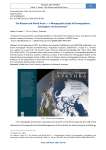
At the beginning of 2022, the Political Encyclopedia Publishing House (ROSSPEN) published a collective monograph “Russian and World Arctic: Population, Economy, Settlement” / Fauzer V.V., Smirnov A.V., Lytkina T.S., Fauzer G.N.; ed. by prof. Fauzer, Moscow, Political Encyclopedia Publ., 2022, 215 p. ISBN 978-5-8243-2479-2. The reviewers were well-known scientists: S. V. Ryazantsev, Corresponding Member of the RAS, Doctor of Economic Sciences, Professor, Director of the Institute for Demographic Studies of the Federal Research Sociological Centre of RAS, and A. N. Pilyasov, Doctor of Geographical Sciences, Professor, Professor of the Department of Socio-Economic Geography of Foreign Countries, Faculty of Geography, M.V. Lomonosov Moscow State University.
Free
The Russian region policy in the Arctic in the XX−ХХI centuries: problems of strategic continuity
Scientific article
The report considers problems of continuity in the Russian state’s policy towards the Arctic region and the Northern Sea Route. Traced the main strategic directions of the state interests in the northern territories in the twentieth century and expansion them to XXI century, associated with the preservation of the Russian Federation the status of a major Arctic power. In the regional Arctic policy is permanent, regardless of changing political regimes.
Free
Scientific article
Here we present a brief overview of events and presentations at the International Arctic Vegetation Archive and Classification Workshop, held in Prague, the capital of the Czech Republic, on 30–31 March 2017. The purpose of the workshop was to collect and process data about the Arctic vegetation. The data supposed to be presented in a standard format for subsequent classification and analysis. Twenty-nine scientists from most of the Arctic states were among the participants of the workshop. They presented an overview of existing databases on vegetation, discussed the possibility of sharing and pooling of data as well as possible ways of classification for the pan-Arctic vegetation.
Free
Scientific article
The problems of the mobilization decisions in the economic and military-strategic development of the Arctic and the Northern Sea Route in 1930-1950-ies. Analyzes the Soviet experience in the implementing important for the state of the socio-economic programs in the northern areas rich in the natural resources.
Free
The St. Petersburg International Economic Forum (SPIEF-2022) and Its Arctic Agenda
Scientific article
The article summarizes the results of the 25th St. Petersburg International Economic Forum (SPIEF-2022), which was held in St. Petersburg from June 15 to 18, 2022. As a participant of the forum, the author focuses on the analysis of Arctic issues, which were considered at the last event. They include current problems in the Arctic Council's activities, issues of the development of the Northern Sea Route, shipbuilding and ship repair in the Arctic, ensuring security in the region by the forces and means of the Russian EMERCOM, the state and prospects of building the international Arctic station Snezhinka, and problems of education and personnel training. Particular attention is paid to increasing the role of science, scientific and educational centers in making strategic decisions on the development of the economy, social and spiritual spheres of the Arctic territories. It is noted that, for the first time, heads of Arctic regions of the Russian Federation successfully presented investment projects in their regions at the Forum.
Free
Scientific article
The article examines the development and use of the Northern Sea Route (hereinafter: the NSR) during the Soviet era. It also considers various trends in the development of the state transport policy in the world and significant aspects of its assessment. The above-mentioned transport route is significant from a geopolitical point of view. Although the USSR failed to realize the commercial potential of the NSR and its year-round operation, it made significant progress in the development of the NSR to achieve the political and strategic goals of the Soviet Union. The article analyzes the essential aspects of Soviet and Russian transport policy in the XX century. The author argues that transport innovations caused by the energy crises of the 1970s and 1980s and related environmental problems largely bypassed the Soviet economy due to the period of stagnation. The author concludes that if the USSR had kept pace with modern trends in technology and the Soviet Union had not collapsed, the NSR could have become a self-sustaining route and the goal of year-round navigation on the NSR would have been achieved in Soviet times in the 20th century.
Free
The Svalbard fisheries protection zone: how Russia and Norway manage an Arctic dispute
Scientific article
Svalbard and the maritime zone around this Arctic archipelago are central to Norway-Russia relations. Since 1977, a dispute has concerned Norway's right to exercise jurisdiction over fisheries. What are Russian positions on Norwegian jurisdiction enforcement in the Fisheries Protection Zone (FPZ)? How have perceptions and reactions evolved since the turn of the millennium? Has the deterioration in the bilateral relationship post-2014 sharpened the dispute in the FPZ, and has the risk of conflict increased? We find that 2014 does not appear to be a watershed with respect to relations in the FPZ around Svalbard. After the dramatic arrest of a Russian trawler in 2005, the Russian central authorities switched from protest to relatively conciliatory dialogue - with a marked exception in 2011 related to Russian domestic discord surrounding the 2010 Barents Sea maritime boundary agreement. After 2011, incidents in the FPZ have been handled without further escalation, but the situation is underpinned by various factors that might change. Russia’s policies in the FPZ have been a balancing act: always stressing its official position and insisting that there are limitations to how much Norwegian enforcement can be accepted, while also ensuring that the enforcement regime survives.
Free
The Tourism Vector for the Karelian Arctic Development
Scientific article
The article presents an integrated approach to considering the tourism vector of Karelian Arctic development. Six municipalities of the Republic of Karelia, included into the Arctic zone of the Russian Federation, have become a model site for the study. Severe natural and climatic North conditions, along with challenges of socio-economic development, actualize the perspective of tourism and recreation, including for the local population. For the first time in the study, the territory of the Karelian Arctic was comprehensively examined from the standpoint of tourist and recreational development. The study analyzes tourist and recreational potential, tourist infrastructure, including infrastructure of accommodation, catering, leisure and recreation, tourist flow and types of tourism; projects of tourist orientation, strategic directions of tourism development in the municipal context. The opinion of the residents of the Karelian Arctic about the tourist and recreational development of the territory is also taken into account, and limitations and current challenges are highlighted. The study reveals the diversity of municipal districts in the Karelian Arctic in terms of tourism and recreational potential, the degree of tourist development of the territory, tourism development opportunities, the constraints. Despite the existing limitations, on the basis of the identified opportunities, the significance of the tourism development vector of the Karelian Arctic is shown as a promising direction of domestic tourism in the Russian North, as well as a tool to restore physical and emotional strength of the local population.
Free
The UK’s interests in the Arctic
Scientific article
The article analyzes the priorities of British policy in the Arctic. The UK has a long tradition of studying the Arctic and is one of the first observer countries of the Arctic Council. At the same time, the Arctic strategy of London has undergone several significant changes, which are a natural reaction to the changing situation in the region. An analysis of the British Foreign Ministry report 2018 reveals four primary areas of the UK's interest in the Arctic. First, the country's economy continues to rely heavily on the hydrocarbon and bioresources of the Arctic. Secondly, after the outbreak of the Ukrainian crisis and in the conditions of deteriorating relations with Moscow, the British authorities have begun to pay more attention to the security, primarily the military one. Third, an important direction of the UK Arctic policy is to solve the problem of climate change since the country considered one of the world leaders in reducing greenhouse gas emissions. Finally, the development of international cooperation in the region based on scientific diplomacy is one of the priorities of British Arctic politics. However, despite the official documents fixing the priorities of the UK’s Arctic strategy, London’s Arctic policy is passive. This fact is a reason for British expert criticism.
Free
Scientific article
The reasons of sending special expedition of the OGPU in 1929 to the Ukhtariver are analyzed. The main factor of sending the expedition was the reform of the penitentiary system of the USSR and transition to use of compulsory labor of prisoners.
Free
