
Journal articles - Arctic and North
All articles: 1008
Scientific article
The article describes the aspects of sustainable development in the Arctic fishing industry as a socio-ecological-economic system. Describes the relationships and conflicts between the subsystems of the system, the directions of the state for fisheries management as a socio- ecological-economic system.
Free
Svalbard in the context of Arctic security
Scientific article
The article studies Svalbard’s role in the Arctic security agenda, the history of the implementation of the Paris Treaty 1920 with the emphasis on its security provisions, as well as the risks of engaging Svalbard in a military conflict in the region. Despite the demilitarized status of Svalbard, the evaluation of its role in the hard security situation in the Arctic is hampered by several factors. First, Norway sticks to a narrow interpretation of the Treaty 1920 provision that bans any use of the archipelago for warlike purposes. Norway does not consider such actions as the entry of military ships in Svalbard’s ports, overfly of military aircraft, and some other, contradicting with the Russian position, a violation of the Treaty. Second, the development of technologies, particularly of “dual” use, has posed the question of whether the application of some objects situated on Svalbard by the militaries - primarily the stations of space monitoring - are legitimate. Third, as the political uncertainty in the Arctic rises, Svalbard has been more often involved in the worst-case scenarios for the region - as a place vitally important for Russia and simultaneously representing potential vulnerability for NATO. At the same time, the author argues that the threat of a military conflict over Svalbard is minimal. The international Svalbard agenda is dominated by economic issues, whereas the stakeholders stay aware of the significant risks in case of a military conflict on Svalbard.
Free
Svalbard, Norwegian strategy in the Arctic, and Russia's Interests
Scientific article
The paper describes main directives and mechanisms of Norwegian policy in the area of Svalbard in the beginning of the XXI century in conformity with Russian interests in this region. The paper is based on legal Norwegian and Russian sources.
Free
Swedish chairmanship of the Barents Euro-Arctic council 2017-2019: key results and achievements
Scientific article
The Barents Euro-Arctic Region is an integration of states and their administrative divisions, markedly different in terms of population living standards, but with a particular affinity that affords firm ground to consider the region as a separate geopolitical, economic, social and cultural macroregion. The article refers to the practical achievements of the national chairmanship of the Russian Federation in the Council of the Barents Euro-Arctic region; important aspects of the functioning of BEAR as a platform for strengthening of mutual trust and stability, respect for human rights, democratic values and gender equality, support for indigenous peoples, achievements in the fields of trade and economic cooperation, environmental protection, developments in the field of health care, tourism, industrial production, effective international transport links, urgent action to combat climate change and its impacts. The article concentrates on the analysis of key results and achievements of Swedish chairmanship of the Barents Euro-Arctic Council (October 19, 2017 - October 3, 2019), evaluating the current status and prospects for further international cooperation within the framework of the BEAR.
Free
System problems and directions of municipal development of the Russian Arctic
Scientific article
The subject of the study is the municipalities of the Arctic, their specifics of functioning and development in comparison with the southern regions of the Arctic states. The purpose of the work was to identify problem areas of regional development that affects the socio-economic situation of the Arctic municipalities, prospects, and directions of their development. The theoretical and methodological basis consisted of the works of Russian and foreign scientists on regulating and stimulating the socio-economic development of the territories and municipalities of the Arctic. The study grounds on an integrated approach to the functioning and development of municipalities in the specific conditions of the Arctic, as well as general and specific factors for the growth in the Russian Arctic, considering international research. An analysis of the leading indicators of the socio-economic situation of the Arctic territories showed several common problems for the development of municipalities. The main forces of state regulation should be aimed at solving the issues of human development, social and transport infrastructure and require the approval and state support of the Arctic territories. Government policies to minimize negative processes and factors for the municipalities of the Russian Arctic should base on international experience. Authorities and management can use the results of the study for the development of fiscal, tax, investment policy, programs, and plans for the socio-economic development of the Arctic territories.
Free
Tangible vs Intangible in the Axiosphere of Shift Workers
Scientific article
The rotational method of work, being a special form of employment, involves a long stay of employees away from their permanent place of residence. This mode of work has a significant impact on the axiosphere of personality, forming a special balance between tangible and intangible values. The research is aimed at analyzing the ratio of materialistic and non-materialistic aspects in the value orientations of shift workers, identifying the specifics of the value framework, as well as the factors influencing their transformation over the period spent working under such conditions. The theoretical basis of the work was the concepts of values and axiological systems, including the works of Russian and foreign scientists studying the phenomenon of professional mobility, social adaptation and the influence of working conditions on personal preferences. The empirical part of the study is based on data from the authors’ survey of shift workers (n=77) in various industries (oil and gas, construction, mining, etc.). Analysis and interpretation of the data obtained showed that tangible values play a key role in shift work. It has been established that over time, the significance of various values is being rethought and strategies for the shortage of intangible assets are being formed. The findings of the study can be useful not only for employers, psychologists, sociologists, and HR specialists, but may also be taken into account by interested parties to harmonize the value system of shift workers and to increase job satisfaction.
Free
Scientific article
The damage caused to the natural environment of the Arctic in recent years is too large and requires removal. The elimination of environmental damage requires large investments. In conditions of limited financial resources it is necessary to select the most efficient projects. The evaluation of environmental and economic efficiency of projects of the elimination of the last environmental damage can become the tool of such selection, based on the cost-benefit analysis, this evaluation consists of accounting of non-market environmental effects of restoring the environment of the Arctic. The article presents an algorithm of such evaluation and selection of projects and examples of its application.
Free
Scientific article
Analysis of the profiles of Russia's leading Arctic Telegram channels is an extremely relevant but underdeveloped research topic. The aim of the study was to identify the unique “handwriting” of the most influential Arctic Telegram channels in Russia. The objectives of the study were: to develop a methodology and criteria for identifying Russia's leading Arctic Telegram channels; to compare them in terms of quantitative and qualitative indicators (effectiveness and authority) of development over the past two years; to determine the characteristic profile of each Telegram channel. The oldest channel in terms of creation (2017), Kapitan Arktika (Capitan Arctic), has a clear authorial, systematically integrated character, the largest share of the audience viewing news on the first day of release, and the highest effectiveness and authority; the three other Telegram channels — SMP (NSR), Arktika Online (Arctic Online) and Pervy Arkticheskiy (The First Arctic) — are primarily informational in nature. SMP (created in 2019) has the largest number of active readers and subscribers, but with minimal engagement, high efficiency indicators, and is expertly assessed by us as informational and rational. Arktika Online (created in 2020) has the highest number of publications in the last two years, but the lowest number of active subscribers, the lowest share of the audience viewing news on the first day of release, and the lowest effectiveness and authority of the four leading Arctic Telegram channels in Russia. We have assessed it as informational and reactive-evaluative. The youngest Telegram channel, Pervy Arkticheskiy (created in 2022), has the highest subscriber engagement and high credibility indicators. We have assessed it as informational and descriptive. The limitations of the author’s approach are related to the lack of consideration of the qualitative structure of each channel’s audience (professional, educational, age, gender, etc.), the lack of study of the ratio of current and “strategic” news in each Telegram channel, and the assessment of the degree of reliability of the news flow of each Telegram channel. It would be advisable to develop these topics in further research.
Free
Territorial explication of the North as a conglomerate of local environments
Scientific article
The article presents a conceptual analysis of the territorial typology of the northern region. The methodology of the integrative approach typology of the northern territories as a conglomerate of local media is substantiated. There is the methodological analysis of the factors of the transition from «the development of a habitation» northern territories as bases of social typology of the northern people, Nordmen.
Free
The 50th Anniversary of the Start of Drilling the Kola Superdeep Well
Scientific article
The Kola Superdeep Well (SG-3) is an outstanding achievement of Soviet science and technology, drilled in Precambrian crystalline rocks and reached a depth of 12262 m. It was one of a series of super deep wells planned within the framework of the program “Earth's Interior Exploration and Superdeep Drilling”. In order to achieve record depths, unique domestic drilling equipment and materials capable of working at high temperatures and pressures were created. A fundamentally new technology for drilling wells using hydraulic downhole motors was developed. Despite difficult drilling conditions and repeated accidents, SG-3 has fulfilled almost all the tasks assigned to it. The well was penetrated with full core sampling, which was subjected to comprehensive study. This made it possible to study the deep structure of the Earth's crust and to revise the interpretation of depth seismic data. It was found that changes in the physical properties of rocks at great depths had been erroneously interpreted as a change in their composition. It made it possible to assess the prospects of deep horizons of the Pechenga structure for copper-nickel mineralisation by uncovering a previously unknown body of ore-bearing hyperbasites. New information was obtained on the temperature gradient, which turned out to be significantly higher than expected, as well as on the vertical metamorphic zoning along the borehole section. The composition and physical properties of rocks in deep horizons were investigated. Tectonic fault zones and six types of ore mineralisation were identified in the borehole section. New data on ore formation processes at great depths have been obtained, which is an important contribution to the theory of mineral deposit formation.
Free

The Arctic Convoys and the Kara Expeditions (news from the British Center)
Scientific article
In her article the author comments on two important events connected with the exploration of the Arctic and the significant role it played during the WW2. Valentina Golysheva gives a retrospective view of “Dervish-75”, International Forum in NArFU and the “Kara Expedition” conference in Salekhard held in autumn of 2016.
Free
Scientific article
The article examines the formation and development of the Arctic Council (AC; Council) from 1996 to 2021. It is noted that the Council was created as an intergovernmental "high-level forum" for the development of cooperation between the Arctic states, coordination of their actions in the interests of ensuring sustainable development of the region, protecting the environment, preserving the culture, traditions, and languages of the indigenous peoples of the North. The status, structure, and organisation of the Council's activities are characterised. It is emphasised that the Arctic Council does not deal with military security issues. There are six indigenous peoples' organisations and 13 observer states that participate permanently in AC. In the second part of the article, the author analyses Canada, the USA, Finland, Iceland, Russia, Norway, Denmark, and Sweden chairmanship results in the Arctic Council (from 1996 to the present day). Revealing the issues of continuity in the chairmanship of the AC founding states, the author focuses on new approaches of countries in the exploration and development of the Arctic through the activities of working groups. In contrast, joining the AC of intergovernmental and non-governmental organisations is investigated for the first time. The author notes the growth of the authority and prestige of the Arctic Council in the Arctic arena of international relations. The preparation of the Russian Federation for the chairmanship of the AC (2021–2023), its program, and main events are analysed.
Free
Scientific article
The article deals with the results of the 2 years of the US chairmanship of the Arctic Council, notes positive results and draws attention to the weak points of the US Arctic policy. It reveals that the US has chaired the AC to solve its own problems related to the Arctic. The authors also analyze the ministerial meeting in Fairbanks (Alaska) and describe the current Russian position in the Arctic. The foundations of the Finnish Arctic policy and the analysis of the first statements of politicians and experts helps the author to predict the Finland's plans for the chairmanship in the Arctic Council 2017–2019, and its possible impact on settling differences in Russian-American and Russian- Western European relations. In addition, it is important to take a closer look at the role of the Finland’s chairmanship in strengthening the Russian-Finnish cooperation in the run-up of the 100 anniversary of the independent Finnish state (December 2017). It is found that in contrast to Canada, the United States did not transfer the existing contradictions between the US and Russia to the work of the Arctic Council. It largely contributed to the positive results of the US chairmanship, especially on the development of multilateral cooperation of the coast guards, international fisheries in the Arctic Ocean and the problems of communication networks in the Arctic.
Free
The Arctic Floating University completed the expedition around Novaya Zemlya
Scientific article
The article presents a review of the expedition “Arctic Floating University — 2018”, the thematic name of which was “Terrae Novae”. The expedition passed through 3,800 nautical miles along the White, Barents, Kara and Pechora Seas. Its participants completed landings on two arctic archipelagoes: Solovetsky Islands and Novaya Zemlya. The expedition had three stages. At the first stage, marine research was made in the White and Barents seas. In total, 48 stops were made, and deep sounding was carried out at each hydrological station. At the second stage, marine and ground research was made in the Barents Sea. The third stage included work on hydrological sections in the Kara Sea and ice condition monitoring along the area. The expedition research team made seven landings on the Arctic archipelagos of Novaya Zemlya and Solovetsky. Samples of soil were taken, and specific studies of the atmosphere, water, marine biology, flora and fauna of the area were carried out. The obtained materials contain new data on the development of a monitoring methodology, assessment of forecasting and prevention of risks associated with biological transport of highly toxic pollutants that can accumulate in food chains and spread to Arctic ecosystems; the study of endoliths; paleomagnetic studies; microplastic studies; marine microfauna for investigating the settling history of the Barents Sea, etc.
Free
The Arctic Geo-Economy: Mobility of Strategic Oil Resources at the End of Globalization
Scientific article
A distinctive feature of the cyclical dynamics of global development is the rapid transformation of the maxim of “global superiority” into softer forms of leadership on the geopolitical and economic atlas of the modern world, such as “national power” and/or “regional advantage”. This requires a concentration of resources to achieve the latter's mobility on the strategic movement trends of contemporary Russia. The importance of oil and petroleum products in the formation of the Russian Federal Budget and the National Welfare Fund cannot be overestimated. Today, oil is essentially the main source for the successful implementation of the special military operation and, at the same time, ensuring the progressive development of Russia. The article substantiates the necessity to maintain the economic turnover of oil resources development, including in the Arctic, carries out an expert assessment of three options for the development of oil production: reduction of production; reduction of oil exports against the background of increasing domestic consumption; and ensuring the mobility of export supplies to find and develop new markets.
Free
The Arctic Region as a Space for Trans-disciplinary, Resilience and Peace
Scientific article
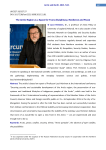
The article is based on report of Professor Lassi Heininen at the international conference "Ensuring security and sustainable development of the Arctic region, the preservation of ecosystems and traditional lifestyles of indigenous peoples of the Arctic", which was held in the framework of the V International meeting of representatives of the Member States of the Arctic Council, observer States and foreign scientific public on 15—16 September 2015 in the city of Arkhangelsk1. During the period in after the Cold War has been carried out successfully transition from military confrontation to the Political stability and increasing international cooperation. New circumstances and uncertainty may jeopardize the stability of the existing. Lassi Heininen believes that none of us would like to open a new front in the Arctic — we are experienced and wise enough not to do so.
Free
Scientific article
This article has the following research objectives: first, to make an analysis of the international legal basis for the Arctic states’ cooperation on emergency situations prevention and search and rescue operations; second, to study the existing cooperative experiences at the biand multilateral levels; third, to suggest some practical recommendations to improve such a cooperation from the Russian national interests’ point of view.
Free
The Arctic as a constantly evolving multidimensional space
Scientific article
The author analyzes the main approaches to the multidimensionality of the Arctic and the factors that enhance the role of the Arctic in modern conditions. Special attention is paid to the research made by NArFU (Yu.F. Lukin) and the Institute of Europe of RAS (N.M. Antyushina). In conclusion the author underlines the need for systematic work on the Arctic consciousness and involvement of the Russian citizens in the Arctic affairs. Along with the analysis of the growing role of Russia and the European countries in the Arctic, the article is concerned with cooperation between Russia and China. It is revealed that Beijing's cur-rent foreign policy in the Arctic is productive, businesslike, benevolent and long-term for Russia. The emerging problems and difficulties are resolving through negotiations on a mutually beneficial basis. It is also concluded that the presence of large Asian states in the Arctic Council leads to a deescalate tensions due to disagreements between Russia and the West over the situation in Syria and Ukraine. The author tried to determine the level of militarization in the Arctic and its impact on the possibility of conflicts in the region. It is concluded that in modern conditions a long-term Arctic megaproject could become a powerful Arctic consolidation factor. In the article, the author uses methods of political science and humanities: comparative analysis, historical approach, institutional and prognostic methods, incl. the analysis of possible scenarios for the further development of the Arctic Council by Yu.F. Lukin.
Free
The Arctic defense postures in the context of the Russia-West confrontation
Scientific article
In 2015–2017, in most Arctic countries, a planned review of defense policy was carried out. It coincided with the Ukrainian crisis, the aggravation of relations between Russia and the West and the active phase of the implementation of a large-scale program of military construction in the Russian Arctic. An analysis of the decisions made during this period allows us to judge to what extent the confrontation between Russia and the West has affected the military and political situation in the region and how it can affect it in the foreseeable future. For this purpose, the documents of the strategic military-political planning of the Arctic countries adopted in recent years are compared with their earlier plans for military construction in the Arctic. The analysis allows to conclude with a high degree of certainty that in the short term the military and political situation in the region will remain stable and predictable. The Arctic countries have not reconsidered their previous calm assessments of military threats and modest military development programs in the region. The main attention of the Arctic states-members of NATO is concentrated on the Arctic not that much as it is for the development of the military-political situation in the Baltic and in the North Atlantic. However, the longer the current crisis in the relations between Russia and the West goes on, the more likely that in the medium and long-term perspective, the military and political situation in the Arctic will change for the worse.
Free
