
Journal articles - Arctic and North
All articles: 1008
The Arctic ice: monitoring and adaptation measures
Scientific article
Ice condition monitoring in the Arctic seas allows evaluating the impact of changes by analyzing the two opposite points of view — Arctic ice is melting and ice is included into the “cold cycle”. Histogram of the area with the Arctic paleocrystic ice (2002—2013), and statistical analyze of the collected data allowed to construct a polynomial trend that defines a sufficient degree of probability and predicted values of the minimum area of the Arctic sea ice. The best model was selected — the method of harmonic balance and the interval forecasts of the ice cover of the Arctic seas for 2015 and 2016 were composed. Risk consideration under the climate change is very important for mining industries, maritime navigation and infrastructure in the Russian Arctic, in order to minimize losses arising from possible threats.
Free
The Arctic in the Post-Truth Era: Risks to International Security and Counteraction Scenarios
Scientific article
The article examines the impact of the post-truth phenomenon on the perception of international security in the Arctic region. The main focus is on analyzing information distortions in the media resources of leading foreign mass media outlets (The New York Times, The Washington Post, The Guardian, The Daily Telegraph). Based on content analysis and discourse analysis of 176 publications from 2022 to 2025, the study reveals that the Western media systematically constructs an image of the Arctic as a zone of permanent crisis and military-political confrontation, where Russia and China are presented as key sources of instability. The actions of Western states, in contrast, are presented as necessary and defensive. The authors identify characteristic post-truth techniques: use of emotionally charged headlines, selective presentation of facts, distortion of cause-and-effect relationships, and imposition of simplified narratives. The article assesses the risks of such destructive information influence, including growing mistrust between Arctic states, escalation of conflict potential, and reduction of opportunities for international cooperation in scientific, environmental, and economic spheres. Based on the identified trends, two key scenarios for the development of the situation in the region are developed: “acute escalation” and “freezing of cooperation”. In response to these challenges, a system of comprehensive multi-level measures is proposed, including promotion of international information security, creation of objective information resources about the Arctic, improvement of media literacy among the population, and support for expert and scientific contacts to counter manipulative narratives and maintain stability in the Arctic.
Free
The Arctic in the Soviet cinema lens: “Two Oceans” by Vladimir Shneiderov
Scientific article
The study aims at introducing unstudied materials, i.e., film documents of the Soviet period, related to the development of the Russian North, into the scientific circulation. So-called expedition films occupied a special place in the history of Soviet visual anthropology — films of educational content about the peoples and territories of the USSR. They reached its heyday at the turn of the 1920s — 1930s. One of the pioneers of Soviet visual anthropology is considered to be the filmmaker V.A. Shneiderov, the author of a series of films about the USSR territories (“The Great Flight”, “The Pamirs (the bottom of death)”, “At the height of 4500”, etc.). In addition to solving creative issues, the production of such films was part of a state experiment on the construction of local images and the country. The Soviet authorities used the resources of the cinematographer as a media source and agitation. In this article, the author considers the example of the expedition film “Two Oceans”, the classic of documentary films where V.A. Shneiderov pictured the history of the Northern Sea Route and the Soviet colonization of the Arctic. The context of the filmmaking, i.e., parallel processes in Soviet cultural politics and cinema, is discussed as well. The author conclusions contain thoughts about the research value of the Soviet expeditionary film as a complex historical source.
Free

Scientific article
The article describes the evolution of the British Arctic strategy, the role of the British political institutions in this process, as well as the interests and policy priorities for the region. It is noted that currently the focus of the UK is addressed to the study of the environment state in the Arctic, as well as on climate change. In the future, with the development of the Arctic technology and increasing scrutiny of the area the interest of the Kingdom to natural resources of the Arctic zone will increase, as well as its military and defense interests in the region.
Free
The Arctic population: dynamics and centers of the settlement system
Scientific article
The article presents an estimate of the Arctic population in 1900-2019 by country and macro-region, obtained using official statistics of eight Arctic States. Analysis of spatial and temporal data revealed the main patterns of the Arctic population formation. Calculations show the world’s Arctic population increased from 1.3 million in 1900 to 6.1 million in 1989, and then declined to 5.4 million in 2019. The share of Russia varied from 22% to 58%. The data show that interregional migration in the Russian Arctic had a decisive influence on the demographic dynamics of the Arctic in general. The main reasons for the decline in the Arctic population in different periods were the completion of cycles of natural resource development and lower quality of life in comparison with the central regions. To smooth out differences in national statistical accounting systems, the article examines the dynamics of the population in 17 major centers of settlement in the Arctic, where more than two-thirds of the population lives. Calculations show that urbanization and population concentration in several of the most attractive areas of the Arctic continue. Administrative and educational centers, which are points of attraction for residents of other Arctic territories, get an advantage. The results of the study allow us to predict the further evolution of the Arctic settlement system. They can be used in the development of strategies and programs for the spatial development of the North and the Arctic.
Free
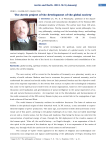
The Arctic project to a global society
Scientific article
The article investigates the spiritual, moral and historical grounds of objectively formation of a global society in the world content integrity. Expands the historical logic of the development of world society as the rise of social practice from the requirements of natural necessity to creative strategies, universal freedom. Substantiates the key role of the Arctic in a humanistic civilization and consolidation of humanity.
Free
The Arctic projects of the interregional integration
Scientific article
The problems of the interregional integration in the Russian Arctic, as the example of the White Sea and the planned Arctic union of the regions of Russia.
Free
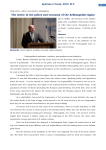
The Arctic regions in the policy and economy of Arkhangelsk area
Scientific article
Article is devoted to the consideration of the Arctic vector in the politician of the government of the Archangelsk area, region and economy.
Free
Scientific article
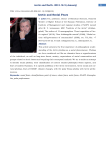
This article presents the first experience of philosophical understanding of the Arctic phobias as a social phenomenon. Phobias are here considered not like as obsessive fears or apprehensions of the individual, as well as long-term threat, anxiety, expectations of social communities and groups related to Arctic issues and requiring their conceptual analysis. We try to make an attempt to identify social phobias, their classification of content studied philosophy Homo sapiens, and fears of modern Russians. It is opened polifobiya of the Arctic environment, Arctic social and cultural phobias, fears of HAARP, climatic changes, with the polar Russo phobia with Arctic performances.
Free
The Arctic society under the environmental and climate change (based on survey results)
Scientific article
Changes of the environment and climate have different local consequences in the Arctic. The article presents the research results of these impacts on traditional nature management in the perception of residents of the Nenets Autonomous District. The materials of nine focus groups and expert interviews were conducted in 2014, 2015, 2017 in the town of Naryan-Mar and two rural settlements on the island of Kolguev and Kanin Peninsula. The author reveals some reasons for the negative impact on reindeer herding: changes in the vegetation cover of tundra and populations of animals and the birds there; changes in the diet of deer; deterioration of accessibility of snow-covered forages; irrational use of deer pastures; pollution of tundra by industrial debris and waste. Hunters noted a reduction in the period of the spring hunting, deterioration in the availability of hunting resources, a decrease in the number of geese and a shift in their migration routes due to changes in the ice regime. A reduction in the number of valuable fish species is typical for fisheries. It is associated with contamination and shallowing of water bodies, an increase in water temperature and excessive fish production. Climate change positively influences the diversity and productivity of wild resources, but intensive harvesting worsens the condition of the berry. A decrease in the quality of the natural resources traditionally used by the population was observed. It increases the degree of discomfort in the remote territories of the Arctic.
Free
The Arctic strategic projects and their implementation
Scientific article
Presentation of the model of the cooperative projects to develop resources in the Arctic, developed by the project team from Arkhangelsk.
Free
Scientific article
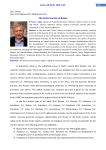
In the new book "Arctic tourism in Russia" the basic concepts, resource potential, attractiveness (from Lat. Attrahere: to attract), opportunities and threats of environmental, cruise, international, and other types of tourism in the Arctic are system-based analyzed, for the first time in the literature. The sphere of tourism has becoming an integral sector of the economy, having a multiplicative effect for the development of infrastructure, social services, employment. Reference materials about the tourism products in the Russian Arctic and Far North regions are published, including the Arkhangelsk and Murmansk regions; Republic of Karelia, Komi, Sakha (Yakutia); Nenets, the Yamalo-Nenets, Khanty-Mansiysk, the Chukotka Autonomous Districts; Taimyr Dolgan-Nenets Municipal District, Turukhansk district, the city of Norilsk of the Krasnoyarsk region; Magadan region, Kamchatka region.
Free
The Arctic with Chinese Characteristics
Scientific article
Year by year, the Arctic is becoming an increasingly complex geopolitical and geoeconomic epicenter of interaction and simultaneous confrontation between Arctic and non-Arctic actors in international relations. In particular, China has already “put its hands” (插手)to the Arctic region, being a non-Arctic state. Using diplomatic language, the PRC was able not only to conduct a number of scientific studies as an official observer at the Arctic Council, but also to build up economic ties with the Arctic countries over a relatively short period of time. The purpose of our study is to identify the institutional features of China’s emerging Arctic identity. The main methodological framework of the study is the analysis of regions through the prism of mega- and meso-areas (Osamu Ieda) and the concept of regional security complexes (B. Buzana and O. Vever). The author is also actively researching the main strategic document of the PRC (the White Paper on the Arctic), the UN Convention on the Law of the Sea, a number of relevant international, national conventions and agreements, regulatory legal acts, international reports, statements and media materials. The author considers the identification of institutional features of the Chinese Arctic identity to be the main result of the study. The article also forecasts China’s further geostrategic course towards the Arctic region.
Free
The Arctic − the big general house for Russia and other states
Scientific article
The chronicle of carrying out of the first Day of Arctic regions in the NArFU named after M. V. Lomonosov.
Free
Scientific article
Taking into account the importance of maintaining and restoring physical and emotional strength, the need to reproduce human capital in harsh natural and climatic conditions of life, the problem of organizing tourism and recreation for the population of the the Arctic zone of the Russian Federation is an important area of scientific research. Despite the growing interest in the Arctic, the issues of choosing tourist destinations by residents of the Arctic regions and their change under the influence of modern challenges remain outside the scope of scientific research. This paper seeks to answer these important questions from the perspective of recreation in the Arctic. The aim of the study is to identify the general trends and specifics of the organized outbound tourism development in the Arctic zone of the Russian Federation under the influence of the modern challenges for the period 2004-2021 on the basis of the official statistical data. The model site of the study is nine Arctic Russian regions, fully and partially belonging to the Arctic zone of the Russian Federation. The study allowed assessing the dynamics, general trends and specifics of the development of outbound tourist flow of residents of the Arctic subjects in comparison with the average Russian indicators in the context of domestic and international tourism. It reveals changes in the volume of organized tourist flow, as well as its redistribution between tourist destinations under the influence of the challenges of our time.
Free
The Code of the Arctic regions
Scientific article
In article materials of a round table “Code of Arctic regions”, spent are systematised on February, 29th, 2012.
Free
The Concept of Knowledge Co-production in the Context of Arctic Research
Scientific article
The review article focuses on the concept of knowledge co-production, which began to be developed at the beginning of the 21st century. Its appearance is associated with the transition to a new paradigm of scientific research, the need for which was caused by the complexity and social significance of global problems. The principle of transdisciplinarity was taken as a basis, which involves going beyond the limits of normative science and including various media and types of information in the production of knowledge. As a result, an approach to scientific research based on the joint production of knowledge was formed. Currently, the concept of “knowledge co-production” is debatable. A review of theoretical and methodological approaches to its definition made it possible to identify the main stages of the knowledge co-production process and the methodological difficulties faced by scientists. In most cases, they are associated with the presence of many different stakeholders in the process of knowledge co-production, differences in understanding of the purpose and objectives of research between representatives of the academic and non-academic community, lack of organizational and financial support. It is shown that the concept of knowledge co-production has received the greatest application in research on the sustainable development of the Arctic, where special attention is paid to the knowledge of indigenous peoples and their co-production.
Free
Scientific article
The article examines the current state of development of small innovative technology companies in the Arctic regions of North-Western Russia. Statistical surveys, questionnaires and in-depth interviews were conducted to identify the most promising forms of support for innovation in small innovative companies, allowing for the differentiation of mechanisms to maximize the effects of regional support measures. The basic factors influencing the interaction of business and science within the framework of technological innovations are presented. The analysis allows identifying current problems and difficulties that hinder the implementation of effective innovations: weak human resources potential of the Arctic regions; low interest of small and medium-sized enterprises in innovations. In order to form the innovative infrastructure of the Arctic regions, it is important to adopt regional programs for the development of cluster formations, especially industrial ones, as well as to develop projects aimed at mobilizing the innovative potential of the regions and including them in the strategy of socio-economic development of the territories. Accordingly, to implement these intentions, it is necessary to carry out coordinated work on a range of issues. It is required to develop a legislative framework for the creation of innovative spaces, industrial, environmental and tourist territorial clusters. At the same time, the introduction of new types of activities by small innovative companies requires the creation of a comprehensive list of organizations supplying innovative products that are in demand by residents of the Arctic zone, with the application of appropriate preferences.
Free
Scientific article
The monograph “Unfrozen: The Fight for the Future of the Arctic” attempts to analyze the current transformations in the Arctic region against the backdrop of climate change and escalating global geopolitics. However, from the Russian perspective, the work is significantly limited by its Western perspective, in which Russia is presented more as a source of tension and an object of sanctions pressure than as an equal participant in Arctic cooperation and sustainable development. The book does not pay sufficient attention to Russian national interests, strategic priorities, and comprehensive approach to Arctic development. The authors’ disregard for Russia’s role in ensuring environmental security, developing the Northern Sea Route and supporting the indigenous peoples of the region is critically important. Instead, the focus is on confrontation and the collapse of the Arctic Council’s institutional model, overlooking Russia’s efforts to maintain and advance cooperation mechanisms at the bilateral and multilateral levels. The monograph inadequately addresses Russian concepts of sustainable Arctic development as well as the consequences of unilateral sanctions and political pressure, undermining overall regional stability and security. Thus, while “Unfrozen” is valuable for understanding the Western perceptions of Arctic changes, it clearly lacks a comprehensive and balanced view that reflects the specifics and interests of Russia as a key Arctic state.
Free
Scientific article
At present, new financial mechanisms of interaction between employees and employers in the context of market relations are being formed and improved in Russia. The decisive factor in workers’ performance is their financial motivation and stimulation. The determinative of productivity of an enterprise activity is remuneration efficiency as a base of laborers’ financial motivation and stimulation. The remuneration is a flexible element of distributive relations and it is impossible to create an effective motivational mechanism without an establishment of its communication with final results. Such indices as salary distribution and salary intensity as basic indicators of wage efficiency assessment have been used in the paper. The object of the research is sixteen large and medium-sized fishing enterprises in the Arkhangelsk region as a part of the Arctic fishing cluster. These enterprises catch fish in the Barents and Norwegian seas, as well as in the North Atlantic. It has been shown that the financial results of fishing enterprises depend on external conditions — primarily on the quotas for fish catch and the price of fish products. In the research, the authors have proceeded from the following hypotheses: the Arctic fishing cluster’s enterprises operate in a monopsony on the labor market; there is a pattern between the size of wage fund and financial performance of the Arctic fishery cluster enterprises; the change in wage fund is an effective mechanism to improve the efficiency of the Arctic fishery cluster. In the course of the research, the following interrelated tasks have been solved: the identification of the features of the Arctic fishing cluster’s labor market; the assessment of the effectiveness of the wage fund use for the Arctic fishing cluster’s enterprises based on the author's methodology; the identification of the importance of the problem of insufficient efficiency of wage fund use in the Arctic fishing cluster.
Free
