
Journal articles - Arctic and North
All articles: 1008
Scientific article
The article examines how the representations of the Sámi were constructed in Finnish studies on Sámi in 1920 and 1930s. The role of racial studies in the Finnish lappology remained a short-period influence, while the dominant scientific field of interest, the Finno-Ugric research, had it´s own hierarchies concerning the Sámi, implied in the multi-disciplinary field from linguistics to folkloristics and ethnology. This branch was challenged by the human anthropological or cultural geographical position, emphasizing the cultural adaptation to the environment as the guiding force formulating Sámi societies. Besides purely scientific knowledge, the article studies the extensive field of other Sámi descriptions, which spanned from travel guides to newspaper articles. It suggests that this mixture of scientific and political interests together with stereotypical representations of the Sámi forms the context for the poor reputation of lappology among the later researchers.
Free
Verkhoyansk secondary school - the oldest school in the far north: the beginning of a long journey
Scientific article
In this article, the author shares the results of his research on the history of the city of Verkhoyansk - one of the oldest cities in the Far North of Russia. The city was founded by the Russian Cossack Postnik Ivanov in 1638. The school, which was opened two and a half centuries later, has its own history, as interesting as the city itself: it reflects almost all the events that took place in such a distant time in the Arctic coast of the Arctic, in Yakutia, in Russia. Despite the fact that the city is one of the smallest for its population, however, the founders of the school, its teachers and alumni were involved in many historical events, facts that made the fame and pride of place, has contributed to the development of their region, their country. Today we will get acquainted with the earliest period - the time of the Foundation and creation of the school as one of the main points of enlightenment of the vast territory lying to the North of the Verkhoyansk ridges. As it turned out, despite the long-standing interest in this place on the part of domestic and foreign historians, sociologists, and ethnographers, this period still remains a blank spot in history: we still do not know many participants in these events, there is no reliable data about some facts. The author has to be content with fragmentary information, give his own interpretation and explanation.
Free
Scientific article
Virtual and augmented reality, as one of the end-to-end technologies of the digital economy, currently has wide practical application in the field of healthcare, helping both doctors and patients. VR/AR technologies allow the most effective rehabilitation of patients with diseases of the musculoskeletal system, provide significant assistance in dealing with psychosomatic disorders, and can be used in surgical operations. In addition, virtual doctors and nurses can be used to provide medical care at home; existing VR applications allow for better involvement of patients in therapy. VR/AR solutions developed in close cooperation of doctors and IT specialists have great development prospects. The application of virtual and augmented reality technologies in the medical care system should result in improved quality of medical services, which is especially important for remote regions. The regions of the Arctic zone of the Russian Federation, being geographically distributed, remote areas with difficult natural and climatic conditions, set themselves the task of developing high-tech medical care to improve the quality of life of the population. It becomes important for regional medical institutions to study and apply the best practices of medical IT solutions based on VR/AR technologies.
Free
Virtual ecological routes and pathesin the natural-cultural geo sustems and ecological behaviour
Scientific article
The innovate conception of virtual ecological paths as a foremost edition for ecotourism and attendance’s preparation in specially protected natural sites was suggested. It’s has a vital importance for remote and sensible ecosystems. The virtual ecological paths will be able to important stage of environmentalization of awareness on the base of modern technologies of elicitation, data processing and storage of information.
Free
Virtual reality of the soft power in the Arctic
Scientific article
First actualized the problems factual, bureaucratic and virtual reality using soft power in the Arctic. Raises the question of the conclusion Arctic pact-XXI.
Free
Scientific article
The article deals with the peculiarities of the regional context of socialization of the youth of the subjects of the AZRF in the field of implementation of vocational and educational attitudes. The paper presents a summary analysis of statistical indicators of migration gain (loss) in the AZRF, including the structure by age groups, as well as data on the dynamics of the number of students studying at different types of educational institutions from 2005 to 2020. Statistical indicators of migration gain (loss) have revealed a trend of a sharp decrease in the outflow of population in the Russian Arctic. The obvious reasons for this situation were the consequences of the COVID-19 pandemic, which significantly increased the changes in the logic of the reproduction of the social structures, in particular, there was a migration turn towards provincial subjects, as the most favorable for life, in contrast to megacities and large cities. It actualizes and problematizes the possibilities of the environment of remote regions for the optimal socialization of young people. The authors of the article focus on environmental factors that contribute to the formation and implementation of professional and educational attitudes of young people in the region. The purpose of the article is to study the professional and educational attitudes of young people in the conditions of the migration outflow of the population. The object of the research is young people studying in the Murmansk Oblast. The choice of a specific subject of the Russian Arctic (Murmansk Oblast) is due to a number of reasons: intensive migration loss of population; significant reduction in the number of educational institutions; reduction in the number of students in comparison with other subjects of the Russian Arctic. The empirical basis of the article was formed by the results of a sociological study conducted in April–May 2021 in the Murmansk Oblast using the online survey method among graduates of educational institutions of secondary general (523 people), secondary vocational (519 people) and higher education (bachelor level) (283 people).
Free
Vocational and Educational Strategies of SVE Students (Based on a Survey in the Murmansk Oblast)
Scientific article
The article analyzes the educational and professional strategies of graduates of secondary vocational education (SVE) of the Murmansk Oblast, formed on the basis of prevailing values in the conditions of socialization in a particular region. The paper focuses on the existing contradictions in understanding the reasons for the growth in the number of applicants to secondary vocational institutions. On the basis of statistical data from various sources, an analysis of the system of vocational training at the secondary professional level is presented and the features of the human resources potential and needs of the region are indicated. The authors of the article focus on environmental factors that contribute to the formation of values and the implementation of vocational and educational strategies for the youth of the region. The theoretical framework of the study is based on the social constructivism theory of P. Berger and T. Lukman, as well as the value theory of R. Inglehart. The object of the study is graduate students in the secondary vocational education system of the Murmansk Oblast. The choice of a specific subject of the Russian Arctic (Murmansk Oblast) is due to a number of reasons: intensive migration loss of the population; significant reduction in the number of educational institutions; reduction in the number of students. The empirical base of the article was formed by the results of a sociological study conducted in April-May 2021 in the Murmansk Oblast by online questionnaire survey among graduates of educational institutions of secondary vocational level — 519 people. The study of professional and educational strategies of graduates of secondary vocational education, an analysis of educational plans, attitudes towards employment, including the direction of training, labor value orientations as well as migration attitudes of students were additionally considered.
Free
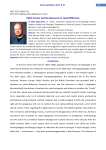
Väinö Tanner and the discourse on racial difference
Scientific article
The article charts a previously lesser-known aspect of research on the Skolt Sami by Väinö Tanner — his ideas on the Skolt Sami as a race. Tanner’s place in the scholarly field of racial theorizing and the discursive resources on which he relied are examined. One inspiring contemporaneous discourse was the Finnish hygienic discourse and the improvement of the nation’s health, towards which Tanner leaned. He reproduced aspects of the more aggressive eugenic discourse articulated by his ethnic peers, the Finland-Swedes, but the discourse on their racial superiority was unusable, given the agenda of his book, to elevate the Skolt Sami in the racial hierarchies. The economic organization of society was decisive for Tanner, rather than race, making him a Social evolutionist.
Free
Water Transport in Arctic Tourism Logistics
Scientific article
The success of Arctic tourism development is associated with solving the problem of delivering tourists to the places of their interest. “The Concept for the Development of Cruise Tourism”, approved by the government of the Russian Federation in 2022, suggests that overcoming the transport problem in the Arctic is possible thanks to water transport. It can be used in the logistics of Arctic tourism as a way of transporting tourists on routes and for organizing sea and river cruises. We have examined the current use of water transport in the organization of tourist routes in the Russian sector of the Arctic based on information from river and sea cruise operators. In addition, we have identified regions where water transport is used to organise passenger transport. In the European part of the Russian Arctic, water transport is most actively used for river cruises. Arctic river cruises provide tourists with the opportunity to travel in areas where there is no special infrastructure. In this case, river routes usually start southwards in the most populated regions. In the Asian part of the Russian Arctic the number of cruises is smaller, they are carried out only on three rivers — the Ob, the Yenisei and the Lena. But there are also regular passages that can be used by tourists travelling to the Arctic. Using content analysis of tourists’ reviews of Arctic river cruises we have identified the main drawbacks of their organization. SWOT analysis of the use of water transport in the logistics of Arctic tourism showed what hinders its development. The main problems of water transport use in the Arctic include the ageing of vessels, passenger safety, short navigation period and shallowing of waterways. The most promising ways for the use of water transport in Arctic tourism are inland waterways in the European part of the Russian Arctic, the White Sea and the Barents Sea.
Free
Scientific article
This article is devoted to the analysis of the water transport in the European North of Russia. Using the case of the Arkhangelsk Oblast, we present the main challenges and perspectives of river navigation development in light of the area’s history and current situation. Our research shows that, historically, water transport has played an important role in the social and economic development of the Arkhangelsk Oblast and held a leading position in the transportation system. However, due to the transition to a market economy in the 1990s, river traffic lost its competitive advantages. The study presents statistical data showing the negative trends of the passenger inland water transport development. The lack of the state involvement in industrial management has led to the deterioration of the water transport quality and its infrastructure. Despite existing challenges, however, water transport still plays an important role in the socioeconomic development of the Russian North. In recent years, various levels of government have discussed the revival of the river navigation and improvements in its use for regional development. The article discusses prospects for overcoming the existing negative trends in the development of water transport. The focus is made on its connection with the industrial development of the Arctic and the cultural potential of the region.
Free
Scientific article
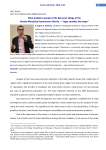
The expedition to the village of Berezovo of the Berezovsky district of the Khanty-Mansiisk Autonomous District — Yugra, held on 6—8 of June 2015, became part of a large research project “Governan-ce, Community and Ecology: Responding to Challenges of Resource Development in the Circumpolar North”. Its purpose was to study current trends and prospects for sustainable development of certain Arctic areas to ensure balanced economic development, preserve the unique natural ecological system, way of life of indigenous peoples and the existing system of regional and municipal management of these processes. The expedition took place with the support and involvement of the Administration of the Khanty-Mansiisk — Ugra and Berezovsky area.
Free
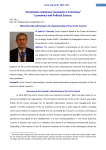
What the USA will bring to its chairmanship of the Arctic Council
Scientific article
The results of Canada’s chairmanship of the Arctic Council (2013-2015) and the Iqaluit declaration signed on the 24th of April 2015 are analyzed in the present article. The author is convinced that the United States intend to use their Arctic Council chairmanship (2015— 2017) to solve the US internal problems related to the Arctic areas. The program for the US Chairmanship has three focus areas: improving the economic and living conditions of the Arctic communities; Arctic Ocean safety, security and stewardship and the impacts of the climate change. The United States hope for constructive cooperation with Russia aimed at solving these problems.
Free
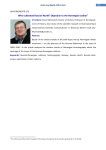
Who cultivated Russian North? Objection to the Norwegian author
Scientific article
Based on the critical analysis of the book Ingve Astrup ‛Norwegian timber merchants – are the pioneers of the Russian Belomorye in the years of 1880−1930’. In the article analyzes the modern trends of Norwegian historiography about the coverage of the issues of the Russian-Norwegian relations.
Free
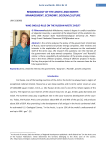
Who should rule on the Russian Arctic shelf?
Scientific article
In the article analyzes the policy of the government (ministries) of Russia, state-owned and private energy companies, their motives and interests in the exploitation of oil and gas resources on the continental shelf of the Arctic seas. We research the questions: Are the interests of the government and state-owned companies (‛Gazprom’ and ‛Rosneft’) similar, is there a possibility of participation of the private energy companies in the Arctic offshore projects, timing of offshore projects in Russia: Do they the project of the immediate future or the resource base for the future generations.
Free
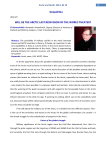
Will be the Arctic last redivision of the world theater?
Scientific article
The possibility of military conflict in the Arctic between Russia and NATO countries is illusory, if Russia can maintain its military capabilities at least at current levels. In the more distant future, a party can be a redistribution of the Arctic, China, is experiencing growing demand for natural resources and rapidly increasing military power.
Free
Scientific article
The article deals with the life of women in the first Russian settlements in the North-East of Russia in the late XVII — early XVII centuries, known from various archaeological sources. The major idea of the article is opposite the prevailing regional historiography tradition. Archaeological findings show that in the Northern Yakutia, the first settlers came there not only with the representatives of the indige-nous peoples of the region, but also with Russian women.
Free
Women's personalities in the pages of textbooks the history of Russia
Scientific article
In article the review modern (published since 2000) school textbooks of Domestic history about that consideration as a female personnel is presented on their pages is spent.
Free
Work Communities: Sense of Place in the Context of a Single-Industry Arctic City
Scientific article
The aim of this article is to provide a substantive definition of the sense of place among the residents of Norilsk, who constitute an urban working community. The term “working community” is used to refer to the residents of an industrial single-industry town, united by a shared mental conceptualization of those with whom they live, work, communicate, share common values, for whom professional and corporate identities are dominant and determine the nature and directions of the urban community’s sustainability. The theoretical framework of the study is based on the principles of social constructivism, which views social identities as multiple discursive constructs of the modern globalized world, in which the loss of place and ties to communities are consequences of the ongoing changes. As the main concept for identifying the characteristics of the local, we chose “sense of place”, which arises as a result of interaction with the environment and is meaningfully reflected in its interpretation by residents. The methodological basis of the work was the method of qualitative text analysis, specifically narrative analysis. At the empirical level, a detailed description of subjective perception of the city of Norilsk was carried out on the basis of a) text messages, posts and comments to them for 20212024 (the total number of posts was 4,511, of which 110 posts with the number of comments exceeding 50 were selected); b) individual in-depth interviews (18 people, employees of the Nadezhda Metallurgical Plant named after B. V. Kolesnikov; the Talnakh Concentrator; the Komsomolskiy Mine). The analysis allowed us to identify the main dominants of the “sense of place” among Norilsk residents as an urban working community: ambivalent emotional attachment to the city; perception of Norilsk as a “place not for everyone” and as a city of an industrial corporation with a special professional profile — heavy labor professions.
Free
Wrangel island as actant in the historical geography of the Russian Arctic through a Mi’kmaw lens
Scientific article
Wrangel Island is the largest island in the Russian Eastern Arctic and is now a protected place with international recognition. One of only five UNESCO world heritage sites in the Arctic, Wrangel Island is uniquely varied in its flora and fauna for an Arctic island. In this reflection piece, I use an Indigenous Mi’Kmaw cosmological approach to envision the much-storied Wrangel Island as a being and an actant in its long history, especially regarding human beings and anthropocenic activity. My approach asserts that, like plants, rocks, mountains, water, and landscapes, Wrangel Island has a unique and remarkable identity, personality, and spirit. For centuries, Wrangel Island has rebuffed human presence and it has been little affected by human activity. Today only scientists visit; no human collectivity has ever gained more than a slippery grip on the island. The tragedy is that, despite the island’s inclinations, the warming of the Russian Arctic may change this.
Free
