
Journal articles - Arctic and North
All articles: 1028
Conservation and Evolution of Marine and Coastal Ecosystems: Polar Factor
Scientific article
The paper presents an analysis of polar ecological policy actors. From this perspective, authors discuss in detail a role of state in conservation and development of marine and coastal ecosystems. Furthermore, they describe a green agenda for polar regions. At last, some ways for creating of ecological policies in the Arctic and the Antarctic regions, most especially on behalf of sea and marginal ecosystems conservation and evolution, are proposed. One of the most vital parts of such policies is staff training. The authors have attempted a comprehensive analysis of the Green Agenda at the global, national and local levels in terms of the effectiveness of its proposed mechanisms for the protection of biodiversity in polar areas. Researchers have also reviewed plans of Russia according to the new set of strategies for Arctic and Antarctic regions, which were adopted in 2020. The ideas proposed by the authors can be used in a real-case scenario both for strategies implementation and for public discussion on the global ecological problems.
Free
Consistency and Adaptability: New Aspects of the Arctic Policy of Sweden
Scientific article
The article is an analytical review of Sweden’s Arctic policy since the adoption of the country’s first Arctic strategy in 2011 until nowadays. The priorities of Sweden’s 2011 Arctic Strategy in the areas of environmental protection, economic cooperation and human life in the Arctic are analyzed. Sweden’s chairmanship programs at the Arctic Council for 2011–2013 and at the Barents Euro-Arctic Council for 2017–2019 are assessed for compliance with the national Arctic strategy priorities. The participation of Sweden in projects under the auspices of the Arctic Council in the 2010s and at present is presented. The content of the updated Sweden’s Arctic strategy of 2020 is analyzed. The updated strategy is compared with the strategy of 2011; the reasons for the enlargement of the thematic coverage of Sweden’s Arctic strategy of 2020 (additional priorities are international cooperation in the Arctic, security and stability in the region, and scientific cooperation) are explained. The reasons for Sweden’s emphasis on security issues in the Arctic are explained. It is concluded that Sweden’s Arctic policy from 2011 to the present is consistent and adaptable due to the changing climatic, economic, political and military situation in the Arctic region. The desire of Sweden to cooperate with the Nordic countries and NATO in the field of military cooperation in the Arctic is marked as a new tendency in Sweden’s Arctic policy. The new role of the European Union, Canada and Germany in the implementation of Swedish Arctic policy at the present stage is traced. Sweden’s Arctic strategy is also estimated in correspondence to the provisions of the Arctic Council Strategic Plan for 2021–2030.
Free
Consumption of alcohol by students of Ar-khangelsk in the beginning of XXI century
Scientific article
In clause (article) problems deviance as criterion of modern social safety in habitats the European North of Russia are discussed. Communication(connection) of Serious social harm which can be connected to the use of alcohol, including family and other interpersonal problems, problems on work, violent both other crimes and social safety is deduced. The researches which are directed on individual risk factors and settling down rather close to illness in a cause and effect chain, the important sociological processes ignore. In this connection preventive maintenance of drunkenness in the learning environment remains ineffective. Monitoring of process alcoholization should be continued.
Free
Scientific article
The authors discuss the methodological approaches to the assessment of the level and quality of life of the population. The analysis of the scientific literature shows that in most cases, such studies are based on the basic statistics. The results of such studies give rise to some controversy related to the fact that at a fairly high standard of living, determined by a statistical method, the actual level of satisfaction of the population in the region, determined by other methods, is estimated lower. In this regard, the authors offer alongside with generally accepted methods of living standards and quality assessment of the population, to use the method of content analysis, which can be also used to identify the real problems of life of the resident population of coastal areas in terms of industrial development of the Arctic region.
Free
Scientific article
The Arctic region has long been at the center of world politics and economy. One of the reasons for the transformation of the global fringe into a center of attraction for the economic, geo-ecological and geopolitical interests of foreign countries is the Arctic is undergoing dynamic transformations. In the socio-political and scientific research agenda of the Arctic States, there are acute issues of accumulation and exchange of knowledge about changes taking place in the natural and socio-economic environment of a non-standard region from the point of view of management. The Arctic strategies of the Northern European States seek to fill the vacuum about the trends of environmental changes in the Arctic, the impact of natural transformations on the environment, socio-economic development, population security, and the use of natural resources by indigenous peoples. This task is planned to be solved through the development of research activities of universities located in the Far North and in the Arctic zone of Denmark, Norway, Finland and Sweden, as well as Iceland. The article describes the scientific interests of the Northern European States in the Arctic. Using analytical and comparative methods, the goal is achieved - to characterize universities as one of the parts of their scientific and educational space in the Nordic countries. An attempt is made to answer the question: how does educational and research activities contribute to the implementation of state program documents for the development of natural resources in the Arctic and the use of its spaces? The further direction of scientific research may be to compare the educational and research activities of universities in Northern Europe and universities in the Arctic zone of the Russian Federation.
Free

Scientific article
This paper describes V.A. Rusanov’s expeditions to Novaya Zemlya in 1907–1912. The objectives of the expeditions included studying the coastline, the Northern Sea Route, searching for minerals, and exploring the possibility of organizing fishing. V.A. Rusanov travelled on foot along the shores of Matochkin Shar, Mashigin Bay, and Southern and Northern Sulmenovaya Bay. For the first time, a walking route was completed along Krestovaya Bay in the northern part of Novaya Zemlya. The scientist described the rocks of the Silurian, Devonian, Permian, Carboniferous, and Jurassic periods with paleontological justification. As a result of his research, V.A. Rusanov suggested that in the Silurian period, there was a deep-water sea in the place of Novaya Zemlya. The similarity between the Devonian fauna of Novaya Zemlya and the fauna of Timan allowed him to establish a close connection between the North and European seas. According to V.A. Rusanov, mountain formation occurred at the end of the Palaeozoic era. While studying cephalopods, V.A. Rusanov discovered a new species, Karoceras. He discovered fossil ice in Krestovaya Bay, in the Eastern Valley at Cape Krestovoy. This led to the conclusion that there had been several stages of glaciation. As a result of the expeditions, the main minerals (peat, coal, pyrite, copper ore, galena, ochre) were discovered. The geographical outcome of V.A. Rusanov’s expeditions was the naming of 32 objects.
Free
Contribution to the study of history of the Kola North
Scientific article
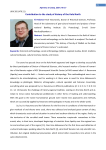
Scientific activity by Irina A. Razumova in the field of historical and social anthropology on the Kola North is analyzed. The book of documentary materials "The History of Family of Zhidkih on the Background of Pomor Culture" is estimated.
Free
Cooperation between Russia and China in Arctic shipping: current state and prospects
Scientific article
The article analyzes the cooperation between China and Russia in the field of Arctic shipping. The author compares the tasks of the Northern Sea Route development and the Ice Silk Road construction. This allows identifying the factors that promote and hinder cooperation. The author examines the specifics of the Sino-Russian format of comprehensive partnership and strategic interaction that helps to mitigate contradictions between the national interests of the two states. The author examines the current cooperation between Russia and China in the field of Arctic shipping, identifying strengths, weaknesses, opportunities, and threats in key areas of interaction (SWOT analysis). The author concludes that differences between interests and status of the two states in the Arctic provides Russia a strategic advantage in its relations with the PRC. This balance may be maintained within the framework of a multilateral cooperation. At the same time, cooperation with China in the field of marine security is promising in case of keeping existing power balance. In conclusion, the author suggests areas for cooperation to increase the effectiveness of bilateral interaction in the field of Arctic shipping.
Free

Cooperation between Russia and China in the Arctic Energy Sector: A Strategic Perspective
Scientific article
The imposed sectoral restrictions on the Russian Federation and the current macroeconomic situation create prerequisites for building a new model of cooperation with Asian countries, primarily with the People’s Republic of China. The People’s Republic of China demonstrates a strategic approach to joint implementation of energy projects in the Arctic, having shares in joint ventures with Russian energy companies (Yamal LNG, Arctic LNG-2). Yamal LNG, the most complex technological project in the Arctic for the production of liquefied natural gas (LNG), located on the Yamal Peninsula above the Arctic Circle on the basis of the South Tambeyskoe field, has become the flagship of Russian-Chinese cooperation in the Arctic. The joint implementation of this project has the most important geostrategic and industrial significance in the global energy industry, clearly demonstrating the capabilities of the two countries in creating high-tech solutions for gas liquefaction in difficult climatic conditions. It is important that such projects have powerful complex-forming and multiplicative effects, creating conditions for the maximum utilisation of the industries of both countries, as well as for the construction of infrastructure along the Northern Sea Route and the creation of a high-tech fleet for the transportation of liquefied natural gas. Despite the existing legal disagreements between Russia and China regarding economic activities in the Arctic, in light of the current macroeconomic situation, interaction with Asian partners is a promising area of cooperation in the implementation of joint technological projects. With significant financial resources and accumulated engineering and technical competences, the People’s Republic of China is one of Russia's most reliable partners in the context of implementing energy projects. It is important that China is also a buyer of Russian energy resources, which ensures a stable market for hydrocarbons. The publication analyses the development of Russian-Chinese relations and considers the prospects for joint economic cooperation in the Arctic in the energy sector.
Free
Cooperation of India and Russia in the Arctic: Challenges and Prospects
Scientific article
The article examines the factors that have both a restraining and a facilitating effect on the development of cooperation between India and Russia in the Arctic. Attention is paid to the evolution of India’s foreign policy shaped by economic, political and diplomatic factors. The current state and prospects of cooperation between India and Russia in the transport sector are considered. Given India’s general interest in Arctic resources, it is more beneficial for India to participate not so much in the development of the Northern Sea Route as in the development of the “North–South” transport corridor and the southern sea route “Vladivostok–Chennai”. In energy cooperation, India’s involvement is limited to participation in the development of the Vankor and Taas-Yuryakh fields. Regarding mineral resources, India is most interested in the extraction and processing of rare-earth metals and diamonds, but these require long-term investment. In the scientific sphere, India is involved in studying the consequences of climate change and other fundamental research; however, the cooperation proposed by the Russian side has not yet been implemented. The main obstacles to India’s more active Arctic cooperation with Russia seem to be the long-term reorientation of its economy towards cooperation with the West and pressure from the US.
Free
Scientific article
Mechanisms for coordinating the activities of international interstate and macro-regional organizations of the North-Arctic regions, the implementation of which may be directly related to the program of the Russian Federation’s Presidency of the International Arctic Council in 2021-2023, are proposed. Among these organizations, primarily the Arctic Council is an international forum, which operates on the basis of interstate government agreements of the highest level between the Arctic countries. But in recent years, the Arctic territories’ activities at the macro-regional and regional levels, their regional and local governments have increased. How are the efforts of these top-level intergovernmental and regional communities and societies coordinated? For example, how is the interaction of the Arctic Council with the established sufficiently effective Barents / Euro-Arctic Council (BEAC) or the Northern Forum regulated and the newly created Bering / Pacific-Arctic Council (BPAC)? Do we need clear and well-coordinated mechanisms for this interaction and who should do it? The analysis concludes that a special task force is needed within the Arctic Council structure to develop mechanisms for coordinating its activities with similar macro-regional structures to make the process a coherent and focused one to address the priorities of the Arctic basin in the coming decades. The duration of this task force will depend on the outcome of the task at hand. This proposal is very timely, as it is possible to implement it during the presidency of the Russian Federation in the Arctic Council in 2021-2023.
Free

Counterterrorism in the Russian Arctic: legal framework and central actors
Scientific article
Russia’s strategic interests in the Arctic coupled with a complex and diffuse terrorist threat has produced a niche topic: Arctic counterterrorism. Arctic counterterrorism is a new and underdeveloped topic that has received only limited attention. This article contributes a discussion of the legal framework and the main actors involved in countering terrorism in the Russian Arctic. The author finds that the legal framework for counterterrorism is extensive yet centered in core documents. Similarly, counterterrorism involves many and varied actors united in a relatively simple and streamlined national system for counterterrorism. Current legal regulation and organisation provide a solid base that may support efficient management of counterterrorism, also in the Arctic. A notable strength is the concentration of coordination responsibilities in the hands of one central actor, the FSB. Another important characteristic is that the system is symmetrical and follows Russia’s federal organisation with coordinating bodies for all regions including those in the Arctic. Counterterrorism legislation is kept up to date and the trend is towards tougher punishments and a wide understanding of terrorist offenses. A potential weak spot is the unclear role of the newly formed National Guard. The uncertainty surrounding the role of the National Guard in the fight against terrorism may challenge the FSB and weaken coordination of the system for counterterrorism in the future.
Free
Scientific article
The article is based on a review of the geopolitical problems of the Arctic region, represented in the contemporary American media discourse on the example of the newspaper «The New York Times». The paper was chosen because it is an example of traditional American journalism, which adheres to the princi-ples of objectivity. As a result of the analysis, the following trend was found — throughout 2001-2005 years the newspaper actively presented two Arctic issues: the feasibility of oil drilling in Alaska and the problem of climate change in the Arctic. Since 2007, the arctic problematics on the pages of newspapers became relevant in the context of geopolitical issues, which was connected to the event of August 2, 2007, namely the setting of the Russian flag in the Arctic Ocean. Coverage of the Arctic issues was carried out in the context of competition, and later — international cooperation. In the period from 2011 to 2018, the focus of the American newspaper was pointed out to the climate change and resource development in the Arctic.
Free

Creation of development zones in the Arctic: methodology and practice
Scientific article
The article describes the basic principles and methodological bases of formation and development of the supporting areas of the Russian Arctic. The work emphasizes that the basis of the methodological approach in the formation of the supporting areas is a vector of development of the territory as an integral project on the principle of coordination of all "industrial" activities in the planning, goal-setting, financing and implementation, which will allow to reduce all kinds of costs and expenses, as well as all the projects included in the supporting areas should be aimed at the development of the macroregion as a whole, not just to solve individual tasks of the industry. The article underlines that the formation of the supporting areas is aimed at achieving a single global goal — to encourage efficiency and diversification of the economy of the Arctic zone, oriented to the preservation and development of the Northern Sea Route.
Free
